Key takeaways
- Early spring (March-April) is prime for ramps, fiddleheads, and morels across USDA zones 4-7.
- Late spring and early summer (May-July) offer wild berries, milkweed shoots, and nettles.
- Mid-to-late summer (July-August) brings wild grapes, blackberries, and elderberries to harvest.
- Fall (September-November) is the season for diverse wild mushrooms, nuts like hickory and black walnut, and wild apples.
- Always positively identify plants, forage sustainably, and respect land access rules to ensure safety and future harvests.
- Understanding local microclimates and USDA hardiness zones can refine foraging timing by several weeks.
Quick answer: The Northeast and New England foraging calendar spans from early spring (March-April) for ramps, fiddleheads, and morels, through summer for berries, and into fall (September-November) for mushrooms and nuts.
Foraging in the Northeast and New England gives a unique connection to the land, providing seasonal wild edibles from early spring through late fall. This region, spanning USDA hardiness zones 3 to 7, presents a diverse landscape from coastal plains to mountainous areas, each with its own specific timing for wild harvests. While the general calendar provides a good starting point, local conditions—like a late snow or an early warm spell—can shift prime foraging windows by one to three weeks.
An experienced grower knows that successful foraging is about more than just identification; it requires an understanding of plant life cycles, local ecosystems, and sustainable harvesting practices. This guide lays out a month-by-month calendar for some of the most sought-after wild foods, offering practical advice for those looking to supplement their diet with nature’s bounty across states like Maine, Vermont, New York, and Massachusetts.
Early spring: ramps, fiddleheads, and morels (March-April)
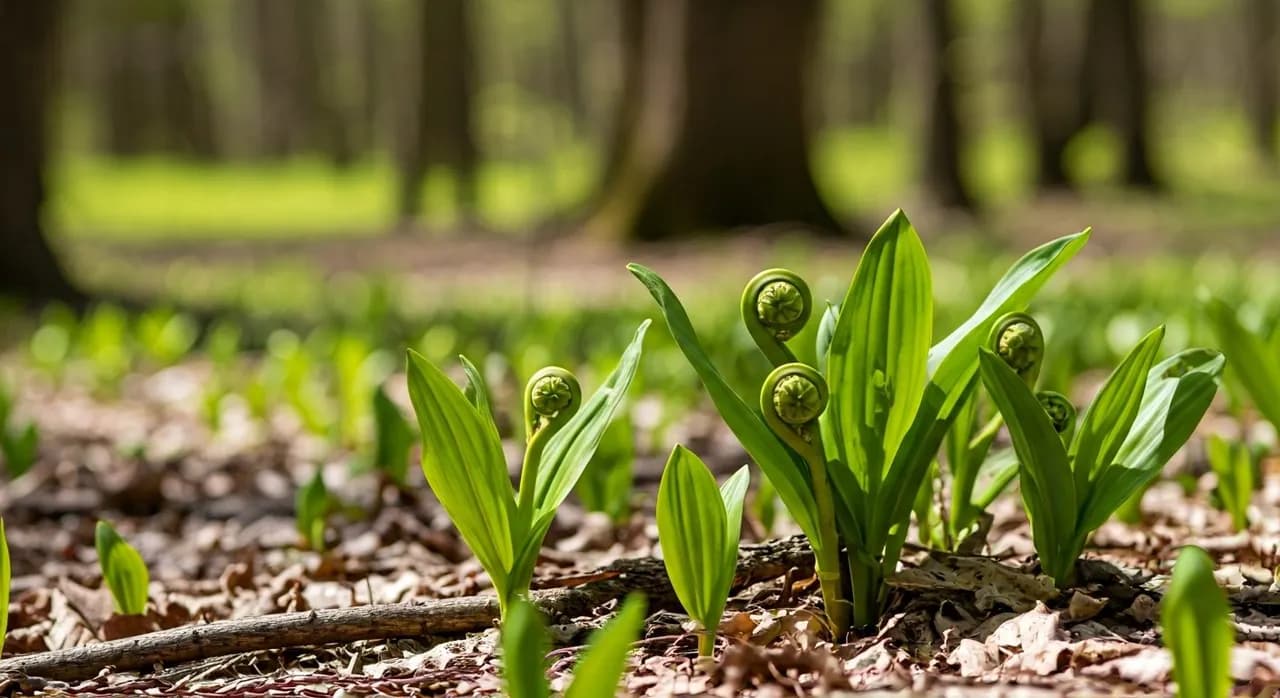
As the snow melts and temperatures consistently rise above 40°F, the Northeast woodlands awaken with some of the most anticipated wild edibles. March and April are prime months for ramps (wild leeks), which typically emerge first in southern New England and New York in USDA zone 6, then progress northward. These pungent greens are often found in moist, deciduous forests, especially near streams. When harvesting ramps, take only one leaf per plant so the patch can regenerate and stay healthy for future years.
Identifying early spring edibles
Fiddlehead ferns, specifically the ostrich fern (Matteuccia struthiopteris), begin to unfurl their coiled fronds in mid-April in many areas, particularly along riverbanks and floodplains in USDA zones 3-7. Look for their distinctive brown, papery scales and U-shaped groove on the stem. Harvest only a few fiddleheads per plant, leaving at least two-thirds of the fronds untouched to allow the plant to thrive. Morels, the prized wild mushrooms, typically appear from late April into May, often after a good rain and when ground temperatures reach 50°F. They are found in various habitats, including old apple orchards and disturbed areas, and their distinctive honeycomb caps make them relatively easy to identify for experienced foragers. Always be 100% certain of identification before consuming any wild mushroom, as many poisonous look-alikes exist. For those new to foraging, resources like Foraging for beginners: identifying common wild edibles safely can provide essential guidance.
- Ramps: Look for broad, flat leaves with a distinct oniony-garlic scent.
- Fiddleheads: Identify the tight, coiled fronds of ostrich ferns, often near water.
- Morels: Seek out their unique conical, pitted caps, typically in late spring.
- Wild ginger: Found in moist, shaded areas, with heart-shaped leaves.
Late spring to early summer: berries, greens, and flowers (May-June)
As spring transitions into summer, there's a new array of edibles to forage. May brings an abundance of wild greens, including young stinging nettles (Urtica dioica) and milkweed shoots (Asclepias syriaca). Nettles are best harvested when young, before they flower, typically reaching 6-12 inches in height. Wear gloves to avoid their stinging hairs; cooking or drying neutralizes the sting. Milkweed shoots, harvested when they are 4-8 inches tall, offer a tender, asparagus-like flavor. These plants thrive in open fields and disturbed areas across USDA zones 3-8.
Summer’s first fruits and flowers
June marks the beginning of the wild berry season. Wild strawberries (Fragaria virginiana) are among the first to ripen, often smaller but more intensely flavored than their cultivated cousins. They are common in sunny meadows and forest edges throughout the region. Later in June, serviceberries (Amelanchier spp.), also known as Juneberries, become ripe. These small, purplish-red berries grow on shrubs or small trees and are excellent fresh or in preserves. Look for them in woodlands and along roadsides. Foraging for these early berries can yield several pounds of fruit from a single patch if harvested sustainably. Always leave enough berries for wildlife and for the plant to propagate, leaving a portion of the harvest.
- Wild strawberries: Small, red, intensely flavored, found in open areas.
- Stinging nettles: Young shoots, 6-12 inches tall, require gloves for harvest.
- Milkweed shoots: Tender, asparagus-like, harvested when 4-8 inches tall.
- Serviceberries: Purplish-red berries on shrubs, ripening in June.
Mid-summer: wild grapes, blackberries, and elderberries (July-August)
Mid-summer in the Northeast brings a bounty of juicy fruits, perfect for fresh eating, jams, and wines. July is prime time for blackberries (Rubus allegheniensis), which grow prolifically along roadsides, forest edges, and in disturbed areas across USDA zones 4-8. These thorny bushes can yield several pounds of berries per plant, often ripening over a period of 2-3 weeks. Look for plump, shiny black berries that detach easily from the stem. Be mindful of thorns and wear long sleeves for protection.
Identifying summer’s abundant fruits
Elderberries (Sambucus canadensis) also begin to ripen in late July and continue through August. These dark purple berries grow in large clusters on shrubs, often found in moist soils near streams or wetlands. While the berries are edible when cooked, the raw berries and other parts of the plant are toxic, so always cook elderberries thoroughly. Wild grapes, such as Small-Leaved Wild Grape (Vitis parvifolia), start to swell and change color in August, though they often need a frost to fully sweeten. These vines can be found climbing trees and fences, providing hundreds of small, tart grapes per vine. Be sure to differentiate edible wild grapes from toxic moonseed berries, which lack the characteristic tendrils of grapevines and have a single, crescent-shaped seed rather than the 2-4 round seeds of grapes. A mature wild grape vine can produce a substantial amount of fruit in a good year.
- Blackberries: Plump, shiny black, found on thorny bushes.
- Elderberries: Dark purple clusters, edible when cooked, found near water.
- Wild grapes: Small, tart, found on climbing vines, often need frost to sweeten.
- Blueberries: Small, sweet, found on low bushes in acidic soils.
Fall: nuts, wild apples, and late-season mushrooms (September-November)
Autumn turns the Northeast into a prime spot for foraging, particularly for nuts and late-season mushrooms. September is when black walnuts (Juglans nigra) and hickory nuts (Carya spp.) begin to drop. The roots of black walnut trees produce a chemical called juglone, which can inhibit the growth of many other plants in the surrounding soil. Black walnuts are encased in a thick, green husk that stains hands, while hickory nuts have a smoother, thinner husk. Both are highly nutritious, but require effort to crack. Look for these trees in mature forests and along old farmsteads in USDA zones 4-8. A mature black walnut tree can yield a substantial amount of nuts in a good year.
Harvesting fall’s bounty
Wild apples, often remnants of old orchards or escaped cultivars, ripen from late August through October. These can be tart but are excellent for cider, sauces, and pies. Look for them in abandoned fields and along forest edges. Fall also brings a second flush of mushrooms, including hen of the woods (Grifola frondosa) and oyster mushrooms (Pleurotus ostreatus). Hen of the woods, a large, frilly polypore, often grows at the base of oak trees and can weigh 5-20 pounds. Oyster mushrooms grow in shelf-like clusters on dead or dying hardwoods. As with all mushrooms, positive identification is paramount, and it’s advisable to forage with an experienced guide or join a local mycological society for safe identification. The USDA Natural Resources Conservation Service (NRCS) provides resources on tree identification that can assist in locating nut trees in specific regions. For example, the NRCS plant database details the native ranges of many nut-bearing trees across the US [1].
- Black walnuts: Hard-shelled, encased in green husk, fall in September.
- Hickory nuts: Varied species, often with smoother husks, dropping in September-October.
- Wild apples: Tart, found in old fields, ripen through October.
- Hen of the woods: Large, frilly mushroom, grows at base of oak trees.
- Oyster mushrooms: Shelf-like clusters on dead hardwoods, appearing in fall.
Seasonal Foraging Shows in Northeast & New England
Season | Key Edibles | Typical Harvest Window | USDA Zones |
|---|---|---|---|
Early Spring | Ramps, Fiddleheads, Morels | March – April | 3-7 |
Late Spring/Early Summer | Wild Strawberries, Nettles, Serviceberries | May – June | 3-8 |
Mid-Summer | Blackberries, Elderberries, Wild Grapes | July – August | 4-8 |
Fall | Black Walnuts, Hickory Nuts, Wild Apples, Mushrooms | September – November | 4-8 |
Ramp Harvest Rule: When harvesting ramps, take only one leaf per plant to ensure the patch can regenerate.
Mushroom Safety: Always achieve 100% positive identification for any wild mushroom; consult an expert for species like morels, which have look-alikes.
Wild Grape Yield: A mature wild grape vine can produce 10 to 20 pounds of fruit in a productive season, often sweetening after a frost below 32°F.