Key takeaways
- Always carry essential gear like a sharp knife, durable basket, and a regional field guide.
- Adhere to harvest ratios, typically 10-20% of a patch, to ensure plant regeneration.
- Practice leave-no-trace principles, including proper waste disposal and minimal disturbance.
- Identify plants accurately using reliable resources; misidentification can lead to serious health risks.
- Obtain necessary permits and understand local regulations before foraging in any area, especially public lands.
- Prioritize plant health and long-term sustainability over immediate yield, respecting the ecosystem.
Quick answer: To forage sustainably in the US, carry essential gear like a field guide and sharp knife, adhere to harvest ratios typically 10-20% of a patch, and practice leave-no-trace principles. Always identify plants accurately and obtain necessary permits to ensure long-term ecosystem health.
In the Appalachian foothills of North Carolina, where wild ramps emerge in early spring, the practice of foraging gives a direct connection to the land and its bounty. Many folks are rediscovering the satisfaction of gathering their own food, from wild berries in USDA zone 7 to edible greens like lamb’s quarters that thrive across most of the US. This resurgence, however, brings with it a critical responsibility: understanding the ethical framework and practical tools needed to harvest sustainably.
Respect for natural systems matters in both cultivated fields and wild patches. Main considerations include carrying appropriate gear, using sensible harvest ratios, and following leave-no-trace principles that protect shared natural spaces.
Essential foraging tools: beyond the basket
Stepping into the woods or fields to forage, you need more than just a keen eye and a desire for wild edibles. The right gear makes the experience safer, more efficient, and ultimately, more sustainable. Think of it like any other outdoor activity; you wouldn’t hike a 10-mile trail in flip-flops, and you shouldn’t forage without the proper kit. Across the Mid-Atlantic, from collecting wild grapes in Maryland to finding pawpaws in Ohio, a few key items are indispensable for a successful and responsible outing so you can harvest safely and respectfully.
A basic foraging kit for responsible gathering
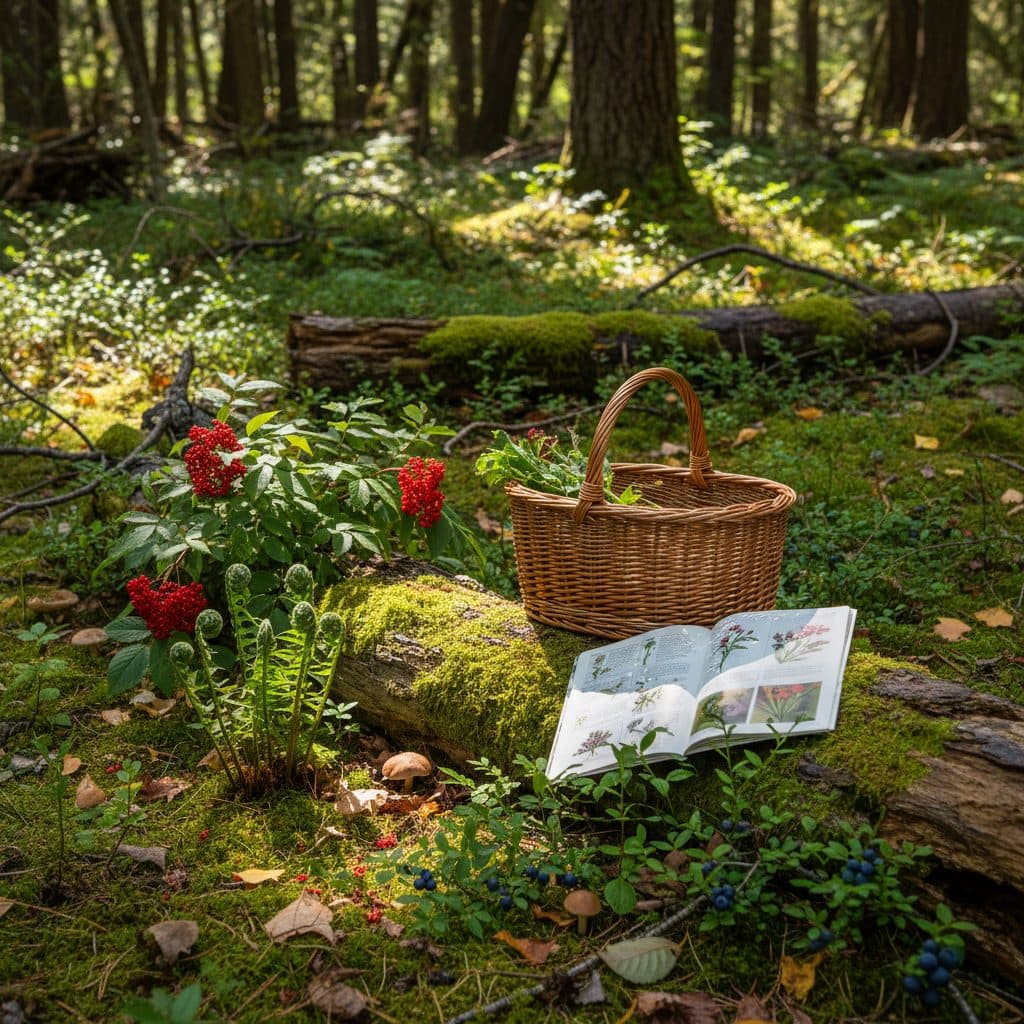
A reliable field guide is the most important tool, especially for beginners. It helps confirm plant identification, preventing dangerous mistakes; a guide covering your specific US region, like the Pacific Northwest or the Southeast, is ideal. A comprehensive regional guide typically covers over 200 edible species, often including detailed illustrations and seasonal availability. Next, a sharp knife with a 3-inch to 4-inch blade is essential for clean cuts, minimizing damage to the plant and ensuring quick regeneration. For instance, when harvesting wild asparagus in USDA zone 5, a clean cut above the ground promotes new shoots and reduces stress on the perennial root system. Durable gloves protect your hands from thorns, stinging nettles, and potential skin irritants. A sturdy basket or cloth bag allows for air circulation, keeping your harvest fresh and preventing delicate greens from wilting in just 30 minutes, unlike plastic bags. These containers can hold a useful amount of produce. Finally, always bring water to stay hydrated and a basic first-aid kit, because even a short trip can involve unexpected scrapes, insect bites, or minor allergic reactions. These tools provide safety and efficiency while protecting the harvested plants [3].
- A regional field guide, weighing 1 to 2 pounds, for accurate identification of 200+ species.
- A sharp, fixed-blade knife, 3 to 4 inches long, for clean, plant-friendly harvesting.
- Durable work gloves to protect hands from thorns and irritants, like those from wild berries.
- A breathable basket or cloth bag, holding 1 to 2 gallons, for fresh and aerated transport.
- A basic first-aid kit and at least 2 liters of drinking water for personal safety and hydration.
Harvest ratios and sustainable gathering
Understanding and applying sustainable harvest ratios ensures that wild patches continue to grow and reproduce in subsequent years. Careful harvesting maintains productivity, whether in a cultivated bed of greens or a wild stand of berries. The goal is always to leave enough so the plant population can regenerate and even expand, providing food for wildlife and future foragers alike, thereby preserving the ecological balance of the area.
Applying the 10-20% rule for plant health
A widely accepted guideline for responsible harvesting is the 10-20% rule: never harvest more than one-fifth of an individual plant or a patch of plants. For certain slow-growing species, like wild ramps (Allium tricoccum) in the Northeast, this percentage should be even lower, especially if you take the bulb, which is necessary for the plant’s perennial survival. In contrast, for abundant, fast-growing greens like lamb’s quarters (Chenopodium album), which can produce thousands of seeds per plant and often grow as weeds in disturbed areas, you might safely harvest closer to 20% of a large, healthy patch. When gathering berries, such as wild blueberries in Maine or huckleberries in the Pacific Northwest, it’s generally fine to pick up to 20% of a bush’s fruit, as you’re leaving plenty for birds and other animals that rely on them for sustenance. For mushrooms, which are the fruiting bodies of a larger underground mycelial network, the impact of harvesting is often less direct, but still, collecting only a portion of a visible patch is a good practice to ensure spore dispersal. This values-based approach [2] protects the long-term health of the ecosystem and local wildlife. Consider the plant’s life cycle and abundance in your specific USDA zone; a patch of wild ginger in USDA zone 6 might require a lighter touch than a sprawling patch of wild mustard in USDA zone 8, which can often be quite prolific.
- Harvest no more than 10-20% of a plant or patch to allow for regeneration.
- For slow-growing or sensitive plants like ramps, aim for 5-10% or less of the population.
- Always leave ample food for wildlife so ecosystem balance and biodiversity.
- Focus on harvesting abundant species; strictly avoid rare, threatened, or stressed plant populations.
- Consider the plant’s specific life cycle and regenerative capacity in your local US region.
Leave-no-trace: minimizing impact
The principle of leave-no-trace is fundamental to all outdoor activities, and foraging is no exception. It’s about minimizing our footprint and ensuring that our presence leaves the natural environment as undisturbed as possible. Every action, no matter how small, has an impact. From the forests of Oregon to the coastal plains of Georgia, applying these principles preserves wild habitats and supports native wildlife.
Seven principles for foragers: respecting the environment
The Leave No Trace Center for Outdoor Ethics outlines seven core principles, and several are particularly relevant for foragers. First, plan ahead and prepare. This includes researching the area, understanding local regulations, and packing appropriate gear, as discussed earlier. Knowing the weather forecast for the next 24 hours can prevent unexpected exposure. Second, travel and camp on durable surfaces. Stick to existing trails and avoid trampling delicate vegetation or compacting soil, especially in sensitive areas like riparian zones or alpine meadows. Foragers should aim to stay a good distance from water sources when possible to protect water quality and wildlife habitats. Third, dispose of waste properly. Pack out everything you pack in, including fruit peels and nut shells, which can take weeks or months to decompose and attract wildlife, potentially altering their natural foraging behaviors. Dig a cathole a proper depth and distance from water, trails, and campsites for human waste, covering it completely. Fourth, leave what you find. While foraging involves taking, this principle reminds us to avoid disturbing rocks, plants (beyond our harvest), or historical artifacts. Fifth, minimize campfire impacts; if you must have a fire, use existing fire rings and keep it small so it’s completely out before leaving. Sixth, respect wildlife by observing from a distance and never feeding animals, which can make them dependent or aggressive. Finally, be considerate of other visitors; keep noise levels down and share trails. Adhering to these guidelines keeps foraging activities from degrading natural habitats [4]. For more foundational knowledge, consider reading foraging for beginners, which covers plant identification basics.
- Plan your trip thoroughly, knowing local rules, weather, and plant identification.
- Stay on existing trails and durable surfaces to prevent soil compaction and plant damage, especially 200 feet from water.
- Pack out all trash, including organic waste like fruit peels, which can take 6 months to decompose.
- Leave natural objects undisturbed, beyond your intended sustainable harvest.
- Respect wildlife by observing from a safe distance, at least 50 feet, and never feeding them.
Legal and ethical considerations: knowing the rules
Beyond the practical tools and sustainable harvesting techniques, a responsible forager must navigate a complex web of legal and ethical considerations. The rules vary significantly across the United States, from state to state, and even between different types of public lands. Understanding these regulations avoids legal fines and respects landowner rights. Ignoring these aspects can lead to depletion of resources, conflict with landowners, or damage to delicate ecosystems.
Understanding permits, property lines, and protected species
Before foraging on any site, determine land ownership. Foraging on private land without explicit, verifiable permission is trespassing, regardless of whether you’re collecting a few wild berries or a bushel of mushrooms. Always seek permission from landowners, even for common plants like Small-Leaved Wild Grape, and ideally get it in writing. On public lands, the rules are more nuanced and require specific research. National Forests, managed by the US Forest Service, often allow personal-use harvesting of small quantities of common edibles like berries, mushrooms, or nuts, sometimes without a permit. However, commercial harvesting almost always requires a permit, and some species, like ginseng, are heavily regulated even for personal use, sometimes requiring a specific state permit. State Parks and local city parks, on the other hand, frequently prohibit all foraging to protect natural resources and ensure visitor safety; a sign often indicates “no collecting” near trails or park boundaries. Also, be acutely aware of protected species in your region. The USDA Natural Resources Conservation Service [5] lists many plants that are rare, threatened, or endangered, and harvesting these is illegal and highly unethical, potentially resulting in significant fines. For example, in many parts of the Midwest, certain native orchid species are protected by state law. Always verify the regulations for the specific land you plan to visit, and if in doubt, err on the side of caution. This ethical perspective [1] guides us to act responsibly and ensures the long-term viability of wild edible populations across the country.
- Always obtain explicit, verifiable permission before foraging on any private land.
- Thoroughly check local regulations for public lands, including National Forests and State Parks, which vary widely.
- Understand specific quantity limits, often 1 gallon per person per day for personal use in National Forests.
- Identify and strictly avoid harvesting protected, rare, or endangered plant species in your region.
- Respect tribal lands and their specific cultural harvesting protocols, which may differ from federal or state rules.
Common foraging tools comparison
Tool | Primary use | Key feature | Typical cost |
|---|---|---|---|
Field guide | Plant identification | Regional specificity, 200+ species | $20-$35 |
Foraging knife | Clean harvesting | 3-4 inch stainless steel blade | $15-$40 |
Durable gloves | Hand protection | Thorn-resistant, breathable fabric | $10-$25 |
Harvest basket | Transporting edibles | Breathable, 1-2 gallon capacity | $25-$60 |
First-aid kit | Emergency care | Basic wound treatment, insect bite relief | $15-$30 |
Harvest Limit: Many US National Forests permit personal foraging of up to 1 gallon of berries or mushrooms per person per day without a permit.
Plant Regeneration: For sustainable harvesting, aim to collect no more than 10-20% of a plant patch so future growth and wildlife sustenance.
References
- Ethics and Literary Translation (2026).
- Marine mammals foraging around fishing gear or preying upon fishing catch and bait: it may not be “depredation” (2022).
- Sweat Gear: For that Mean and Lean Look (1997).
- Stored human tissue: an ethical perspective on the fate of anonymous, archival material (2003).
- USDA Natural Resources Conservation Service (2024).