Key takeaways
- Turmeric thrives outdoors as a perennial in USDA zones 8-11, or as an annual in zones 6-7 with proper care.
- Plant rhizome pieces 2-4 inches deep and 6-8 inches apart in well-draining soil with a pH of 6.0-7.0.
- Maintain consistent soil moisture, providing 1 inch of water per week, especially during the growing season.
- Harvest rhizomes 8-10 months after planting, typically when leaves begin to yellow and die back.
- Cure fresh turmeric by boiling, drying, and grinding; five to ten pounds of fresh rhizome yields roughly one pound of powder.
- Protect plants from common pests like scale insects and diseases such as rhizome rot, particularly in humid conditions.
Quick answer: To grow turmeric in the US, plant rhizomes 2-4 inches deep in well-draining soil (pH 6.0-7.0) in USDA zones 8-11 as a perennial, or as an annual in zones 6-7. Provide consistent moisture and harvest 8-10 months after planting.
Growing turmeric (Curcuma longa) in the United States is a rewarding project for many gardeners, particularly those in warmer climates. While commercially significant production is concentrated in tropical regions, home growers in USDA zones 8-11 can cultivate this spice outdoors as a perennial. In cooler areas, such as USDA zone 6, it can be grown in containers started indoors in late winter — turmeric needs eight to ten months, far longer than the outdoor season in those zones, so the plant has to begin and end its cycle under cover.
This guide provides practical steps for cultivating turmeric, from selecting healthy planting material to processing your harvest into cured powder. We will cover the specific needs of this warm-season crop, so you understand the conditions required for a successful yield in your US garden. Expect to dedicate about eight to ten months from planting to harvest for mature rhizomes [4].
site selection and soil preparation for turmeric
Successful turmeric cultivation begins with selecting the right site and preparing the soil. Turmeric prefers a warm, humid climate, performing best as a perennial in USDA zones 8-11, such as Florida, coastal California, or the Gulf Coast states. Zones 10 and 11 rarely see frost, but zone 8 winters can drop into the teens Fahrenheit, so in zones 8 and 9 the rhizomes need a deep mulch over them or should be lifted and stored dry over winter. For growers in cooler zones, like USDA zone 6, choose a sunny, sheltered spot, or consider growing in containers that can be moved indoors when temperatures fall below 50°F.
soil composition and ph
Turmeric requires well-draining, fertile soil that is rich in organic matter. A sandy loam is ideal, which lets rhizomes expand freely and prevents waterlogging, a cause of rhizome rot [2]. Aim for a soil pH between 6.0 and 7.0 [4]. If your soil is heavy clay, amend it with significant amounts of compost or aged manure—up to 4 inches deep—to improve drainage and fertility. You can find more information on improving garden soil health through practices like cover cropping in our cover crops guide. A soil test will provide precise pH and nutrient levels, guiding your amendments for optimal growth.
- Sunlight: Full sun to partial shade (at least six hours of direct sunlight daily).
- Drainage: Essential to prevent rhizome rot, especially in high rainfall areas.
- Organic Matter: Incorporate 2-4 inches of compost or aged manure.
- Soil pH: Target a range of 6.0 to 7.0 for best nutrient uptake.
- Protection: Shelter from strong winds to prevent leaf damage.
planting turmeric rhizomes
Once your soil is prepared, the next step is planting the turmeric rhizomes. You can source rhizomes from a reputable nursery or an organic grocery store, and check that they are plump, firm, and show small ‘eyes’ or buds, similar to seed potatoes. Avoid any rhizomes that appear shriveled, soft, or moldy. For best results, plant in the spring after the last frost, when soil temperatures consistently reach 65°F or higher; in Florida, this might be as early as March, while in USDA zone 7, it could be May.
rhizome preparation and planting depth
Before planting, cut larger rhizomes into pieces, each 1-2 inches long, and make sure each piece has at least one viable bud. Allow the cut pieces to cure for 24-48 hours in a dry, shaded area to form a protective callus, which helps prevent rot in the soil [4]. Plant these pieces 2-4 inches deep, with the bud facing upwards, and space them 6-8 inches apart within rows that are 12-18 inches apart [4]. If growing in containers, select pots at least 12 inches in diameter and 10 inches deep to allow for adequate rhizome development. For indoor growing, a reflective grow tent can provide the consistent warmth and light needed.
- Source: Obtain healthy, firm rhizomes from a reliable supplier.
- Cut: Divide larger rhizomes into 1-2 inch pieces, each with one or more buds.
- Cure: Let cut pieces dry for one to two days to prevent rot.
- Planting Depth: Bury rhizome pieces 2-4 inches deep in the soil.
- Spacing: Maintain 6-8 inches between plants and 12-18 inches between rows.
care and maintenance for healthy turmeric
This builds directly on planting turmeric rhizomes.
Once planted, turmeric requires consistent care to develop robust rhizomes. Water is a critical factor; turmeric needs consistent moisture, especially during its active growing season from late spring through fall. Aim for about 1 inch of water per week, either from rainfall or irrigation [4]. In arid regions of the Southwest, you might need to water more frequently, perhaps every two to three days during hot spells, to prevent the soil from drying out completely. However, avoid waterlogging, as this can quickly lead to fungal diseases like rhizome rot [2].
fertilization and pest management
Turmeric is a heavy feeder. Begin with a balanced organic fertilizer at planting, then switch to a fertilizer higher in nitrogen during the initial vegetative growth phase, for example, a 5-1-1 ratio. Once the plant is established and beginning to form rhizomes, switch to a more balanced fertilizer, such as a 5-10-10 or 10-10-10, every four to six weeks [4]. Monitor your plants regularly for pests. Common issues include scale insects and nematodes [5]. In Florida, where humidity is high, fungal leaf spots can also be a concern. Inspect the undersides of leaves and the base of the plant. For scale, a horticultural oil spray can be effective, applied every seven to ten days until control is achieved.
- Watering: Provide 1 inch of water weekly, ensuring consistent soil moisture.
- Fertilization: Use a high-nitrogen fertilizer early, then a balanced one every 4-6 weeks.
- Mulching: Apply 2-3 inches of organic mulch to retain moisture and suppress weeds.
- Pest Control: Monitor for scale insects and nematodes; use horticultural oil for scale.
- Disease Prevention: Ensure good air circulation and drainage to prevent fungal issues.
harvesting and curing turmeric for powder
Those care and maintenance habits matter here as well.
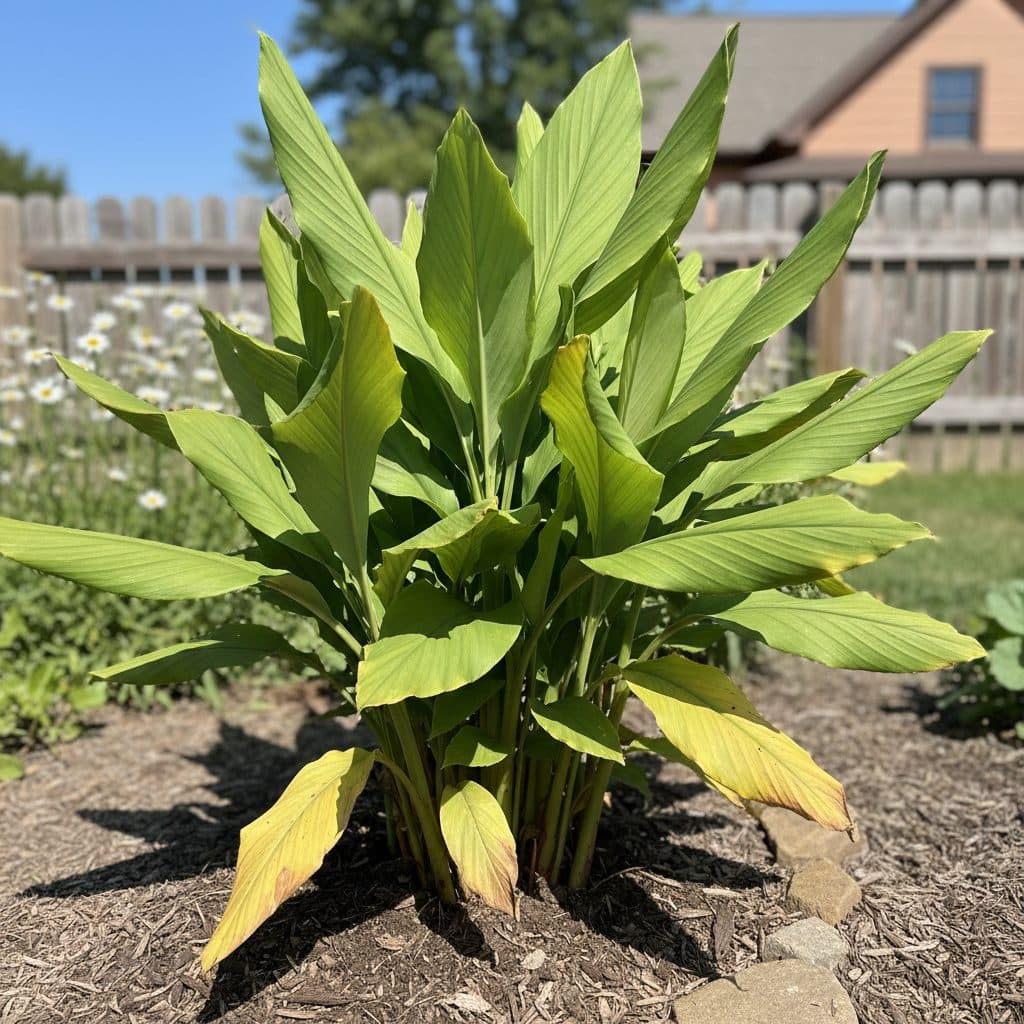
Turmeric rhizomes are typically ready for harvest 8-10 months after planting, usually in late fall or early winter in warmer climates, such as November in USDA zone 9. The plant will signal its readiness by its leaves beginning to yellow and die back [4]. This dormancy period indicates that the plant has directed its energy into developing the underground rhizomes. In cooler regions where it’s grown as an annual, harvest before the first hard frost, even if leaves are still green, to prevent damage to the rhizomes from freezing temperatures.
processing fresh turmeric into powder
To harvest, carefully dig up the entire plant using a garden fork, being mindful not to damage the rhizomes. Shake off excess soil, then separate the main rhizome from the smaller ‘fingers.’ Reserve some of the healthiest, firmest rhizomes with visible buds for replanting next season. Clean the remaining rhizomes thoroughly under running water, scrubbing off any remaining soil. For curing into powder, the process involves boiling, drying, and grinding. First, boil the clean rhizomes for 30-45 minutes, or until they are soft enough to be pierced easily with a fork [3]. This gelatinizes the starch and sets the color. After boiling, spread the rhizomes in a single layer to dry. This can take several days to weeks, depending on humidity. A food dehydrator set to 120°F can significantly speed up this process, reducing drying time to 12-24 hours. Once completely dry and brittle, grind the rhizomes into a fine powder using a spice grinder or a powerful blender. Expect a fresh-to-dry powder yield ratio of approximately 5:1 to 10:1 by weight [3], meaning five pounds of fresh turmeric might yield one pound of powder. Store the powder in an airtight container away from light and heat for up to one year.
- Harvest Time: 8-10 months after planting, when leaves yellow.
- Digging: Carefully excavate rhizomes to avoid damage.
- Cleaning: Wash off all soil from the harvested rhizomes.
- Boiling: Boil for 30-45 minutes until soft to set color and gelatinize starch.
- Drying: Dry thoroughly until brittle; use a dehydrator for faster results.
- Grinding: Process dried rhizomes into a fine powder using a spice grinder.
Turmeric Growing: Outdoor Perennial vs. Indoor/Annual
Feature | Outdoor Perennial (USDA Zones 8-11) | Indoor/Annual (USDA Zones 6-7) |
|---|---|---|
Climate Suitability | Warm, humid; minimal frost | Cooler, shorter seasons; needs protection |
Planting Time | Spring (March-April) | Start in pots indoors in February-March; move outdoors after the last frost |
Harvest Cycle | 8-10 months, often yearly | 8-10 months, before first hard frost (October-November) |
Rhizome Size | Potentially larger, more mature | Smaller, but still viable harvest |
Yield Potential | Higher, consistent yields over years | Moderate, single-season yield |
Winter Care | Mulch for protection, minimal intervention | Bring indoors or harvest completely |
Curcumin Content: Dried turmeric rhizomes typically contain 2-5% curcumin, the compound responsible for its yellow color and bioactivity [1].
Water Needs: Turmeric plants require approximately 1 inch of water per week during their active growth phase to support robust rhizome development [4].
Frequently asked questions
Can turmeric be grown in pots in cooler US climates?
Yes, turmeric can be successfully grown in large containers (at least 12 inches in diameter) in cooler USDA zones, such as zone 6. This allows you to move the plants indoors when temperatures drop below 50°F, protecting them from frost and extending their growing season to achieve a good harvest.
How long does it take for turmeric to grow from planting to harvest?
Turmeric typically requires 8-10 months from the time of planting to reach maturity and be ready for harvest [4]. The best indicator is when the plant’s leaves begin to yellow and die back naturally in the fall or early winter.
What kind of soil does turmeric prefer?
Turmeric thrives in well-draining, fertile soil rich in organic matter, with a pH between 6.0 and 7.0 [4]. Heavy clay soils should be amended with 3-4 inches of compost to improve drainage and aeration for optimal rhizome development.
How much sunlight does a turmeric plant need?
Turmeric plants prefer full sun to partial shade, requiring at least six hours of direct sunlight per day for robust growth. In very hot climates, like parts of Arizona, some afternoon shade can prevent leaf scorch, especially when temperatures exceed 90°F.
What is the fresh-to-dried turmeric powder yield ratio?
When processing fresh turmeric into powder, the yield ratio typically ranges from 5:1 to 10:1 by weight [3]. This means that five to ten pounds of fresh turmeric rhizomes will yield approximately one pound of dried, ground powder.
Are there common pests or diseases that affect turmeric in the US?
Yes, turmeric can be affected by pests such as scale insects and nematodes [5], and diseases like rhizome rot and leaf spot [2]. Ensuring good drainage, proper spacing, and regular inspection can help mitigate these issues, especially in humid regions like the Southeast, where fungal diseases are more prevalent.
References
- Bioactivity of Turmeric (2007). Bioactivity of Turmeric.
- Diseases of Turmeric (2007). Diseases of Turmeric.
- Turmeric — Production, Marketing, and Economics (2007). Turmeric — Production, Marketing, and Economics.
- Agronomy of Turmeric (2007). Agronomy of Turmeric.
- Insect Pests of Turmeric (2007). Insect Pests of Turmeric.
- USDA Natural Resources Conservation Service (2024). USDA Natural Resources Conservation Service.