Key takeaways
- Starting an organic home kitchen garden in India provides daily fresh culinary herbs, leafy greens, and staple desi vegetables with zero synthetic chemical residues.
- Choose breathable terracotta pots or UV-stabilised HDPE/fabric grow bags elevated on brick stands to ensure rapid drainage during heavy monsoon downpours.
- Formulate a lightweight, moisture-retentive potting mix composed of 40% washed coco peat, 30% vermicompost or aged cow dung, 20% garden soil, and 10% coarse river sand or rice husk, plus about 50 g of neem cake powder mixed through each 12-inch pot.
- Align your planting schedule with India's three agricultural seasons: Kharif (monsoon), Rabi (winter), and Zaid (summer).
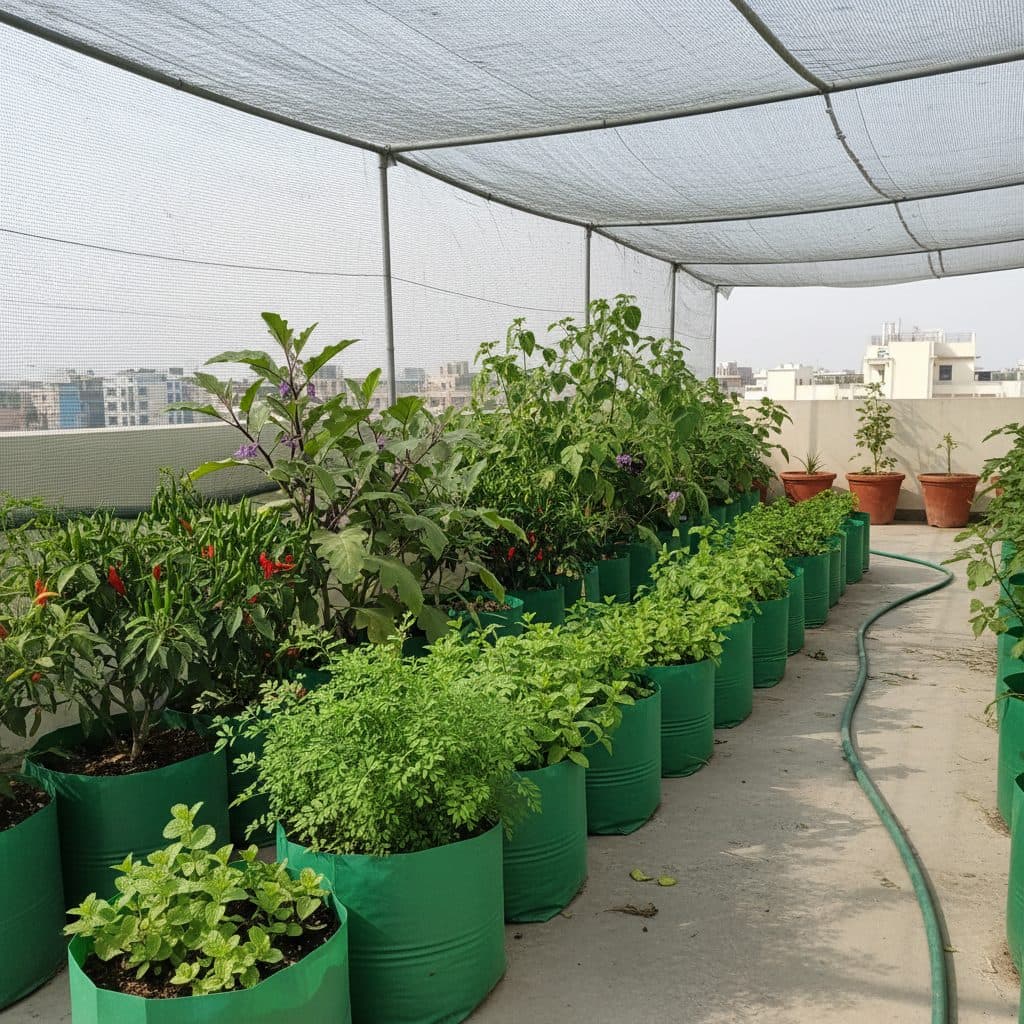
- Deploy 50% green agro-shade netting over rooftop gardens between April and June when concrete terrace temperatures exceed 40°C.
- Begin with high-success beginner crops: curry leaf (kadi patta), green chillies, mint, methi, palak, coriander, and potted brinjal.
Quick answer: To start a home kitchen garden in India, select a sunny terrace or balcony receiving 5 to 7 hours of daily sunlight. Use 12 to 15-inch grow bags filled with a lightweight 40:30:20:10 mix of coco peat, vermicompost, garden soil, and sand or husk, enriched with 50 g of neem cake per pot. Begin with easy culinary staples like green chillies, curry leaf, mint, and seasonal leafy greens.
Growing fresh produce at home has become increasingly common across Indian cities. Whether you have a concrete rooftop in Delhi, an apartment balcony in Bengaluru or Mumbai, or a small backyard in Chennai, cultivating your own greens provides fresh ingredients through the year.
A productive home kitchen garden in India requires adaptations to local climate extremes, from 42°C summer heat on concrete roofs to heavy monsoon rains that test drainage. Container choice, potting mix, and seasonal timing determine how well plants perform.
This guide covers layout planning, potting soil formulation, vegetable varieties, and organic pest control for Indian conditions.
+-------------------------------------------------------------+
|              THE INDIAN KITCHEN GARDEN SEASONS              |
|                                                             |
|   SEASON           TIMELINE            CORE CROPS           |
|   ------           --------            ----------           |
|   Kharif (Monsoon) June to September   Bhindi, Gourds, Baingan|
|   Rabi (Winter)    October to March    Methi, Palak, Matar  |
|   Zaid (Summer)    March to June       Mint, Kheera, Chaulai|
+-------------------------------------------------------------+
How do you select the right location and containers?
Before purchasing seeds, evaluate the environmental conditions of your available space.
Sunlight assessment
- Most fruiting vegetables (tomatoes, chillies, brinjal, bhindi) require a minimum of 5 to 7 hours of direct, unfiltered sunlight daily.
- Leafy greens and culinary herbs (mint, coriander, methi, spinach) can thrive in 3 to 4 hours of bright morning or dappled sunlight, making them ideal for partially shaded balconies.
Container selection
- UV-stabilised HDPE grow bags (200-250 GSM): Lightweight, affordable, and durable. They do not crack like cheap plastic under harsh summer UV rays. Standard 12x12 inch (30x30 cm) and 15x15 inch (38x38 cm) sizes suit most vegetables.
- Terracotta / Earthen pots (gamlas): Naturally porous clay allows air exchange to the root zone and keeps soil significantly cooler during hot Indian summers.
- Rectangular shallow planters: Ideal for broadcasting leafy greens like methi, palak, and coriander (15 to 20 cm depth is plenty for shallow fibrous roots).
+-------------------------------------------------------------+
|              CONTAINER SIZING GUIDE FOR INDIAN CROPS        |
|                                                             |
|   POT / BAG SIZE          BEST CROPS                        |
|   --------------          ----------                        |
|   6 to 8 Inches (Depth)   Mint, Coriander, Methi, Palak     |
|   10 to 12 Inches (Depth) Green Chillies, Capsicum, Baingan |
|   15 to 18 Inches (Depth) Tomatoes, Bhindi, Dwarf Papaya    |
|   24 x 12 Inch Trough     Climbing Gourds (Lauki, Tori)     |
+-------------------------------------------------------------+
How do you formulate the ideal lightweight potting mix?
Never fill terrace pots with heavy, unamended native clay soil. Topsoil becomes compacted, suffocates roots, and places dangerous structural dead-weight on concrete roof slabs.
+-------------------------------------------------------------+
|              IDEAL TERRACE POTTING FORMULATION              |
|                                                             |
|   INGREDIENT                 VOLUME %    ROLE               |
|   ----------                 --------    ----               |
|   Washed Low-EC Coco Peat    40%         Lightweight porous |
|   Vermicompost or Gobar Khad 30%         Organic nutrition  |
|   Garden Loam / Topsoil      20%         Mineral structure  |
|   Coarse River Sand / Husk   10%         Sharp aeration     |
|   *(Add 50g Neem Cake Powder + 1 spoon Bone Meal per pot)*  |
+-------------------------------------------------------------+- Washed coco peat (40%): Expands into a lightweight, moisture-retentive base that weighs far less than saturated garden soil, an important difference when pots sit on a concrete roof slab.
- Organic compost (30%): Well-rotted vermicompost or aged cow dung provides organic nitrogen and beneficial microbes. Learn manure feeding dynamics in cow dung fertilizer for plants.
- Good garden soil (20%): Provides natural clay-silt minerals and micronutrients.
- Coarse river sand or rice husk (10%): Prevents compaction and ensures sharp internal aeration.
- Neem cake powder (Neem Khali, 50g per pot): Natural organic amendment that enriches nitrogen while suppressing root nematodes and soil grubs without chemical toxicity.
- Drainage elevation: Always place pots on small brick bats or pot feet. Elevating containers keeps drainage holes clear, allows excess monsoon water to run off, and prevents staining on concrete roof slabs.
Which easy desi crops should beginners start with?
Start your kitchen garden with reliable, high-yield culinary staples before tackling challenging crops.
+-------------------------------------------------------------+
|              TOP BEGINNER CROPS FOR INDIAN HOMES            |
|                                                             |
|   CROP NAME       HINDI NAME     HARVEST TIMELINE           |
|   ---------       ----------     ----------------           |
|   Curry Leaf      Kadi Patta     Perennial (Continuous)     |
|   Green Chillies  Hari Mirch     60-75 days (Heavy bearing) |
|   Fenugreek       Methi          25-30 days (Cut & come)    |
|   Spinach         Palak          30-40 days (Continuous)    |
|   Coriander       Dhaniya        35-45 days (Shallow trays) |
|   Brinjal         Baingan        60-80 days (9-12 months)   |
+-------------------------------------------------------------+
1. Daily culinary herbs
- Curry Leaf (Murraya koenigii / Kadi Patta): Plant a single healthy nursery-raised seedling, or a rooted sucker lifted from an established plant, in a 12-inch terracotta pot in full sun. Feed with sour buttermilk or diluted mustard cake tea once a month.
- Mint (Mentha spicata / Pudina): Incredibly easy to grow from grocery store stem cuttings planted in shallow, wide rectangular trays kept in partial shade.
- Coriander (Dhaniya): Gently crush whole coriander seeds into halves before sowing into shallow potting mix. Provide morning sun and keep soil consistently moist.
2. Fast leafy greens
- Methi (Fenugreek): Scatter whole methi seeds from your spice box over moist potting soil in October. You can harvest tender green leaves in just 25 to 30 days.
- Palak (Spinacia oleracea, desi palak): Produces broad, iron-rich green leaves throughout winter; harvest outer leaves continuously using a cut-and-come-again method.
3. Fruiting nightshades and gourds
- Green chillies: Thrives on hot balconies, producing heavy flushes of fiery peppers from late spring to winter.
- Brinjal (Baingan): Compact, resilient, and highly productive in 12x12 inch grow bags. See our guide on how to grow brinjal at home for detailed container advice.
- Companion flowers: Interplant pots with bright marigold flowers from seed to draw honeybees and natural pest predators into your vegetable patch.
How do you protect terrace plants from 40°C summer heat and monsoon rains?
India's weather transitions demand active seasonal adjustments on rooftops and balconies:
+-------------------------------------------------------------+
|              SEASONAL TERRACE PROTECTION STRATEGIES         |
|                                                             |
|   CHALLENGE                 HORTICULTURAL ACTION            |
|   ---------                 --------------------            |
|   Peak Summer (April-June)  Erect 50% Green Agro-Shade Net  |
|   Concrete Heat Absorption  Double-potting & 5 cm Straw Mulch|
|   Heavy Monsoon Downpours   Elevate on brick feet; tilt pots|
|   High Terrace Winds        Secure bamboo staking to frames |
+-------------------------------------------------------------+
Summer defense (March to June)
- 50% Green shade netting: When ambient temperatures climb above 38°C to 42°C in May, open rooftop plants will scorch. Erect 50% UV-stabilised green shade cloth at least 7 feet above your beds to lower ambient foliage temperatures.
- Deep surface mulching: Spread a 3 to 5 cm blanket of dry leaves, rice husk, or straw over every container surface. Mulch insulates roots from radiant pot heat and sharply reduces evaporation from the soil surface.
- Watering timing: Water deeply in the early morning (before 7:30 AM) and give a light evening moisture refresh if topsoil dries out. Avoid midday watering.
Monsoon management (July to September)
- Inspect drainage: Ensure water drains out of bottom holes within 30 seconds of rainfall. Standing water suffocates roots and breeds fungal collar rot.
- Prevent splashback: Heavy monsoon rain drops splash soil-borne fungal spores onto lower leaves. Keep lower stems pruned clean 10 cm above the pot rim.
How do you manage common pests organically?
Urban kitchen gardens do not need synthetic chemical pesticides. A simple organic preventive regimen handles most of the sap-sucking and leaf-chewing pests you will meet on an Indian balcony:
+-------------------------------------------------------------+
|              ORGANIC KITCHEN GARDEN SPRAY RECIPE            |
|                                                             |
|   - 1 Litre Clean Water                                     |
|   - 5 ml Cold-Pressed Pure Neem Oil (1500+ PPM Azadirachtin)|
|   - 2 ml Mild Liquid Soap or Baby Shampoo (as emulsifier)   |
|   *(Shake vigorously until milky white; spray at dusk)*     |
+-------------------------------------------------------------+- Preventive weekly spray: Spray the diluted neem oil mixture over both the tops and undersides of leaves every 7 to 10 days in the late evening.
- Yellow sticky traps: Hang yellow and blue sticky cards 15 cm above the plant canopy to trap flying whiteflies, aphids, and thrips.
- Wood ash dusting: Dust dry wood ash lightly over leaves to repel leaf-eating caterpillars and hadda beetles during the rainy season.
- Kitchen waste recycling: Turn daily vegetable peelings and tea leaves into rich organic compost using simple odourless methods from our small-space composting guide.
Selecting appropriate containers, using a lightweight potting mix, planting in season, and setting up summer shade netting helps keep an Indian balcony or rooftop garden productive through the year.