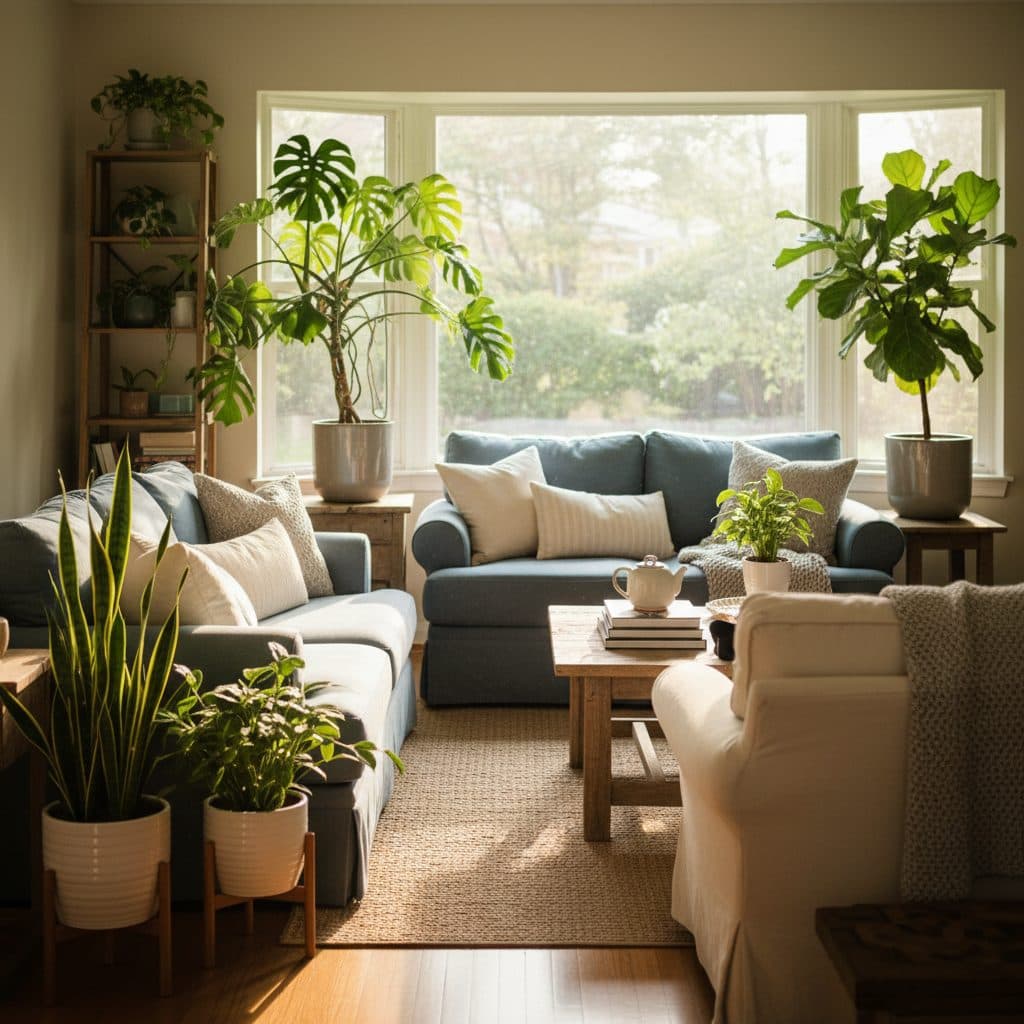
Key takeaways
- Assess your home’s light conditions—low, medium, or bright—before selecting any plants.
- Overwatering is a common beginner mistake; use a soil moisture meter to ensure the top 1-2 inches are dry before watering again.
- Maintain indoor humidity between 40% and 60% for most tropical houseplants, especially during dry winter months.
- Choose well-draining potting mix with perlite or coarse sand to prevent root rot.
- Regularly inspect plants for pests, treating early with neem oil at 1 to 2 tablespoons per gallon of water.
- Select resilient species like snake plants or ZZ plants if your indoor environment is consistently 60-70°F.
Quick answer: To choose houseplants for US homes thriving in 60-75°F, assess light conditions, use a soil moisture meter to prevent overwatering, and maintain 40-60% humidity. Select resilient species like snake plants or ZZ plants for these common indoor temperatures.
Bringing greenery indoors can transform any living space, from a small apartment in New York City to a sprawling home in rural Texas. For many in the United States, the average indoor temperature hovers between 68°F and 72°F, a range that suits a surprising number of resilient houseplant species. This guide is for the complete beginner, focusing on practical advice to help you choose plants that will thrive in typical US home environments.
Starting your indoor plant journey does not require a green thumb, but it does demand a basic understanding of a few key principles: light, water, and soil. We will cover how to select species appropriate for your specific indoor conditions, how to properly water them, and how to address common issues like pests, all grounded in real-world numbers and practical strategies for the average US household.
The appeal of indoor greenery
Integrating houseplants into your home offers more than just aesthetic appeal; it can create a more inviting and calming atmosphere. People often report that tending plants makes a room feel calmer, though the research on indoor plants and wellbeing is mixed. However, the initial enthusiasm can quickly wane if plants struggle due to unsuitable conditions or improper care. The average US home maintains an indoor temperature between 68°F and 72°F, with humidity often dropping to 30% or lower in winter, especially in drier regions like Arizona or Colorado.
understanding common challenges
One of the biggest hurdles for new plant parents is understanding the specific needs of each species. For instance, a tropical plant accustomed to 80% humidity in its native habitat will struggle in a home with 35% humidity. Overwatering is another common pitfall, and it kills more beginners' houseplants than any other single mistake. To avoid this, it helps to select plants that are forgiving of minor care lapses and well-suited to your home’s ambient conditions. Consider starting with species known for their resilience, such as the Snake Plant (Sansevieria trifasciata) or the ZZ Plant (Zamioculcas zamiifolia), which can tolerate a wide range of conditions, including lower light levels and less frequent watering, sometimes going 2-3 weeks between waterings.
- a living focal point in rooms that feel bare
- reduced stress and enhanced mood
- added aesthetic appeal to any room
- a connection to nature, even in urban settings
- a rewarding hobby with tangible results
Matching plants to your home’s light
Light is arguably the most critical factor for houseplant survival, influencing photosynthesis and overall plant health. Most US homes have varying light conditions, from bright, south-facing windows receiving 2,000+ foot-candles of light to dimly lit corners with less than 50 foot-candles. Understanding your home’s light profile is the first step in choosing the right plant. A south-facing window typically provides the most intense light, while north-facing windows offer consistent, indirect light, often around 100-200 foot-candles. East-facing windows get gentle morning sun, and west-facing windows receive strong afternoon light.
understanding light levels and plant needs
Plants are categorized by their light requirements: low, medium, and bright. Low-light plants, like the Pothos (Epipremnum aureum) or Peace Lily (Spathiphyllum), can thrive in areas receiving 50-150 foot-candles, often 5-10 feet from an east or west window. Medium-light plants, such as the Monstera deliciosa or the Prayer Plant (Maranta leuconeura), prefer 150-500 foot-candles, typically within 3-5 feet of a bright window. Bright-light plants, including many succulents and citrus trees, need 500+ foot-candles and often require direct sun for several hours daily. If natural light is insufficient, especially during shorter winter days in northern states like Michigan or Montana, a full-spectrum LED grow light on a timer can supply 12 to 14 hours of usable light per day; a reflective indoor grow tent around it simply keeps more of that light on the plants.
- Low light: Snake Plant, ZZ Plant, Pothos, Peace Lily — all four irritate the mouth and gut of cats and dogs if chewed, so site them out of reach in a pet household
- Medium light: Monstera, Philodendron, Prayer Plant, Spider Plant
- Bright light: Fiddle Leaf Fig, Bird of Paradise, Succulents, Cacti
- Direct sun: Citrus trees, Olive trees, specific desert cacti
The art of watering and humidity
Watering is often the most misunderstood aspect of houseplant care, leading to both overwatering and underwatering issues. Overwatering, which starves roots of oxygen, is the most common cause of houseplant failure, especially for beginners. The key is to water thoroughly when the plant needs it, rather than on a fixed schedule. For most plants, this means allowing the top 1-2 inches of soil to dry out completely between waterings. A 3-in-1 soil moisture meter can be an invaluable tool, providing a numerical reading of soil dampness from 1 (dry) to 10 (wet), helping you avoid guesswork.
maintaining ideal humidity levels
Many popular houseplants originate from tropical regions and thrive in higher humidity, ideally between 40% and 60%. In contrast, the average US home, particularly during winter months in colder climates like Minnesota or New England, can see humidity levels drop to 20-30%. Low humidity can cause brown leaf tips, stunted growth, and increased susceptibility to pests like spider mites. To increase humidity, you can group plants together, use a pebble tray with water, or invest in a small humidifier. Misting leaves can offer a temporary boost but is often insufficient for long-term humidity needs. Plants like ferns, calatheas, and orchids are particularly sensitive to low humidity and will show signs of distress quickly if levels drop below 40% for extended periods.
- Check soil moisture: Use a finger or meter to test the top 1-2 inches.
- Water thoroughly: Until water drains from the bottom of the pot.
- Empty saucers: Do not let plants sit in standing water for more than 30 minutes.
- Adjust for seasons: Plants need less water in winter due to slower growth.
- Increase humidity: Group plants, use pebble trays, or a humidifier.
Soil, nutrients, and repotting
The right potting mix provides essential nutrients, aeration, and moisture retention for your houseplants. Standard garden soil is too dense for pots and can lead to root rot; instead, opt for a well-draining potting mix specifically formulated for indoor plants. A good mix often contains a blend of peat moss or coco coir for moisture retention, perlite or coarse sand for drainage, and sometimes compost for nutrients. For succulents and cacti, a mix with 50% or more inorganic material like perlite or pumice is ideal to ensure rapid drainage, preventing issues in arid climates like Southern California.
when and how to repot
Houseplants typically need repotting every 1-2 years, or when they show signs of being root-bound—roots growing out of drainage holes or circling tightly at the bottom of the pot. Repotting into a pot that is only 1-2 inches larger in diameter gives the roots room to grow without overwhelming the plant with too much soil, which can retain excess moisture. When repotting, gently loosen any circling roots and add fresh potting mix. Fertilization is also important, especially during the active growing season (spring and summer). A balanced liquid fertilizer, diluted to half strength, applied every 2-4 weeks can provide the necessary nutrients. Avoid fertilizing in fall and winter when most plants are dormant, as this can lead to nutrient burn.
- Choose appropriate soil: Use a mix designed for houseplants, not garden soil.
- Ensure drainage: Potting mix should contain perlite or coarse sand for aeration.
- Repot when root-bound: Typically every 1-2 years into a pot 1-2 inches larger.
- Fertilize during growth: Use a balanced liquid fertilizer every 2-4 weeks in spring/summer.
- Avoid over-fertilizing: Do not fertilize dormant plants in fall and winter.
Common pests and simple solutions
Even the healthiest houseplants can occasionally attract pests. Catching pests early prevents infestations from spreading to other plants. Common houseplant pests include spider mites, aphids, mealybugs, and fungus gnats. Spider mites, tiny arachnids, often create fine webbing and cause tiny yellow or brown spots on leaves, especially in dry conditions below 40% humidity. Aphids are small, pear-shaped insects that cluster on new growth, while mealybugs appear as white, cottony masses in leaf axils. Fungus gnats, small flying insects, are usually a sign of consistently wet soil.
effective pest management strategies
Regular inspection, at least once a week, allows you to catch pests before they become a major problem. If you spot pests, isolate the affected plant immediately. For mild infestations, a strong spray of water can dislodge many pests. For more persistent issues, neem oil is an effective organic option, typically mixed at 1 to 2 tablespoons per gallon of water with a few drops of mild dish soap as an emulsifier. Apply it thoroughly to all leaf surfaces, including the undersides, every 5-7 days for 2-3 weeks. Alternatively, a homemade bug spray using rubbing alcohol (diluted 1:1 with water) can target specific pests like mealybugs. Always test any spray on a small, inconspicuous part of the plant first to ensure it doesn’t cause damage, especially on sensitive plants like ferns.
- Inspect regularly: Check plants weekly for any signs of pests.
- Isolate affected plants: Prevent spread to other healthy plants.
- Physical removal: Use a strong stream of water or wipe with a damp cloth.
- Neem oil spray: Apply at 1 to 2 tablespoons per gallon of water every 5-7 days for 2-3 weeks.
- Insecticidal soap: Effective for soft-bodied pests like aphids and mealybugs.
Optimal Humidity: Most tropical houseplants thrive in indoor humidity levels between 40% and 60%, significantly higher than the typical 20-30% found in many US homes during winter.
Watering Frequency: Overwatering kills more beginners' houseplants than anything else, so check soil dryness before watering.
Light Requirements: Low-light plants can survive on as little as 50-150 foot-candles, while bright-light species require 500+ foot-candles for optimal growth.
Frequently asked questions
How often should I water my houseplants?
Watering frequency depends on the plant species, pot size, and environmental conditions. A good rule of thumb is to check the top 1-2 inches of soil; if it feels dry, it’s time to water. For many common plants, this might be every 7-10 days, but always check the soil first to avoid overwatering.
What are the best low-light houseplants for a beginner?
For beginners with low-light conditions, excellent choices include the Snake Plant (Sansevieria), ZZ Plant (Zamioculcas zamiifolia), and Pothos (Epipremnum aureum). These plants can tolerate light levels as low as 50-150 foot-candles and are forgiving of inconsistent care, making them ideal for new growers in average US homes. All three are toxic to cats and dogs if chewed, so place them out of reach in a pet household.
How do I increase humidity for my tropical plants indoors?
To increase indoor humidity, especially in dry climates or during winter, you can group plants together, use a pebble tray filled with water, or employ a small room humidifier. Aim to maintain humidity levels between 40% and 60% for most tropical species, as many US homes can drop to 20-30% humidity.
When should I repot my houseplant?
You should repot your houseplant every 1-2 years, or when you notice signs of it being root-bound, such as roots growing out of the drainage holes or circling tightly within the pot. Choose a new pot that is only 1-2 inches larger in diameter than the current one to give roots space without excess soil.
What is the best way to deal with common houseplant pests?
For common pests like spider mites or mealybugs, early detection is crucial. Isolate the affected plant and use a strong spray of water to dislodge pests. For persistent issues, a neem oil solution at 1 to 2 tablespoons per gallon of water with a drop of soap, applied every 5-7 days for 2-3 weeks, is highly effective.