Key takeaways
A photorealistic image showing a vibrant organic garden with both short, bushy green bean plants in the foreground, heavy with pods, and tall pole bean plants climbing a wooden trellis in the background. A gardener's hand is reaching to harvest a pod, set against a backdrop of fertile soil and bright natural light.
From compact bush varieties to sky-high pole beans, green beans are a rewarding crop that brings abundant harvests with just a few key considerations. Choosing the right type, understanding soil needs, and mastering the picking rhythm are your secrets to a continuous supply from seed to frost.
- Direct-sow green beans only once the soil reaches 55 to 60°F; cold, wet soil rots the seed instead of sprouting it.
- Bush beans stand on their own and crop in a 2 to 3 week rush; pole beans climb 6+ feet and keep going until frost.
- Plant 1 inch deep, bush seed 2 to 4 inches apart, pole seed 6 inches apart at a sturdy trellis.
- Beans are legumes that fix their own nitrogen, so skip the nitrogen feed — too much grows leaves, not pods.
- Pick every 2 to 3 days while pods are young; frequent harvest is what keeps a plant setting more.
Green beans are the crop that turns a first-time grower into a gardener, because they go from seed to a steady pick in about 55 days with almost no fuss. The two mistakes that sink a bean patch are sowing into cold soil and feeding the plants like tomatoes — both easy to avoid once you know why beans behave the way they do.
This is a seed-to-harvest walkthrough: choosing bush or pole types, getting the soil warm enough to direct-sow, why beans make their own nitrogen, how to stagger bush plantings for an 8 week supply, and the picking rhythm that keeps pods coming. Nearly every step below comes back to two numbers — 60°F soil and a 2 to 3 day picking interval.
Bush or pole: pick the plant before the seed
The first decision shapes everything else, and it has nothing to do with flavor. Bush beans grow knee-high, need no support, and set most of their crop inside a 2 to 3 week window — ideal for a single big freeze-and-can session. Pole beans are vines that climb 6 feet or more and keep flowering and podding until frost, trading a slower start for a much longer haul. Both are the same species, the common bean, Phaseolus vulgaris, just with different growth habits bred in.
Yield per square foot favors pole types because they crop vertically over a long season, while bush types win on speed and zero hardware. Most bush varieties mature in 50 to 60 days and pole varieties in 60 to 70 days, so a row of each spreads your harvest across the whole summer.
Trellising the climbers
Pole beans need their support in the ground before you sow, not after the vines flop. A few structures that hold up to a season of growth:
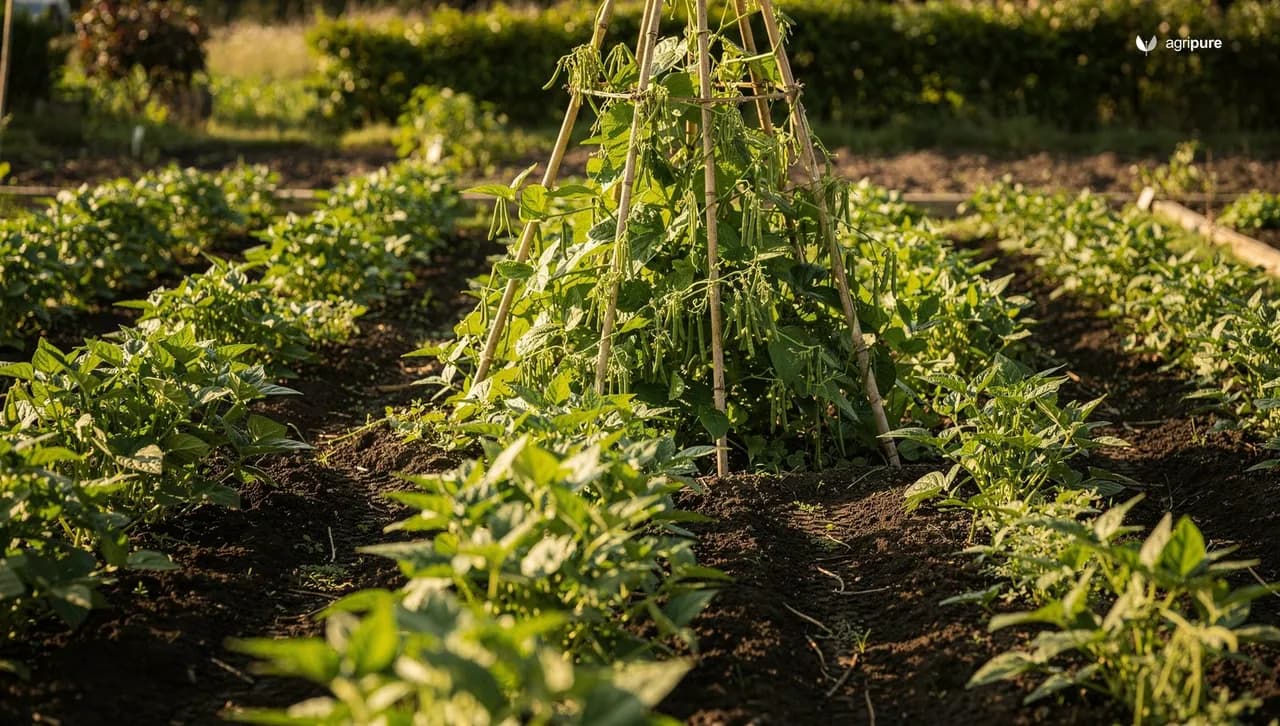
- Bamboo tripod or teepee: three to five 7 to 8 foot poles lashed at the top, seed 6 inches apart around each base.
- Cattle-panel arch or netting: a 5 foot wide span lets you pick from both sides and walk underneath.
- Single-string trellis: twine run from a top wire to each plant, the commercial method for tidy rows.
Set the support first. Beans grab on within days of emerging; a trellis added late means untangling vines by hand and snapping growing tips.
A bamboo teepee trellis covered in climbing pole bean vines with hanging green pods in a backyard vegetable garden.
Wait for warm soil, then direct-sow
Beans hate cold feet. Clemson Cooperative Extension is specific: do not plant before the soil is at least 60°F at the 4-inch depth, while the University of Georgia puts the floor for good germination at 55°F. Below that, the seed sits in damp ground and rots before it can sprout, which is why an early-April gamble so often ends with a bare row and a reseed in May.
Beans are also a poor transplant — the taproot resents disturbance — so they are direct-sown almost universally. Plant 1 inch deep, water once, and then leave the soil alone until you see loops of stem breaking the surface in 7 to 10 days. A cheap probe takes the guesswork out of timing; checking that the bed has truly warmed is exactly what soil-temperature patience teaches across every warm-season crop.
Spacing that pays off
Crowded beans mildew; thin beans waste space. The extension-tested numbers:
- Bush rows: seed 2 to 4 inches apart, rows 2 to 3 feet apart for airflow and picking room.
- Pole hills: 6 inches apart around each trellis leg, rows 3 feet apart.
- Depth: a consistent 1 inch — deeper in fast-draining sandy soil, shallower in heavy clay.
Why beans feed themselves
This is the step that trips up growers coming from tomatoes or corn. Green beans are legumes, and University of Georgia Extension states plainly that they don’t require a lot of fertilizer, which is why a 10-10-10 feeding routine backfires on them. The reason is biology: bean roots partner with Rhizobium bacteria that pull nitrogen straight out of the air. A peer-reviewed review in the journal Plants describes this symbiotic nitrogen fixation as a genuinely valuable source of nitrogen for the plant and the soil.
Penn State Extension puts the practical upshot in one line: the nitrogen the bean fixes is enough to feed the bean plant through the season. Pile on a high-nitrogen feed and you get a lush, dark-green plant with few pods — all leaf, no dinner. The contrast with a heavy feeder like sweet corn is total: corn wants 1 to 2 nitrogen sidedressings, beans want none.
Inoculant, not fertilizer. If beans are new to a bed, dust the seed with a pinch of legume inoculant (rhizobia bacteria) so the partnership starts on day one. It costs a few dollars and lasts the whole row.
Bush vs pole at a glance
The two habits ask for different gear, timing, and harvest plans. This table lines them up side by side so you can match the type to your season and the space you have.
Trait | Bush beans | Pole beans |
|---|---|---|
Support | None needed | Trellis 6 ft or taller |
Days to maturity | 50 to 60 days | 60 to 70 days |
Harvest window | Concentrated 2 to 3 weeks | Continuous until frost |
Seed spacing | 2 to 4 in apart | 6 in apart at trellis |
Best for | Canning, succession sowing | Small footprint, fresh eating |
Nitrogen feed | None (fixes its own) | None (fixes its own) |
Across both habits the constants hold: 1 inch deep, warm soil, and no nitrogen feed. The only real fork is whether you want one big harvest or a steady trickle.
Succession sowing for an 8 week supply
Bush beans have one flaw: they crop hard, then quit. Because most of the harvest lands in a 2 to 3 week window, a single sowing gives you a glut and then nothing. The fix is succession. Clemson recommends sowing every 10 to 14 days, and the University of Minnesota goes further — bush beans planted every two weeks until early August for production into fall.
Three short bush rows sown 2 weeks apart will out-supply one long row sown all at once, because you are spreading the same seed across a longer calendar. Pole beans solve this differently: a single sowing produces for months, so they need no succession at all. Many growers run both — a few pole teepees for the long season plus staggered bush rows raised at standing height in a raised bed for the canning batches.
A simple staggered plan
- Sowing 1: first bush row at 60°F soil, usually 1 to 2 weeks after last frost.
- Sowing 2 and 3: two more rows at 14-day gaps, the last by early August in most zones.
- Pole row: a single sowing at the same first date, left to run until frost.
Harvest often to keep pods coming
Frequent picking is not tidiness — it is the lever that controls yield. Once a pod matures and its seeds swell, the plant reads its job as done and slows new flowers. The University of Georgia is direct: continue to harvest beans as they become ready to keep the plant in production. In peak season that means walking the row every 2 to 3 days, picking pods while they are pencil-thin and snap cleanly.
Pole beans reward this most: Penn State notes they keep producing until the fall frost as long as the vine grows and you keep stripping the pods. Miss a few days and you find leathery, stringy pods and a stalled plant. Pick young, pick often, and a 10-foot row of pole beans can feed a household for two months straight.
Pick dry, hold the vine. Harvest after the dew burns off — wet bean foliage spreads disease on touch — and pinch each pod off with two hands so you don’t tear the brittle stem.
A wooden bowl heaped with freshly picked slender green bean pods resting on the soil beside a leafy bean plant.
Conclusion
Growing green beans comes down to respecting two things the plant tells you. Wait for 55 to 60°F soil and direct-sow 1 inch deep; let the roots make their own nitrogen instead of feeding them; trellis the pole types before they climb; and walk the row every 2 to 3 days with a bowl. Do that and a few dollars of seed turns into eight weeks of pods.
Frequently asked questions
What soil temperature do green beans need to germinate?
Green beans need warm soil — at least 55°F for good germination, and Clemson Extension advises waiting until the soil reaches 60°F at the 4-inch depth. Sown into cold, wet ground the seed usually rots before it sprouts.
Should I grow bush or pole green beans?
Bush beans need no support and crop in a concentrated 2 to 3 week window in 50 to 60 days, which suits canning. Pole beans climb 6 feet or more, mature in 60 to 70 days, and keep producing until frost in a small footprint.
Do green beans need fertilizer?
Not much at all. Green beans are legumes that fix their own nitrogen through rhizobia bacteria on their roots, so University of Georgia Extension says they do not require a lot of fertilizer. A high-nitrogen feed such as a 10-10-10 grows leaves at the expense of pods.
How often should I pick green beans?
Pick every 2 to 3 days while pods are young and pencil-thin. Continued harvesting signals the plant to keep flowering, so frequent picking is what keeps a bean plant producing through the season.
How do I get green beans all summer?
Sow bush beans in succession every 10 to 14 days, up to early August in most zones, so each short row crops as the last one finishes. A single pole-bean sowing produces continuously until fall frost.
References
- Clemson Cooperative Extension — Bush & Pole-Type Snap Beans
- University of Georgia Cooperative Extension — Home Garden Green Beans
- Penn State Extension — Growing Snap Beans in the Home Garden
- University of Minnesota Extension — Growing beans in home gardens
- Plants (Basel) — Common Bean Non-Nodulating Mutants Altered in Rhizobial Infection