Key takeaways
- Shade cloth can extend cool-season green harvests by several weeks into summer, especially in regions with daytime temperatures consistently above 80°F.
- A 30% to 50% shade cloth is generally effective for lettuce and spinach, reducing leaf temperatures and helping to prevent bolting.
- Proper irrigation and soil moisture management are critical under shade. While shade reduces evaporation, you must still monitor soil moisture carefully to ensure plants have enough water without becoming waterlogged.
- Integrating shade structures with natural building materials or existing off-grid infrastructure, like solar-powered fans, improves homestead resilience.
- Monitor plant health closely for signs of bolting or insufficient light, particularly when summer temperatures regularly exceed 85°F for multiple days.
Quick answer: To extend lettuce and spinach harvests into summer in USDA zones 6-8, use 30-50% shade cloth to reduce heat and light intensity. This prevents bolting and stress, allowing plants to thrive in warmer conditions.
In the Mid-Atlantic region, where summer temperatures often climb past 85°F by late June, maintaining a steady supply of fresh cool-season greens like lettuce and spinach can be a significant challenge. These plants, which thrive in cooler weather between 50°F and 75°F, quickly bolt and turn bitter when exposed to intense summer sun and heat. For many homesteaders in USDA zones 6 through 8, the harvest window for these crops typically closes by early July, leaving a gap in fresh produce until autumn.
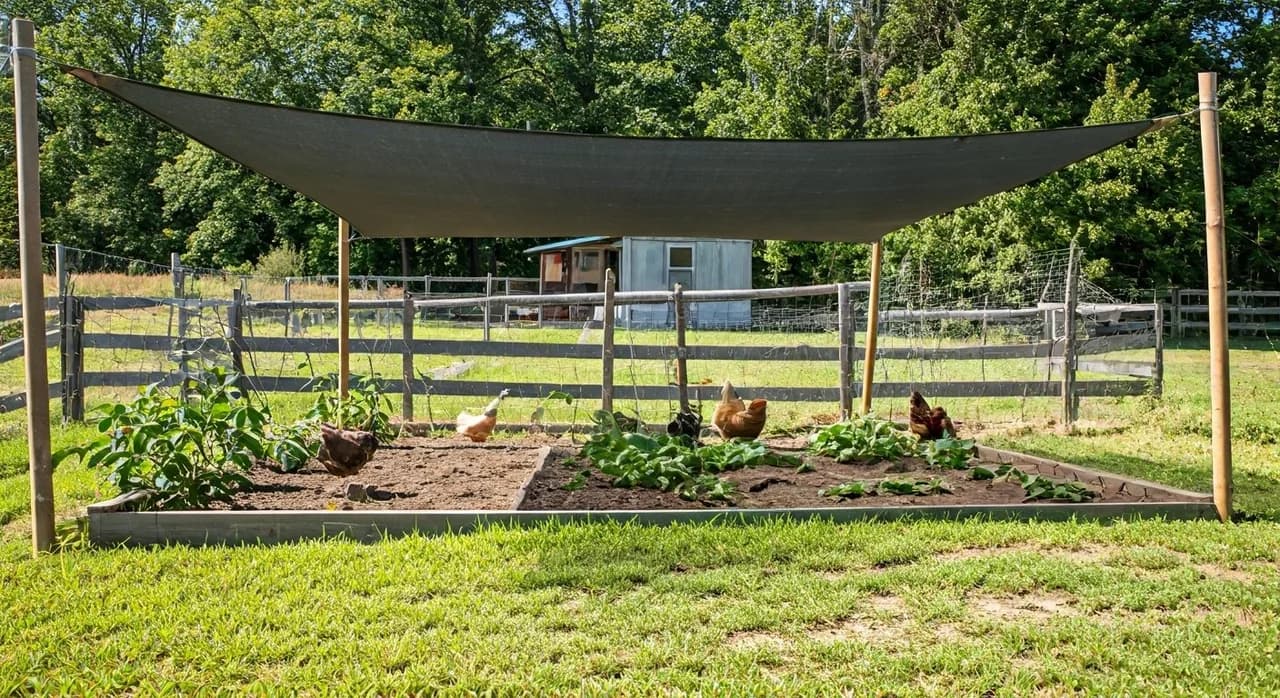
Hanging shade cloth stretches the harvest window for cool-season greens by four to six weeks or longer. Cutting excess sunlight and cooling the bed lets lettuce and spinach keep sizing up into early summer and yields more than uncovered rows so fresh greens stay on the table through warm months.
Understanding the challenge of summer heat for cool-season greens
Cool-season greens are specifically adapted to thrive in moderate temperatures, typically between 50°F and 75°F. When ambient temperatures consistently rise above 80°F, or soil temperatures exceed 70°F, these plants experience significant stress. For instance, ‘Buttercrunch’ lettuce and ‘Bloomsdale Long Standing’ spinach, popular varieties for homestead gardens, will rapidly initiate flowering, a process known as bolting. This physiological response is triggered by longer days and higher temperatures, signaling the plant to reproduce before adverse conditions worsen, leading to a bitter taste and tough texture in the leaves, rendering them unpalatable.
Intense sunlight, especially during peak summer hours from 11:00 AM to 4:00 PM, contributes to this stress by increasing leaf surface temperatures above ambient air temperatures. This excessive heat can also lead to leaf scorch, reduced photosynthesis, and increased water demand, often requiring additional water per week to prevent wilting. Research on cool-season turfgrasses, which share similar temperature sensitivities, shows that even partial shade can improve their persistence and health when temperatures exceed 80°F, indicating a broader principle for cool-season plants [1]. Without intervention, yields can drop significantly, and the quality of the remaining harvest diminishes significantly, making shade cloth a practical solution for maintaining productivity.
Signs of heat stress in your greens
- Rapid elongation of the central stem, often growing 6-12 inches in a few days.
- Leaves becoming smaller, thicker, and developing a noticeably bitter flavor profile.
- Premature flowering, with small white or yellow blossoms appearing on the central stalk.
- Yellowing or browning of leaf edges, indicating scorch from excessive sun exposure.
- Overall stunted growth, despite adequate water and nutrient availability, with yields dropping by 25% or more.
Selecting the right shade cloth percentage and material
Choosing the correct shade cloth percentage matters for success, as too much shade can hinder growth, while too little will not provide adequate protection. For most cool-season greens like lettuce, spinach, arugula, and Swiss chard, a shade cloth with a 30% to 50% shade factor is generally ideal. This range allows sufficient light for photosynthesis while significantly reducing heat and light intensity. For example, a 30% shade cloth can reduce ambient temperatures and leaf temperatures, which is often enough for USDA zones 6 and 7. In hotter climates, such as USDA zone 8 or 9, where summer days regularly exceed 90°F, a 40% or 50% shade cloth might be more appropriate to prevent bolting and maintain quality, extending harvests by six weeks.
The material of the shade cloth also matters. Knitted shade cloths, typically made from high-density polyethylene (HDPE), are durable, resistant to tearing, and allow for good airflow, making them a popular choice for homesteaders. They often come with a UV treatment that extends their lifespan to 5-10 years, even under intense sun. Woven shade cloths, while also effective, tend to be heavier and can sometimes restrict airflow more, which might be a concern in very humid regions. The color of the shade cloth can also play a minor role; black shade cloth is common and effective, while white or reflective options can further reduce heat by reflecting more sunlight, potentially lowering temperatures by an additional 2-3°F. Understanding the light response of various cool-season plants, as observed in studies on turfgrasses, confirms that different species have varying optimal light intensities [2].
Factors for shade cloth selection
- Shade percentage: Match to your local climate and specific crop needs, typically 30-50% for greens.
- Material durability: Opt for knitted HDPE for longevity, often lasting 5-10 years.
- UV resistance: Ensure the cloth is UV-stabilized to prevent degradation from sun exposure.
- Size and dimensions: Measure your growing area accurately, adding 1-2 feet on each side for overhang.
- Color: Black is standard, but white or reflective options can offer additional cooling benefits of 2-3°F.
Designing and building effective shade structures
Simple designs can be highly functional for a shade structure and still fit an off-grid homestead aesthetic. A basic hoop house design, constructed from PVC pipes or electrical conduit bent into arches, is a popular and cost-effective option. For a typical 4 ft by 8 ft raised bed, you might use three to four 10 ft long, 1/2 inch PVC pipes, spaced 3-4 feet apart, anchored to the bed frame or ground with rebar. This design can support a shade cloth canopy 5-6 ft high, allowing for easy access and good air circulation. For a more permanent solution, consider a structure built from locally sourced timber or reclaimed wood, which aligns well with natural construction principles and can last for many years with proper maintenance.
Integrating these structures with other off-grid systems can further improve their utility. For instance, a small solar panel, like those discussed for solar for tiny homescould power a small fan to improve air circulation under the shade cloth, especially in humid climates where fungal issues can arise. Rainwater harvesting from the shade structure’s roof, if designed with a slight pitch, can collect useful irrigation water. The USDA Natural Resources Conservation Service notes that rainwater harvesting can significantly reduce reliance on external water sources [5]. A shade structure can be designed to collect rainwater, providing a substantial supplement for your greens. For more on self-sufficient living, see our resources on off-grid living.
Materials for a simple hoop shade structure
- PVC pipes (1/2 or 3/4 inch): Five to six 10-foot sections for a 4 ft x 8 ft bed.
- Rebar (1/2 inch): Eight 18-inch pieces to anchor the hoops into the ground.
- Shade cloth: Sized to cover the structure with a 1-2 foot overhang on all sides.
- Clamps or clips: To secure the shade cloth to the PVC frame, typically 10-15 clamps.
- Zip ties or twine: For additional securing points and structural reinforcement.
Cultivation practices under shade
Even with a shade structure in place, specific cultivation practices are essential to ensure your cool-season greens thrive through the summer. Consistent moisture is paramount; shaded plants still transpire, and while the shade reduces direct evaporation from the soil surface, plants may still require 1.5 inches of water per week, sometimes more in sandy soils. Drip irrigation or soaker hoses are highly effective under shade, delivering water directly to the root zone and minimizing water loss, conserving more water than overhead sprinklers. Applying a 2-3 inch layer of organic mulch, such as straw or wood chips, will further help retain soil moisture, regulate soil temperature, and suppress weeds, reducing the need for frequent watering.
Soil health is another critical factor. Enriching your soil with 2-3 inches of compost before planting provides a steady supply of nutrients and improves soil structure, which improves its water-holding capacity. Regular foliar feeding with a diluted liquid seaweed or fish emulsion every two to three weeks can also provide a boost of micronutrients, supporting plant vigor under challenging conditions. Pest management under shade might differ slightly; while some pests, like aphids, can be less prevalent due to reduced heat, others, such as slugs and snails, can thrive in the consistently moist, shaded environment. Regular inspection and manual removal, or the use of organic slug baits, can keep populations in check. For detailed guidance on specific crop needs, resources like how to grow spinach offer useful insights into optimal timing and care, which can be adapted for shaded conditions.
Key care tips for shaded greens
- Consistent watering: Provide 1.5 inches of water per week through drip irrigation for efficiency.
- Mulching: Apply a 2-3 inch layer of organic mulch to retain soil moisture and cool the soil by 5-10°F.
- Soil enrichment: Incorporate 2-3 inches of compost annually to improve soil structure and nutrient availability.
- Nutrient supplementation: Use diluted liquid fertilizers regularly for a micronutrient boost.
- Pest monitoring: Regularly inspect plants for slugs, snails, and other pests that thrive in moist, shaded conditions.
Shade cloth effectiveness for cool-season greens
Shade Percentage | Typical Use | Impact on Greens |
|---|---|---|
30% | Mild summer heat (USDA zones 6-7), early season extension. | Reduces leaf temperature by 5-7°F, allows 70% light, good for lettuce. |
50% | Moderate to hot summers (USDA zones 7-8), longer season extension. | Reduces leaf temperature by 10-12°F, allows 50% light, effective for spinach and chard. |
70% | Extreme heat (USDA zones 9+), propagation, or very sensitive plants. | Reduces leaf temperature by 15-20°F, allows 30% light, generally too much for most greens. |
Temperature Reduction: A 30-50% shade cloth can reduce leaf surface temperatures by 10-15°F, significantly mitigating heat stress for cool-season greens.
Water Savings: Using drip irrigation under shade cloth can reduce water usage by up to 50% compared to overhead watering, while mulching adds another 10-15% in moisture retention.
References
- Effects of Shade on the Persistence of Cool Season Grasses to Form Turfgrass (2007).
- Response To Light Intensity of Sun And Shade On Two Cool Season Turfgrass (2021).
- Synteny and Comparative Genomics between Model and Cool Season Grain Legumes (2011).
- Madden-Julian Oscillation Relationships with Cool Season Cyclogenesis, Daily Precipitation, and Cool Season Severe Weather Frequencies in the Gulf of Mexico Reg (2023).
- USDA Natural Resources Conservation Service (2024).
- EPA — Soak Up the Rain (2024).