Key takeaways
- Common purslane (Portulaca oleracea) is a widespread edible succulent found across US USDA zones 3-10.
- It has an exceptional omega-3 to omega-6 fatty acid ratio, exceptionally high, making it a highly nutritious wild edible [2].
- Careful identification is critical to distinguish it from toxic look-alikes like horse purslane (Trianthema portulacastrum) [1].
- Harvest purslane sustainably by snipping stems 1 to 2 inches above the ground, allowing for continuous regrowth and multiple harvests [2].
- Its mild, slightly tangy flavor makes it versatile for raw salads, sautéed dishes, soups, and even pesto.
- Purslane is easy to cultivate in gardens, thriving in full sun with minimal care and providing harvests for 3 to 4 months.
Quick answer: Purslane (Portulaca oleracea
) is a widespread edible succulent found across US USDA zones 3-10, notable for its exceptional omega-3 fatty acid content, potentially that is remarkably high. It offers significant nutritional value, including vitamins, minerals, and antioxidants, making it a useful wild edible.
Across the United States, from the sunny streets of Phoenix, Arizona, to the humid farmlands of central Florida, a succulent plant often dismissed as a common weed thrives in plain sight. This plant, purslane (Portulaca oleracea), is more than a garden nuisance. It is a notable source of omega-3 fatty acids, a nutrient often scarce in the average American diet. Many growers and home gardeners are surprised to learn that this resilient annual can boast an omega-3 to omega-6 ratio that is remarkably high in some varieties, a figure that rivals many fish oils [2].
For centuries, people around the world have recognized its value, with the term ‘purslane’ appearing in English texts as early as the 13th century [3]. Despite its long history of use, this edible plant remains largely overlooked in modern US cuisine. Identifying and safely harvesting purslane can add a useful, free, and readily available food source to your table, growing robustly even in USDA zone 3 and thriving through zone 10 [5].
What is purslane? identification and distribution
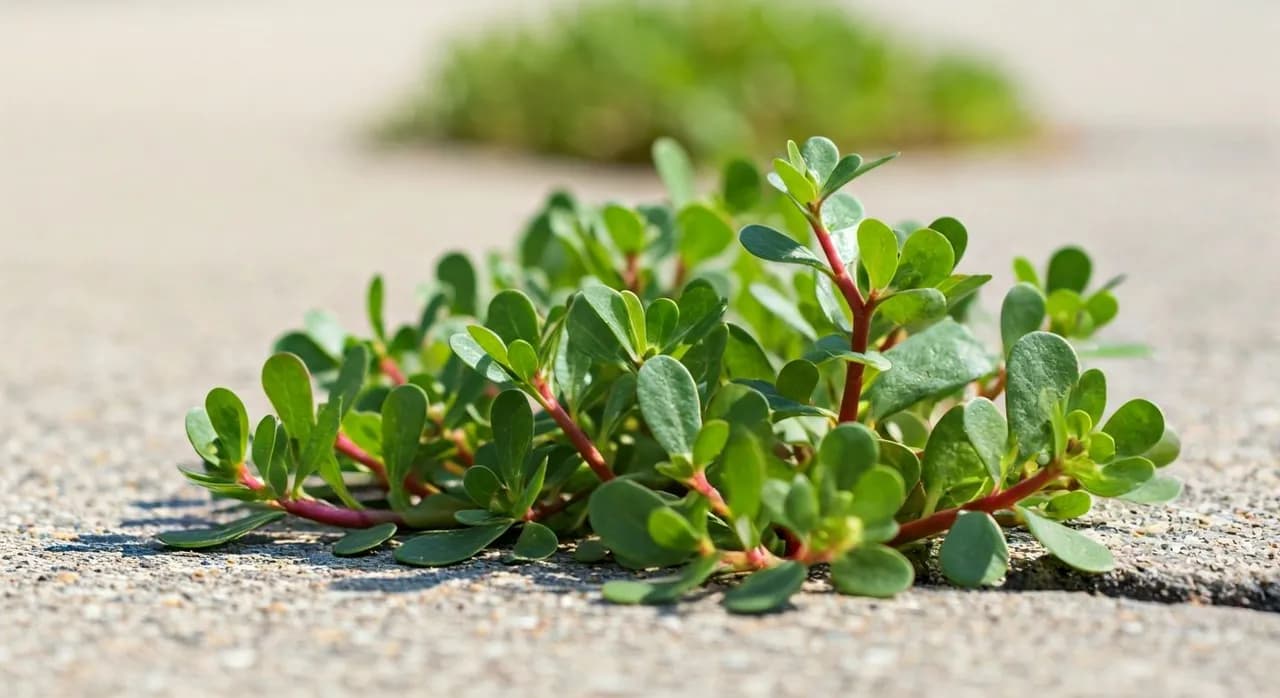
Common purslane (Portulaca oleracea) is an annual succulent plant found growing prostrate along the ground, often in disturbed soils like garden beds, cracks in sidewalks, and agricultural fields across the United States [1, 4]. Its distinctive appearance makes it relatively easy to identify. The plant features thick, reddish stems that can spread up to 2 feet wide, and small, paddle-shaped, fleshy leaves, typically bright green [2]. These leaves are arranged alternately along the stem, with clusters at the tips. Tiny yellow flowers, usually less than one-quarter inch across, open only for a few hours on sunny mornings [2].
Distinguishing common purslane from look-alikes
While common purslane is a beneficial edible, it is critical to differentiate it from similar-looking plants. Horse purslane (Trianthema portulacastrum) is considered toxic and has thicker, more rounded leaves with a less reddish stem [1]. A main difference is the presence of a small, thin membrane or stipule at the base of each leaf on horse purslane, absent in common purslane [3]. Always confirm identification before consuming any wild plant. For more on identification, see our article Purslane plant: how to identify the omega-3 weed and tell it from its toxic twin.
Common purslane thrives in warm climates and can tolerate poor soil conditions, making it a persistent presence in many US agricultural settings. In states like Louisiana, it can reduce sugarcane yields by 10% to 30% if not properly managed, showing its vigorous growth [3]. It is a member of the Portulacaceae family, a group known for its succulent characteristics [4].
- Thick, reddish stems, spreading up to 2 feet.
- Small, paddle-shaped, fleshy green leaves.
- Tiny yellow flowers, less than 0.25 in, opening briefly.
- No stipules at the base of leaves.
- Grows prostrate, typically 2 to 6 inches tall.
Nutritional profile and health benefits
Common purslane is especially high in omega-3 fatty acids. This plant gives an omega-3 to omega-6 ratio that can be that is remarkably high in some varieties, a stark contrast to the typical Western diet which often has a ratio closer to 1:15 or 1:20 [2]. Omega-3s are essential fatty acids that the human body cannot produce, playing critical roles in heart health, brain function, and reducing inflammation. Purslane also provides significant amounts of vitamins and minerals, making it a useful addition to any diet.
Key nutrients in purslane
A 100-gram serving of fresh purslane contains approximately 1.3 grams of protein, 3.4 grams of carbohydrates, and only 16 calories, making it a low-calorie, nutrient-dense food [2]. It is an excellent source of alpha-linolenic acid (ALA), a plant-based omega-3. Also, it is rich in vitamins A, C, and E, as well as several B-complex vitamins. Minerals like magnesium, calcium, potassium, and iron are also present in notable quantities. For instance, it is a good source of vitamin C.
The plant's high antioxidant content, including beta-carotene and glutathione, may protect cells from oxidative damage. Regular consumption of purslane, whether foraged from a backyard in USDA zone 7 or cultivated in a container, can support overall well-being. Its mild, slightly tart, and peppery flavor works in salads, stir-fries, and soups.
- High omega-3 fatty acid content, up to 30:1 ratio.
- Rich in vitamins A, C, and E, and B-complex vitamins.
- Good source of minerals: magnesium, calcium, potassium, iron.
- Low in calories, approximately 16 calories per 100 grams.
- Contains beneficial antioxidants like beta-carotene.
Foraging and harvesting purslane safely
Foraging for purslane is a rewarding activity, especially given its widespread presence across the US, from urban cracks in New York City pavements to rural fields in Nebraska. The best time to harvest purslane is in the morning after the dew has dried, but before the full heat of the day. This timing ensures the leaves are turgid and flavorful. Look for plants with bright green leaves and plump, reddish stems, typically growing 2 to 6 inches tall and spreading outwards [2]. Avoid any plants showing signs of wilting, discoloration, or pest damage.
Sustainable harvesting practices
When harvesting, use a clean pair of scissors or a knife to snip off the stems about 1 to 2 inches above the ground. This method encourages the plant to regrow, allowing for multiple harvests throughout the growing season, which typically runs from late spring through early fall in most temperate USDA zones, like zone 6. Always leave a portion of the plant intact to ensure it can continue to produce seeds and sustain its population. Avoid harvesting from areas that may have been treated with pesticides or herbicides, such as roadsides or conventionally farmed fields. A good rule of thumb is to forage at least 10 feet away from roads and known contamination sources.
After harvesting, purslane can be stored in a plastic bag in the refrigerator for up to one week, similar to other leafy greens. Its succulent nature helps it retain moisture and freshness for longer than many other wild edibles. Before consumption, wash the purslane thoroughly under cold running water to remove any dirt or small insects. For those new to wild edibles, our foraging for beginners: identifying common wild edibles safely article offers essential guidance for safe and responsible harvesting.
- Harvest in the morning after dew dries.
- Look for healthy green leaves and plump, reddish stems.
- Snip stems 1 to 2 inches above the ground for regrowth.
- Avoid areas treated with pesticides or herbicides.
- Store in the refrigerator for up to one week.
Culinary uses and simple recipes
The mild, slightly lemony, and peppery flavor of purslane makes it a versatile ingredient in the kitchen, adding a unique crunch and nutritional boost to a variety of dishes. Its succulent texture holds up well, whether eaten raw or lightly cooked. In many parts of the world, including the Mediterranean and parts of Asia, purslane has been a staple for centuries, incorporated into salads, soups, and stews. For instance, in Greece, it is often added to traditional salads with feta cheese and tomatoes, providing a fresh, tangy counterpoint.
Simple ways to enjoy purslane
One of the simplest ways to enjoy purslane is raw in salads. Just wash and chop the stems and leaves, then toss them with other greens, vegetables, and a light vinaigrette. The crisp texture and subtle tang complement a wide range of ingredients. You can also add chopped purslane to sandwiches or wraps for an extra layer of flavor and crunch. For a cooked application, lightly sauté purslane with garlic and olive oil for about 2 minutes, or add it to scrambled eggs or omelets just before they finish cooking. Its mucilaginous quality can also act as a thickener in soups and stews, similar to okra, especially when added during the last 5 to 10 minutes of simmering.
Consider making a purslane pesto by blending it with nuts, garlic, parmesan cheese, and olive oil, a fresh alternative to traditional basil pesto. This can be stored in the refrigerator for up to 5 days. For those exploring other wild edibles, consider how purslane’s crispness might pair with the tartness of small-leaved wild grape or the unique texture of hedge caper. It works as a fresh side dish in California or a hearty addition in a Midwest stew.
- Add raw to salads for crunch and tang.
- Incorporate into sandwiches and wraps.
- Lightly sauté with garlic and olive oil.
- Use as a thickener in soups or stews.
- Blend into a fresh pesto with nuts and cheese.
Cultivating purslane in your garden
While many encounter purslane as a wild edible, it is also remarkably easy to cultivate, making it a reliable addition to any home garden, especially for those in warmer USDA zones like zone 8. Its adaptability to various soil types and drought tolerance means it requires minimal care once established. You can start purslane from seeds, which are tiny and numerous, or by transplanting cuttings from wild plants. Seeds can be sown directly into the garden bed after the last frost, typically when soil temperatures reach above 60°F. Plant them shallowly, about one-quarter inch deep, and space them 6 to 12 inches apart to allow for spreading.
Care and harvesting of cultivated purslane
Purslane prefers full sun, requiring at least 6 hours of direct sunlight per day for optimal growth and flavor development. While it tolerates dry conditions, consistent moisture will result in more tender and succulent leaves. Water deeply once a week, especially during dry spells. Fertilization is generally not necessary, as purslane thrives even in nutrient-poor soils. Begin harvesting when plants are about 4 to 6 inches tall, typically 30 to 45 days after planting. Similar to wild harvesting, snip stems 1 to 2 inches above the ground to encourage continuous regrowth, allowing for several harvests over a growing season, which can extend for 3 to 4 months in many US regions.
If you’re concerned about purslane spreading too vigorously, especially in a raised bed or container, you can easily manage its growth. Simply pull up unwanted plants before they go to seed, as each plant can produce thousands of tiny seeds that remain viable in the soil for years. This ease of cultivation makes it a practical choice for urban gardeners in places like downtown Los Angeles, or for those seeking resilient crops in drier climates. For more on plant care and identification, remember to check out our Purslane plant: how to identify the omega-3 weed and tell it from its toxic twin article.
- Sow seeds one-quarter inch deep after last frost.
- Space plants 6 to 12 inches apart.
- Provide at least 6 hours of direct sunlight daily.
- Water deeply once a week during dry spells.
- Harvest when 4 to 6 inches tall, 30 to 45 days after planting.
Main differences between common purslane and horse purslane
Feature | Common Purslane (Portulaca oleracea) | Horse Purslane (Trianthema portulacastrum) |
|---|---|---|
Stems | Thick, round, reddish, smooth | Thicker, often paler green or white, sometimes hairy |
Leaves | Fleshy, paddle-shaped, bright green, no stipules | Thicker, more rounded, often with a small, papery stipule at the base |
Flowers | Tiny (less than 0.25 in), yellow, open briefly in sun | Small, pink to purple, often inconspicuous, found in leaf axils |
Growth habit | Prostrate, spreading low to the ground (up to 2 ft wide) | More upright or sprawling, can reach 1 foot tall |
Edibility | Edible, high in omega-3s | Toxic, not for consumption |
Distribution | Widespread across US, USDA zones 3-10 | Common in warmer US regions, often in disturbed areas |
Omega-3 Ratio: Common purslane can have an omega-3 to omega-6 ratio as high as 30:1, significantly higher than most plants [2].
Rapid Growth: In optimal conditions, purslane can spread up to 2 feet wide and regrow quickly after being cut 1 inch above the ground [2].