Key takeaways
- Source raw beef suet (dense kidney fat) for the purest, mildest, snow-white cooking and cosmetic tallow.
- Grind or finely dice chilled fat to maximize surface area and ensure fast, even fat release without scorching.
- Wet rendering (adding water and salt to the pot) keeps temperatures below 212°F (100°C), preventing fat browning and odors.
- Strain hot liquid fat through stainless steel mesh and three layers of 100 percent cotton cheesecloth to remove the cracklings and fine sediment.
- Properly rendered, moisture-free tallow stores safely at room temperature for a year, or in cold storage for up to three years.
Quick answer: Rendering tallow is the traditional culinary process of slowly heating raw beef fat (especially suet from around the kidneys) to melt the triglycerides, separate out moisture, and filter away connective tissue (cracklings). The resulting purified fat (called tallow) cools into a shelf-stable, snow-white solid. Homesteaders use rendered tallow as a nutrient-dense, high-smoke-point cooking fat (400°F / 204°C), a natural moisturizer for skin balms, and a primary base for traditional soap making.
For generations, animal fats were the cornerstone of traditional homestead kitchens and utility pantries. Today, home cooks and self-reliant growers are rediscovering beef tallow as a clean, unhydrogenated alternative to industrial seed and vegetable oils.
Raw beef fat contains water, blood, and connective tissue that spoil rapidly if left unprocessed. Rendering uses gentle heat to release the pure liquid lipids while evaporating water and cooking connective tissue into crispy cracklings.
Understanding the difference between kidney suet and trim fat, choosing between wet and dry rendering techniques, and filtering out micro-sediment ensures you produce odorless, pure white tallow that keeps in the pantry for years.
Suet vs trim fat: selecting the right raw material
Not all beef fat produces the same quality of finished tallow.
+------------------------+-----------------------------------+-----------------------------------+
| Fat Type               | Anatomical Origin                 | Best Finished Uses                |
+------------------------+-----------------------------------+-----------------------------------+
| Beef Suet (Kidney Fat) | Dense fat surrounding kidneys     | Baking, soaps, pemmican, balms    |
| Muscle Trim Fat        | Subcutaneous fat along steaks     | Savory frying, roasting, searing  |
| Brisket / Rib Trim     | Soft intermuscular fat            | High-heat frying, burger griddling|
+------------------------+-----------------------------------+-----------------------------------+
Suet (dense kidney fat) is firm and crumbly at room temperature. It contains high concentrations of saturated stearic acid, making it the only choice for shelf-stable pemmican (softer trim fat oxidises quickly and spoils preserved meat). It contains higher concentrations of saturated stearic acid, yielding a firm, snow-white tallow with a very mild, neutral aroma. Trim fat from steaks or brisket is softer, contains more connective tissue, and retains a stronger savory beef flavor ideal for frying potatoes but less desirable for pastries or skincare.
If raising your own homestead livestock as covered in our guide on miniature cattle, saving and processing all suet during harvest is a fundamental principle of whole-animal utilization.
Wet vs dry rendering: comparing methods
Homesteaders use two primary techniques to render fat on the stove, in a slow cooker, or over a wood cookstove.
+------------------------+-----------------------------------+-----------------------------------+
| Feature                | Wet Rendering Method              | Dry Rendering Method              |
+------------------------+-----------------------------------+-----------------------------------+
| Water Added to Pot     | Yes (1/2 to 1 cup water + salt)   | No (fat placed directly in pot)   |
| Temperature Ceiling    | Capped at 212°F (100°C) until dry | Can exceed 250°F+ (risk scorch)   |
| Final Product Color    | Pure snow-white                   | Off-white to light ivory          |
| Aroma Profile          | Very mild, neutral                | Light roasted beef aroma          |
| Processing Time        | Slightly longer (boils off water) | Faster fat extraction             |
+------------------------+-----------------------------------+-----------------------------------+
Why wet rendering produces superior tallow
Adding water creates a thermal buffer at the bottom of the pot. Because liquid water cannot exceed 212°F (100°C) at standard atmospheric pressure, the fat is shielded from hot spots that scorch tissue and impart a brown tint. The added salt helps draw impurities and blood into the water phase, leaving the fat exceptionally clean.
+-------------------------------------------------------------------+
|                 WET RENDERING PROCESS OVERVIEW                    |
+-------------------------------------------------------------------+
| 1. Chill & Dice Suet     --> Finely chop or grind cold fat        |
| 2. Simmer on Low Heat    --> Add water; cook gently (2 to 4 hours)|
| 3. Cracklings Float/Sink --> Water evaporates; fat turns clear    |
| 4. Multi-Layer Strain    --> Filter through cotton cheesecloth    |
| 5. Cool & Solidify       --> Fat hardens into white block         |
+-------------------------------------------------------------------+
Step-by-step wet rendering protocol
Follow this proven kitchen workflow to render clean, odorless tallow at home.
Step 1: prep and dice the fat
Keep raw suet refrigerated and render it within a day or two of collection, or freeze it until you are ready. Chill suet in the freezer for 30 minutes until very firm before cutting; cold fat cuts cleanly without turning greasy. Use a sharp chef's knife to dice the fat into small 1/4-inch cubes, or run it through a coarse meat grinder plate. The smaller the pieces, the faster and more completely the fat will render out.
Step 2: low and slow cooking
Place the diced fat into a heavy-bottomed stainless steel stockpot, cast iron Dutch oven, or electric slow cooker set to LOW. Add 1/2 cup of water and 1 teaspoon of non-iodized salt per pound of fat. Cover with the lid for the first hour to help steam and soften the pieces.
Step 3: evaporation and separation
After one hour, remove the lid. The fat will slowly melt into a clear, golden liquid as steam rises. Stir every 20 minutes to prevent pieces from sticking to the bottom. As the water completely evaporates (usually after two to four hours depending on batch size), the bubbling will subside and the remaining connective tissue (cracklings) will shrink, turn light golden brown, and float or sink.
Step 4: straining and filtering
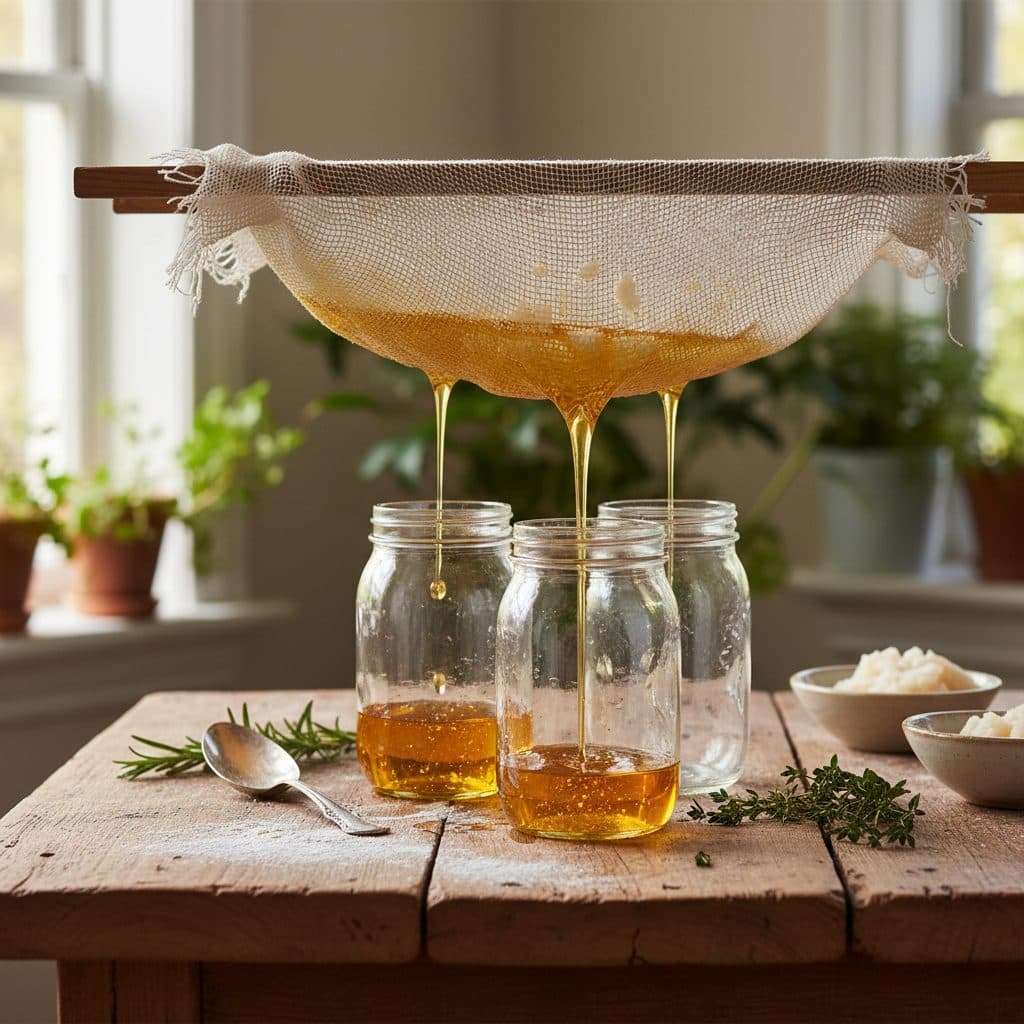
Turn off heat. Let it cool until it stops steaming — check with a thermometer rather than a clock, and aim for roughly 170°F (77°C) before straining. Line a stainless steel colander with three layers of unbleached cotton cheesecloth, a large unbleached coffee filter, or a fine nut milk bag placed over a clean heatproof bowl.
Pour the hot liquid slowly through the filter. Press the cracklings gently with a wooden spoon to extract residual fat, but avoid mashing them through the cloth. (Salt the crispy cracklings and enjoy them as a traditional snack.)
Step 5: pouring and storing
Warm the jars first (rinse with hot tap water, then dry them completely), stand them on a towel or tray, and pour slowly to prevent thermal shock and glass breakage. Leave 1/2 inch of headspace. Leave the jars uncovered or only loosely covered until the tallow is completely cool and solid, then wipe the rims dry and seal tightly (capping warm tallow traps steam that condenses and drips water into the fat, causing spoilage).
Storing and utilizing rendered tallow
Water is the primary enemy of fat preservation. Ensure jars and utensils are bone-dry before pouring. Stated shelf life assumes the tallow was fully rendered (no bubbling, no residual water), filtered clear, and stored sealed in the dark below 70°F (21°C). Rancidity, not spoilage organisms, is the limit — discard any jar showing a water layer, cloudiness at the base, or a sharp, crayon-like smell.
+------------------------+-------------------+-------------------------------------------+
| Storage Location       | Shelf Life        | Key Conditions                            |
+------------------------+-------------------+-------------------------------------------+
| Dark Pantry Cupboard   | 10 to 12 months   | Cool room (below 70°F / 21°C), airtight   |
| Refrigerator           | 18 to 24 months   | Sealed Mason jar                          |
| Deep Freezer           | 3+ years          | Wrapped blocks or wide-mouth jars         |
+------------------------+-------------------+-------------------------------------------+
For long-term pantry storage, keep jars in a dark cabinet away from direct heat and light as explored in root cellaring no power storage and avoid storage pitfalls outlined in safe canning beginner mistakes.
Versatile homestead applications
- Culinary Frying: With a high smoke point of 400°F (204°C), tallow is ideal for searing steaks, roasting root vegetables, and frying potatoes. Its high saturated-fat content makes it slower to oxidise than most polyunsaturated oils, but discard any fat that smokes at normal frying temperature, darkens, or smells sharp.
- Traditional Pastry: Substitute chilled tallow for lard or butter in savory pie crusts and biscuits for exceptional flakiness.
- Herbal Skincare Balms: Whipping tallow with a touch of jojoba oil creates a simple, single-ingredient moisturiser that carries small amounts of fat-soluble vitamins.
- Tallow Candles & Soaps: Melted tallow saponifies into hard, long-lasting bars of traditional soap (always observe strict lye safety protocols: wear eye protection and gloves, and add lye to water, never water to lye).
Explore broader self-sufficiency traditions in what is homesteading to integrate traditional home-craft skills across your homestead.