Key takeaways
- German chamomile (Matricaria recutita) is an annual herb, growing 12-24 inches tall, suitable for USDA zones 3-9.
- Seeds require light for germination; sow them directly on the soil surface in early spring or fall for best results.
- Chamomile thrives in full sun (6+ hours daily) and well-drained soil with a pH between 5.6 and 7.5.
- Harvest flowers when fully open, typically 60-90 days after sowing, picking every 2-3 days for continuous blooms.
- Proper drying at low temperatures (95-105°F) with good air circulation helps preserve the flowers’ medicinal qualities.
- Store dried chamomile in airtight containers for up to 12 months, away from light and moisture, to maintain potency.
Quick answer: To grow German chamomile for tea, sow seeds on the soil surface in early spring or fall in USDA zones 3-9. Harvest flowers when fully open, then dry them at 95-105°F with good air circulation to preserve their medicinal qualities.
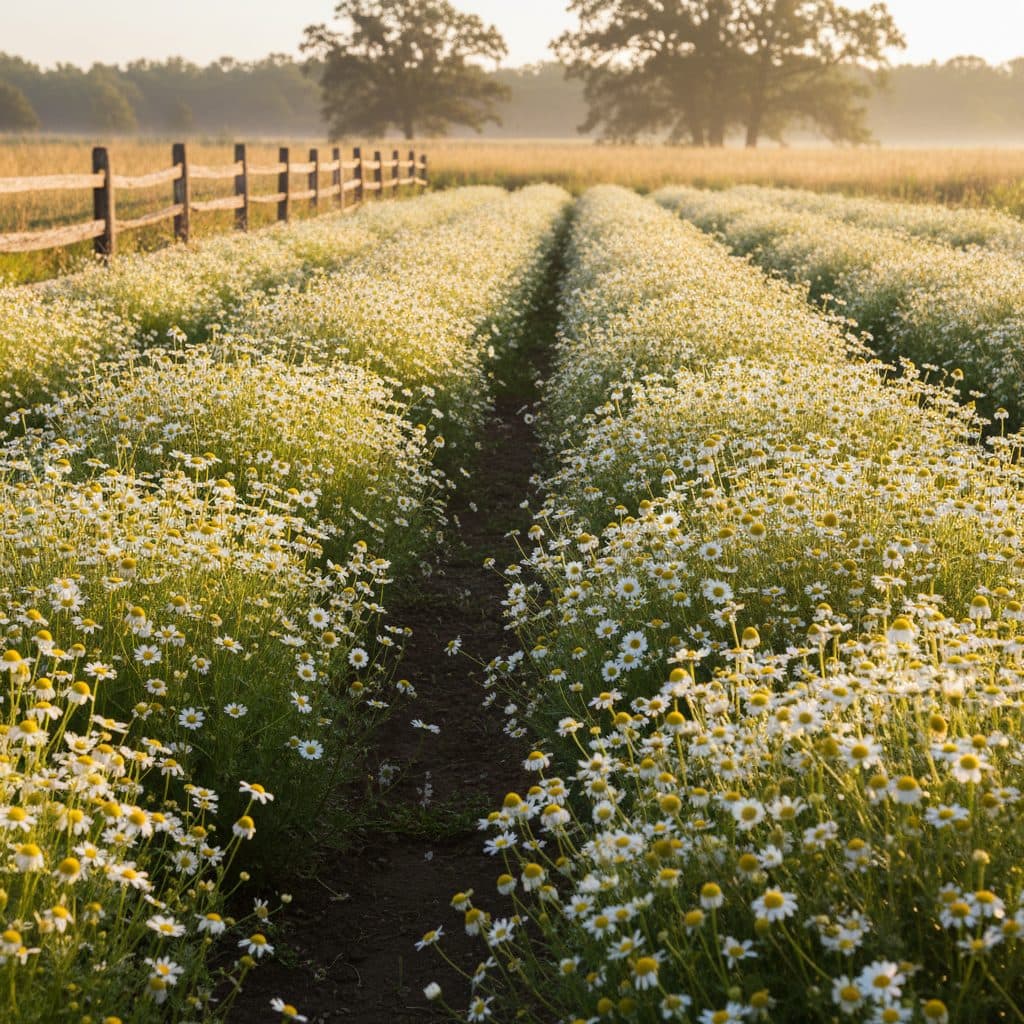
In many parts of the United States, from the fertile valleys of California to the humid summers of the Southeast, German chamomile (Matricaria recutita) offers a rewarding crop for home gardeners and small-scale producers. This annual herb, known for its delicate white and yellow flowers, is widely appreciated for its use in herbal teas and traditional remedies. Unlike its perennial cousin, Roman chamomile, German chamomile grows quickly, reaching heights of 12-24 inches within a single growing season, making it a productive choice for those seeking a quick return on their planting efforts [1].
Cultivating German chamomile for tea involves a straightforward process, from preparing the soil to drying the harvested flowers. This guide walks you through each step, grounded in practical experience and numerical data, so you can grow this aromatic herb successfully in your US garden. We’ll cover everything from optimal sowing times in USDA zones 3-9 to the precise conditions needed for drying your harvest, aiming for a high-quality yield of fragrant, potent blossoms.
Understanding German chamomile: species, benefits, and growing conditions
German chamomile, scientifically known as Matricaria recutita, is an annual plant native to Europe and Asia, but it has naturalized across much of North America. It typically grows to a height of 12-24 inches, producing numerous small, daisy-like flowers with white petals and a prominent yellow center [1]. These flowers are the primary part of the plant used for tea and essential oil extraction, valued for their calming properties. The plant is generally hardy in USDA zones 3 through 9, thriving in a wide range of climates across the US, from cooler northern states to warmer southern regions, provided it receives adequate moisture and sunlight.
The ideal growing environment for chamomile
For optimal growth and flower production, German chamomile requires specific environmental conditions. It prefers a location that receives full sun, meaning at least 6 hours of direct sunlight per day [2]. In hotter climates, such as those found in USDA zones 8 and 9, a location with some afternoon shade can prevent stress during peak summer heat, especially when temperatures consistently exceed 85°F. The soil should be well-drained and can range from sandy to loamy, with a slightly acidic to neutral pH between 5.6 and 7.5 [2]. While chamomile is not particularly demanding in terms of soil fertility, incorporating 1-2 inches of compost before planting can significantly improve soil structure and nutrient availability, leading to a stronger plant and a higher yield of flowers.
- Sunlight: At least 6 hours of direct sun daily.
- Soil pH: Between 5.6 and 7.5.
- Soil type: Well-drained, sandy to loamy.
- Growth habit: Annual, 12-24 inches tall.
- USDA Zones: Hardy in zones 3-9.
Starting seeds: indoor propagation and direct sowing
Getting German chamomile seeds to germinate successfully is often the first hurdle for many growers. The seeds are quite small and require light to sprout, so they should not be buried deeply. In colder regions, particularly USDA zones 3-5, starting seeds indoors 4-6 weeks before the last frost date can give your plants a head start and a longer harvesting period. Use a seed-starting mix in trays, like a 24-Cell Seedling Propagation Tray with Dome, and gently press the tiny seeds onto the surface. Maintain a consistent soil temperature of 60-70°F for optimal germination, which typically occurs within 7-14 days.
Direct sowing for a natural start
For growers in USDA zones 6-9, or for a more natural approach in any zone, direct sowing outdoors is a viable option. Chamomile seeds can be sown in early spring, after the danger of hard frost has passed, or in late fall. Fall sowing often leads to stronger plants the following spring, as the seeds undergo natural stratification over winter. Prepare a fine seedbed by raking the soil smooth and broadcasting the seeds thinly over the surface. Lightly tamp them down with a board or your hand to ensure good seed-to-soil contact, but do not cover them with soil. Keep the area consistently moist with a fine spray until germination. Once seedlings are 2-3 inches tall, thin them to a spacing of 6-12 inches apart to allow for proper air circulation and growth. This spacing helps prevent fungal issues and ensures each plant has enough room to develop its full potential, yielding more flowers per plant.
- Indoor Start: 4-6 weeks before last frost in zones 3-5.
- Direct Sow: Early spring or late fall in zones 6-9.
- Seed Depth: Surface sow, do not cover, as seeds need light.
- Germination Temp: 60-70°F.
- Thinning Space: 6-12 inches apart.
Cultivation and care: watering, nutrients, and pest management
Once established, German chamomile is a relatively low-maintenance plant, but consistent care will lead to a more abundant harvest. Watering is essential, especially during dry spells and in the initial weeks after germination or transplanting. Aim for about 1 inch of water per week, either from rainfall or irrigation. In sandy soils or hot climates (e.g., Arizona or parts of Texas), you might need to water more frequently, possibly every 2-3 days, to keep the soil consistently moist but not waterlogged. Overwatering can lead to root rot, so ensure your soil has excellent drainage. Chamomile does not require heavy fertilization; a single application of a balanced organic fertilizer (e.g., 5-5-5 NPK) at half strength when plants are 4-6 inches tall is usually sufficient. Excessive nitrogen can promote leafy growth at the expense of flowers.
Managing common pests and diseases
German chamomile is generally robust, but it can occasionally encounter pests. Aphids are common culprits, often found on new growth. A strong spray of water or an application of insecticidal soap (diluted to 2 tablespoons per gallon of water) can control them. In humid environments, such as the southeastern US, fungal issues like powdery mildew can appear. Ensuring good air circulation by proper plant spacing (6-12 inches apart) and watering at the base of the plant rather than overhead can help prevent this. If mildew becomes an issue, a homemade baking soda spray (1 tablespoon baking soda per gallon of water with a few drops of dish soap) can be effective. Regularly inspecting your plants, perhaps once every 3-4 days, allows for early detection and management of any problems, protecting your potential yield of 0.5-1 pound of dried flowers per 100 square feet.
- Watering: 1 inch per week, more in hot/sandy conditions.
- Fertilization: Light application of 5-5-5 NPK once.
- Pest Control: Water spray or insecticidal soap for aphids.
- Disease Prevention: Good air circulation, avoid overhead watering.
- Inspection Frequency: Check plants every 3-4 days.
Harvesting and drying: preserving your chamomile flowers
The timing of your harvest significantly impacts the quality and potency of your dried chamomile flowers. German chamomile typically begins flowering 60-90 days after sowing, depending on the variety and growing conditions. The ideal time to harvest is when the flowers are fully open, but before the petals start to droop or turn brown. This usually means harvesting in the morning, after the dew has dried but before the midday sun becomes too intense, which can diminish the essential oil content. You can harvest by hand-picking individual flowers or by gently raking them with a special chamomile comb, if you have a larger patch. For continuous blooms, harvest every 2-3 days, as this encourages the plant to produce more flowers throughout the season, which can extend for several weeks in cooler climates like the Pacific Northwest.
Drying for long-term storage
Proper drying is critical to preserve the aromatic compounds and medicinal properties of chamomile. The goal is to remove moisture quickly and efficiently without exposing the flowers to excessive heat or direct sunlight, which can degrade their quality. Spread the harvested flowers in a single layer on screens or clean trays in a well-ventilated area, away from direct sun. An ideal drying temperature is between 95-105°F. This can be achieved in a food dehydrator, a dedicated drying room, or even in an indoor space with good airflow, perhaps using a fan. Drying typically takes 3-7 days, depending on humidity levels. The flowers are fully dry when they feel papery and crumble easily between your fingers. Once dry, store the flowers in airtight glass jars or opaque containers in a cool, dark place. Properly dried and stored chamomile can retain its potency for up to 12 months. For a larger harvest, consider using a reflective indoor grow tent with a small fan for a controlled drying environment, especially in humid regions like Florida or Louisiana.
- Harvest Time: When flowers are fully open, in the morning.
- Harvest Frequency: Every 2-3 days for continuous blooms.
- Drying Method: Single layer on screens, well-ventilated.
- Drying Temperature: 95-105°F.
- Storage: Airtight containers, cool, dark place for up to 12 months.
Making chamomile tea: preparation and uses
Once you’ve successfully harvested and dried your German chamomile flowers, the most common and rewarding use is brewing a comforting cup of tea. The process is simple and allows you to enjoy the full flavor and benefits of your homegrown herb. For a standard 8-ounce cup of tea, use 1-2 teaspoons of dried chamomile flowers. One caution before you brew: chamomile is in the aster family, so people who react to ragweed, daisies or marigolds can react to it too, occasionally severely. Anyone who is pregnant, taking anticoagulants, or taking sedatives should check with a clinician before drinking it regularly. Place the flowers in a tea infuser or directly into your mug. Bring fresh water to a boil, aiming for a temperature of about 200-212°F, and then pour it over the flowers. Allow the tea to steep for 5-10 minutes, depending on your desired strength. A longer steeping time will result in a stronger, more potent brew. Strain the flowers if necessary, and sweeten with honey or a slice of lemon if preferred.
Beyond the basic brew: other uses for your harvest
While tea is the primary application, your dried German chamomile can be used in several other ways. Many growers in states like Oregon and Washington, known for their herbal production, incorporate chamomile into homemade salves or tinctures. A simple chamomile infused oil can be made by steeping 1 part dried flowers in 4 parts carrier oil (like olive or almond oil) for 2-4 weeks, then straining. This oil can be used topically or as a base for lotions. You can also add dried chamomile flowers to potpourri for a calming scent in your home, or even create a soothing bath soak by adding 1/2 cup of flowers to a muslin bag and steeping it in your bathwater. The versatility of this herb makes it a valuable addition to any home garden, offering benefits far beyond just a simple cup of tea, with potential yields of 0.5-1 pound of dried flowers per 100 square feet of garden space.
- Tea Ratio: 1-2 teaspoons dried flowers per 8 ounces water.
- Water Temperature: 200-212°F.
- Steeping Time: 5-10 minutes.
- Infused Oil Ratio: 1 part flowers to 4 parts carrier oil.
- Bath Soak: Use 1/2 cup flowers in a muslin bag.
German Chamomile vs. Roman Chamomile
Feature | German Chamomile (Matricaria recutita) | Roman Chamomile (Chamaemelum nobile) |
|---|---|---|
Life Cycle | Annual, completes life in one season | Perennial, returns for multiple years |
Height | 12-24 inches tall | 4-12 inches tall, often used as groundcover |
Flower Appearance | Hollow, conical yellow center; white petals that often droop | Solid, flatter yellow center; white petals that are more upright |
Primary Use | Tea, essential oil, culinary | Groundcover, tea (less common), essential oil |
Flavor Profile | Sweeter, apple-like, slightly herbaceous | More bitter, herbaceous |
USDA Zones | 3-9 (as an annual) | 4-9 (as a perennial) |
Optimal pH: German chamomile thrives in well-drained soil with a pH range of 5.6 to 7.5, supporting robust growth and flower production [2].
Drying Temperature: To preserve potency, dry chamomile flowers at a low temperature, ideally between 95-105°F, for 3-7 days with good air circulation [1].
Yield Potential: A well-maintained German chamomile patch can yield 0.5-1 pound of dried flowers per 100 square feet of garden space.
Frequently asked questions
What is the best time to plant German chamomile in the US?
In USDA zones 3-5, start seeds indoors 4-6 weeks before the last frost. For zones 6-9, direct sow seeds outdoors in early spring after the last frost, or in late fall for stronger plants the following year. Seeds need light to germinate, so press them onto the soil surface without covering.
How much sunlight does German chamomile need?
German chamomile requires full sun, which means at least 6 hours of direct sunlight daily, to produce abundant flowers. In very hot climates, like parts of Arizona with summer temperatures exceeding 95°F, some afternoon shade can be beneficial to prevent plant stress and ensure a good yield.
How often should I water my chamomile plants?
Chamomile plants need about 1 inch of water per week, either from rain or irrigation. During dry periods or in sandy soils, you might need to water every 2-3 days to keep the soil consistently moist. Ensure good drainage to prevent root rot, especially in humid regions like Florida.
When should I harvest chamomile flowers for tea?
Harvest German chamomile flowers when they are fully open, typically 60-90 days after sowing. The best time is in the morning after the dew has dried. Harvesting every 2-3 days encourages the plant to produce more blooms, extending your harvest period for several weeks.
What is the ideal temperature for drying chamomile?
The ideal temperature for drying chamomile flowers is between 95-105°F, with good air circulation. This low heat helps preserve the delicate essential oils and medicinal compounds. Drying usually takes 3-7 days, depending on the humidity of your drying environment.
How long can I store dried chamomile flowers?
Properly dried German chamomile flowers, stored in airtight glass jars or opaque containers in a cool, dark place, can maintain their potency and flavor for up to 12 months. After this period, their aromatic qualities may start to diminish, so it’s best to use them within a year.
References
- Chamomile Oil, German Type (2023). Chamomile Oil, German Type.
- Chamomile, German (2017). Chamomile, German.
- Chamomile, German (Matricaria recutita/chamomilla) and Chamomile, Roman (Chamaemelum nobile) (2022). Chamomile, German (Matricaria recutita/chamomilla) and Chamomile, Roman (Chamaemelum nobile).
- CHAMOMILE OIL GERMAN (1979). CHAMOMILE OIL GERMAN.