Key takeaways
- Proper curing is an essential step to prevent fungal rot and allow garlic bulbs to store for 4 to 12 months.
- Cure harvested garlic with roots and foliage intact in a shaded, well-ventilated space at 18°C to 27°C (65°F to 80°F) for two to four weeks.
- Hardneck garlic (common in Canada and cold regions) stores for 4 to 6 months; long-storing softneck varieties can last up to 9 to 12 months.
- Never store whole fresh garlic bulbs in a domestic refrigerator; the 4°C to 10°C (40°F to 50°F) band that household fridges sit in breaks dormancy and triggers premature sprouting.
- Maintain long-term pantry storage at 12°C to 18°C (55°F to 65°F) with 55% to 65% relative humidity in breathable mesh bags or wire baskets.
- Set aside your largest, healthiest, unblemished bulbs at the end of curing, in late summer, as seed stock for autumn planting.
Quick answer: To store garlic long term, cure freshly harvested bulbs with foliage attached in a dry, well-ventilated, shaded space for two to four weeks until wrapper skins are papery and roots are brittle. Trim stems to 3 cm, brush away dry soil, and store in mesh bags or slatted crates at 12°C to 18°C (55°F to 65°F) in a dark, dry pantry.
Garlic (Allium sativum) is one of the most rewarding staple crops for cold-climate homesteaders and home gardeners across Canada and northern regions. A single midsummer harvest can supply a household with pungent, aromatic culinary cloves throughout the long winter months and provide prime seed stock for autumn planting.
Knowing how to store garlic successfully begins at harvest time instead of in the pantry. If bulbs are improperly dried, washed with water, bruised during handling, or stored in humid, airtight plastic containers, fungal moulds like Penicillium and Botrytis will rapidly destroy months of gardening effort.
This comprehensive guide details the post-harvest curing process, explains the storage differences between hardneck and softneck varieties, and outlines ideal environmental conditions for year-round preservation.
+-------------------------------------------------------------+
|              GARLIC POST-HARVEST STORAGE TIMELINE           |
|                                                             |
|   PHASE           DURATION        ENVIRONMENTAL TARGETS     |
|   -----           --------        ---------------------     |
| 1. Harvest      Mid-Summer      Dig when bottom 3 leaves dry|
|   2. Curing       2 to 4 Weeks    18°C-27°C, shade, airflow |
|   3. Trimming     Post-Cure       Trim stems 3cm, roots 1cm |
|   4. Long Storage 4 to 12 Months  12°C-18°C, 55-65% RH, dark|
|   5. Seed Sorting Late Summer     Select largest cloves     |
+-------------------------------------------------------------+
How do you cure garlic properly after harvest?
Curing is the post-harvest drying process that forces garlic into deep dormancy. During curing, moisture leaves the outer wrapper leaves, forming protective, papery skins that seal out fungal spores and retain moisture inside the juicy cloves.
+-------------------------------------------------------------+
|              CURING RACK & AIRFLOW STRUCTURE                |
|                                                             |
|   Air Circulation In ===>  [ Slatted Mesh Screen ]  ===> Air|
|                            -   *   *   *   *   *            |
|                           (Bulbs spaced 5cm apart,          |
|                            foliage and roots intact)        |
+-------------------------------------------------------------+- Harvest gently: Dig bulbs when the bottom three to four lower leaves have turned brown, while the top five or six leaves remain green. Use a garden fork to loosen soil beneath the root plate; never pull bulbs forcefully by their stems, which damages the neck. For complete bed care, review our foundational guide on how to grow garlic.
- Do not wash with water: Brush off loose surface soil with your fingers or a soft brush. Never wash harvested garlic with water, as excess moisture trapped beneath damp wrappers breeds fungal neck rot.
- Leave foliage and roots attached: Keep the entire plant intact during curing. Energy and moisture gradually migrate from the dying leaves and stem into the bulb, refining flavour and closing the vascular neck tissue.
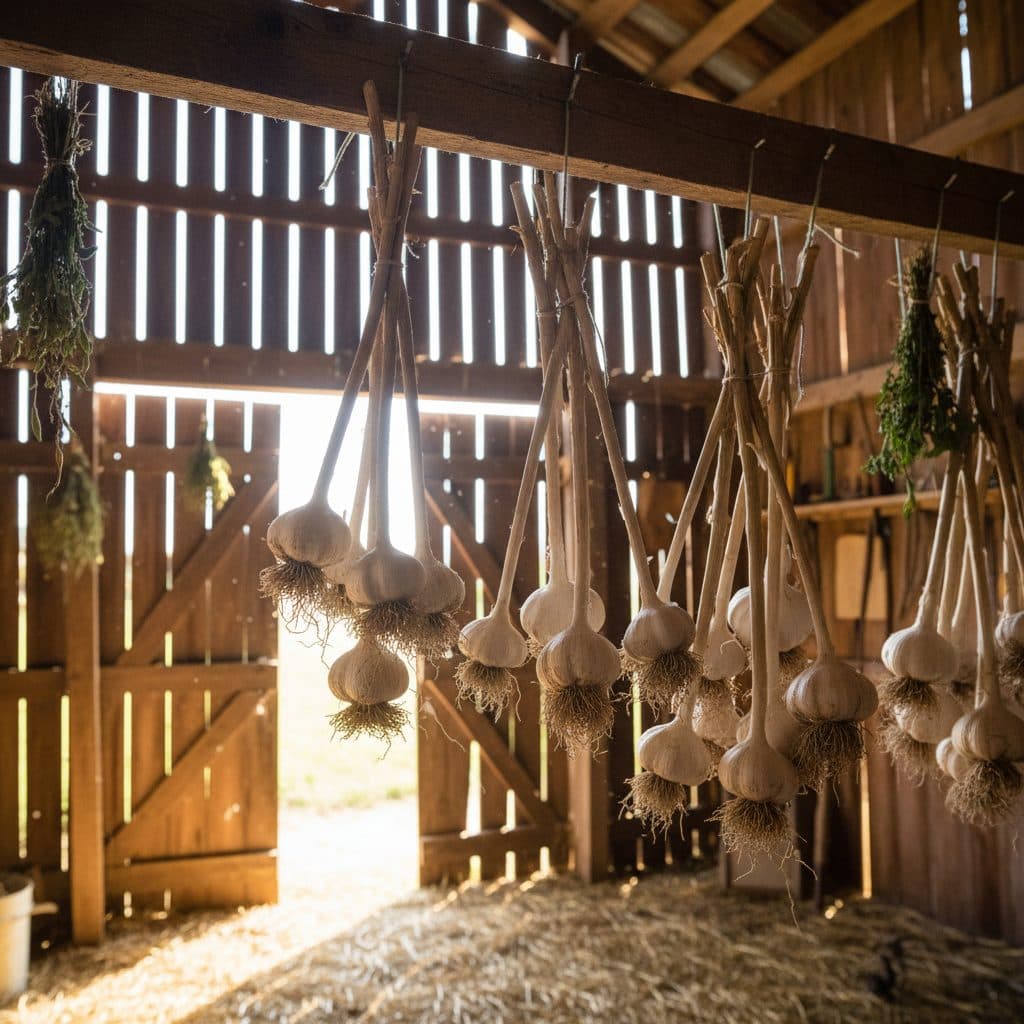
- Choose a shaded, airy location: Spread bulbs in a single layer on wire mesh screens, slatted wooden tables, or hang them in bundles of 5 to 10 from rafters in a covered porch, garage, or garden shed. Ensure constant cross-ventilation using an oscillating fan if necessary. Never cure garlic in direct outdoor sunlight, which bakes cloves and ruins storage viability.
- Testing for doneness: After two to four weeks, check the roots and stems. The roots should feel stiff and brittle like dry wire, the outer wrappers should rustle like dry tissue paper, and the stem should be completely dry through to the centre with no green sap.
How do hardneck and softneck garlic varieties compare for storage?
Understanding whether you are growing hardneck or softneck garlic dictates how long your harvest will last and how bulbs should be arranged.
+-------------------------------------------------------------+
|              HARDNECK VS SOFTNECK GARLIC STORAGE            |
|                                                             |
|   CHARACTERISTIC       HARDNECK GARLIC      SOFTNECK GARLIC |
|   --------------       ---------------      --------------- |
|   Botanical Subtype    var. ophioscorodon   var. sativum    |
|   Cold Hardiness       Extreme (Canadian)   Moderate        |
|   Central Stem         Rigid, woody scape   Pliable, leafy  |
|   Clove Arrangement    Single ring (4-8)    Multiple layers |
|   Braiding Capability  No (too stiff)       Yes (pliable)   |
|   Storage Lifespan     4 to 6 Months        9 to 12 Months  |
|   Common Varieties     'Music' (Porcelain)  'Inchelium Red' |
|                        'German Red'         'Nootka Rose'   |
+-------------------------------------------------------------+
1. Hardneck garlic (Allium sativum var. ophioscorodon)
- Traits: Dominant across Canadian provinces and northern US states due to superior cold tolerance. Produces a central edible flowering stem (scape) and large, easily peeled cloves.
- Storage life: Typically 4 to 6 months, with Porcelain-group cultivars such as 'Music' reaching 6 to 8 months and often keeping into February; Rocamboles are the shortest keepers at roughly 3 to 4 months.
- Storage preparation: Because hardneck stems are woody and stiff, they cannot be braided. Trim cured stems 2.5 to 4 cm above the bulb and store loose in baskets, or tie stems into hanging bundles of 6 to 10 with natural jute twine.
2. Softneck garlic (Allium sativum var. sativum)
- Traits: Characterised by pliable, grassy stems and multiple overlapping layers of smaller cloves.
- Storage life: 9 to 12 months. Their tight, multi-layered wrapper skins seal out air exceptionally well.
- Braiding: Softneck stems can be plaited into decorative hanging garlic braids. Braids allow maximum air circulation around every bulb while saving shelf space in your pantry.
What is the ideal long-term storage environment?
Once garlic is fully cured and cleaned, maintaining correct temperature, humidity, and airflow keeps bulbs dormant and plump.
+-------------------------------------------------------------+
|              IDEAL GARLIC STORAGE PARAMETERS                |
|                                                             |
|   PARAMETER             TARGET RANGE                        |
|   ---------             ------------                        |
|   Temperature           12°C to 18°C (55°F to 65°F)         |
|   Relative Humidity     55% to 65%                          |
|   Lighting              Complete Darkness or Dim Pantry     |
|   Air Circulation       Continuous Passive Airflow          |
|   Container Type        Open Mesh Bags, Slatted Crates      |
+-------------------------------------------------------------+
1. Temperature control
- Ideal range: 12°C to 18°C (55°F to 65°F). A cool, unheated pantry, basement corner, or insulated cellar is ideal.
- The refrigerator mistake: Never store whole, raw garlic bulbs in a household refrigerator (typically 4°C to 10°C). These temperatures simulate winter soil conditions (vernalisation), prompting the garlic to break dormancy, produce green shoots, and turn bitter within weeks.
2. Relative humidity and containers
- Humidity target: 55% to 65% relative humidity. If humidity drops below 50%, cloves dehydrate and shrivel into hard pellets. If humidity exceeds 70%, fungal spores germinate, causing mouldy wrappers and premature rooting.
- Breathable containers: Store bulbs in mesh onion bags, wire mesh baskets, unglazed terracotta garlic keepers, or wooden slatted crates. Never use sealed plastic bags or airtight plastic tubs, which trap transpirational moisture.
For off-grid cellar storage strategies across winter, compare root preservation techniques in our guide to root cellaring without power and traditional root cellaring techniques.
How do you select and store seed garlic for autumn planting?
Saving your own garlic cloves for replanting adapts the crop to your local soil and climate over successive generations:
+-------------------------------------------------------------+
|              SEED GARLIC SELECTION CRITERIA                 |
|                                                             |
|   [ KEEP FOR PLANTING ]              [ EAT IN KITCHEN ]     |
|   - Largest, heaviest bulbs          - Smaller bulbs        |
|   - Plump outer cloves               - Split or loose cloves|
|   - 100% tight, clean wrappers       - Damaged skins        |
|   - Zero mould or softness           - Asymmetrical cloves  |
+-------------------------------------------------------------+- Sort at curing time: When cleaning cured bulbs, immediately set aside the largest 15% to 20% of your harvest as seed stock. Large seed cloves produce larger bulbs with deep root systems.
- Inspect wrappers: Select bulbs with intact, tightly bound papery skins. Reject any bulbs showing signs of basal rot, blue mould, or discolouration around the root plate.
- Store at room temperature: Keep seed garlic in a dry, well-ventilated room at 15°C to 20°C until planting day in autumn, typically mid-September to early October on the Prairies and in colder zones, and October in southern Ontario, Quebec, and coastal BC, aiming for four to six weeks before the ground freezes.
- Separate cloves just before planting: Keep seed bulbs whole until the day of planting. Breaking bulbs into individual cloves weeks in advance allows the root basal plate to dry out and invites soil pathogens.
For coordinating garlic planting alongside other cold-hardy staples, consult our guide on fall and winter gardening sowing.
How do you preserve excess garlic that begins to sprout?
If garlic begins to soften or sprout in late winter before you can consume it, preserve the cloves using culinary methods:
- Freezing whole peeled cloves: Peel sound cloves, spread them on a baking sheet, freeze solid, and transfer to freezer bags. Frozen cloves chop easily while still frozen and retain pungent flavour in cooked dishes.
- Dehydrating garlic powder: Slice cloves thinly, dry in a food dehydrator at 45°C (115°F) until brittle, and pulse in a spice grinder to produce pure homemade garlic powder.
- Pickled garlic in vinegar: Submerge peeled cloves in a 5% acidity vinegar brine inside sterilised canning jars for refrigerated storage. Note that garlic must never be stored in oil at room temperature due to the lethal risk of botulism (Clostridium botulinum).
Curing thoroughly after harvest, maintaining cool pantry temperatures, and selecting good seed stock keeps homegrown garlic usable through the winter.