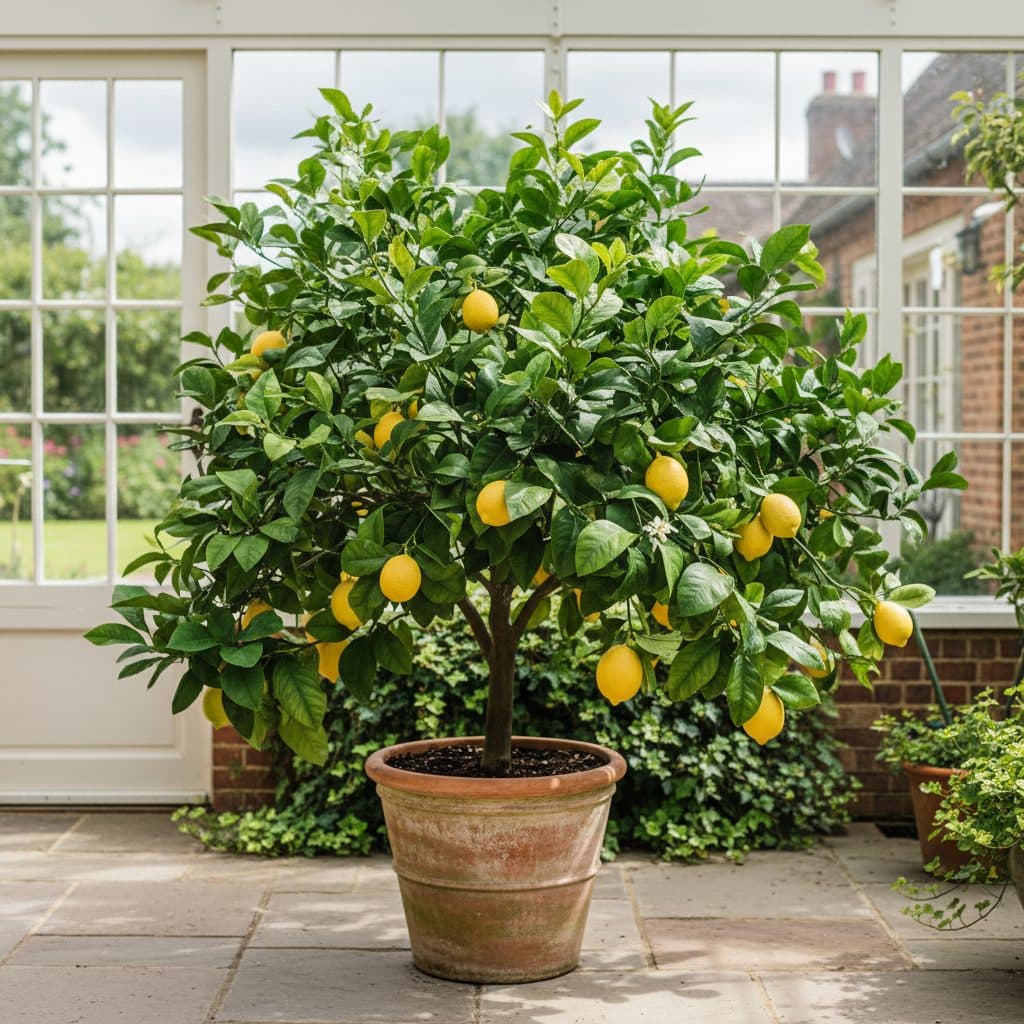
Key takeaways
- Grow lemon trees in containers using free-draining loam-based compost with extra grit to prevent winter root rot.
- Place potted citrus outdoors in full sun from late May to September; move indoors before the first autumn frost.
- Overwinter trees in a cool, bright, frost-free space; 'Meyer' tolerates 5–12°C, while 'Eureka' prefers a 10°C minimum under maximum light.
- Water thoroughly in summer when the top 3 cm dries, but reduce watering dramatically during dark winter months.
- Switch between a high-nitrogen summer citrus feed and a low-nitrogen, higher-potassium winter citrus feed to support seasonal growth cycles.
Quick answer: Lemon tree care in the UK revolves around container cultivation, moving potted trees outdoors to a sunny patio for summer (late May to September) and overwintering them indoors in a cool, bright, frost-free space during winter. Using free-draining citrus compost, switching seasonal feeds, and avoiding central heating drafts keeps trees vigorous.
Growing a productive lemon tree (Citrus limon) is one of the most satisfying container gardening achievements in the United Kingdom. With their intensely fragrant white blossoms, glossy evergreen foliage, and bright golden fruit that can hang on the branches for months, lemon trees bring Mediterranean beauty to British patios and sunrooms.
However, cultivating citrus in the British climate requires an understanding of the plant's subtropical nature. Lemon trees are not frost-hardy. Damage to blossom, fruit and foliage starts at around -2°C, so bring the tree in once frost is forecast.
Successfully caring for a lemon tree in the UK depends on container management: providing free-draining compost, coordinating seasonal moves between patio sun and winter indoor shelter, calibrating seasonal watering, and diagnosing winter leaf drop early.
Choosing varieties and potted cultivation setup
Selecting the right cultivar makes a substantial difference in growth vigor and fruit setting under UK light conditions:
- Meyer Lemon (Citrus x meyeri): The premier cultivar for UK growers. A natural hybrid between a lemon and a mandarin orange, the Meyer lemon is naturally compact, sets fruit prolifically at a young age, tolerates lower winter light levels, and produces sweet, thin-skinned lemons with lower acidity. Discover botanical details in our profile on the Meyer lemon.
- Eureka Lemon (Citrus limon 'Eureka'): The classic culinary lemon — near-thornless, moderately vigorous, open in habit and close to everbearing, with sharply acidic fruit. ('Lisbon' is the vigorous, thorny alternative and is a little more cold-tolerant.)
Because lemon trees must be moved indoors twice a year, always grow them in portable containers:
- Pot selection: Use sturdy plastic or glazed ceramic pots with multiple wide drainage holes at the base. Unsealed terracotta pots breathe well, but dry out very rapidly during hot summer spells.
- Potting compost formulation: Standard peat-free multi-purpose compost holds far too much water during cold British winters, leading to lethal root rot. The ideal UK citrus mix consists of:
- 3 parts loam-based compost (such as John Innes No. 2 or No. 3).
- 1 part horticultural grit or coarse sharp sand to guarantee sharp drainage.
- 1 part perlite or composted pine bark for root aeration.
- Pot elevation: Keep container pots elevated on decorative pot feet year-round to ensure drainage water escapes freely.
For broader container gardening foundations, explore our guide to rooftop and patio container gardening.
The seasonal outdoor and indoor care cycle
Managing your lemon tree's location throughout the changing British seasons is the key to healthy foliage and heavy fruit crops:
Summer season (late May to September)
Once all danger of spring frost has passed and night temperatures remain consistently above 10°C (typically late May or early June in southern England, mid-June in the north), move your lemon tree outdoors. Place it in the warmest, most sheltered, sunniest spot available on your patio or balcony, ideally backed by a south-facing brick wall. Outdoor summer placement provides maximum sunlight, natural rainfall, and access to pollinating bees.
Winter overwintering (October to mid-May)
Before the first autumn frost arrives in October, clean the container and relocate the tree indoors. The ideal winter location is a cool, bright, frost-free space. 'Meyer' is content at 5–12°C; true lemons such as 'Eureka' and 'Lisbon' do better with a winter minimum nearer 10°C. Whatever the temperature, keep light levels as high as you can — cold plus dark is what causes leaf drop:
- Best winter locations: An unheated conservatory, a bright porch, a cool sunroom, or a frost-free greenhouse fitted with a thermostatically controlled heater.
- Locations to avoid: Never place a lemon tree in a centrally heated living room next to a warm radiator. The combination of hot, bone-dry radiator air and low winter window light triggers severe physiological stress, causing the tree to drop all its leaves and developing fruit within weeks.
Compare these citrus shelter tactics with outdoor container strategies in our guide to olive tree care in the UK.
Seasonal watering and citrus fertiliser routines
Feeding follows growth, not location — start the summer feed in April when growth resumes, even though the tree is still indoors, and switch to the winter feed once growth stops in October:
Summer watering & feeding (April to September)
Water thoroughly whenever the top 3 cm of compost feels dry. Soak the pot until water runs freely from the drainage holes, then discard any water collected in the saucer after 20 minutes.
Feed weekly from April through September using a specialist high-nitrogen summer citrus fertiliser. Nitrogen fuels lush vegetative growth, strong flower bud formation, and fruit sizing.
Winter watering & feeding (October to March)
In winter, cool temperatures and short daylight hours reduce water uptake significantly. Water sparingly, often only once every two to three weeks, allowing the top half of the potting compost to dry out between waterings.
Feed monthly using a low-nitrogen, higher-potassium winter citrus feed to strengthen root systems and help the tree sustain hanging winter fruit.
If overwatering occurs in cold winter soil, follow emergency recovery protocols in our root rot overwatering rescue guide.
Troubleshooting yellow leaves and winter foliage drop
Yellowing leaves and sudden defoliation are the most common distress signals displayed by UK lemon trees:
- Winter Leaf Drop (Overwatering & Cold Root Chill): If cold winter compost remains saturated, root tips rot and fail to absorb moisture. Leaves turn pale yellow and drop while still plump. Allow the pot to dry out, elevate on pot feet, and move to a brighter spot.
- Winter Leaf Drop (Dry Radiator Heat): Warm indoor air causes rapid leaf transpiration, but cold roots in chilly compost cannot pump water fast enough, resulting in dried, curled leaf drop. Move the tree away from radiators. Raising local humidity helps a little — a tray of damp expanded clay under the pot does more than weekly misting.
- Iron and Magnesium Chlorosis (Interveinal Yellowing): Young leaves turn bright yellow while leaf veins remain dark green in iron deficiency, frequently triggered by hard tap water (chalky alkaline water raises compost pH, locking out iron). Water with collected rainwater and apply chelated iron tonic. Magnesium deficiency shows the same interveinal yellowing but on the older, lower leaves, often with a green wedge at the leaf base, and is common after a heavy summer feeding programme. Iron shows on the youngest leaves. Correct magnesium with Epsom salts (roughly 15 g per litre) as a foliar spray or soil drench.
- Common Citrus Pests: Inspect leaf undersides and branch crotches regularly for scale insects (brown, waxy, limpet-like bumps), mealybugs (fluffy white cotton-like clusters), and red spider mites (fine webbing and speckling in dry indoor air). Wipe pests away with a soft cloth or sponge and a soap-based spray used at the strength given on its label. Repeat every 7 to 14 days — one pass never clears scale or mealybug, because eggs and crawlers survive it.
Pruning and formative shaping
Lemon trees require only light, formative pruning to maintain an open, balanced habit:
Prune in late winter or early spring (February to March) before the main spring flush begins:
- Remove dead, diseased, or crossing branches cleanly back to the main stem.
- Cut back excessively vigorous, upright "water shoots" by two-thirds to encourage bushy lateral branching.
- Thin out congested growth in the center of the canopy to let sunlight reach ripening fruit.
- Strip away any suckers emerging from below the graft union on the lower rootstock trunk.