Key takeaways
- Plant olive trees in gritty, free-draining loam-based compost to prevent root rot during wet British winters.
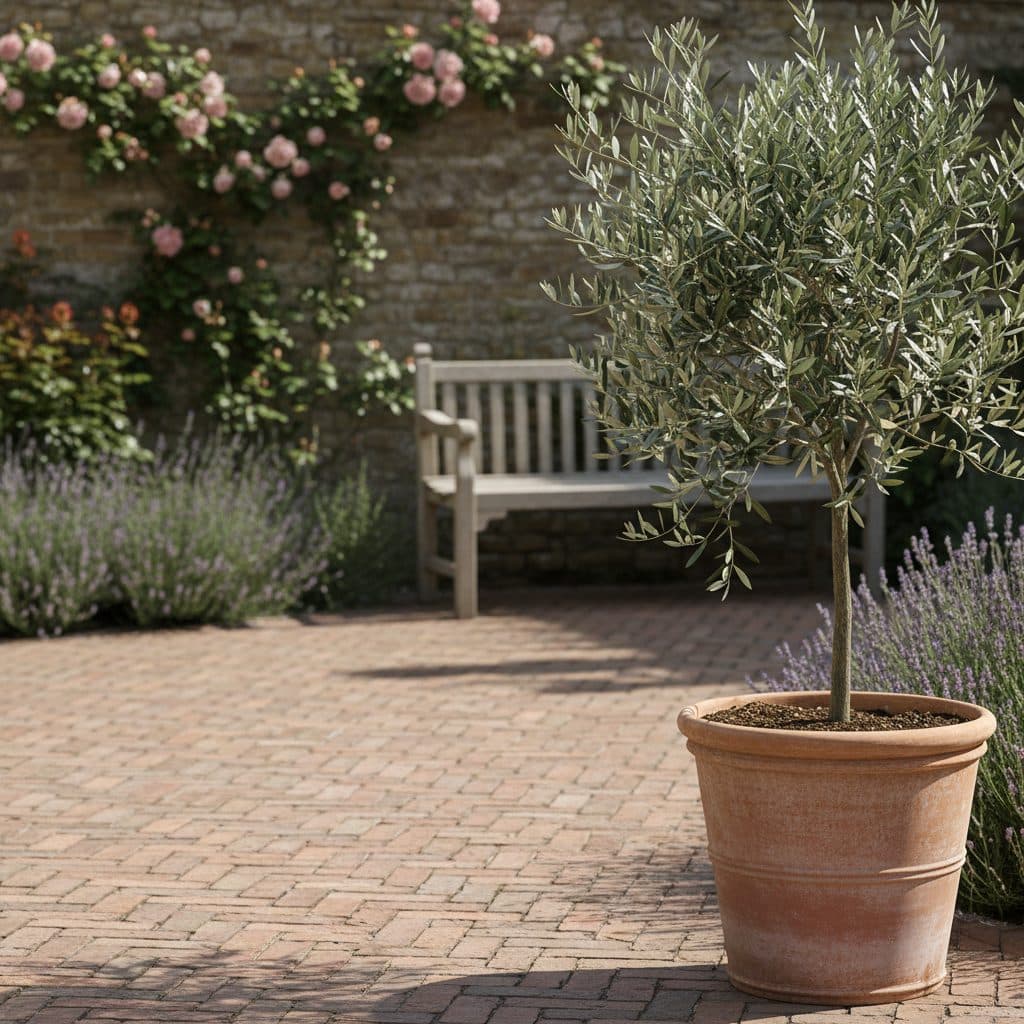
- Position potted olives in the sunniest, most sheltered spot on your patio against a south-facing brick wall.
- Water deeply when the top 5 cm of compost dries in summer, but reduce watering significantly through winter.
- Wrap containers in bubble wrap and protect foliage with horticultural fleece during severe sub-zero cold spells.
- Prune in late spring (April to May) to remove dead or crossing wood and maintain an open, light-filled canopy.
Quick answer: Olive tree care in the UK focuses on providing maximum sunlight, gritty well-drained compost, and protection against waterlogged winter soil. While mature olive trees planted in ground soil tolerate frosts down to -10°C, potted specimens require container insulation and sheltering against south-facing walls during hard freezing spells to protect root systems from freezing solid.
The European olive (Olea europaea) has become an iconic feature across British gardens, bringing Mediterranean architectural elegance and silvery-green evergreen foliage to urban courtyards, allotments, and patio spaces. Despite their origins in sunny, arid Mediterranean climates, olive trees demonstrate surprising resilience in the UK climate when provided with appropriate care.
Successfully caring for an olive tree in the UK depends on understanding the tree's main vulnerabilities. While olives handle summer heat and light frost without issue, they are intolerant of sitting in cold, waterlogged soil during grey British winters.
Whether you cultivate a compact potted olive on a sunny balcony or an established specimen in a sheltered border, mastering soil selection, seasonal watering, cold-weather protection, and formative pruning ensures your tree remains healthy and vigorous year after year.
Potting and soil requirements for UK olive trees
The vast majority of olive trees in the UK are grown in containers, which allows gardeners to control soil drainage and move trees into sheltered positions during harsh winter weather.
Olives demand a free-draining, structured growing medium. Standard multi-purpose peat-free compost breaks down too quickly and holds excessive moisture during autumn and winter, leading to root rot. The ideal potting blend consists of:
- 2 parts loam-based compost (such as John Innes No. 3) to provide weight, mineral nutrients, and long-term structure.
- 1 part horticultural grit or coarse sharp sand to guarantee rapid drainage.
- 1 part perlite or composted pine bark to maintain aeration around the root zone.
Choose heavy frost-proof terracotta (not merely 'frost-resistant') or glazed clay pots with generous drainage holes at the base. Terracotta provides stability against strong winds and allows moisture to evaporate through pot walls, reducing waterlogging risks. Avoid narrow-necked containers, which make future repotting difficult.
When planting, ensure the root flare sits level with the compost surface. Elevate the pot on terracotta pot feet year-round to ensure drainage holes never become blocked by standing water on patio slabs. For wider container growing principles, explore our guide to rooftop and patio container gardening.
Watering routines and seasonal feeding
Managing moisture correctly is the single most important aspect of olive care in containers:
During spring and summer (April to September), olive trees actively produce new shoot growth and flower buds. Water thoroughly whenever the top 5 cm of compost feels dry to the touch, soaking the container until water runs freely from the drainage holes. Never allow containers to sit in saucers of standing water.
During autumn and winter (October to March), dramatically reduce watering. Cool temperatures and low light levels slow metabolic activity. Check the pot every couple of weeks; only water if the compost has dried out almost entirely to prevent root rot, following protocols from our root rot overwatering rescue guide.
Feed potted olives from late April through August with a balanced liquid fertiliser, such as liquid seaweed extract supplemented with micronutrients, applied every three to four weeks. Alternatively, top-dress the compost surface in early spring with a handful of slow-release organic granular fertiliser. Cease feeding by late August so new growth has time to harden before winter frosts arrive. Learn more about the botanical characteristics of the European olive.
Winter protection strategies for cold British weather
Established olive trees planted directly into well-drained ground in mild, coastal, or urban microclimates in southern England can survive temperatures down to -7°C to -10°C without significant damage. However, roots of potted trees are far more vulnerable, as a container root ball chills far faster than open ground and can freeze right through in a prolonged cold snap — which is what kills potted olives, rather than the air temperature the top growth sees.
Implement the following winter protection steps in late autumn:
- Relocate to shelter: Move potted olives against a warm, south- or west-facing brick wall of your house. The thermal mass of the masonry radiates heat throughout the night.
- Insulate the container: Wrap several layers of bubble wrap, burlap (hessian), or thermal insulation jackets around the pot exterior, securing with garden twine. This prevents freezing winds from chilling the root system.
- Protect the canopy: If heavy snow, freezing rain, or prolonged sub-zero temperatures (below -5°C) are forecast, drape breathable horticultural fleece over the canopy. Remove the fleece once severe cold passes to allow airflow and light.
- Unheated glasshouse shelter: In cold northern UK regions, moving potted olives into an unheated greenhouse, porch, or conservatory over the worst winter months (December to February) provides ideal protection.
For complementary Mediterranean container fruit management, read our advice on lemon tree care in the UK.
Pruning olive trees in the UK climate
Olive trees naturally produce slow, compact growth in the British climate, meaning they require only light, formative pruning once a year.
The optimal time to prune is late spring (late April to May) once the tree has resumed active growth and all threat of hard frost has passed. Pruning earlier in winter leaves cut surfaces vulnerable to frost damage and fungal infection.
Follow these principles when pruning:
- Open the center: Remove congested, inward-facing branches to create a wine-glass or goblet shape. This allows sunlight to penetrate the inner canopy and promotes airflow, drying foliage quickly after British rains.
- Remove dead and damaged wood: Cut back dead, diseased, or crossing shoots cleanly to their point of origin with sharp, sterilised secateurs.
- Manage height and shape: Shorten excessively long, straggly leader shoots to encourage branching and maintain a tidy, balanced head.
- Clear root suckers: Strip away any vigorous shoots (suckers) emerging from the lower trunk or root base, as these divert energy from the main framework.
Troubleshooting yellow leaves and foliage drop
While olives are evergreen, individual leaves naturally age and shed after two to three years. However, sudden or widespread yellowing and leaf drop indicate environmental stress:
- Winter overwatering and cold wet compost: The most common UK issue. Saturated roots suffocate and rot in cold weather, causing the tree to drop green and yellow leaves in late winter. Allow the pot to dry out, check drainage holes, and shield the root zone from excessive winter rain.
- Acute summer drought: If a potted olive is left completely dry for weeks in summer heat, leaves curl, turn pale yellow-brown, and drop. Rehydrate the root ball by soaking the pot thoroughly.
- Low light levels: Olives kept indoors in dark rooms drop foliage rapidly. Always overwinter trees in the brightest available position with direct sunlight.
- Peacock spot (Venturia oleaginea, syn. Spilocaea oleaginea): A fungal disease causing dark circular spots with yellow halos on older leaves, prevalent in damp UK autumns. Open the canopy for airflow, and collect and bin fallen infected leaves rather than composting them; expect some leaf spotting in wet autumns.