Key takeaways
- Select appropriate citrus varieties for your specific microclimate within USDA zones 9-10, considering cold hardiness and heat requirements.
- Implement swales and other water harvesting techniques to reduce irrigation needs in dry periods.
- Choose companion plants that provide nitrogen fixation, pest deterrence, and mulch, supporting the citrus trees’ health and productivity.
- Design your guild using permaculture zones, placing frequently accessed plants closer to the home for daily use.
- Regularly monitor soil moisture and nutrient levels to ensure optimal growth, especially during the first three years of establishment.
- Integrate beneficial wildlife habitats to improve natural pest control and pollination within the food forest system.
Quick answer: Designing a resilient citrus guild in USDA zones 9-10 involves selecting appropriate varieties, implementing water harvesting techniques like swales, and choosing companion plants for nitrogen fixation and pest deterrence. This permaculture approach creates a self-sustaining system that increases yield and reduces maintenance.
In the warm, sun-drenched regions of the United States (places like central and southern Florida, the Gulf Coast of Texas and Louisiana, and coastal Southern California), growing citrus is a rewarding endeavor. These areas, largely falling within USDA plant hardiness zones 9 and 10, offer ideal conditions for a wide range of citrus varieties, but they also present unique challenges such as occasional freezes, intense summer heat, and varying soil types. A thoughtful design can turn these challenges into opportunities, leading to a more productive and self-sustaining system that yields fruit for decades.
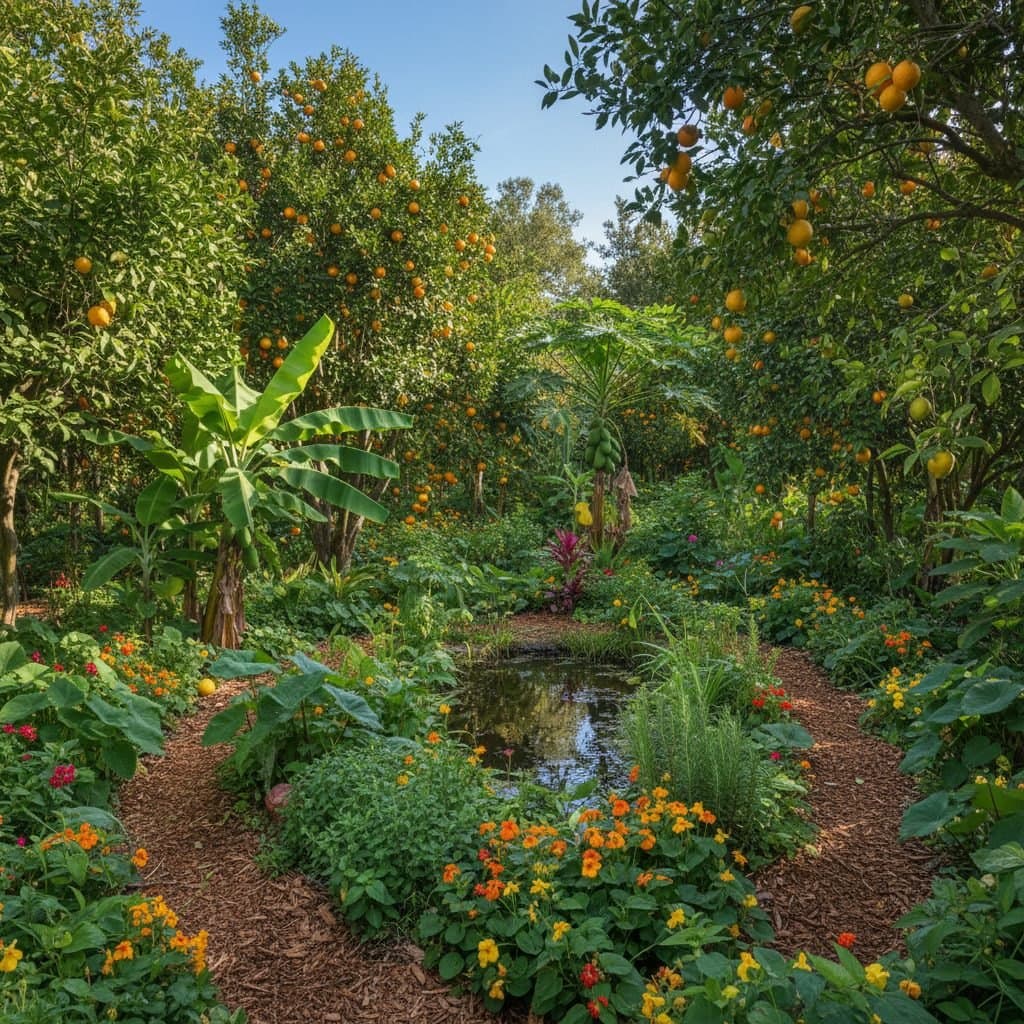
Permaculture offers a practical framework for creating such a system, moving beyond individual plants to design interconnected plant communities, or guilds. A citrus guild, part of a larger food forest, mimics natural ecosystems to reduce maintenance, conserve resources, and increase overall resilience. By carefully selecting plants that support each other and integrating smart water management, growers in these zones can cultivate abundant citrus harvests with less effort.
Site assessment for citrus success in zones 9-10
Before planting a single tree, a thorough site assessment is essential for any permaculture project, especially when designing a citrus guild in USDA zones 9-10. This involves understanding the unique characteristics of your land, from sun exposure to soil composition and microclimates. In Florida, for example, sandy soils often require significant organic matter amendments, while parts of Southern California might contend with heavy clay. Observing sun patterns throughout the year is vital; citrus trees generally need at least six to eight hours of direct sunlight daily to produce well. Mapping these elements helps determine the best placement for your main citrus trees and their supporting guild members.
Understanding microclimates and water flow
Microclimates (small areas with distinct climatic conditions) can significantly impact citrus growth. A north-facing wall might offer protection from intense afternoon sun in Arizona, while a low hollow or the foot of a slope in a zone 9 area of Georgia could be a frost pocket — cold air drains downhill and pools there on still nights. A south-facing slope, by contrast, is usually the warmest ground you have and the best place for tender citrus. Identifying these nuances allows for strategic plant placement, protecting tender varieties or providing necessary shade. Understanding the natural flow of water on your property is equally important; observing how water moves after a one-inch rain event can inform the placement of water-harvesting earthworks. For more on this, consider reading permaculture design: how to read a site before you plant it, which details methods for site analysis.
- map sun exposure patterns throughout the year
- test soil pH and nutrient levels (aim for 6.0-7.0 pH for citrus)
- identify natural water flow and drainage areas
- note prevailing wind directions and potential frost pockets
- observe existing vegetation and wildlife activity
Choosing the right citrus and companion plants
The success of a citrus guild hinges on selecting the right varieties for your specific USDA zone 9 or 10 location and pairing them with beneficial companion plants. Buy only certified, nursery-grown citrus from a registered nursery in your own state: huanglongbing (citrus greening) and Asian citrus psyllid quarantines cover much of the citrus-growing South and Southwest, and moving citrus plants across state (and in some places county) lines is restricted or prohibited. Check with your state department of agriculture before ordering. For example, in USDA zone 9b, ‘Satsuma’ mandarins and ‘Meyer’ lemons are often more cold-hardy than ‘Eureka’ lemons or ‘Valencia’ oranges, which thrive in zone 10. Consider the mature size of the citrus tree, its rootstock, and the heat it needs to sweeten fruit. A ‘Flying Dragon’ rootstock, for instance, can impart cold hardiness and dwarfing characteristics, making it suitable for smaller spaces or marginal zone 9 areas. Aim for a diversity of citrus types to extend your harvest season and provide a range of flavors.
Companion plant functions in a guild
Companion plants serve multiple functions within a citrus guild, supporting soil health, pest management, and overall ecosystem stability. Nitrogen fixers such as perennial peanut (Arachis glabrata) or various clovers capture atmospheric nitrogen and make some of it available to citrus roots over time, trimming the amount of bought-in fertilizer the tree needs. Dynamic accumulators, such as sterile Bocking 14 comfrey, draw up deep minerals and, when chopped and dropped, return these nutrients to the topsoil as mulch. Choose Bocking 14 rather than the seed-setting common comfrey (Symphytum officinale), and treat the leaves as mulch only — comfrey's pyrrolizidine alkaloids are hepatotoxic, so it is not food or fodder. Pest deterrents, like marigolds or garlic, are often planted to confuse or repel common citrus pests, though the evidence for repellent companion planting in tree crops is thin. These plants create a living mulch, suppressing weeds and conserving soil moisture. For more information on creating such systems, see permaculture gardening: no-dig beds, guilds, and zones.
- nitrogen fixers: perennial peanut (Arachis glabrata), white clover, cowpea
- dynamic accumulators: Bocking 14 comfrey, yarrow, dandelion
- pest deterrents: marigolds, garlic, nasturtiums
- pollinator attractors: borage, lavender, calendula
- mulch producers: comfrey, vetiver grass, sweet potato
Efficient water management with swales and drip systems
Water is a precious resource, especially in the often-dry climates of USDA zones 9 and 10, such as Southern California’s Mediterranean climate or Florida’s dry season. Implementing efficient water management strategies is paramount for a thriving citrus guild. Swales, which are level ditches dug along contours with an earthen berm on the downhill side, are excellent for passively harvesting rainwater. They slow, spread, and sink water into the landscape, recharging groundwater and making it available to plant roots over time. Plant citrus on the downhill berm, never in the swale itself — citrus will not tolerate saturated roots, and standing water in the root zone is an open invitation to Phytophthora root and foot rot. On flat, sandy Florida sites with a high water table, plant on a raised mound instead of digging a swale at all. A well-designed swale system can meaningfully cut the need for active irrigation in an established food forest, especially during periods of drought. For example, a 100-foot swale can capture thousands of gallons of water from a single heavy rain event.
Integrating drip irrigation for targeted watering
While swales handle passive water harvesting, a targeted drip irrigation system can provide precise water delivery during dry spells or for young, establishing trees. Drip systems deliver water directly to the root zone, minimizing evaporation and runoff, which uses noticeably less water than overhead sprinklers. For citrus, deep and infrequent watering is generally preferred over shallow, frequent watering, encouraging a strong root system. A soil moisture meter, such as the Soil Moisture Meter, can help you determine exactly when your trees need water, preventing both over and under-watering. Designing your drip system carefully, as outlined in designing a drip irrigation system, ensures optimal water use.
- install swales on contour to capture rainwater runoff
- use drip irrigation for targeted, efficient watering
- apply thick layers of organic mulch (4-6 inches deep) to retain soil moisture
- incorporate water-wise companion plants that thrive with less water
- monitor soil moisture levels regularly to prevent overwatering
Laying out your citrus food forest with permaculture zones
The permaculture zone system provides a logical framework for laying out your citrus food forest so that the most frequently visited and tended plants are closest to your home. Zone one, immediately adjacent to your house, is ideal for herbs, annual vegetables, and small, frequently harvested citrus like a ‘Kumquat’ or ‘Limequat’ that you might use daily. Moving outward, zone two might contain your primary citrus trees, such as ‘Navel’ oranges or ‘Grapefruit’, along with their guilds of companion plants, requiring weekly attention. This systematic approach reduces travel time and energy expenditure, making your system more efficient and enjoyable to manage, especially on properties larger than one acre.
Spacing and access paths in the food forest
Proper spacing between citrus trees and their companion plants is essential to prevent overcrowding and ensure adequate air circulation and sunlight. For most standard citrus trees, a spacing of 15-20 feet between trunks is recommended, though dwarf varieties can be planted closer, at 8-10 feet. Consider the mature canopy size and root spread of all plants. Incorporate clear, well-maintained access paths, at least 3 feet wide, to allow for easy harvesting, pruning, and observation. These paths can be mulched with wood chips or gravel, reducing weed pressure and providing a stable surface. A well-planned layout, as discussed in a permaculture garden plan: zones, guilds, and a first-year layout, can significantly improve the long-term productivity and manageability of your food forest, potentially saving dozens of hours of labor annually.
- zone one: herbs, annuals, small citrus (e.g., ‘Kumquat’) requiring daily visits
- zone two: main citrus trees, perennial vegetables, berries needing weekly care
- zone three: larger fruit trees, nut trees, and staple crops requiring less frequent attention
- zone four: managed woodlands, forage areas, or larger animal systems (e.g., chickens)
- zone five: wild, unmanaged areas for observation and natural processes
Citrus variety cold hardiness for zones 9-10
Citrus type | USDA Zone 9 suitability | USDA Zone 10 suitability | Notes |
|---|---|---|---|
Satsuma mandarin | Excellent (down to 15°F) | Excellent | Very cold hardy, sweet, easy to peel. Early season. |
Meyer lemon | Good (down to 20°F) | Excellent | More cold tolerant than ‘Eureka’ lemon, prolific bearer. |
Navel orange | Good (down to 26°F) | Excellent | Popular sweet orange, generally good for zone 9b with protection. |
Valencia orange | Moderate (down to 26°F) | Excellent | Late season, good for juice. Slightly less cold tolerant than ‘Navel’. |
Eureka lemon | Marginal (down to 28°F) | Good | Less cold hardy, needs protection in zone 9a/9b. |
Key lime | Marginal (down to 30°F) | Excellent | Very tender, best in zone 10 or protected zone 9. |
Water savings: Swales cut active irrigation needs in established food forests during dry periods by holding rainfall on site instead of letting it run off.
Soil pH target: Citrus trees thrive in slightly acidic to neutral soil with a pH range of 6.0 to 7.0, which can be maintained with organic amendments over 3-5 years.
Nitrogen contribution: Nitrogen-fixing companion plants supply part of a citrus tree's nitrogen needs, reducing reliance on external fertilizers.
Shop permaculture essentials
Frequently asked questions
What are the best citrus varieties for USDA zone 9?
For USDA zone 9, especially 9a or 9b, cold-hardy varieties like ‘Satsuma’ mandarins, ‘Meyer’ lemons, and ‘Navel’ oranges are excellent choices. These can typically tolerate temperatures down to about 15-26°F on mature, hardened-off wood. Hanging fruit is far more tender than wood and is damaged by freezes the tree itself shrugs off, and young trees need frost protection for their first several winters.
How much space does a citrus guild require?
The space required depends on the mature size of your chosen citrus trees and the density of your companion plantings. A single standard citrus tree and its guild can occupy a circular area 15-20 feet in diameter. For a small backyard, even one or two guilds can be highly productive, yielding hundreds of pounds of fruit annually.
How often should I water my established citrus trees in a guild?
Established citrus trees in a well-designed guild with swales and mulch generally need deep watering once every one to three weeks during dry periods, depending on soil type and weather. Monitoring soil moisture at a depth of 6-12 inches with a soil moisture meter helps prevent over or under-watering.
Can I grow citrus in a food forest if I live in a colder part of zone 9?
Yes, you can. In colder parts of zone 9, focus on the most cold-hardy varieties like ‘Satsuma’ mandarins and use strategies like planting on the south side of structures, integrating windbreaks, and providing temporary frost protection when temperatures drop below 20°F. Selecting dwarfing rootstocks can also help manage size for easier protection.
What are the benefits of using companion plants in a citrus guild?
Companion plants offer numerous benefits, including improving soil fertility through nitrogen fixation, deterring pests, attracting beneficial insects for pollination and pest control, and acting as living mulches to conserve soil moisture. This approach reduces the need for external inputs over time and supports a healthy ecosystem.