Key takeaways
- Mealybugs appear as small, white, cottony masses, often found in leaf axils and on stems of plants like orchids or citrus.
- Early detection matters; regularly inspect new plants and existing ones, especially in warmer US regions like Florida.
- A 30:1 water-to-70% isopropyl alcohol solution, applied with a cotton swab, is an effective spot treatment.
- Repeat treatments every 5 to 7 days for at least three weeks are often necessary to break the mealybug life cycle.
- Quarantine new plants for 30 days and maintain good plant hygiene to prevent infestations in your home.
- Mealybugs can transmit plant viruses, causing significant damage to susceptible species like hibiscus or coleus.
Quick answer: Mealybugs on houseplants can be effectively treated with a 30:1 water-to-70% isopropyl alcohol solution applied with a cotton swab. Consistent application every 5-7 days for at least three weeks breaks their life cycle.
In US homes, particularly in humid states like Florida or along the Gulf Coast, mealybugs are a common and persistent houseplant pest. These small, soft-bodied insects can quickly colonize a plant, forming noticeable white, cottony masses that are often mistaken for mold. While they may seem daunting, especially on a prized orchid or a beloved fiddle-leaf fig, effective treatment options exist. Understanding their life cycle and habits is the first step toward reclaiming your indoor garden from these unwelcome guests.
This article focuses on identifying mealybug infestations and details a practical, widely used method for their eradication: the rubbing alcohol treatment. With consistent application and proactive measures, you can protect your houseplants from significant damage.
Identifying mealybugs on your houseplants
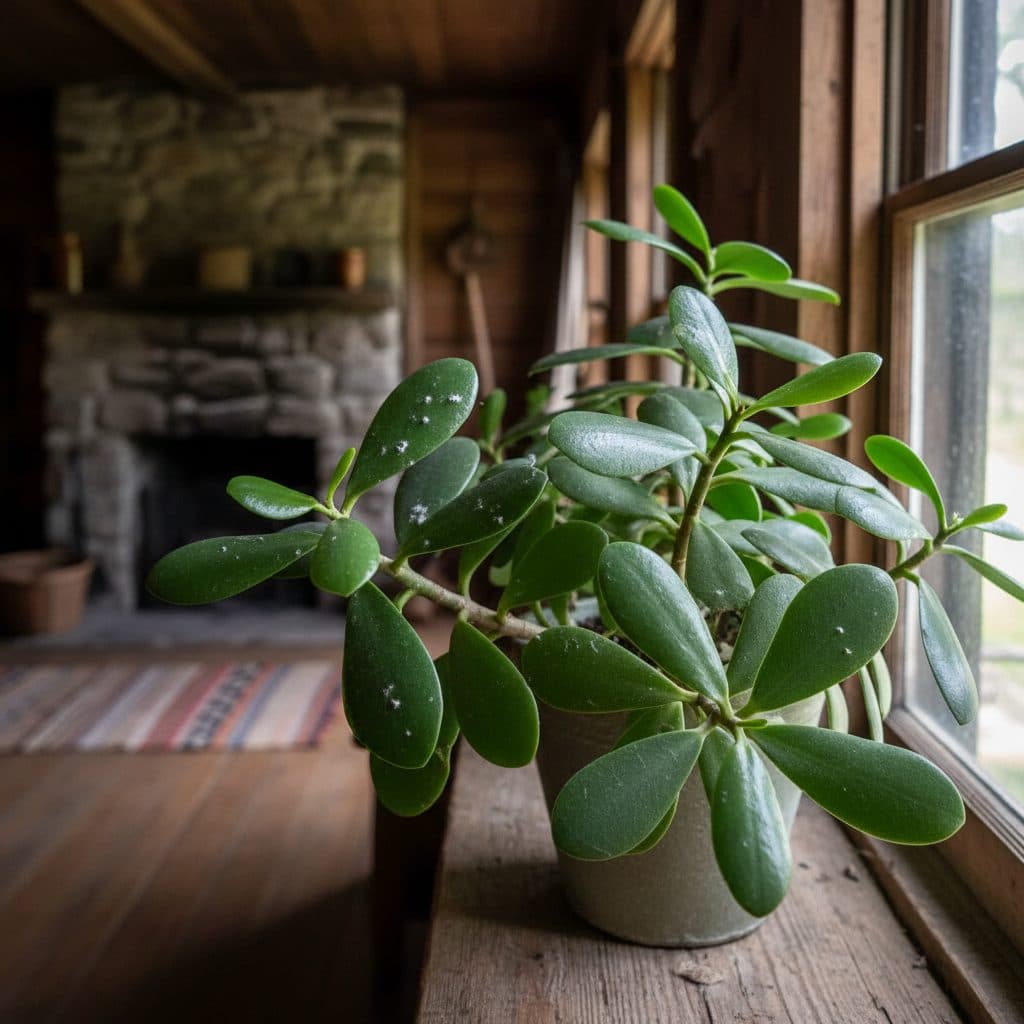
Mealybugs are easily recognizable, appearing as small, white, segmented insects covered in a powdery, waxy coating. This coating gives them their characteristic “cottony” appearance, often found clustered in leaf axils, along stems, or on the undersides of leaves. In a typical infestation, you might see individual insects ranging from 0.05 to 0.20 inches (1.3 to 5.0 mm) in length, alongside sticky honeydew and sometimes black sooty mold. The citrus mealybug (Planococcus citri) and the long-tailed mealybug (Pseudococcus longispinus) are two of the most common species encountered on houseplants in US apartments and homes, with Pseudococcus longispinus being particularly prevalent on orchids and ferns [1].
where to look for signs of infestation
Regular, close inspection of your houseplants is the most effective way to catch an infestation early, before populations grow too large. Focus on the hidden areas of the plant where mealybugs prefer to congregate, as they seek sheltered spots to feed and lay eggs. Check along the veins of leaves, especially on the underside, and inside the tight crevices where leaves meet stems. A magnifying glass can reveal tiny, immature nymphs that are less than 0.04 inches (1 mm) long. Early detection can significantly reduce treatment time, often requiring fewer applications over a shorter period.
- White, cottony masses in leaf axils or stem joints.
- Sticky residue (honeydew) on leaves or surfaces below the plant.
- Tiny, oval, soft-bodied insects, often less than 0.20 inches long.
- Stunted plant growth or yellowing leaves.
- Black sooty mold growing on honeydew deposits.
Understanding the mealybug life cycle and damage
Mealybugs, like many other scale insects, undergo a relatively simple life cycle that can be completed in as little as 20 days under optimal indoor conditions, such as temperatures around 75°F (24°C). Most species reproduce sexually, with females laying hundreds of eggs in a cottony ovisac, though some, like the long-tailed mealybug (Pseudococcus longispinus), give live birth to nymphs [1]. These nymphs are mobile and actively seek out feeding sites, often dispersing across the plant within hours of hatching. This rapid reproductive rate is why consistent treatment breaks the cycle.
how mealybugs harm your plants
Mealybugs feed by inserting their needle-like mouthparts into plant tissue and sucking out sap, which contains vital nutrients. This feeding depletes the plant’s energy reserves, leading to several visible symptoms. Common signs include yellowing leaves, distorted new growth, and overall stunted development. Heavily infested plants, especially those with delicate foliage like ferns or coleus, may experience significant leaf drop, reducing their photosynthetic capacity. Furthermore, mealybugs excrete a sticky substance called honeydew, which can cover leaves and stems. This honeydew attracts ants and provides a substrate for the growth of black sooty mold, further hindering photosynthesis and diminishing the plant’s aesthetic appeal. Some mealybug species are also known to transmit plant viruses, potentially causing systemic diseases in susceptible hosts [5].
- Sap-sucking depletes plant nutrients.
- Honeydew excretion leads to sticky leaves and sooty mold.
- Stunted growth and distorted foliage.
- Yellowing leaves and premature leaf drop.
- Potential transmission of plant viruses.
Preventing mealybug infestations
Preventing mealybug infestations is often more straightforward than treating an established outbreak. A proactive approach can save your plants and your time, significantly reducing the need for intensive treatments. The most critical step is to quarantine any new plant acquisitions for at least 30 days. During this period, keep the new plant separate from your existing collection, ideally in a different room or a dedicated reflective indoor grow tent. This isolation period allows you to closely monitor for any signs of pests, including mealybugs, before they can spread to your other plants.
maintaining a clean and healthy environment
Beyond quarantine, maintaining a clean and healthy growing environment significantly reduces the likelihood of mealybug problems. Regularly inspect your plants, especially the undersides of leaves and stem joints, at least once every 7 to 10 days. Remove any dead or decaying plant material, as this can harbor pests and create favorable conditions for their proliferation. Wiping down leaves with a damp cloth can also help remove dust and deter pests, improving the plant’s overall health and ability to resist infestations. For plants that are particularly susceptible, such as citrus or hibiscus, consider a light preventative spray of neem oil solution every 2 to 4 weeks. Ensuring proper air circulation, perhaps with a small fan, can also make the environment less appealing to mealybugs, which prefer stagnant conditions, especially in spaces under 200 square feet.
- Quarantine new plants for 30 days before introducing them to your collection.
- Inspect plants thoroughly every 7-10 days, focusing on hidden areas.
- Remove dead leaves and debris promptly to eliminate hiding spots.
- Wipe down leaves regularly to remove dust and interrupt pest activity.
- Maintain good air circulation around plants, especially in enclosed spaces.
The rubbing alcohol treatment: a detailed guide
The rubbing alcohol treatment is a highly effective and readily available method for eradicating mealybugs from houseplants. Isopropyl alcohol, typically sold at 70% concentration in US pharmacies, acts as a desiccant, dissolving the mealybug’s waxy coating and dehydrating its soft body on contact. This method is particularly effective for spot treatments on smaller infestations or for targeting individual clusters of pests. While generally safe for most plants, it’s important to dilute the alcohol properly to prevent leaf burn, especially on sensitive species like ferns or African violets. A 30:1 ratio of water to 70% isopropyl alcohol is a widely recommended starting point, reducing the alcohol concentration to approximately 2.3%.
step-by-step application and safety tips
Before applying the alcohol solution to your entire plant, always perform a patch test on a small, inconspicuous leaf or stem. Wait 24 to 48 hours to observe any adverse reactions, such as yellowing or spotting. If no damage occurs, proceed with treatment. For direct application, dip a cotton swab or a small paintbrush into the diluted solution and gently dab it directly onto each visible mealybug and cottony mass. Ensure thorough coverage, as direct contact is necessary for the alcohol to work. For larger infestations, a fine-mist spray bottle can be used, but ensure the solution does not pool in the crown of the plant. Repeat this treatment every 5 to 7 days for at least three weeks to target newly hatched nymphs and break the mealybug life cycle. Consistency is key; missing a single treatment can allow a new generation to emerge, setting back your efforts. After treatment, consider a general plant health boost, perhaps by checking for other issues like powdery mildew, which can sometimes co-occur with weakened plants.
- Mix 30 parts water with 1 part 70% isopropyl alcohol.
- Perform a patch test on a small leaf and wait 24-48 hours.
- Dip a cotton swab in the solution and dab directly onto mealybugs.
- For larger areas, use a fine-mist sprayer, avoiding plant crowns.
- Repeat treatment every 5-7 days for a minimum of three weeks.
Post-treatment care and ongoing vigilance
After successfully treating a mealybug infestation with rubbing alcohol, your plant will need some post-treatment care to fully recover and thrive. The stress of an infestation and the treatment itself can weaken a plant, making it more susceptible to other issues. Ensure the plant receives adequate light, appropriate watering, and consistent humidity. Avoid over-fertilizing immediately after treatment, as the plant’s root system may be temporarily compromised; wait at least 7 to 10 days before resuming a regular feeding schedule at half strength. For plants that have lost significant foliage, consider light pruning of severely damaged leaves to encourage new, healthy growth. A healthy plant can recover its vigor within a month of successful treatment.
long-term prevention and plant health
Ongoing vigilance is paramount to prevent future mealybug outbreaks. Make plant inspection a regular part of your routine, dedicating 5 to 10 minutes per week to check your entire collection. Pay special attention to plants that have been previously infested, as they may be more prone to re-infestation. Maintain optimal growing conditions for each plant species, as stressed plants are more vulnerable to pests. For instance, a plant requiring USDA zone 10 conditions will struggle in a cooler, drier indoor environment, making it a prime target. Consider a systemic insecticide for highly susceptible or frequently re-infested plants, especially if you have a large collection. These products, typically applied to the soil, are absorbed by the plant and can provide protection for several weeks. Remember, a healthy, well-cared-for plant is its own best defense against pests, significantly reducing the chance of severe infestations.
- Provide consistent light, water, and humidity for recovery.
- Avoid immediate over-fertilization; wait 7-10 days before resuming.
- Prune severely damaged leaves to encourage new growth.
- Continue weekly inspections of all houseplants for early detection.
- Maintain optimal growing conditions to boost plant immunity.
Comparison of Common Mealybug Treatments
Treatment Method | Effectiveness | Application Frequency | Pros | Cons |
|---|---|---|---|---|
Rubbing Alcohol (30:1) | High (spot treatment) | Every 5-7 days for 3+ weeks | Inexpensive, readily available, fast-acting on contact | Requires direct contact, potential for plant burn if not diluted, labor-intensive for large plants |
Insecticidal Soap | Moderate to High | Every 7-10 days for 3+ weeks | Relatively safe for plants, suffocates pests, good for broad coverage | Requires direct contact, may need multiple applications, can leave residue |
Neem Oil Solution | Moderate (slow-acting) | Every 7-14 days for 4+ weeks | Repels and interrupts pest life cycle, systemic properties, broad-spectrum | Slower results, distinct odor, can clog stomata if overused, less effective on adult mealybugs |
Systemic Insecticides | High (long-lasting) | Every 60-90 days | Long-term protection, absorbed by plant (less contact needed), effective against hidden pests | Chemical, not suitable for edible plants, potential environmental concerns, can harm beneficial insects |
Early Detection: Regular inspection of houseplants can significantly reduce pest outbreaks, saving treatment time and effort.
Dilution Ratio: A 30:1 water-to-70% isopropyl alcohol solution is recommended to effectively treat mealybugs while minimizing plant damage.
Frequently asked questions
What do mealybugs look like on houseplants?
Mealybugs appear as small, oval, soft-bodied insects, typically 0.05 to 0.20 inches (1.3 to 5.0 mm) long, covered in a white, powdery, waxy substance. They often cluster in the crevices where leaves meet stems, resembling tiny cotton balls. You might also notice sticky honeydew or black sooty mold on the leaves.
How often should I treat my plants with rubbing alcohol for mealybugs?
You should treat your infested plants with the diluted rubbing alcohol solution every 5 to 7 days for a minimum of three weeks. This schedule targets newly hatched nymphs and breaks the mealybug’s life cycle, which can be completed in as little as 20 days.
Can rubbing alcohol harm my plants?
Yes, undiluted rubbing alcohol can burn or damage plant foliage, especially on sensitive species. It’s essential to dilute 70% isopropyl alcohol with water at a 30:1 ratio (water to alcohol) and always perform a patch test on a small, inconspicuous part of the plant 24-48 hours before full application. This reduces the alcohol concentration to about 2.3%.
What are the signs of a severe mealybug infestation?
Signs of a severe infestation include extensive white, cottony masses covering large portions of the plant, significant yellowing or wilting of leaves, stunted new growth, and a heavy coating of sticky honeydew. In severe cases, plants may experience significant leaf drop, reducing their photosynthetic capacity.
How can I prevent mealybugs from returning?
To prevent mealybugs from returning, quarantine all new plants for at least 30 days. Regularly inspect your plants every 7 to 10 days, remove dead foliage, and ensure good air circulation. Maintaining optimal growing conditions for each plant species also significantly boosts their natural resistance to pests, reducing the chance of re-infestation.
References
- Philippine Mealybugs of the Genus Pseudococcus (Pseudococcidae, Coccoidea, Hemiptera) (2023). Philippine Mealybugs of the Genus Pseudococcus (Pseudococcidae, Coccoidea, Hemiptera).
- To All the Houseplants I Have Killed (2023). To All the Houseplants I Have Killed.
- Semiochemicals in Mealybugs (2016). Semiochemicals in Mealybugs.
- Happy houseplants : how to grow and maintain your indoor plants / by Elizabeth Walker. (1992). Happy houseplants : how to grow and maintain your indoor plants / by Elizabeth Walker..
- Mealybugs as Vectors (2016). Mealybugs as Vectors.
- USDA Natural Resources Conservation Service (2024). USDA Natural Resources Conservation Service.