Key takeaways
- Rain gardens can reduce stormwater runoff from impervious surfaces by 30% to 50% in urban areas.
- Native plants are adapted to local climates and soils, requiring up to 50% less supplemental water once established.
- Ollas, buried clay pots, can reduce irrigation water use by 50% to 70% compared to surface watering methods.
- Wicking beds use capillary action to draw water from a reservoir, potentially cutting water consumption by 40% to 50%.
- Proper rain garden design includes a 6-inch to 12-inch depression and a soil mix with 50% sand, 20% compost, and 30% existing soil.
- Selecting native species like Cardinal Flower (Northeast) or Joe Pye Weed (Southeast) supports local biodiversity and pollinator populations.
Quick answer: Native rain gardens reduce stormwater runoff by 30-50% by capturing and filtering rainwater from impervious surfaces. They conserve water by using native plants, which require up to 50% less supplemental irrigation, and passive irrigation methods like ollas and wicking beds.
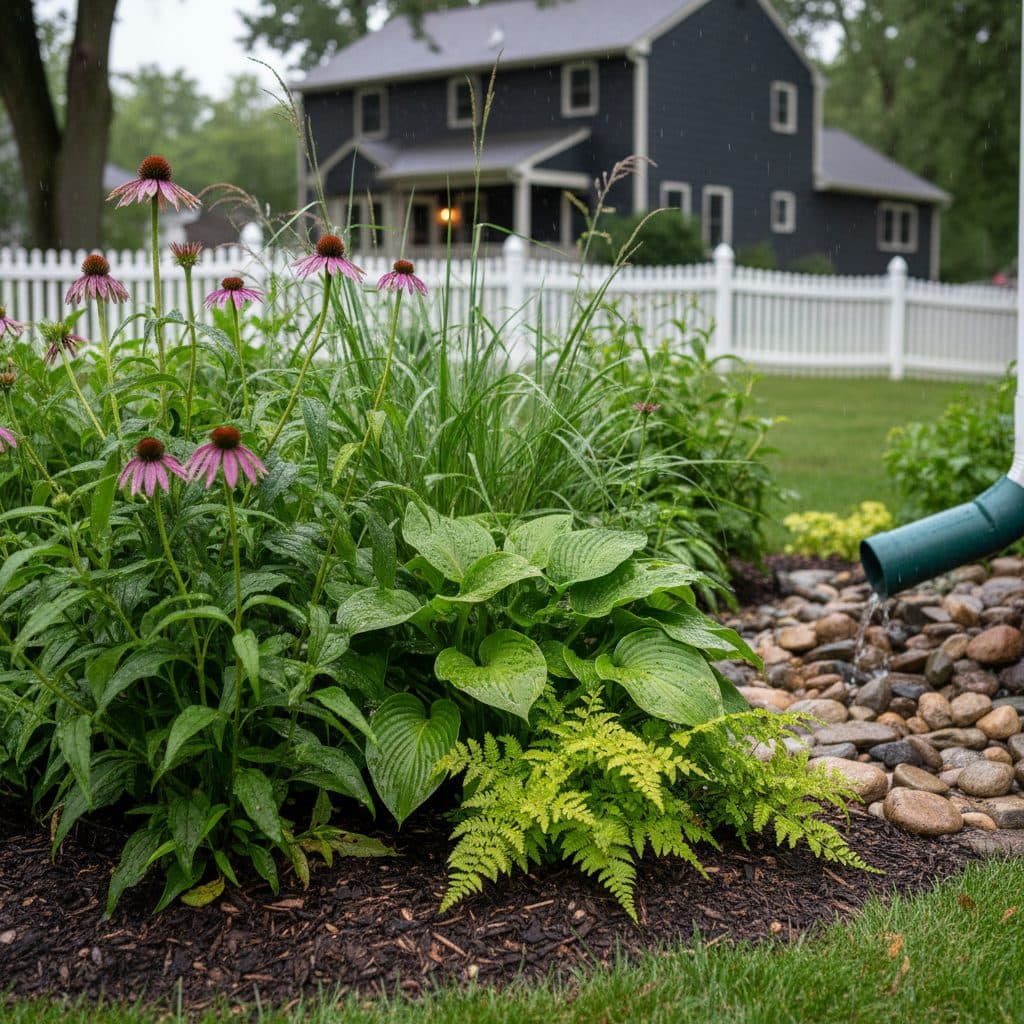
In many US cities, stormwater runoff carries pollutants into waterways, impacting water quality and causing localized flooding. For instance, in the Chesapeake Bay watershed, impervious surfaces cover over 15% of the land, contributing significantly to runoff issues. Rain gardens offer a practical solution, designed to capture and filter this water, reducing runoff volumes by 30% to 50% in residential settings. These planted depressions allow rainwater to soak into the ground slowly, recharging groundwater and filtering out contaminants before they reach streams and rivers.
Integrating native plants into these gardens is a strategy that pays dividends. Native species are naturally adapted to local rainfall patterns, soil types, and temperatures, meaning they require up to 50% less supplemental irrigation once established compared to non-native alternatives. This article explores suitable native plants for rain gardens across four major US regions (Northeast, Midwest, Southeast, and Pacific Northwest) and discusses passive irrigation techniques like ollas and wicking beds that further conserve water in your landscape.
Foundational principles of rain gardens and passive irrigation
A rain garden is essentially a shallow depression, typically 6 inches to 12 inches deep, designed to capture rainwater from impervious surfaces like rooftops or driveways. The goal is to allow water to slowly infiltrate the soil over a 24-hour to 48-hour period, preventing it from overwhelming storm drains. A well-designed rain garden often includes a specialized soil mix, commonly 50% sand, 20% compost, and 30% existing soil, to improve drainage and support plant growth. This structure can reduce peak stormwater runoff rates by up to 90% during moderate rain events.
integrating passive irrigation for water efficiency
Beyond the rain garden’s inherent water-saving design, passive irrigation methods can further improve water conservation, especially during dry spells or for specific plant needs. Ollas, for example, are unglazed clay pots buried near plants and filled with water. The porous clay allows water to seep slowly into the soil, directly to the root zone, reducing water loss from evaporation by 50% to 70% compared to surface watering. Another effective technique is the wicking bed, which features a water reservoir at the bottom, allowing plants to draw water upwards through capillary action. These systems can cut water consumption by 40% to 50%, making them ideal for vegetable gardens or raised beds adjacent to rain gardens. For new plantings, consider using an Expandable Hose with 7-Pattern Spray Nozzle to deliver water precisely.
- Select a site at least 10 feet from your home’s foundation.
- Calculate the size based on your impervious surface area—a common ratio is 5% to 10% of the contributing area.
- Dig a shallow depression, 6 inches to 12 inches deep, with gently sloping sides.
- Amend the soil with a mixture of sand and compost for improved drainage.
- Install a small berm on the downhill side to retain water.
Native rain garden plants for the Northeast
These foundational principles of points carry into this section, too.
The Northeast region, encompassing USDA zones 3 to 7, experiences varied rainfall patterns, often with heavy spring and summer downpours. Native plants here must tolerate periods of both inundation and drier conditions. Cardinal Flower (Lobelia cardinalis) is a striking choice, thriving in the wettest parts of a rain garden, tolerating up to 6 inches of standing water for 24 hours. Its vibrant red flowers attract hummingbirds, with studies showing native plants can increase hummingbird visits by 30% [5]. Another excellent option is Swamp Milkweed (Asclepias incarnata), a critical host plant for monarch butterfly caterpillars, supporting a 25% increase in local butterfly populations. It prefers moist to wet soils and can handle occasional flooding.
selecting resilient species
For the slightly drier edges of a Northeast rain garden, Blue Flag Iris (Iris versicolor) provides beautiful blue-purple blooms and tolerates both wet feet and drier periods once established. This species is hardy in USDA zones 3 to 9 and can grow 2 feet to 3 feet tall. When establishing these plants, a consistent water supply is important, which can be managed with a Garden PE Irrigation Hose for efficient delivery. Consider the mature size of plants; a single Cardinal Flower can spread 1 foot to 2 feet wide. Choosing native plants supports local biodiversity by giving native insects and birds habitat and food, which improves the overall health of your local ecosystem by up to 40%.
- Cardinal Flower (Lobelia cardinalis): Prefers full sun to part shade, tolerates wet conditions, attracts hummingbirds.
- Swamp Milkweed (Asclepias incarnata): Full sun, wet to moist soil, essential for monarch butterflies.
- Blue Flag Iris (Iris versicolor): Full sun to part shade, adaptable to various moisture levels, hardy in USDA zones 3-9.
- New England Aster (Symphyotrichum novae-angliae): Full sun, moist to dry soil, late-season nectar source.
- Joe Pye Weed (Eutrochium purpureum): Full sun to part shade, moist soil, attracts a wide range of pollinators.
Midwest rain garden plant selections
That work on native rain garden sets up what follows here.
The Midwest, covering USDA zones 3 to 6, experiences hot, humid summers and cold winters, often with periods of heavy rainfall followed by drought. Rain garden plants in this region need to be robust and adaptable. Purple Coneflower (Echinacea purpurea) is a staple, thriving in full sun and a variety of soil conditions, including those that are occasionally wet. It grows 2 feet to 4 feet tall and attracts numerous pollinators and increases bee visits by 20% to 30%. Another excellent choice is Blazing Star (Liatris spicata), which produces tall, spiky purple flowers that are a magnet for butterflies, supporting up to 15 different pollinator species [3]. It prefers full sun and moist to wet soils, handling periods of standing water up to 4 inches deep.
supporting local wildlife with native plantings
For the central, wetter zones of a Midwest rain garden, Great Blue Lobelia (Lobelia siphilitica) offers beautiful blue flowers and tolerates consistently moist to wet soil. It is hardy in USDA zones 4 to 8 and typically grows 1 foot to 3 feet tall. These plants, once established, require minimal care, often needing only 1 inch of supplemental water per week during extended dry periods. Consider incorporating a Drought tolerant plants article to guide further selections. Using native plants can increase local insect biomass by 10% to 15%, which in turn supports bird populations. Ensure your soil pH is suitable; a 3-in-1 Soil pH, Moisture & Light Meter can help monitor conditions.
- Purple Coneflower (Echinacea purpurea): Full sun, adaptable to wet and dry, attracts bees and butterflies.
- Blazing Star (Liatris spicata): Full sun, moist to wet soil, excellent for butterflies.
- Great Blue Lobelia (Lobelia siphilitica): Full sun to part shade, consistently moist to wet soil, blue flowers.
- Prairie Dropseed (Sporobolus heterolepis): Full sun, adaptable, provides fine texture and erosion control.
- Wild Bergamot (Monarda fistulosa): Full sun, moist to dry soil, attracts hummingbirds and bees.
Southeast native plants for rain gardens
This builds directly on midwest rain garden.
The Southeast, spanning USDA zones 6 to 9, is characterized by hot, humid summers, mild winters, and significant rainfall, often concentrated in tropical storms. Plants for this region’s rain gardens must endure both intense heat and prolonged periods of saturation. Joe Pye Weed (Eutrochium purpureum) is a tall, stately plant that thrives in full sun to part shade and consistently moist to wet soils. It can grow 5 feet to 7 feet tall and its large, purple flower clusters are highly attractive to a wide array of butterflies, supporting up to 40 different insect species [2]. Another robust option is **River Oats* (Chasmanthium latifolium*), a native grass that provides texture and movement. It tolerates both wet and dry conditions, growing 2 feet to 3 feet tall, and is hardy in USDA zones 3 to 9.
managing water with passive systems
For the wettest areas of a Southeast rain garden, Lizard’s Tail (Saururus cernuus) is an excellent groundcover or marginal plant, thriving in standing water up to 6 inches deep. It produces unique white, bottlebrush-like flowers and is hardy in USDA zones 4 to 9. The region’s high evaporation rates make passive irrigation techniques particularly valuable. Ollas can be strategically placed to ensure plants receive consistent moisture during dry spells, reducing the need for manual watering by 60%. Consider how greywater systems could supplement your rain garden’s water supply, especially for non-edible plants, potentially diverting hundreds of gallons of water from drains annually.
- Joe Pye Weed (Eutrochium purpureum): Full sun to part shade, moist to wet soil, attracts butterflies.
- River Oats (Chasmanthium latifolium): Full sun to part shade, adaptable to wet and dry, ornamental grass.
- Lizard’s Tail (Saururus cernuus): Part shade to full sun, very wet to standing water, unique flowers.
- Cardinal Flower (Lobelia cardinalis): Full sun to part shade, wet soil, attracts hummingbirds.
- Sweet Pepperbush (Clethra alnifolia): Full sun to part shade, moist to wet soil, fragrant flowers.
Pacific Northwest rain garden plant choices
Those southeast native plants habits matter here as well.
The Pacific Northwest, covering USDA zones 6 to 9, is known for its mild, wet winters and dry summers. Rain gardens here need plants that can handle seasonal waterlogging and then endure extended dry periods. Pacific Coast Iris (Iris douglasiana) is an excellent choice for the drier edges of a rain garden, preferring moist but well-drained soil. It is hardy in USDA zones 7 to 10 and offers beautiful spring blooms in various colors. For areas that receive more water, Red Osier Dogwood (Cornus sericea) is a versatile shrub that thrives in wet conditions and provides year-round interest with its bright red stems. It can grow 6 feet to 9 feet tall and is hardy in USDA zones 2 to 7.
designing for seasonal moisture shifts
For the wettest zones of a Pacific Northwest rain garden, Western Sword Fern (Polystichum munitum) provides evergreen foliage and can tolerate periods of standing water, though it prefers consistently moist soil. It is hardy in USDA zones 6 to 9 and grows 3 feet to 4 feet tall. During the dry summer months, supplemental watering might be necessary for newly established plants, and a 5 L Garden Pressure Sprayer can be useful for targeted application. Incorporating a 2-inch to 3-inch layer of wood chip mulch can help retain soil moisture by up to 30%, reducing the need for frequent watering. This region’s unique climate means careful plant selection is paramount for a successful rain garden, ensuring plants can survive both 60 inches of annual rainfall and 3 months of summer drought.
- Pacific Coast Iris (Iris douglasiana): Full sun to part shade, moist well-drained soil, colorful spring blooms.
- Red Osier Dogwood (Cornus sericea): Full sun to part shade, wet to moist soil, red winter stems.
- Western Sword Fern (Polystichum munitum): Part shade to full shade, moist soil, evergreen foliage.
- Oregon Grape (Mahonia aquifolium): Part shade, adaptable soil, provides winter interest and berries.
- Salmonberry (Rubus spectabilis): Full sun to part shade, moist soil, edible berries, attracts birds.
Comparison of Passive Irrigation Techniques
Technique | Water Savings | Installation Complexity | Best Use Case |
|---|---|---|---|
Ollas | 50% to 70% | Low | Individual plants, small beds, potted plants |
Wicking Beds | 40% to 50% | Medium | Raised beds, vegetable gardens, container planting |
Rain Gardens | 30% to 50% runoff reduction | Medium to High | Stormwater management, landscape aesthetics, biodiversity |
Water Savings: Ollas can reduce irrigation water use by 50% to 70% compared to traditional surface watering methods.
Runoff Reduction: Properly designed rain gardens can reduce stormwater runoff by 30% to 50% from impervious surfaces like rooftops.
Pollinator Support: Native plants, like Purple Coneflower, can increase bee visits by 20% to 30% in your garden.
Frequently asked questions
How deep should a rain garden be?
A typical rain garden should be 6 inches to 12 inches deep, with gently sloping sides. This depth allows it to hold a significant volume of water, up to 1,000 gallons for a 100 sq ft garden, during a rain event, giving it time to infiltrate the soil.
What kind of soil is best for a rain garden?
The ideal soil for a rain garden is a mix that promotes good drainage while retaining some moisture. A common recommendation is a blend of 50% sand, 20% compost, and 30% existing soil, which allows water to infiltrate at a rate of at least 1 inch per hour.
Do rain gardens attract mosquitoes?
When designed correctly, rain gardens should not attract mosquitoes. They are engineered to drain completely within 24 to 48 hours after a rain event, which is too short a period for mosquito larvae to develop, as they typically require 7 to 10 days in standing water.
How much water can an olla save?
Ollas are highly efficient passive irrigation tools, capable of reducing water consumption by 50% to 70% compared to overhead or surface drip irrigation. A single medium-sized olla can effectively water plants in a 2-foot diameter area for several days on one filling.
Are wicking beds suitable for all plants?
Wicking beds are excellent for many plants, especially those with high water needs like vegetables, herbs, and some flowering annuals. However, plants that prefer very dry conditions or deep taproots might not thrive as well, as the soil in a wicking bed remains consistently moist, often at 60% saturation.
How often do I need to water a rain garden?
Once established, typically after one to two growing seasons, a rain garden with native plants should require minimal to no supplemental watering. During extended dry periods, such as a 3-week drought, you might need to provide 1 inch of water per week, especially for younger plants.
References
- Got Sun? (2013). Got Sun?.
- Native Plants of the Southeast: A Comprehensive Guide to the Best 460 Species for the Garden (2017). Native Plants of the Southeast: A Comprehensive Guide to the Best 460 Species for the Garden.
- Selecting the “Best of the Best” Plants for Your Garden (2017). Selecting the “Best of the Best” Plants for Your Garden.
- Behavior of native and non-native plants in two tropical rain forests on Oahu, Hawaiian Islands (1980). Behavior of native and non-native plants in two tropical rain forests on Oahu, Hawaiian Islands.
- Attracting hummingbirds to your garden using native plants (2015). Attracting hummingbirds to your garden using native plants.
- USDA Natural Resources Conservation Service (2024). USDA Natural Resources Conservation Service.