Key takeaways
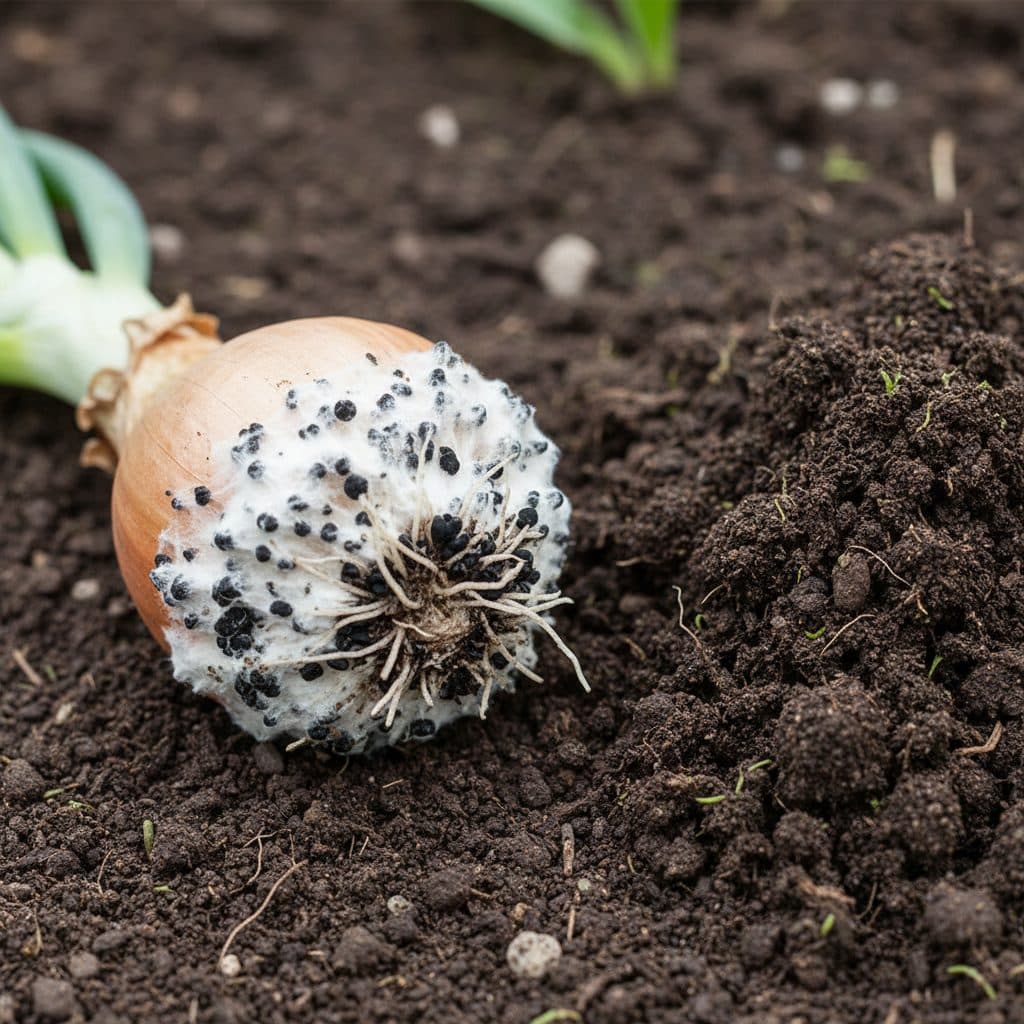
- Recognise white rot by yellowing foliage, soft decaying bulb bases, and fluffy white fungal growth with black sclerotia.
- Understand that resting sclerotia of Stromatinia cepivora survive in garden soil for at least fifteen years without a host.
- Acknowledge that no chemical fungicides are approved for home gardeners in the UK; management relies on cultural controls.
- Grow alliums in clean raised beds, troughs, or container potting mixes if your allotment soil is contaminated.
- Practice rigorous tool and boot hygiene to prevent carrying sclerotia in soil between growing beds.
Quick answer: Onion white rot is a serious soil-borne fungal disease caused by Stromatinia cepivora that attacks all allium crops, including onions, garlic, leeks, and shallots. Because resting sclerotia persist in garden soil for at least 15 years and no domestic chemical cures exist in the UK, management relies on strict quarantine, hygiene, and growing alliums in isolated containers or uncontaminated raised beds.
Onion white rot is widely regarded as one of the most frustrating challenges facing allotment holders and kitchen gardeners across the United Kingdom. Caused by the specialised fungal pathogen Stromatinia cepivora (historically classified as Sclerotium cepivorum), this disease attacks all cultivated members of the Allium genus, including bulb onions, shallots, garlic, leeks, and spring onions.
Identifying and understanding onion white rot early is critical for any grower. Once the fungus enters a bed, it renders the soil inhospitable to conventional allium cultivation for decades. The pathogen produces microscopic, poppy-seed-like survival structures called sclerotia that lie dormant in the ground, waiting for chemical signals from allium roots before germinating.
Because there are no approved chemical fungicides available to home gardeners for treating white rot in the UK, tackling this problem requires honest assessment, biological insight, and rigorous cultural practices.
Recognising the symptoms of onion white rot
White rot typically strikes from mid-spring through early summer, though in overwintered crops it can appear whenever soil temperatures sit between 10°C and 20°C with adequate moisture.
Watch for the following symptoms in your allium beds:
- Foliage yellowing and dieback: The outer leaves turn yellow from the tip downwards, wilting prematurely while surrounding non-allium plants look healthy.
- Stunted, loose plants: Because the fungal mycelium destroys the root system, infected plants pull out of the ground with zero resistance when tugged.
- Fluffy white fungal growth: Inspecting the base of the bulb reveals a dense, cottony white growth of fungal mycelium covering the root plate.
- Black sclerotia: As the fungus exhausts the plant tissue, it produces hundreds of tiny, spherical black structures resembling coarse ground black pepper embedded within the white mycelium.
- Soft watery rot: The base of the bulb becomes soft, brown, and foul-smelling as secondary bacterial rots enter the damaged tissues.
For broader diagnostic comparisons across garden crops, refer to our systematic guide on plant disease diagnosis.
The biology of Stromatinia cepivora and soil persistence
The exceptional persistence of white rot lies in the lifecycle of Stromatinia cepivora.
Unlike many common garden pathogens that die off once host debris decomposes, white rot sclerotia have thick, melanised outer walls that resist microbial breakdown, freezing temperatures, and drought. Sclerotia are generally reckoned to stay viable for at least 15 years, and gardeners should plan on the ground being unusable for alliums for that long.
The fungus is host-specific. Sclerotia stay dormant until allium roots release non-volatile alk(en)yl cysteine sulphoxides into the soil. Soil bacteria break these down into volatile sulphur compounds, and it is those volatiles that trigger the sclerotia to germinate and produce hyphae that grow through the soil to penetrate the root tissue.
Once inside the host, the hyphae spread rapidly through the root cortex into the basal plate and bulb scales, secreting enzymes that dissolve plant cell walls. Before the plant completely rots, the fungus converts its mycelium into thousands of new sclerotia, multiplying the infestation level in that patch of soil exponentially.
Is there an effective onion white rot treatment?
Gardeners frequently search for a cure for white rot, but an honest horticultural assessment is clear: there is currently no chemical treatment or curative fungicide approved for home gardeners in the UK.
Commercial agricultural fungicides are restricted and unavailable for domestic garden use. Furthermore, standard organic sprays such as copper or sulphur have no significant impact on sclerotia buried deep within the soil profile.
One experimental cultural method involves "suicidal germination" using garlic extract or garlic oil:
- In early autumn or late spring (when soil temperatures are 10°C to 18°C), water a garlic-based solution over the bare, allium-free soil. There is no established home-garden rate — published work used commercial garlic oil or powder formulations at field rates, so treat any dilution you try as an experiment rather than a prescription.
- The sulphur volatiles stimulate the dormant sclerotia to germinate. Because there are no live allium roots present to feed on, the fungal hyphae starve and die within several days, reducing soil sclerotia counts.
While garlic extract treatments can reduce sclerotia populations, they rarely eliminate 100% of the pathogen. Therefore, it should be viewed as an experimental reduction strategy rather than an absolute cure.
Growing onions and garlic in contaminated allotment plots
If white rot is confirmed in your allotment soil, continuing to plant alliums in ground beds will only result in crop failure and increased pathogen numbers. However, you can still produce abundant, high-quality alliums by modifying your growing setup:
- Isolated raised beds: Build dedicated timber or masonry raised beds lined at the base with heavy-duty weed membrane to prevent root contact with native soil. A membrane slows root contact with the old soil, but it will not keep sclerotia out on its own — the bed only stays clean if you also keep contaminated tools, boots and splashed soil away from it. Fill these beds with pristine topsoil and compost sourced off-site.
- Container and trough cultivation: Grow garlic, shallots, and spring onions in deep patio pots, plastic troughs, or 30-litre containers filled with fresh peat-free multipurpose potting mix mixed with perlite.
- Module-raised leeks: Leeks show slightly higher tolerance than bulb onions, but can still be destroyed in heavily infested soil. Starting leek seedlings in deep root trainers and planting them into uncontaminated raised containers avoids early infection.
To ensure your isolated plantings produce maximum yields, review our foundational guides on how to grow onions and how to grow garlic.
Strict garden hygiene and prevention protocols
Preventing the introduction and spread of white rot across uninfected allotment beds requires diligent biosecurity habits:
First, never import sets or cloves from uncertified sources. Supermarket garlic bulbs or sets swapped casually between allotment neighbours can harbour invisible sclerotia. Purchase only certified disease-free sets and seed garlic from reputable UK nurseries. Starting alliums from clean botanical seed eliminates the risk of introducing the disease on planting stock.
Second, sterilise tools and footwear. Sclerotia travel easily on damp soil stuck to spade blades, fork tines, wheelbarrow tyres, and the soles of allotment boots. Wash tools thoroughly between beds and disinfect cutting edges according to procedures outlined in our guide on how to sterilise pruners and stop plant disease.
Third, never compost infected allium plants. Domestic compost heaps rarely reach the prolonged high temperatures (above 60°C) required to destroy sclerotia. Putting diseased bulbs into your compost bin will distribute white rot across your entire garden when the finished compost is spread. Bag infected plants securely and dispose of them in municipal council refuse bins or burn them where local bylaws permit.