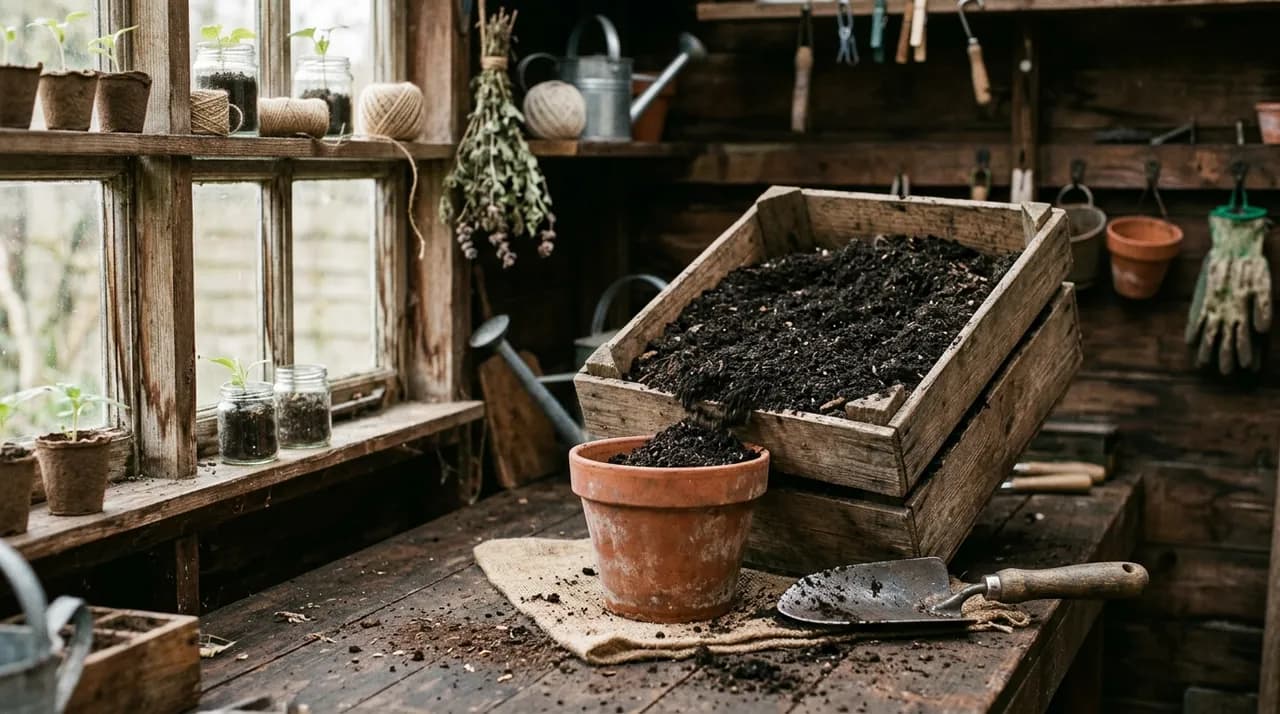
The horticultural sector across the United Kingdom is undergoing a significant and structural transition away from peat-extracted growing media. For decades, milled sphagnum peat formed the reliable baseline for commercial nurseries, amateur gardeners, and allotment potting benches due to its uniform particle structure, predictable water-holding capacity, and sterile profile. As conservation initiatives and regulatory phase-outs progressively remove peat products from retail garden centres and commercial supply chains, British growers are adapting to peat-free alternatives that behave quite differently in pots, seed trays, and raised beds.
To explore how sustainable growing mediums fit into broader British horticultural practices, visit the UK growing hub.
The ongoing shift away from peat in the UK
The withdrawal of peat from the British horticultural market reflects long-standing environmental concerns regarding peatland destruction. Lowland raised bogs and upland blanket bogs across the British Isles and northern Europe are carbon sinks, natural flood mitigation reservoirs, and unique wetland habitats. Commercial peat extraction strips layers of decomposed moss accumulated over thousands of years, releasing stored greenhouse gases and destroying irreplaceable biological communities.
Modern UK manufacturers produce retail compost blends using renewable organic materials, recycled wood residues, and agricultural byproducts instead of mined peat. This transition is the largest operational adjustment in British container gardening in more than half a century. While early iterations of peat-free compost often suffered from inconsistent texture and nutrient locking, contemporary formulations have matured into dependable growing media, provided growers understand their physical characteristics and adjust their daily management habits accordingly.
What peat-free compost is made of
Unlike single-origin peat moss, modern peat-free growing media are engineered blends of several primary components, each contributing specific physical and chemical properties:
- Composted bark and wood fibre: Forestry co-products, such as pine bark fines and mechanically refined wood fibres, provide structural porosity, stable drainage channels, and resist compaction. They mimic the coarse aeration of natural humus.
- Green compost (PAS 100): Sourced from municipal green-waste collections and certified to the British Standards Institution PAS 100 benchmark, this composted material supplies base minerals, beneficial microbial life, and natural moisture-holding organic matter.
- Coir (coconut pith): Imported byproducts of coconut husks, coir has an open sponge-like matrix that absorbs water readily when dry, preventing the water-repellent crusting often seen with dehydrated peat.
- Sterilized loam and sharp sand: Added to heavier container formulations to provide ballast, prevent pots from tipping over in breezy weather, and buffer pH stability.
Because these raw materials originate from diverse sources, blends vary considerably between manufacturers. Learning to assess the texture and moisture state of your chosen blend is more important than attempting to treat every bag identically.
Distinct physical behaviours: water retention and drainage
The most immediate practical difference between peat and peat-free compost lies in how water moves through the container. Traditional peat acts like a uniform sponge: as it dries, it turns pale grey from top to bottom, shrinking away from the pot rims and requiring bottom-soaking to re-wet.
Peat-free blends behave differently:
- Surface evaporation vs. internal moisture: The coarse, fibrous particles on the surface dry out quickly when exposed to moving air and sunlight, turning lighter in colour within hours. However, deeper within the root zone, the finer composted bark and coir particles retain substantial moisture. Gardeners accustomed to watering as soon as the surface turns pale frequently overwater peat-free containers, suffocating delicate root tips in waterlogged sub-layers.
- The lift test: To determine whether a pot requires water, do not rely on visual surface inspections. Instead, push your finger two to three centimetres into the compost to gauge subsurface dampness, or lift the container to evaluate its overall weight. A container that feels distinctly heavy still holds adequate moisture in the root zone.
- Capillary uptake: Many peat-free formulations draw water upward via capillary mats or bottom-watering trays more slowly than peat moss. When watering from above, apply water gently using a fine rose attachment to prevent surface wood fibres from floating away from emerging seedling roots.
These drainage dynamics are particularly noticeable when growing heavy-feeding container vegetables; our practical guide to growing potatoes in bags demonstrates how coarse organic mixes maintain aeration through deep root zones.
Nutrient dynamics and nitrogen draw-down
Traditional peat is naturally nutrient-poor and acidic, which allowed manufacturers to add synthetic base fertilisers that dissolved and released at predictable rates. Peat-free ingredients (particularly raw wood fibres and bark) are biologically active materials that interact with applied plant nutrients.
Microorganisms present within the compost actively break down the carbon-rich lignin and cellulose of the wood fibres. To carry out this decomposition, these microbes consume soluble nitrogen from the compost solution, a phenomenon known as nitrogen immobilization or nutrient draw-down. If a potting mix experiences draw-down, developing plants may display pale yellowing lower leaves (chlorosis) and stalled growth despite being regularly watered.
To maintain vigorous growth in peat-free media:
- Earlier supplemental feeding: In peat-based composts, pre-charged base nutrients typically sustain vegetable plants for four to six weeks. In peat-free mixes, supplemental feeding should generally commence within three to four weeks after potting on.
- Liquid seaweed and organic drenches: Applying balanced liquid organic fertilisers, comfrey tea, or balanced vegetable feeds at half strength with weekly waterings ensures a steady supply of readily available nitrogen and micronutrients that bypass microbial locking.
- Controlled-release granules: Mixing slow-release balanced organic fertiliser pellets into container compost before potting provides a consistent background charge that sustains plants through peak summer fruiting.
For plants requiring specialized soil chemistry, such as blueberries or heather, standard peat-free compost will not suffice due to its neutral pH. In these cases, growers must use dedicated formulations, as explained in our review of ericaceous compost options.
Seed sowing vs. potting on
Using the right grade of peat-free compost for the specific developmental stage of your crop is necessary for success:
- Seed sowing and germination: Emerging seeds require very low nutrient concentrations and a fine, uniform tilth that provides continuous contact with the seed coat. Avoid general multi-purpose compost for fine seeds, as coarse wood chips and bark lumps can block tiny emerging shoots. Select a dedicated peat-free seed compost that has been sieved to a fine, crumbly grade.
- Potting on and mature containers: When transferring established seedlings into larger pots or outdoor planters, a coarser multi-purpose peat-free mix is advantageous. The chunky bark and wood fibres resist structural slumping, maintaining air-filled porosity across long growing seasons.
Adapting daily watering checks, testing container weight, and starting liquid feeding earlier in the growing cycle helps maintain productive plants while avoiding peat extraction from wetland ecosystems.