Key takeaways
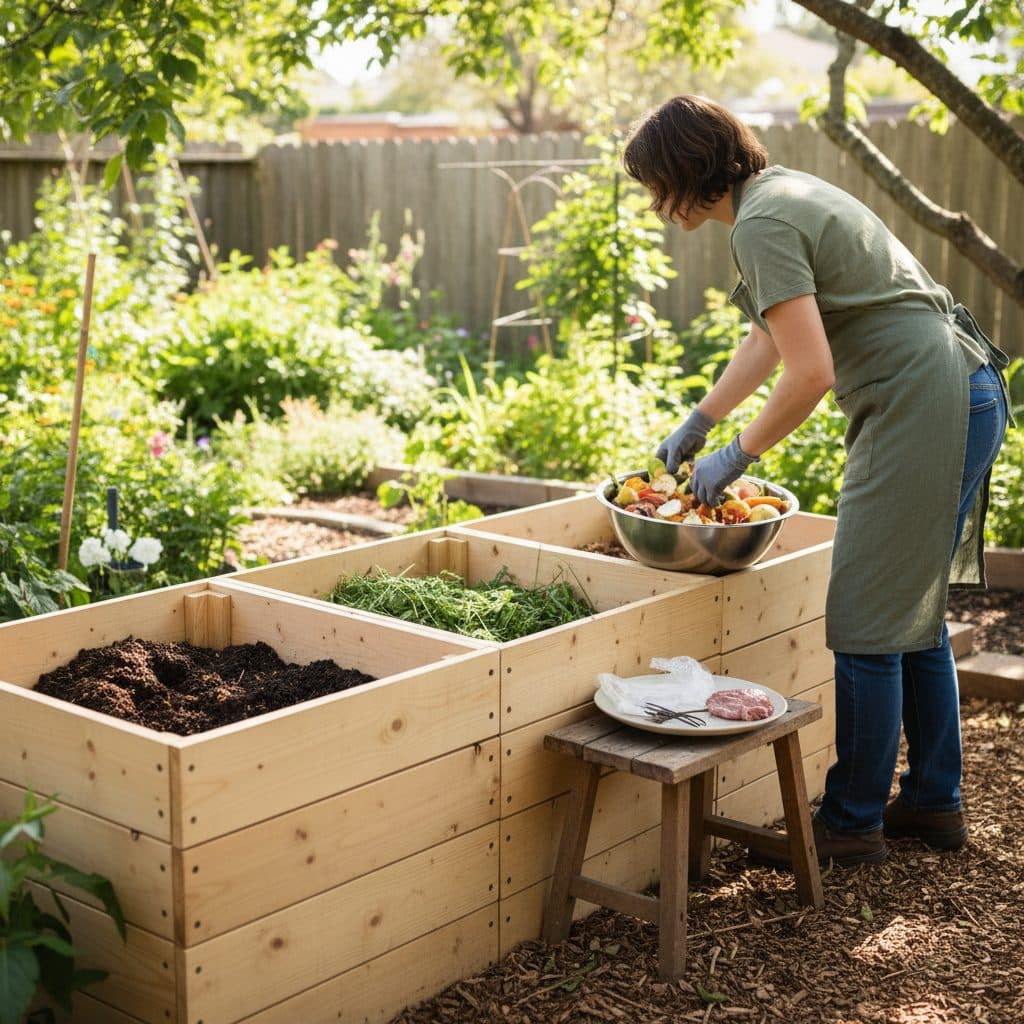
- Keep meat, poultry, fish, bones, and dairy out of basic backyard compost bins to prevent putrid odors and rodent attraction.
- Never add dog or cat feces to edible garden compost due to persistent parasites and pathogens like Toxoplasma gondii.
- Exclude persistent herbicide-treated grass clippings or hay containing chemicals like aminopyralid that survive composting.
- Avoid adding diseased plant materials like tomato late blight or brassica clubroot unless maintaining sustained thermal temperatures above 140°F.
- Omit invasive perennial weed roots and mature seed heads from slow, unmanaged cold compost piles.
- Debunk common myths: citrus peels, coffee grounds, and plain bread are acceptable in moderate quantities in balanced compost piles.
Quick answer: In a standard backyard compost pile, do not add meat, dairy, fats, oils, pet waste (dogs and cats), diseased garden foliage, persistent herbicide-treated clippings, or invasive perennial weed roots. These materials attract pests, introduce human pathogens, or contaminate finished compost with toxic residues.
Backyard composting is one of the most effective practices for recycling household organic matter into nutrient-dense humus for garden beds. By balancing carbon-rich "browns" (leaves, straw, cardboard) with nitrogen-rich "greens" (vegetable scraps, fresh plant trimmings), natural decomposers break down raw materials into dark, crumbly soil conditioner.
However, tossing the wrong items into a domestic compost heap can disrupt microbial balance, create anaerobic foul odors, attract neighborhood rodents and scavengers, or introduce persistent plant pathogens into your vegetable beds. Understanding the science behind what not to compost ensures your compost pile remains clean, efficient, and safe for growing food.
High-risk organic wastes: meat, dairy, and fats
While all animal tissues are technically biodegradable, standard home composting setups lack the sustained high temperatures and mass required to process animal proteins safely.
+-------------------------------------------------------------+
|               WHY MEAT & FATS DO NOT BELONG IN BINS         |
|                                                             |
|   1. Anaerobic Breakdown: Dense lipids seal out oxygen      |
|   2. Putrid Odor Production: Volatile sulfur & amines       |
|   3. Vector Attraction: Rats, mice, raccoons, bears         |
|  4. Slow Decomposition: Takes months without commercial heat|
+-------------------------------------------------------------+- Meat, poultry, and seafood scraps: Raw or cooked animal proteins decompose through anaerobic putrefaction in domestic heaps, releasing foul-smelling compounds (cadaverine and putrescine) that draw raccoons, rats, flies, and neighbourhood dogs.
- Dairy products (cheese, milk, butter, yogurt): High fat content coats organic matter with a water-resistant film, slowing oxygen diffusion and stalling aerobic composting bacteria.
- Cooking oils, lard, and grease: Liquid fats saturate compost pore spaces, creating dense, anaerobic clumps that smell rancid and attract insects.
If you have large volumes of meat or food scraps, consider specialized systems such as bokashi fermentation or dedicated municipal organic waste collections. For worm-based processing, explore our breakdown in vermicompost versus regular compost.
Pet waste and pathogen contamination
A common misconception among beginner gardeners is that all animal manure is beneficial for garden soil. Carnivore and omnivore wastes carry biological hazards that distinguish them fundamentally from herbivore livestock manures.
+-------------------------------------------------------------+
|                MANURE SAFETY CLASSIFICATION                 |
|                                                             |
|   SAFE FOR COMPOSTING:                                      |
|   - Chickens, Horses, Cows, Rabbits, Goats, Sheep           |
|   (Herbivore diet; low risk of human parasite transfer)     |
|                                                             |
|   UNSAFE FOR EDIBLE BEDS:                                   |
|   - Dogs, Cats, Carnivorous Pets                            |
|   (Carries Toxoplasma, Roundworms, E. coli, Salmonella)     |
+-------------------------------------------------------------+- Dog feces: Contains eggs of parasitic roundworms (Toxocara canis) and bacteria that survive in soil for years, posing health risks to children and gardeners.
- Cat litter and feces: Carries Toxoplasma gondii, a protozoan parasite capable of surviving domestic composting temperatures. Toxoplasmosis poses severe health risks to pregnant women and immunocompromised individuals.
- Commercial clay litters: Contain non-biodegradable sodium bentonite clay and synthetic deodorising fragrances that do not break down.
Pet waste can be safely handled using dedicated buried pet-waste digester systems or municipal pet-waste composting programs, but must never be added to compost destined for food crops. Reserve general garden composting strictly for manure from plant-eating livestock (chickens, horses, rabbits, cows). For indoor food scrap recycling, consult our home worm bin guide.
Herbicide-contaminated lawn clippings and hay
One of the most devastating mistakes in modern gardening is adding grass clippings, straw, or manure contaminated with persistent pyridine and pyrimidine carboxylic acid herbicides.
+-------------------------------------------------------------+
|               PERSISTENT HERBICIDE CYCLE IN COMPOST         |
|                                                             |
|   1. Pasture/Lawn sprayed with Aminopyralid or Clopyralid   |
|   2. Grass/Hay fed to cattle or collected as lawn clippings |
|   3. Chemical passes intact through digestive tract & heap  |
|   4. Finished compost applied to vegetable garden           |
|   5. Severe cupping, stunting, and death of nightshades     |
+-------------------------------------------------------------+
Chemical active ingredients like aminopyralid, clopyralid, and picloram are designed to kill broadleaf weeds in pastures and turfgrass without harming grasses. These molecules are heat-resistant and chemically stable, surviving the digestive tracts of livestock and commercial or domestic composting processes for years.
When contaminated compost is spread onto vegetable gardens, even parts-per-billion concentrations cause severe leaf curling, stunting, and death in sensitive families (tomatoes, peppers, beans, peas, and potatoes).
Before accepting hay, stable manure, or neighborhood lawn clippings, verify that the source has not been treated with persistent pasture or turf herbicides. If uncertain, perform a simple seedling bioassay test by following bioassay test for herbicide damage in compost.
Diseased plant materials and noxious weed seeds
Adding infected crop residues or vigorous weed roots can turn your finished compost into a vector for garden problems.
Material | Primary Hazard | Backyard Compost Fate | Safe Disposal Method |
|---|---|---|---|
Late Blight (Phytophthora) | Spreads to tomatoes/potatoes | Spores survive in cool heaps | Municipal green bin / Trash |
Clubroot (Plasmodiophora) | Persists in soil 15+ years | Survives domestic heat | Trash (Do not compost) |
Couch Grass Rhizomes | Roots sprout inside heap | Regenerates from nodes | Solarize or drown in bucket |
Mature Weed Seed Heads | Weed seed bank explosion | Viable in unmanaged piles | Hot compost (140°F) or trash |
Walnut Leaves & Twigs | Juglone inhibits nightshades | Decomposes in hot piles in weeks | Keep out of food garden piles |
Walnut leaves and twigs contain juglone, an allelopathic compound that inhibits solanaceous crops (tomatoes, peppers, potatoes); while juglone breaks down within several weeks in a hot, biologically active compost pile, walnut debris is best kept out of domestic piles destined for vegetable beds. Black walnut (Juglans nigra) contains the highest concentrations, but English walnut (J. regia) and butternut (J. cinerea) also contain juglone.
If your compost pile is a slow, unmanaged "cold" system (temperatures below 120°F / 49°C), weed seeds and fungal spores will survive. For managing household bins without offensive scents, review small-space composting with no odor.
Non-biodegradable and treated household items
Keep manufactured goods and synthetic packaging out of your compost bins:
- Pressure-treated or painted lumber: Older pressure-treated lumber (pre-2004) contains chromated copper arsenate (CCA), which leaches arsenic, while modern residential treated wood contains high levels of copper-based biocides (ACQ, micronized copper); keep all treated sawdust and scrap wood out of compost.
- Produce stickers: Made of vinyl plastic and synthetic adhesives; they do not degrade and contaminate finished compost beds with microplastics.
- Glossy printed magazines: While modern black newsprint uses safe soy-based inks, heavily coated glossy brochures and colored packaging contain synthetic polymers and mineral clays that resist decomposition.
- "Compostable" bioplastics: PLA-based cups and cutlery require industrial composting facilities reaching 140°F to 160°F with controlled humidity for 60 consecutive days; they remain intact in backyard piles.
- Vacuum cleaner lint and dryer lint: Synthetic fabrics (polyester, nylon, acrylic) shed microplastic fibres that accumulate in garden soil. Only compost lint derived 100% from unbleached natural cotton, wool, or linen.
Composting myths debunked: what you actually can compost
Several kitchen items are frequently mislabeled as non-compostable due to outdated gardening lore:
+-------------------------------------------------------------+
|                DEBUNKING BACKYARD COMPOST MYTHS             |
|                                                             |
|   CITRUS PEELS: SAFE IN BACKYARD COMPOST                    |
|   - Acidic in isolation, but natural microbes neutralize    |
|     citric acid rapidly in balanced outdoor heaps.          |
|                                                             |
|   COFFEE GROUNDS: EXCELLENT NITROGEN SOURCE                 |
|   - Though brown in color, spent grounds are ~2% nitrogen   |
|     and have a near-neutral pH once brewed.                 |
|                                                             |
|   PLAIN BREAD & CRACKERS: SAFE IN MODERATION                |
|   - Bury in pile core to avoid surface mold and flies.      |
|                                                             |
|   ONION & GARLIC SKINS: SAFE IN OUTDOOR PILES               |
|   - Break down normally; avoid only in small worm bins.     |
+-------------------------------------------------------------+
By excluding meat, fats, pet waste, contaminated clippings, and diseased materials while balancing your browns and greens, you create clean, rich organic compost that builds healthy soil and nourishes productive garden beds.