Key takeaways
- Keyhole gardens combine a raised bed with a central compost basket, delivering water below the surface where less of it evaporates.
- Site selection matters most; choose a spot with at least six hours of direct sunlight daily and good drainage.
- Materials like stone, brick, or reclaimed lumber can form the bed walls, aiming for a diameter of 6 to 10 feet.
- Layering organic materials, including biochar, in the bed’s fill creates nutrient-rich soil that supports vigorous plant growth.
- The central compost basket continuously feeds nutrients and moisture to the surrounding soil, keeping the micro-ecosystem there productive.
- Proper maintenance, including consistent composting and mulching, ensures long-term soil health and high yields.
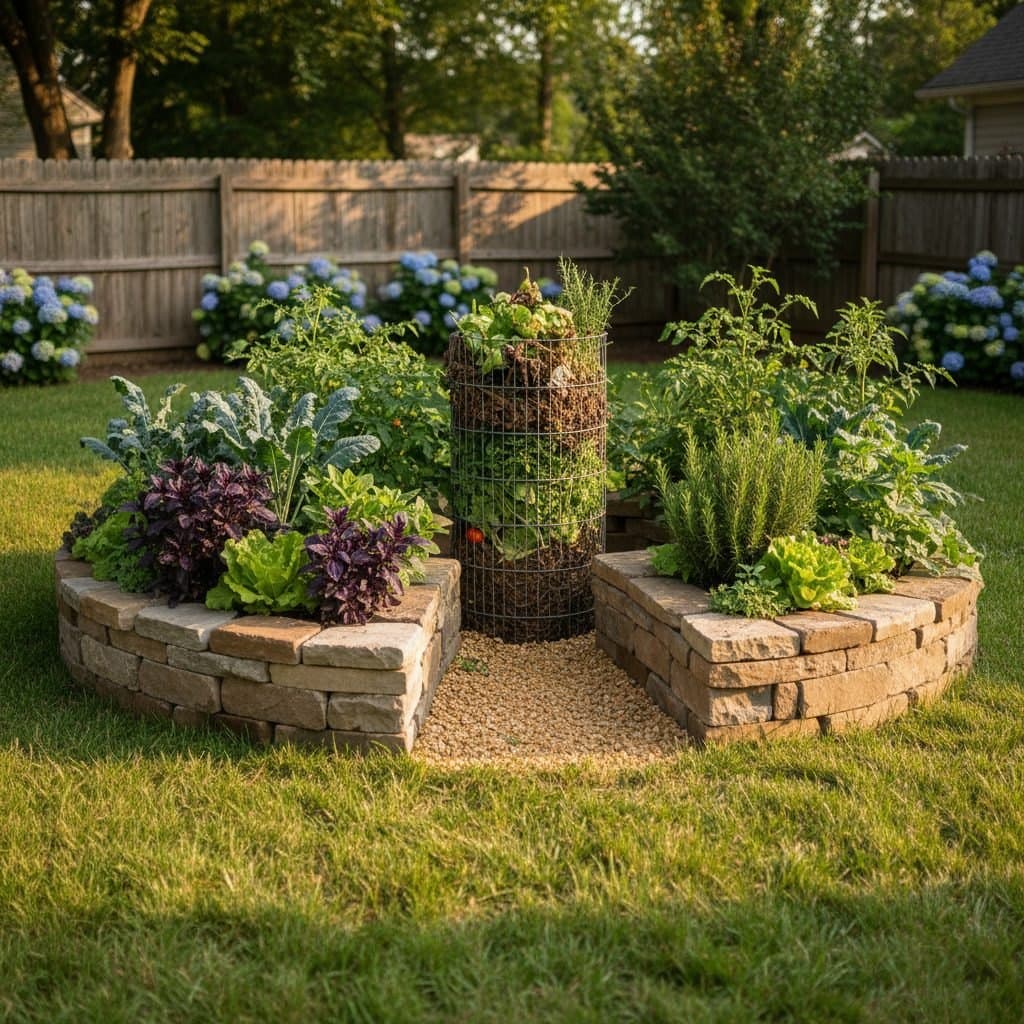
Quick answer: A keyhole garden bed combines a raised bed with a central compost basket, designed for efficient water use and continuous nutrient cycling. It is built by forming a circular bed (6-10 ft diameter) with a cut-out entry path and a central wire mesh cylinder for composting.
In many parts of the US, from the humid summers of Georgia to the arid stretches of Arizona, efficient water use and nutrient cycling are essential for successful gardening. A keyhole garden, with its distinctive shape and central composting system, offers a practical solution for growers looking to maximize output in a compact footprint. This design, often seen in permaculture systems, concentrates resources and makes the most of every drop of water and every bit of organic matter.
Originating from arid regions, the keyhole garden is a raised bed with a cut-out entry path and a central basket for composting kitchen scraps and yard waste. This structure allows nutrients and moisture to seep directly into the surrounding soil, creating a self-feeding system. For instance, watering into the central basket puts moisture where roots can reach it instead of on the surface, which makes the design a practical choice for gardeners in USDA zones 7 and warmer, where water conservation is a priority.
Understanding the keyhole garden design
A keyhole garden is more than just a raised bed; it is a dynamic, self-sustaining system designed for efficiency. Its circular or kidney shape, typically 6 to 10 feet in diameter, allows easy access to all parts of the growing area from a single entry point. The defining feature is the central compost basket, usually a wire mesh cylinder about 12 to 18 inches in diameter. This basket acts as the garden’s heart, continuously releasing nutrients and moisture into the surrounding soil, supporting plant growth and beneficial soil organisms.
benefits of a keyhole garden
One primary benefit is water conservation. Water poured into the central compost basket slowly leaches out, directly feeding plant roots and reducing evaporation. This puts water below the surface rather than on it, which matters in regions like California or Texas where drought conditions are common. Additionally, the raised bed design improves drainage and warms the soil faster in spring, extending the growing season by several weeks in cooler climates, such as USDA zone 5. The continuous nutrient supply from the compost basket also means less need for external fertilizers, saving gardeners money and reducing their reliance on synthetic inputs. This design fits well with permaculture gardening principles, focusing on closed-loop systems and minimal waste.
- Reduces evaporative loss by watering below the surface
- Improves soil fertility through continuous composting
- Extends the growing season in cooler zones
- Provides easy access to all plants from one path
- Minimizes bending and stooping for gardeners
Planning and site selection
Before breaking ground, careful planning ensures your keyhole garden thrives. The first step is selecting the right location. Choose a spot that receives at least six hours of direct sunlight daily, ideally eight hours for most fruiting vegetables. In the US, this often means a south-facing exposure, especially in northern states like Michigan or Montana. Consider proximity to your kitchen for easy access to compost materials and to a water source, even though keyhole gardens are water-efficient, they still require initial and supplemental watering.
designing your garden’s footprint
The ideal diameter for a keyhole garden is between 6 and 10 feet, allowing you to reach the entire growing area from the central path without stepping on the soil. A height of 2 to 3 feet is common, providing good drainage and making gardening more comfortable. For instance, a 7-foot diameter bed covers about 38 square feet in total, of which roughly 30 square feet ends up as planting area once the central basket and the entry path are subtracted. When mapping out your design, ensure the keyhole entry path is wide enough for comfortable access, typically 18 to 24 inches. Think about materials for the walls; reclaimed stone, brick, or rot-resistant lumber like cedar or black locust can last 15 years or more, even in humid climates like Florida. The USDA Natural Resources Conservation Service emphasizes the importance of good soil structure and water infiltration, which a raised bed design inherently supports.
- Minimum six hours of direct sunlight daily
- Proximity to kitchen and water source
- Bed diameter of 6 to 10 feet
- Wall height of 2 to 3 feet
- Access path width of 18 to 24 inches
Constructing the keyhole structure
Once your site is chosen and materials gathered, construction can begin. Start by marking the outer circle of your bed, perhaps 8 feet in diameter, and the inner circle for the compost basket, around 18 inches in diameter. Then, mark the entry path. Dig a shallow trench, about 4 to 6 inches deep, for the base of your walls. This helps stabilize the structure, especially if using stone or brick. An 8-foot circle is about 25 feet of wall, which works out to roughly 38 standard bricks per course and about 11 courses at 2.5 feet high — a little over 400 bricks for a single-wythe wall. Count from your own circumference and brick size before ordering, and plan on mortar or a battered stone face, because a dry-stacked single-brick wall will bow under 2.5 feet of wet soil. Ensure the walls are sturdy and level, using a spirit level frequently during construction.
building the central compost basket
The compost basket is critical. Construct it from sturdy wire mesh, such as galvanized hardware cloth with 0.5-inch openings, forming a cylinder 12 to 18 inches in diameter and extending the full height of your bed, plus an extra 6 inches to anchor it into the ground. Secure the seam with wire or zip ties. Position the basket in the center of your marked inner circle. For added stability, you can drive a few rebar stakes through the bottom of the basket into the ground. This central feature is what transforms a simple raised bed into an efficient keyhole system, supporting continuous nutrient cycling for your plants, similar to the principles discussed in permaculture design.
- Mark outer bed diameter (e.g., 8 feet)
- Mark inner compost basket diameter (e.g., 18 inches)
- Dig a 4-6 inch trench for wall stability
- Construct sturdy walls 2-3 feet high
- Build and anchor a wire mesh compost basket
Filling, planting, and ongoing care
Once the structure is complete, it’s time to fill your keyhole garden. This process, often called ‘lasagna gardening,’ involves layering various organic materials to build rich, fertile soil. Start with a base layer of coarse woody debris, like logs or branches, about 6 to 12 inches deep. This provides long-term carbon and improves drainage. Next, add a layer of cardboard or newspaper to suppress weeds, followed by layers of straw, leaves, grass clippings, and aged manure. Each layer should be 4 to 6 inches thick. A top layer of high-quality compost and garden soil, about 6 to 8 inches deep, is where you’ll plant your crops. Incorporating biochar into these layers can improve soil structure and water holding, and charcoal carbon is unusually persistent once in the soil.
planting and maintenance strategies
For planting, consider companion planting guilds to maximize space and deter pests. For example, peas and carrots are commonly interplanted, and aromatic herbs like sage are traditionally set among brassicas, though the trial evidence for a repellent effect is thin. Aim for dense planting, as the continuous nutrient supply from the compost basket supports vigorous growth. The central compost basket should be actively fed with kitchen scraps, green waste, and a small amount of brown material. Keep it consistently moist, which will also hydrate the surrounding soil. Regular mulching with straw or wood chips, 2 to 4 inches deep, helps retain moisture, suppress weeds, and regulate soil temperature, especially important in fluctuating climates like those in USDA zone 6. Check soil moisture regularly with a soil moisture meter to ensure optimal conditions for your plants.
- Layer coarse woody debris (6-12 inches)
- Add cardboard/newspaper for weed suppression
- Alternate layers of straw, leaves, grass clippings, and manure (4-6 inches each)
- Top with 6-8 inches of compost and garden soil
- Actively feed the central compost basket with organic waste
Keyhole Garden vs. Traditional Raised Bed
Feature | Keyhole Garden | Traditional Raised Bed |
|---|---|---|
Water Efficiency | Water goes in at the centre and spreads below the surface, so less is lost to evaporation. | Standard water usage, requires more frequent watering. |
Nutrient Supply | Continuous, self-feeding from compost basket. | Requires external fertilization or compost application. |
Access | Single entry path allows access to all plants (e.g., 8 ft diameter). | Requires walking around the bed or reaching over (e.g., 4 ft wide limit). |
Soil Building | Layered fill and active composting build rich soil over time. | Typically filled with purchased soil mix, less dynamic nutrient cycling. |
Weed Suppression | Dense planting and mulching, compost activity. | Requires more active weeding or mulching. |
Water Savings: Watering into the central basket delivers moisture below the surface, where less is lost to evaporation than with overhead watering of a flat bed.
Soil Fertility: The continuous nutrient supply from the central compost basket builds soil organic matter over time, improving long-term fertility.
Frequently asked questions
How large should a keyhole garden be?
A typical keyhole garden ranges from 6 to 10 feet in outer diameter. This size allows a gardener to reach all parts of the bed from the central access path, which is usually 18 to 24 inches wide, without stepping on the soil.
What materials are best for keyhole garden walls?
Durable, rot-resistant materials are best. Options include local stone, bricks, concrete blocks, or rot-resistant lumber like cedar or black locust. These materials can last 15 years or more, providing a stable structure for your garden.
What should I put in the central compost basket?
The central compost basket should be fed with kitchen scraps (vegetable and fruit peels, coffee grounds), green garden waste (grass clippings, fresh leaves), and a small amount of brown material like shredded paper. Avoid meat, dairy, or oily foods to prevent pests.
How often do keyhole gardens need watering?
Keyhole gardens are highly water-efficient. Initial watering is essential, but ongoing needs are reduced. Depending on your climate (e.g., USDA zone 8 vs. zone 5) and plant types, you might water the basket once or twice a week during dry periods. Do not rely on the basket alone, though — moisture spreads only a limited distance from it, so keep watering the outer ring of the bed directly, and check moisture at the bed's edge rather than assuming the basket has covered it.
Can I grow anything in a keyhole garden?
Most vegetables, herbs, and flowers thrive in keyhole gardens. The rich, continuously fed soil supports a wide range of plants. Consider compact varieties for smaller beds, and ensure taller plants don’t shade out shorter ones, especially in a 7-foot diameter bed.
How long does it take for a keyhole garden to become productive?
A keyhole garden can be productive in its first season, especially if filled with a good top layer of compost and soil. The underlying organic layers will continue to break down, improving fertility for 3 to 5 years, providing a stable, nutrient-rich growing environment.
References
- Terra preta sanitation as a way to improve sanitation and agriculture for an informal community of peri-urban area of Chisinau, Moldova (2014). Terra preta sanitation as a way to improve sanitation and agriculture for an informal community of peri-urban area of Chisinau, Moldova.
- Biochar, and its Potential Contribution to Improving Soil Quality and Carbon Capture (2012). Biochar, and its Potential Contribution to Improving Soil Quality and Carbon Capture.
- USDA Natural Resources Conservation Service (2024). USDA Natural Resources Conservation Service.