Key takeaways
- Potato blight is caused by the water-mould pathogen Phytophthora infestans, spreading rapidly during warm, humid UK summer weather.
- UK weather monitoring uses the Hutton Criteria (two consecutive days with minimum temperatures of 10°C and at least 6 hours of 90% humidity).
- When foliar infection affects more than 10% of leaves, immediately cut all stems (haulms) to soil level to protect developing tubers.
- Leave tubers in the soil for two to three weeks after cutting haulms so surface spores die before lifting the crop on a dry day.
- Grow blight-resistant Sarpo varieties (such as Sarpo Mira and Sarpo Axona) or fast-maturing first earlies that harvest before blight pressure peaks.
Quick answer: Potato blight (Phytophthora infestans) is a fungus-like (oomycete) disease that causes rapid foliage collapse and tuber rot during warm, wet UK summers. Protect crops by growing resistant cultivars, monitoring Hutton Criteria alerts, cutting infected foliage to ground level immediately, and waiting two to three weeks before harvesting.
For vegetable growers and allotment holders across the United Kingdom, potato blight is the most destructive seasonal plant disease. Known botanically as Phytophthora infestans, this aggressive oomycete pathogen thrives in the damp, mild conditions characteristic of British summers.
When airborne spores land on wet potato leaves, they can destroy entire crop canopies within days. If spores wash down into the soil during summer rainstorms, they infect developing tubers beneath the surface, turning firm potatoes into foul-smelling, unmarketable rot in the ground or storage.
Because synthetic chemical protectants for amateur gardeners are strictly restricted or withdrawn under UK pesticide regulations, managing potato blight successfully requires an integrated cultural approach. By understanding weather triggers, selecting genetically resistant varieties, and acting promptly when symptoms appear, you can secure an abundant harvest.
Understanding blight biology and UK Hutton Criteria triggers
Potato blight is an obligate parasite that overwinters primarily in living plant tissue, particularly discarded potato tubers left in the soil from the previous season (volunteer potatoes) or infected seed tubers.
+-----------------------------------------------------------------------+
|                    THE UK HUTTON CRITERIA FOR BLIGHT                  |
+-------------------+---------------------------------------------------+
| PARAMETER         | THRESHOLD CONDITIONS                              |
+-------------------+---------------------------------------------------+
| Duration          | 2 consecutive 24-hour periods                     |
| Minimum Temp      | Night temperature not dropping below 10°C         |
| Relative Humidity | At least 6 hours each day with humidity >= 90%    |
+-------------------+---------------------------------------------------+
How blight spreads
In late spring and early summer, infected tubers push up shoots carrying live mycelium. Under warm, damp conditions, microscopic sporangia form on the leaves and are released into the air. Wind currents carry these spores several miles across allotment sites and neighbouring gardens.
The Hutton Criteria explained
Historically, UK growers tracked "Smith Periods" to predict blight outbreaks. In recent years, researchers at the James Hutton Institute refined this into the Hutton Criteria, now used in UK blight warning services, which better reflects modern aggressive blight strains:
- A Hutton Period occurs when two consecutive days record a minimum temperature of 10°C, with at least six hours each day reaching relative humidity of 90% or higher.
- When local weather stations confirm a Hutton Criteria event, airborne infection pressure spikes dramatically. Free regional warning services alert gardeners when local conditions favour spore release.
Identifying potato blight symptoms on leaves, stems, and tubers
Early diagnosis allows gardeners to intervene before spores wash into the soil:
[ Foliage Phase ]                  [ Tuber Phase ]
Dark brown water-soaked lesions    --> Rain washes spores into soil
White downy mould on leaf undersides   Reddish-brown granular rot under skin
Stems turn dark and collapse           Secondary bacterial soft rot develops
Foliage symptoms
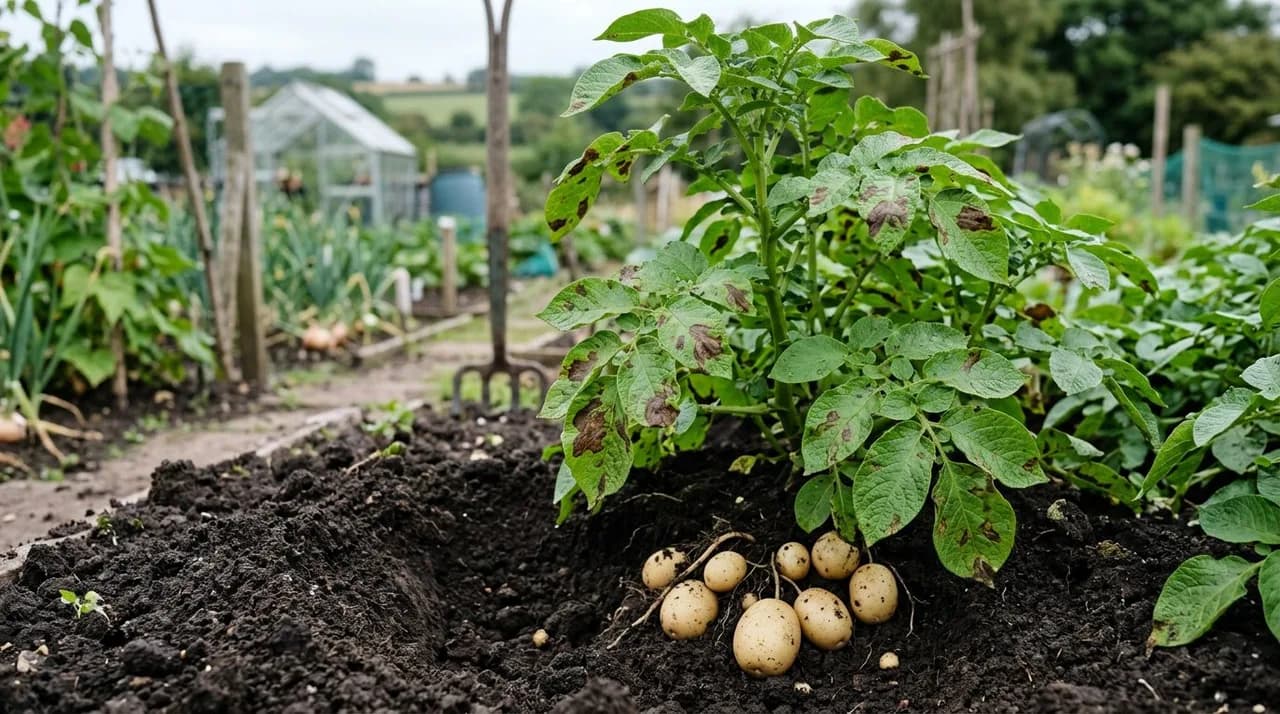
- Leaf Lesions: Initial signs appear as dark brown or purplish-black water-soaked blotches, often starting at the tips or margins of leaves where moisture lingers longest.
- Fungal Bloom: In damp, humid morning air, inspect the undersides of infected leaves. You will observe a delicate, white downy halo of sporangiophores around the margin of the dark lesions.
- Rapid Canopy Collapse: Lesions expand rapidly, merging across leaflets and turning stems dark brown and brittle. In severe outbreaks, an entire healthy potato bed can collapse into blackened decay in less than a week.
Tuber symptoms
- When rain washes spores from leaves down through the soil profile, they penetrate lenticels or skin wounds on shallow tubers.
- Infected tubers exhibit sunken, dark lead-grey patches on the skin. Slicing through the potato reveals a dry, granular reddish-brown marbled rot extending inward from the skin. Secondary bacteria often invade, turning the tuber into a wet, foul-smelling mush.
To learn more about baseline potato cultivation and healthy growth, see our guide on how to grow potatoes.
Immediate action: cutting haulms and safe harvest timing
When foliar blight takes hold on an allotment plot, prompt mechanical intervention is the most effective organic defense:
[ Step 1: Detect Blight ] --> [ Step 2: Cut Haulms at Base ] --> [ Step 3: Wait 2-3 Weeks ] --> [ Step 4: Lift on Dry Day ]
Lesions reach ~10%            Remove all foliage to ground        Spores on soil surface die      Dig cleanly and cure
1. The haulm-cutting technique
When blight symptoms affect around 10% of the foliage, do not hesitate or attempt to pluck individual leaves. Use clean garden shears or a scythe to cut all stems (the haulms) cleanly at soil level.
Cutting the haulms halts the production of new airborne spores immediately and removes the stem infection before it can grow down the haulm and along the stolons into the developing tubers.
2. Disposing of blighted foliage
Rake up all severed foliage, fallen leaves, and blackened stems thoroughly:
- Do not add blighted haulms to a cold, passive allotment compost heap.
- Dispose of blighted haulms in municipal council green waste bins (where commercial composting generates sustained heat exceeding 60°C) or burn them if local allotment association rules permit.
- Phytophthora infestans cannot survive long without living host tissue, and sporangia die quickly once the foliage is dead and dry.
3. The mandatory two to three week ground wait
After removing the haulms, leave the potato tubers undisturbed in the soil for two to three weeks. This waiting period accomplishes two essential goals:
- It allows any live spores lingering on the topsoil to perish from exposure to sunlight and air drying, preventing them from contaminating tubers during harvesting.
- It gives the potato skins time to cure and thicken in the ground, reducing skinning and abrasion during digging.
Lift tubers on a sunny, dry afternoon when the soil is friable. Discard any tubers showing sunken grey patches, and consume sound potatoes promptly or cure them according to our detailed walkthrough on how to store potatoes.
Resistant potato varieties: Sarpo selections and early crops
Genetically resistant cultivars provide the single most reliable long-term protection against UK blight strains:
Variety Name | Maturity Group | Blight Resistance Level | Culinary Profile |
|---|---|---|---|
Sarpo Mira | Maincrop | Exceptionally High | Floury, excellent baker and roaster |
Sarpo Axona | Maincrop | Exceptionally High | Firm, full-flavoured general use |
Setanta | Maincrop | Very High | Red skin, high dry matter, great mash |
Carolus | Early Maincrop | High | Yellow skin, light yellow flesh, firm all-rounder |
Alouette | Maincrop | High | Red skin, yellow flesh, good boiled and mashed |
The Sarpo breakthrough
Bred specifically for durable foliar and tuber blight resistance, Hungarian Sarpo varieties (such as Sarpo Mira, Sarpo Axona, and Sarpo Shona) remain green and vigorous through intense Hutton Criteria events without chemical sprays.
The first early evasion strategy
Another highly effective cultural strategy is growing first early potato varieties (such as Swift, Rocket, Duke of York, or Lady Christl). Plant seed tubers in late March or early April. First earlies mature in just 10 to 12 weeks, allowing you to harvest crisp new potatoes in June and early July, well before summer humidity triggers widespread blight spore flights across the UK.
Cultural practices to minimise blight on UK allotments
Applying smart cultural controls minimises moisture accumulation and limits disease transmission:
- Generous Spacing: Plant maincrop rows at least 75 to 90 cm apart, with 35 to 40 cm between seed tubers. Wide row spacing promotes continuous air circulation, allowing damp morning foliage to dry out quickly after summer rain.
- High Earthing Up: Form broad, steep soil ridges (earthing up) around emerging potato stems. A thick soil layer acts as a physical barrier, preventing washed-down spores from contacting shallow tubers beneath the ridge.
- Crop Rotation: Never plant potatoes, or other members of the potato family (Solanaceae) such as tomatoes and aubergines, in ground that grew potatoes within the preceding three to four years. For broader rotation and disease principles, see our review of tomato blight and disease management.
- Volunteer Eradication: Diligently dig up and destroy any volunteer potato shoots that sprout in spring from missed tubers from the previous year. Volunteer plants are the primary reservoir that restarts the disease cycle each summer.
- Ecological Plot Management: For broader pest and disease suppression across UK allotment plots, explore our foundation guide on integrated pest management for home gardens.