Key takeaways
- Southeast summers demand strategic shade to balance heat reduction with humidity and airflow.
- Passive methods like deciduous trees and vining pergolas can reduce temperatures and are highly sustainable.
- Engineered shade cloth, from 20% to 70% density, should be selected based on crop needs and raised for airflow.
- Prioritize airflow through wider plant spacing, pruning, and ventilation to prevent fungal diseases in 70-90% humidity.
- Integrate shade to improve solar panel efficiency, cool living spaces, and conserve rainwater.
- Thoughtful shade design improves homestead resilience and productivity in USDA zones 7-9.
Quick answer: In Southeast US homesteads, balance shade with humidity by using passive methods like deciduous trees and vining pergolas for heat reduction, while prioritizing airflow through wider plant spacing and ventilation to prevent fungal diseases in high humidity.
In the humid summers of the Southeast, from USDA zone 7 in northern Georgia down to zone 9 in central Florida, homesteaders face a constant challenge: intense solar radiation combined with high humidity. Daytime temperatures can regularly climb above 90°F, sometimes reaching 100°F or more, while relative humidity often hovers between 70% and 90%. This climate demands a thoughtful approach to shade that protects plants and structures from direct sun while managing moisture and airflow.
Simply blocking the sun without considering ventilation can create stagnant, disease-prone environments for crops and uncomfortable, stuffy living spaces. The goal is to strike a balance, providing necessary relief from the sun’s energy while promoting air movement that helps dissipate heat and reduce fungal pressure. The strategies below draw on observations from homesteads across the region, where temperature reduction and air movement make a practical difference during the growing season.
Understanding the Southeast's humid heat
The southeastern United States has a subtropical climate characterized by long, hot, and humid summers. Across states like Alabama, Georgia, and South Carolina, average summer temperatures frequently exceed 85°F, with heat indices often reaching over 105°F due to the high moisture content in the air. This combination means that while direct sunlight is intense, blocking it entirely without air movement can trap humid heat, creating a microclimate that is less than ideal for many temperate crops and livestock. Solar radiation levels can peak at over 1,000 watts per square meter on a clear summer day, stressing both plants and off-grid systems. For homesteaders in USDA zones 7-9, understanding these specific environmental pressures is the first step toward effective mitigation, especially when considering the 100-day growing season for many summer crops.
Regional climate specifics
Plants in USDA zones 7 through 9, for example, often struggle with heat stress when temperatures consistently remain above 90°F for several weeks, particularly when combined with 70-90% relative humidity. This stress can lead to reduced fruit set, wilting, and increased susceptibility to fungal diseases like powdery mildew, which thrives in high moisture. For homesteaders, managing this environment means finding ways to reduce the ambient temperature around crops by 5-10°F while simultaneously encouraging airflow to prevent moisture buildup. Livestock, too, suffer in these conditions; chickens, for instance, may reduce egg production when temperatures stay above 90°F, and cattle can experience significant weight loss. Homesteaders need shade that works alongside ventilation to create a functional microclimate. This balance helps maintain productivity and animal health throughout the summer months, which often stretch from late May through September.
- intense solar radiation: summer sun can deliver over 1,000 watts per square meter, leading to rapid heat gain and plant stress.
- high relative humidity: often 70-90%, exacerbating heat stress and promoting fungal growth on crops and structures.
- prolonged heat waves: multiple weeks with temperatures above 90°F are common from June through September, demanding continuous management.
- poor air circulation: can trap humid air, creating stagnant, unhealthy microclimates for plants, animals, and people, increasing disease risk.
Passive shade strategies for homesteads
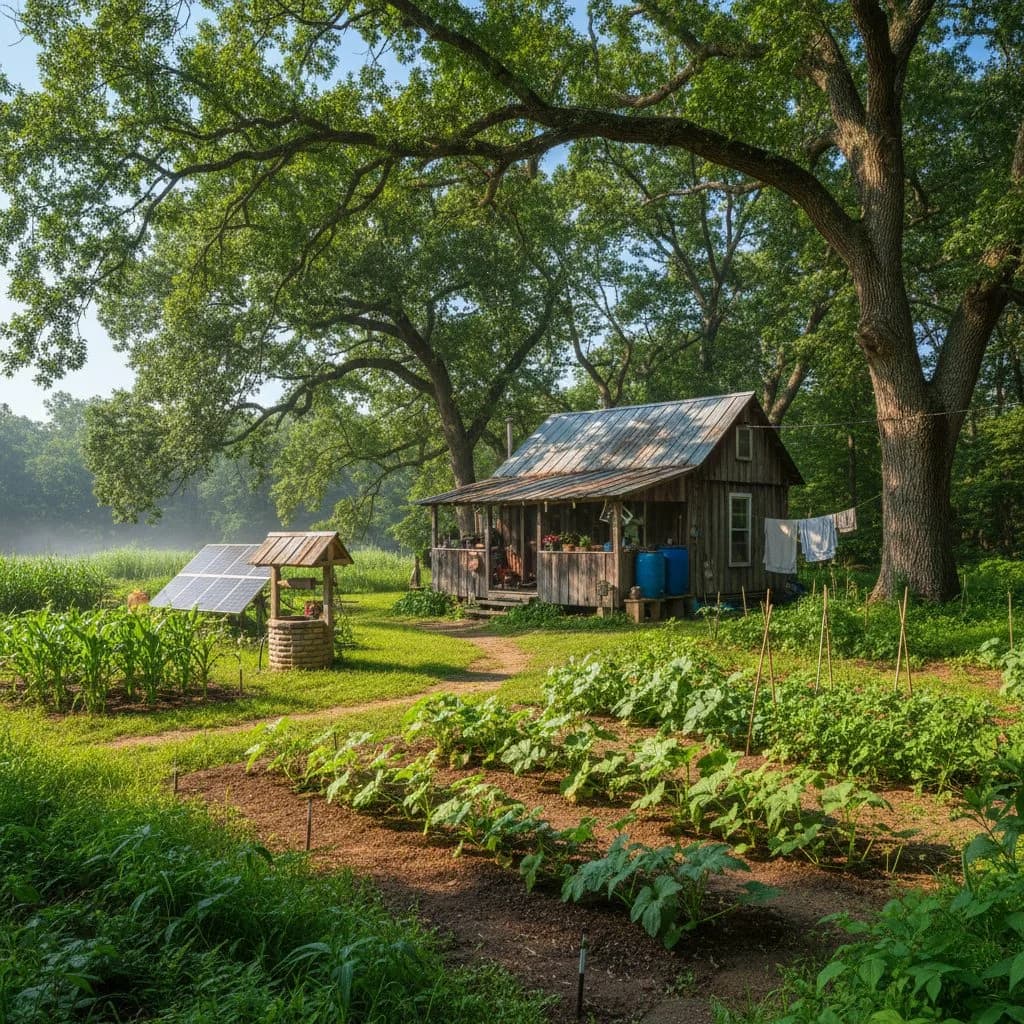
One of the most effective and sustainable ways to manage heat on a homestead is through passive shade strategies. This involves using natural elements and thoughtful design to block solar radiation without relying on active systems. Planting deciduous trees on the south and west sides of structures and gardens is a prime example. A mature oak or maple tree, common in USDA zone 7, can block a significant amount of summer sun while allowing winter sun to pass through its bare branches. Note that oak acorns can be toxic to some livestock, so consider placement carefully if animals will be grazing in the area. This strategic placement can reduce cooling loads by 15-30% in summer and maintain some passive solar gain in winter, directly impacting energy consumption for heating and cooling. Careful species selection is important to avoid invasive roots or excessive leaf drop in sensitive areas.
Strategic tree planting
Beyond trees, designing structures with wide eaves or planting fast-growing vining plants on trellises and pergolas can provide significant shade. For instance, a well-placed pergola covered with muscadine grapes or passionflower vines can reduce temperatures underneath by 10-15°F during peak afternoon sun in USDA zone 8, creating a more comfortable outdoor living space or a cooler microclimate for container gardens. These living shade structures also increase local humidity slightly, which can be beneficial for some crops, while allowing ample airflow. Orienting buildings along an east-west axis with fewer windows on the west side can cut direct solar gain during the hottest parts of the day, especially from 3:00 p.m. to 6:00 p.m. in July. Incorporating deep overhangs of 2-4 ft can further protect walls and windows from high-angle summer sun, reducing heat transfer into the building envelope by up to 15%.
- deciduous trees: block 80-90% of summer sun, allowing 60-70% of winter sun through, reducing cooling costs by 15-30%.
- vining plants on trellises: provide dynamic shade and can reduce temperatures by 10-15°F, suitable for outdoor living areas and specific crops.
- building orientation: minimizing west-facing windows can reduce solar gain by 25-40% during peak afternoon heat, especially in July.
- overhangs and eaves: extend rooflines by 2-4 ft to shade walls and windows, cutting heat transfer by up to 15%.
- shade-tolerant groundcovers: planting low-growing, shade-tolerant plants can keep soil temperatures 5-10°F cooler and reduce evaporation.
Engineered shade solutions and materials
When natural shade isn’t enough, engineered solutions like shade cloth become invaluable for homesteaders. These materials come in various densities, typically ranging from 30% to 70% shade, allowing for tailored light reduction to specific crop needs. For example, many leafy greens and cool-season vegetables in USDA zone 8 thrive under 30-40% shade cloth during the summer, which can lower leaf temperatures by 5-8°F and reduce water evaporation by 10-20%. Tomatoes and peppers, however, might prefer 20-30% shade to prevent sunscald while still receiving ample light for fruit development, often yielding more produce in shaded conditions compared to full sun in the Southeast.
Choosing the right shade cloth
Shade cloth can be deployed over hoop houses, garden beds, or even as temporary covers for livestock pens. It’s important to ensure these structures allow for significant airflow, perhaps by raising the cloth 1-2 ft above the plants or animals, to prevent heat and humidity buildup. This elevation can improve air exchange. For off-grid homesteads, shade structures can also protect sensitive equipment like battery banks or inverters from direct sun, extending their lifespan. While solar panels themselves need direct sun, shading the area around them can reduce ambient temperatures, which helps maintain panel efficiency, as panels lose 0.3-0.5% efficiency for every 1°C above 25°C (77°F). This means a cooler environment can translate to a 5-10% increase in power output on a 95°F day. For more on managing solar systems, see our guide on solar panels for off-grid living. Implementing removable shade solutions allows for seasonal adjustments, providing full sun exposure in cooler months.
- 30-40% shade: ideal for leafy greens, reducing leaf temperatures by 5-8°F and water evaporation by 10-20%.
- 20-30% shade: suitable for fruiting vegetables to prevent sunscald, potentially increasing yields by 10-15%.
- airflow is essential: raise shade cloth 1-2 ft to prevent stagnant, humid air and improve air exchange by 20-30%.
- protecting equipment: shade can extend the life of off-grid components by 2-5 years by reducing heat stress.
- seasonal flexibility: choose systems that allow for easy installation and removal of shade cloth to adapt to changing light needs.
Maximizing airflow and humidity control
In the Southeast, managing humidity is as important as managing heat. Stagnant, humid air creates ideal conditions for fungal diseases like early blight and downy mildew, which can decimate a garden in a matter of days, leading to significant crop loss. Good airflow helps dissipate moisture from plant leaves and the soil surface, reducing disease pressure and making the ambient temperature feel more tolerable for both plants and people. Without adequate air movement, even shaded areas can become stifling, with relative humidity levels remaining above 85% for extended periods, creating a breeding ground for pathogens.
Strategic plant spacing and pruning
Achieving good airflow starts with thoughtful design and maintenance. Spacing plants further apart than recommended for cooler climates (such as 18-24 in for tomatoes instead of 12 in) allows air to circulate freely around foliage and reduces the likelihood of disease. Pruning lower leaves and suckers on plants like tomatoes also improves air movement at the base, where diseases often start. For enclosed spaces like greenhouses or high tunnels, passive ventilation through roll-up sides or ridge vents is essential, allowing warm, humid air to escape and cooler air to enter. These vents should be sized to provide ample area for effective air exchange. For more active cooling and ventilation, especially in larger structures or livestock barns, consider integrating off-grid and hybrid solar systems to power fans, which can move a large volume of air per minute depending on size. Even simple ground covers like wood chips can help moderate soil moisture and temperature, reducing overall humidity in the garden area and suppressing weeds. Elevated garden beds can also improve drainage and air circulation around plant roots.
- wider plant spacing: 18-24 in for larger plants promotes air circulation, reducing disease risk by 30-50%.
- pruning lower foliage: improves air movement at the plant base, preventing moisture buildup and fungal growth.
- passive ventilation: roll-up sides and ridge vents in structures, sized at 20% of floor area, are necessary for air exchange.
- solar-powered fans: can move 1,000-5,000 cubic feet of air per minute for active cooling and humidity reduction.
- ground covers: wood chips or other mulches can reduce garden humidity by 5-10% and suppress weeds by 60-80%.
Integrating shade with off-grid homestead systems
Thoughtful shade integration extends beyond plant health to the efficiency and comfort of the entire off-grid homestead. While direct shade on solar panels reduces output, lowering ambient temperatures around them improves their performance. Solar panels operate less efficiently as their temperature rises above 77°F (25°C), losing some of their output for every degree Celsius increase. Strategically placed deciduous trees or shade structures that block morning or late afternoon sun from hitting the ground near panels, or shade structures that cool the roof where panels are mounted, can help keep the overall environment cooler. This can translate to a 5-10% increase in power output on a 95°F day, especially for arrays in USDA zone 8. For more on sizing your solar array, check out solar panels for off-grid living.
Shade for comfort and efficiency
Shade also keeps off-grid living spaces cooler and reduces cooling energy demands. A tiny home in USDA zone 8, for example, might see its internal temperature drop by 10-15°F during peak summer hours if it’s well-shaded by trees or a pergola, significantly reducing the need for active cooling. This directly impacts the load on your off-grid and hybrid solar systems, potentially cutting energy consumption for cooling by 20-40%. For livestock, shaded watering troughs can keep water temperatures 5-10°F cooler, encouraging animals to drink more and stay hydrated, which is vital when external temperatures exceed 90°F. This can improve livestock health and productivity. Rainwater harvesting systems also benefit from shade, as it reduces evaporation from collection surfaces and storage tanks by 15-25%, conserving water during dry spells that can last for 30-45 days in late summer. Even a simple shade structure over a composting toilet or outdoor shower can make these off-grid amenities significantly more pleasant to use during the hottest months.
- solar panel efficiency: ambient shade can reduce panel temperatures, improving output by 5-10% on hot days, especially above 95°F.
- tiny home cooling: shade can reduce indoor temperatures by 10-15°F, cutting cooling energy needs by 20-40% in summer.
- livestock hydration: cooler water in shaded troughs (5-10°F cooler) encourages drinking, helping maintain animal health in 90°F+ heat.
- rainwater conservation: shade reduces evaporation from tanks by 15-25%, preserving collected water during 30-45 day dry spells.
- outdoor comfort: shaded areas make outdoor work and amenities like composting toilets more tolerable during peak summer heat.
Shade material comparison for Southeast homesteads
material type | shade percentage | airflow | durability | cost per square foot |
|---|---|---|---|---|
deciduous trees | 30-90% | excellent | decades | $0.50 – $5.00 (initial) |
shade cloth (knitted) | 30-70% | good | 5-10 years | $0.20 – $0.75 |
woven tarps | 80-95% | poor | 1-3 years | $0.10 – $0.30 |
lath/slat structures | 40-60% | very good | 10-20 years | $1.00 – $3.00 |
humidity levels: Relative humidity in the Southeast often ranges from 70% to 90% during summer months, exacerbating heat stress.
temperature reduction: Strategic shade can reduce ambient temperatures around plants and structures by 5-15°F during peak summer heat.
solar panel impact: Solar panel efficiency can drop by 0.3-0.5% for every 1°C above 25°C (77°F), making ambient cooling beneficial.
water conservation: Shade over rainwater harvesting tanks can reduce evaporation by 15-25%, preserving water.