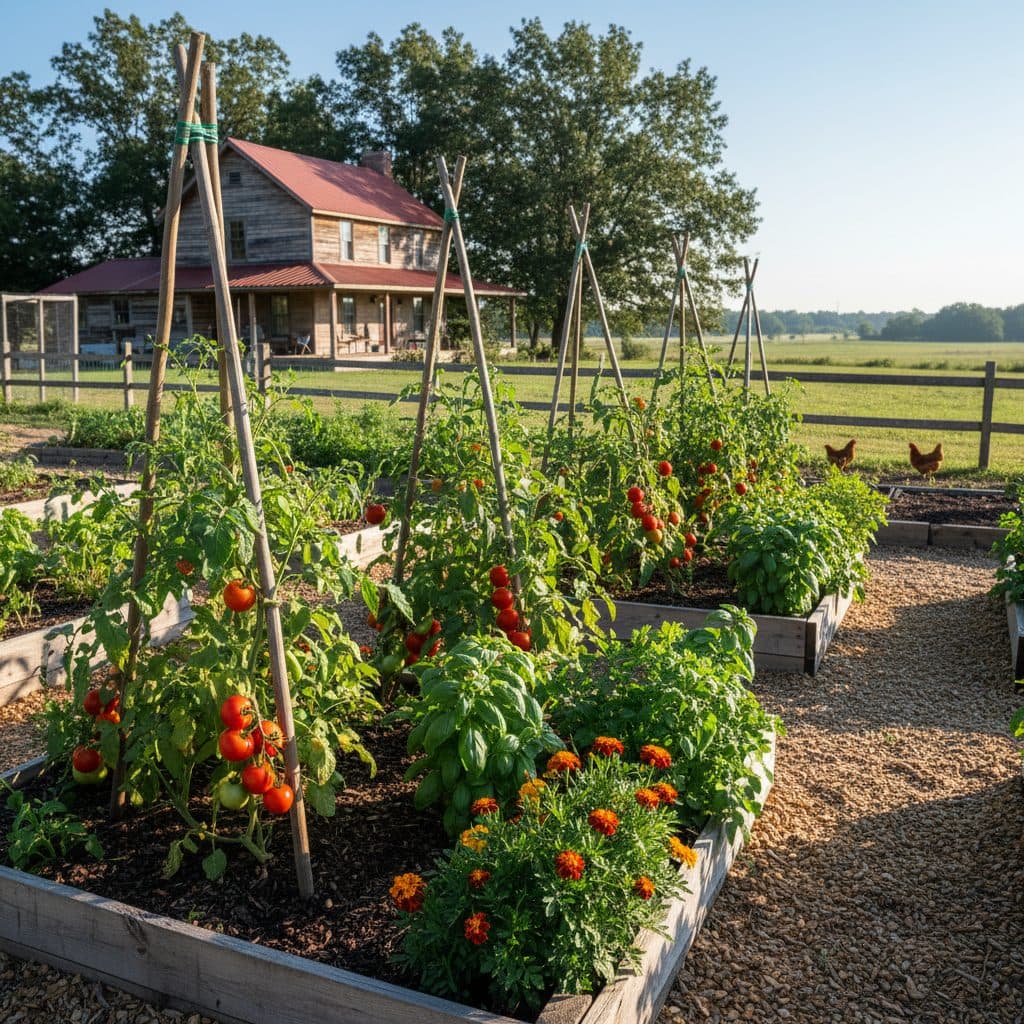
Key takeaways
- Rotate crops every 3-4 years to break disease cycles and reduce pathogen buildup in the soil.
- Ensure good air circulation by pruning lower leaves and spacing plants 24-36 inches apart.
- Water at the base of plants in the morning, allowing foliage to dry before evening to prevent fungal growth.
- Apply organic fungicides, such as copper or Bacillus subtilis, preventatively during periods of high humidity.
- Promptly remove and destroy all infected plant material to prevent the spread of spores to healthy plants.
- Select disease-resistant tomato varieties suitable for your specific USDA zone to minimize disease pressure.
Quick answer: To organically manage early blight, late blight, and septoria leaf spot on tomatoes in USDA Zone 6, implement crop rotation, ensure good air circulation, water at the base of plants, and use organic fungicides preventatively. Promptly remove infected material and select disease-resistant varieties.
For many US growers, tomatoes are the crown jewel of the summer garden, but these beloved plants are susceptible to a trio of common fungal diseases: early blight, late blight, and septoria leaf spot. In regions like the humid Southeast or the variable climate of USDA zone 6, these diseases can significantly reduce yields by 20% or more if left unchecked. Understanding how to identify these issues early and implement effective organic management strategies helps ensure a successful harvest.
This guide identifies each of these common tomato ailments, from the tell-tale concentric rings of early blight to the rapid devastation of late blight, and covers practical, organic approaches to prevention and treatment, grounded in solid agricultural practices and research, to help you grow healthy tomato plants.
Identifying common tomato diseases: a grower’s perspective
Successful organic disease management begins with accurate identification. Many fungal diseases present similar symptoms, but subtle differences can guide your treatment plan. In the Midwest, for example, high humidity and fluctuating temperatures create ideal conditions for various pathogens. Observing your plants closely, especially the lower leaves, on a daily basis can help you catch problems when they are small, making them much easier to manage organically.
Key indicators for early detection
When inspecting your tomato plants, look for specific patterns and locations of spots or lesions. Early blight often starts on older foliage, while septoria leaf spot can appear anywhere on the plant, including stems. Late blight, however, is notoriously aggressive, spreading rapidly across leaves, stems, and even fruit within days under cool, wet conditions. Understanding these initial signs can save a significant portion of your harvest, potentially 30% or more of your total yield.
- Location of symptoms: Note whether spots appear on lower, older leaves or higher, newer growth.
- Size and shape of lesions: Observe if spots are small and circular, or large and irregular.
- Color and texture: Look for dark brown, black, or water-soaked areas, and check for fuzzy growth.
- Progression rate: Determine how quickly the disease is spreading across the plant over a 24-hour period.
- Presence of fruiting bodies: Use a hand lens to check for tiny black dots within spots, characteristic of septoria.
Early blight: spotting the signs and slowing the spread
Early blight, caused by the fungus Alternaria solani, is a common foe for tomato growers, particularly in humid regions like the Mid-Atlantic states. It typically appears when plants are stressed or beginning to set fruit, often after a period of warm, wet weather, with optimal temperatures between 75-85°F. The disease manifests as dark brown to black spots, usually 0.25 to 0.5 inches in diameter, on older leaves. These spots develop characteristic concentric rings, resembling a target, and are often surrounded by a yellow halo. Severe infections can lead to significant defoliation, reducing fruit quality and yield by 15% or more.
Preventative measures for early blight
To manage early blight organically, focus on prevention. Crop rotation is paramount; avoid planting tomatoes or other solanaceous crops in the same spot for at least 3-4 years. This breaks the disease cycle, as spores can overwinter in plant debris. Proper spacing, aiming for 24-36 inches between plants, improves air circulation, which helps dry foliage quickly after rain or irrigation, reducing the hours of leaf wetness that fungi need to thrive. Mulching with 2-4 inches of straw or compost can also prevent spores from splashing up from the soil onto lower leaves. Consider using fermented soybean meal organic fertilizer to build soil health, which can indirectly boost plant vigor and resistance.
- Crop rotation: Implement a 3-4 year rotation cycle for all solanaceous plants.
- Sanitation: Remove and destroy infected leaves and plant debris promptly.
- Air circulation: Prune lower leaves and suckers to improve airflow around the base of plants.
- Watering practices: Water at the base of plants in the morning, avoiding overhead irrigation.
- Mulching: Apply 2-4 inches of organic mulch to suppress soil-borne spores.
Septoria leaf spot: small spots, big problems
Septoria leaf spot, caused by Septoria lycopersici, is another widespread fungal disease affecting tomatoes, particularly prevalent in areas with consistent moisture and temperatures between 68-77°F, such as the humid coastal regions of North Carolina. This disease is characterized by numerous small, circular spots, typically 0.125 to 0.25 inches in diameter, with dark brown borders and light gray or tan centers. A diagnostic feature is the presence of tiny black dots, called pycnidia, within the spots, which are the fungal fruiting bodies. These spots usually appear first on the lower leaves and can quickly spread upwards, leading to significant defoliation and a reduction in fruit size and overall yield by 20% or more [3].
Cultural practices for septoria control
Organic management for septoria leaf spot relies heavily on cultural practices. Since the fungus overwinters on infected plant debris and even on related weeds, diligent garden sanitation matters. Remove and destroy all infected leaves and stems as soon as they are observed. Do not compost diseased material, as the spores can survive. Watering plants at the base in the morning, rather than overhead, helps keep foliage dry, reducing the conditions favorable for spore germination. Ensuring good air circulation by pruning excess foliage and maintaining adequate spacing of 24-36 inches between plants also helps leaves dry faster. Some growers in USDA zone 7 also find success with a preventative spray of neem oil or a copper-based fungicide, applied every 7-10 days during periods of high humidity.
- Sanitation: Promptly remove and dispose of all infected plant parts away from the garden.
- Weed control: Keep the area around tomato plants free of weeds, which can harbor the fungus.
- Watering: Use drip irrigation or water by hand at the soil line to keep leaves dry.
- Airflow: Prune lower branches and space plants properly to promote drying.
- Mulching: Apply a 3-inch layer of clean mulch to prevent soil splash.
Late blight: the aggressive threat
Late blight, caused by the oomycete Phytophthora infestans, is arguably the most feared tomato disease due to its rapid and destructive nature. It can wipe out an entire tomato crop in 10-14 days under ideal conditions, particularly in cool, wet environments like the Pacific Northwest or parts of the Northeast, where temperatures are consistently between 60-78°F with high humidity or prolonged leaf wetness [3]. Symptoms begin as large, irregular, water-soaked lesions on leaves, often with a purplish-black appearance. A distinctive feature is the fuzzy, white fungal growth that may be visible on the underside of infected leaves, especially in the morning when humidity is high. Stems develop dark brown cankers, and fruit can rot quickly, showing large, firm, brown blotches.
Emergency response and resistant varieties
When late blight strikes, immediate action is critical. Remove and double-bag all infected plants and plant parts, then dispose of them in the trash—do not compost them. This disease is highly contagious, and spores can travel miles on wind currents. For organic growers, preventative sprays are the best defense. Copper fungicides, applied every 5-7 days during periods of high risk, can offer protection. Look for tomato varieties labeled ‘LB’ for late blight resistance; some popular options include ‘Defiant PHR’ or ‘Mountain Magic’. In USDA zone 5, where late blight can still be a problem, choosing resistant varieties and monitoring weather forecasts for cool, wet spells are essential components of an integrated pest management plan. You might also consider companion planting strategies to improve plant health, as discussed in our article on what not to plant with tomatoes.
- Immediate removal: Cut out and bag infected plants or plant parts at the first sign of disease.
- No composting: Never compost late blight infected material; dispose of it in municipal waste.
- Resistant varieties: Choose tomato varieties specifically bred for late blight resistance.
- Preventative sprays: Apply organic copper fungicides every 5-7 days when conditions favor disease.
- Monitor weather: Stay vigilant during cool (60-78°F), wet, and humid periods.
A multi-pronged organic approach to disease control
Effective organic management of tomato diseases relies on a holistic, multi-pronged strategy that integrates cultural practices, biological controls, and approved organic treatments. Simply reacting to disease outbreaks is often too late, especially with aggressive pathogens like late blight. Instead, a proactive approach, starting from seed selection and continuing through harvest, yields the best results. For instance, in a typical growing season in USDA zone 6, implementing a consistent preventative spray schedule can reduce disease incidence by 40% or more compared to reactive treatments.
Integrated organic treatment strategies
Beyond prevention, several organic treatments can be employed. Organic copper fungicides are broad-spectrum and effective against all three diseases discussed, but must be applied preventatively and according to label instructions, typically every 7-10 days during periods of high humidity. Products containing Bacillus subtilis, a beneficial bacterium, can also provide protective action by colonizing plant surfaces and outcompeting pathogens. Neem oil, while more effective against pests, offers some fungicidal properties and can be used as part of a rotation. Always ensure good soil health through practices like composting and cover cropping, which supports plant immunity. The USDA Natural Resources Conservation Service has resources on these sustainable practices [6]. Remember, no single product is a silver bullet; a combination of strategies is always more effective for maintaining a healthy tomato crop and achieving a yield of 20 pounds or more per plant.
- Crop rotation: Practice a 3-4 year rotation to avoid pathogen buildup in the soil.
- Resistant varieties: Choose tomato varieties with known resistance to common diseases.
- Sanitation: Regularly remove diseased leaves and plant debris, and clean tools.
- Proper watering: Water at the base of plants in the morning to allow foliage to dry.
- Air circulation: Space plants 24-36 inches apart and prune for good airflow.
- Organic sprays: Use preventative applications of copper fungicides or Bacillus subtilis.
Comparison of Common Tomato Diseases
Feature | Early Blight | Septoria Leaf Spot | Late Blight |
|---|---|---|---|
Pathogen | Alternaria solani | Septoria lycopersici | Phytophthora infestans |
Optimal Conditions | Warm (75-85°F), humid | Warm (68-77°F), wet | Cool (60-78°F), very wet |
Key Symptoms | Target-like spots (0.25-0.5 in) on older leaves | Small spots (0.125-0.25 in) with dark borders, light centers, tiny black dots | Large, irregular water-soaked lesions, fuzzy white growth on undersides |
Spread Rate | Moderate | Moderate to fast | Very fast (10-14 days to destroy crop) |
Primary Impact | Defoliation, reduced fruit size | Defoliation, reduced fruit yield by 20%+ | Rapid plant death, fruit rot |
Organic Treatment | Copper, Bacillus subtilis, sanitation | Copper, Bacillus subtilis, sanitation, neem oil | Copper (preventative), resistant varieties, immediate removal |
Crop Rotation: Rotating tomato crops for 3-4 years significantly reduces the presence of soil-borne pathogens like those causing early blight and septoria leaf spot.
Plant Spacing: Maintaining 24-36 inches between tomato plants improves air circulation, which can reduce leaf wetness by up to 50% and discourage fungal growth.
Watering Time: Watering tomato plants at the base in the morning, ideally before 9 AM, allows foliage to dry completely before evening, minimizing fungal disease risk by 30%.
Late Blight Danger: Late blight can destroy an entire tomato crop within 10-14 days under cool, wet conditions (60-78°F), necessitating immediate and decisive action.
Frequently asked questions
Can early blight spread to other vegetables?
Yes, early blight can affect other solanaceous crops like potatoes, peppers, and eggplants, making crop rotation of 3-4 years essential to prevent disease carryover in the soil.
What’s the best time of day to water tomatoes to prevent disease?
Watering in the morning, ideally before 9 AM, allows foliage to dry completely before evening, significantly reducing the risk of fungal diseases by minimizing leaf wetness periods.
Are there any tomato varieties resistant to these diseases?
Yes, many hybrid tomato varieties offer resistance to one or more of these diseases; look for designations like ‘EB’ for early blight or ‘LB’ for late blight on seed packets, which can reduce disease incidence by 50% or more.
How quickly can late blight destroy a tomato crop?
Late blight can spread very rapidly, often destroying an entire tomato crop within 10-14 days under ideal cool, wet conditions, especially in regions like the Pacific Northwest where humidity is consistently high.
Is it safe to eat tomatoes from plants with septoria leaf spot?
Yes, septoria leaf spot primarily affects the leaves and stems; the fruit itself is generally safe to eat, though severe defoliation can reduce fruit size and overall yield by 20% or more due to reduced photosynthesis.
What is the recommended organic spray for these diseases?
Organic copper fungicides or products containing Bacillus subtilis are effective, especially when applied preventatively every 7-10 days during humid periods, following label instructions carefully for optimal results.
References
- Septoria leaf spot on lettuce. (2017). Septoria leaf spot on lettuce..
- Septoria petroselini (leaf blight: parsley) (2019). Septoria petroselini (leaf blight: parsley).
- EFFECT OF CAPTAFOL AND RIDOMIL (R) MZ IN THE CONTROL OF LATE BLIGHT (PHYTOPHTHORA INFESTANS) AND SEPTORIA LEAF SPOT (SEPTORIA LYCOPERSICI) ON TOMATO (1985). EFFECT OF CAPTAFOL AND RIDOMIL (R) MZ IN THE CONTROL OF LATE BLIGHT (PHYTOPHTHORA INFESTANS) AND SEPTORIA LEAF SPOT (SEPTORIA LYCOPERSICI) ON TOMATO.
- Late Blight in Celery-Grenada (2014). Late Blight in Celery-Grenada.
- Early and late blight on groundnuts – Kenya. (2017). Early and late blight on groundnuts – Kenya..
- USDA Natural Resources Conservation Service (2024). USDA Natural Resources Conservation Service.