Key takeaways
- Ducks produce larger, richer eggs with better baking properties and lay better through short winter days.
- Chickens are cleaner to house in small spaces and produce dry, easy-to-manage droppings on deep litter bedding.
- Ducks have better cold and wet weather hardiness, rarely suffering from respiratory illness when managed well.
- Ducks forage voraciously for garden slugs and snails without aggressively scratching and tearing up perennial root zones.
- Chickens till, scratch, and compost deep garden beds, making them unmatched for turning soil and processing food scraps.
Quick answer: Ducks are hardier in cold, wet climates, lay larger, richer eggs and hold production better through short winter days, and control garden slugs without destroying established perennial roots, but require constant water management. Chickens are cleaner, easier to contain, and excel at scratching and turning compost. Many homesteaders choose to raise both species together to capture the benefits of each.
When homesteaders decide to add poultry to their property, the choice usually comes down to two common domestic birds: chickens and ducks. While chickens (Gallus gallus domesticus) remain the traditional backyard standard, domestic ducks (Anas platyrhynchos domesticus) have surged in popularity among modern homesteaders. Examining raising ducks vs chickens across egg production, housing requirements, mess management, cold hardiness, and garden utility helps you choose the right bird for your land.
Both species provide daily protein, pest control, and nitrogen-rich manure. However, their physical anatomy, dietary habits, and social behaviors differ substantially. Understanding these distinct traits allows you to design housing and daily routines that work with each bird's natural instincts.
Head-to-head poultry comparison matrix
Evaluating both species across practical homestead metrics shows their strengths and management challenges.
+---------------------+-----------------------+---------------------------------------+
| Trait / Metric      | Domestic Ducks        | Backyard Chickens                     |
+---------------------+-----------------------+---------------------------------------+
| Egg Size & Quality  | 30% larger; rich yolk | Standard size; versatile cooking      |
| Winter Laying       | Holds better in cold  | Often pauses without supplemental light|
| Cold / Damp Hardiness| Superior (waterproof) | Moderate (comb frostbite risk in cold)|
| Housing Style       | Ground level bedding  | Elevated roosting bars & nest boxes   |
| Water Needs         | Must submerge bills   | Clean nipple waterers or font cups    |
| Garden Impact       | Eats slugs; soft greens| Scratches mulch; eats pests & greens  |
| Foraging Behavior   | Dabbling / grazing    | Scratching / pecking                  |
+---------------------+-----------------------+---------------------------------------+
To see how poultry fits into a broader livestock plan, review our guide on the best animals for homesteading.
Egg production: duck eggs vs chicken eggs
Both poultry species are prolific egg layers when provided with balanced nutrition, but the eggs themselves have distinct culinary profiles.
+-----------------------------------------------------------------------------------+
|  [Nutritional & Culinary Egg Comparison]                                          |
|                                                                                   |
|  - Duck Eggs: Thicker shell, 30% larger, higher yolk-to-white ratio, rich in      |
|    albumen protein; prized by bakers for soaring cakes & pastries.                |
|                                                                                   |
|  - Chicken Eggs: Familiar mild flavor, easy to crack, perfect for frying and      |
|    everyday breakfast cooking.                                                    |
+-----------------------------------------------------------------------------------+- Laying consistency: Top egg-laying duck breeds like Khaki Campbells and Welsh Harlequins regularly lay 280 to 320 large eggs per year. Ducks also hold laying production better through short winter days than heritage chickens.
- Storage and food safety: Duck eggs have a thicker shell membrane and waxy bloom than chicken eggs, but because ducks often lay in damp bedding or mud, soiled eggs should be washed and refrigerated promptly at 45°F (7°C) or below. Because waterfowl are natural carriers of Salmonella, duck eggs should be cooked until both white and yolk are firm (or used in thoroughly baked dishes) instead of served soft-boiled or raw.
To understand full-scale chicken egg production, read raising chickens for eggs.
Cold hardiness, disease resistance, and health
Ducks hold a distinct advantage when it comes to weather resilience and overall immune vigor:
- Waterproof insulation: Ducks possess a dense layer of insulating down feathers beneath an outer layer of waterproof plumage coated in natural preen oils. They willingly swim and forage in snow, freezing rain, and slush without distress.
- Cold weather resilience: Their thick down coat, dense water-repellent feathering, and lack of fleshy combs or wattles make them far more cold-tolerant than chickens, though their bare webbed feet still need dry straw or wood shavings in sub-zero weather to prevent frostbite.
- Parasite resistance: Ducks love splashing in water, which naturally deters external parasites like chicken mites, lice, and scaly leg mites. They are also less prone to common poultry respiratory illnesses.
For dedicated duck husbandry practices, see our guide on raising ducks.
Housing, containment, and the water reality
Where chickens and ducks diverge most dramatically is in their daily housing and hygiene requirements.
Chicken housing: clean and dry
Chickens naturally roost on elevated wooden perches at night and deposit the majority of their dry droppings beneath the roosts. A chicken coop using the deep litter method can stay dry, clean, and odor-free for months with periodic additions of dry wood shavings or straw. Chickens drink neatly from enclosed nipple waterers, creating zero mess.
Duck housing and the "water challenge"
Ducks do not roost on perches (with the exception of Muscovies, which are perching ducks); they sleep huddled together on clean floor straw. Because ducks are waterfowl, they produce wet, loose droppings that require frequent bedding changes to prevent ammonia buildup.
Most importantly, ducks must be able to submerge their entire bill and nostrils in water to clean their airways and keep their eyes healthy. When drinking, ducks scoop water into their bills and shake their heads, splattering water everywhere. Providing water inside a duck coop quickly creates a soggy, muddy mess. The solution is simple: keep drinking water outdoors in the open run, and only provide dry bedding inside the night coop.
Garden utility: slug hunters vs soil tillers
Both birds help in the garden, but they perform different tasks:
- Ducks in the garden: Ducks do not scratch and dig like chickens, making them safer around established shrubs, fruit trees, and perennial beds, but they will still strip tender seedlings, lettuces, and soft greens down to the ground; keep them supervised or fenced out of active salad beds.
- Chickens in the garden: Chickens scratch the earth relentlessly with sharp claws. While this makes them destructive around tender young seedlings, it makes them exceptional for end-of-season bed cleanup. Chickens till spent garden beds, incorporate organic matter, devour weed seeds, and scratch out overwintering beetle grubs.
To keep your flock nourished with balanced feeds, review our guide on what to feed chickens.
Feed conversion and nutritional requirements
While both ducks and chickens thrive on standard commercial poultry feed, their nutritional demands differ in specific ways:
- Niacin (Vitamin B3): Growing ducklings require significantly higher levels of niacin than chicken chicks to support proper leg bone development. Feeding standard un-supplemented chicken chick starter to ducklings can lead to crippling bowed leg deformities. Always supplement duckling feed with brewer's yeast or purchase waterfowl-specific starter crumbles.
- Forage efficiency: Ducks are exceptional grazers, consuming large quantities of tender pasture greens, clover, aquatic weeds, and worms, which can reduce their commercial feed consumption substantially during the spring and summer months.
Can you raise ducks and chickens together?
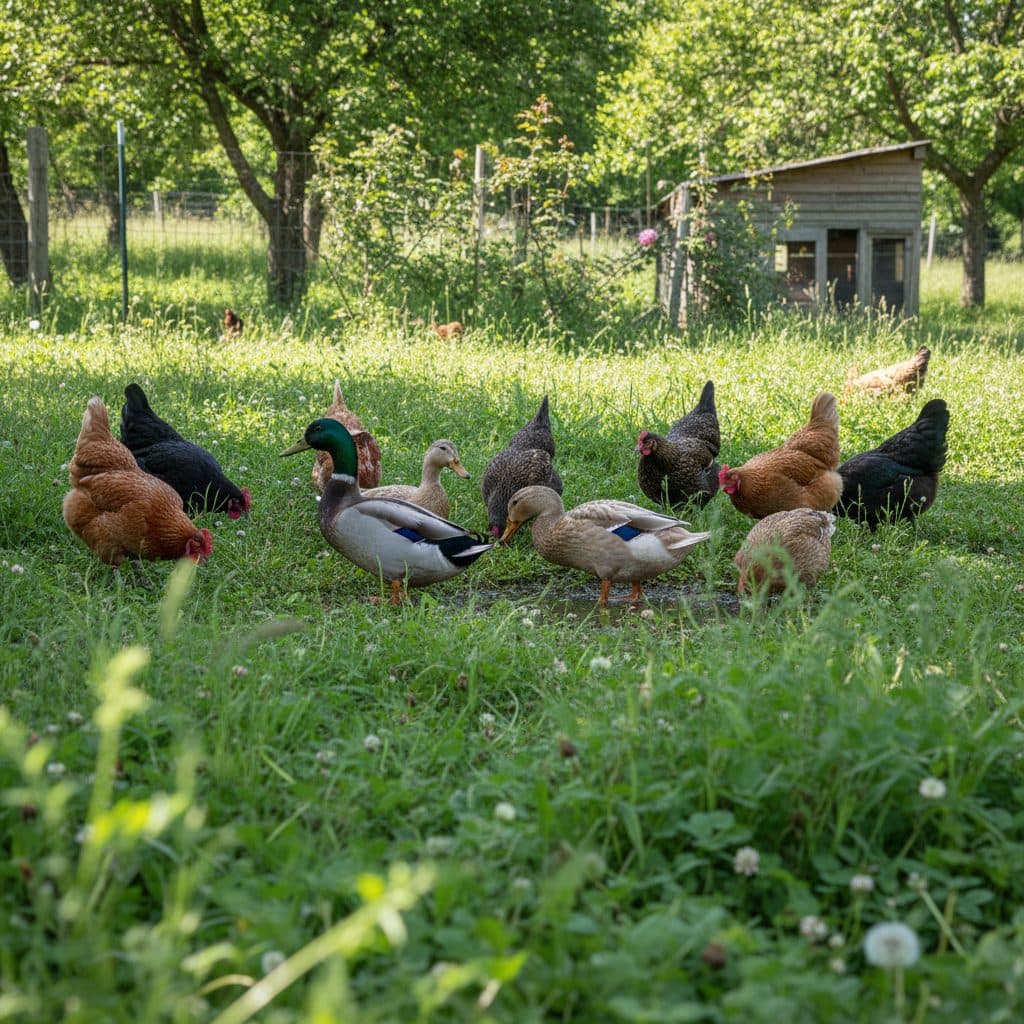
Many homesteaders successfully raise ducks and chickens in a shared pasture or outdoor run.
+-----------------------------------------------------------------------------------+
|  [Rules for Mixed Poultry Flocks]                                                 |
|                                                                                   |
|  1. Separate Night Housing: Keep coops separate to prevent damp duck bedding from |
|     causing respiratory issues in chickens.                                       |
|  2. Outdoor Water Stations: Place open water troughs outside in the run where     |
|     ducks can splash without soaking chicken coop bedding.                        |
| 3. Safe Water Access: Ensure open duck pools have ramps so chickens do not fall   |
|     in and drown, as chicken feathers become waterlogged quickly.                 |
| 4. Drake Supervision: Never allow male ducks (drakes) to mate with female hens,   |
|     as anatomical differences can cause severe injury to chickens.                |
|  5. Biosecurity & HPAI: Waterfowl can shed avian influenza without severe illness;|
|     separate flocks completely during high-risk wild migration or active outbreaks.|
+-----------------------------------------------------------------------------------+
Understanding each species' traits helps you select the right poultry flock for your homestead.