Key takeaways
- Aquaponics combines aquaculture (raising fish) and hydroponics (growing plants without soil), using fish waste to fertilize plants.
- A typical small system can yield 10-15 pounds of fish and 20-30 pounds of leafy greens annually in a space as small as 10 square feet.
- A balanced nitrogen cycle keeps the system healthy, converting toxic ammonia into plant-usable nitrates.
- Starting with a 50-gallon fish tank and a 20-gallon grow bed is a common beginner setup, suitable for growing six to eight plants.
- Aquaponics systems use up to 90% less water than traditional soil gardening, making them highly efficient for regions facing drought, such as California.
- Tilapia, trout, and catfish are suitable fish for home systems, while lettuce, kale, and basil thrive in the nutrient-rich water.
Quick answer: A 50-gallon home aquaponics system can annually produce 10-15 pounds of fish like tilapia and 20-30 pounds of leafy greens such as lettuce by recirculating fish waste as plant fertilizer. This method uses significantly less water than traditional gardening, making it ideal for efficient food production.
In many parts of the United States, particularly in arid regions like Arizona or the high desert of Nevada, water conservation is a critical concern for home gardeners. Aquaponics offers a compelling solution, merging fish farming and soilless plant cultivation into a single, recirculating system. This method can use as little as 10% of the water required for traditional soil gardening, making it an efficient choice for those looking to maximize their yield with minimal water input.
A well-designed small-scale aquaponics system can produce a significant amount of food from a compact footprint, often less than 20 square feet. For instance, a 50-gallon system can comfortably support enough fish to fertilize 20-30 pounds of leafy greens and herbs annually, alongside providing 10-15 pounds of edible fish. This article will guide you through the practical steps of setting up and maintaining such a system, sharing insights from experienced growers across the US.
Understanding the aquaponics cycle
Aquaponics operates on a symbiotic relationship between aquatic animals and plants, mediated by beneficial bacteria. Fish produce waste, primarily ammonia, which is toxic to them in high concentrations. However, specific bacteria convert this ammonia first into nitrites, and then into nitrates. These nitrates are a primary nutrient source for plants, which in turn filter the water for the fish. This natural process allows the system to thrive with minimal external input once established, typically after four to six weeks of cycling.
the nitrogen cycle: the heart of the system
The nitrogen cycle is the foundational process in any aquaponics system, ensuring that fish waste becomes plant food. Without a healthy bacterial colony, ammonia levels would quickly rise, harming the fish and preventing plant growth. Bacterial activity is fastest in water between 68°F and 78°F and slows as the water cools, so a cool-water system such as a trout tank processes waste more slowly than a warm-water one; pick the fish to match the temperature you can actually hold year-round, which matters most in cooler climates like USDA zone 5. Regular testing of ammonia, nitrite, and nitrate levels, at least once a week, helps monitor the health of this cycle.
- Ammonia (NH₃/NH₄⁺): Produced by fish waste and uneaten food; toxic above 0.5 ppm.
- Nitrite (NO₂⁻): Converted from ammonia by Nitrosomonas bacteria; also toxic, especially above 0.25 ppm.
- Nitrate (NO₃⁻): Converted from nitrite by Nitrobacter bacteria; primary plant nutrient, safe for fish up to 80 ppm.
- pH levels: Ideally maintained between 6.0 and 7.0 for plant nutrient uptake and bacterial health.
- Water temperature: Critical for fish and bacterial activity, typically 68-78°F for most common species.
Designing your small-scale system
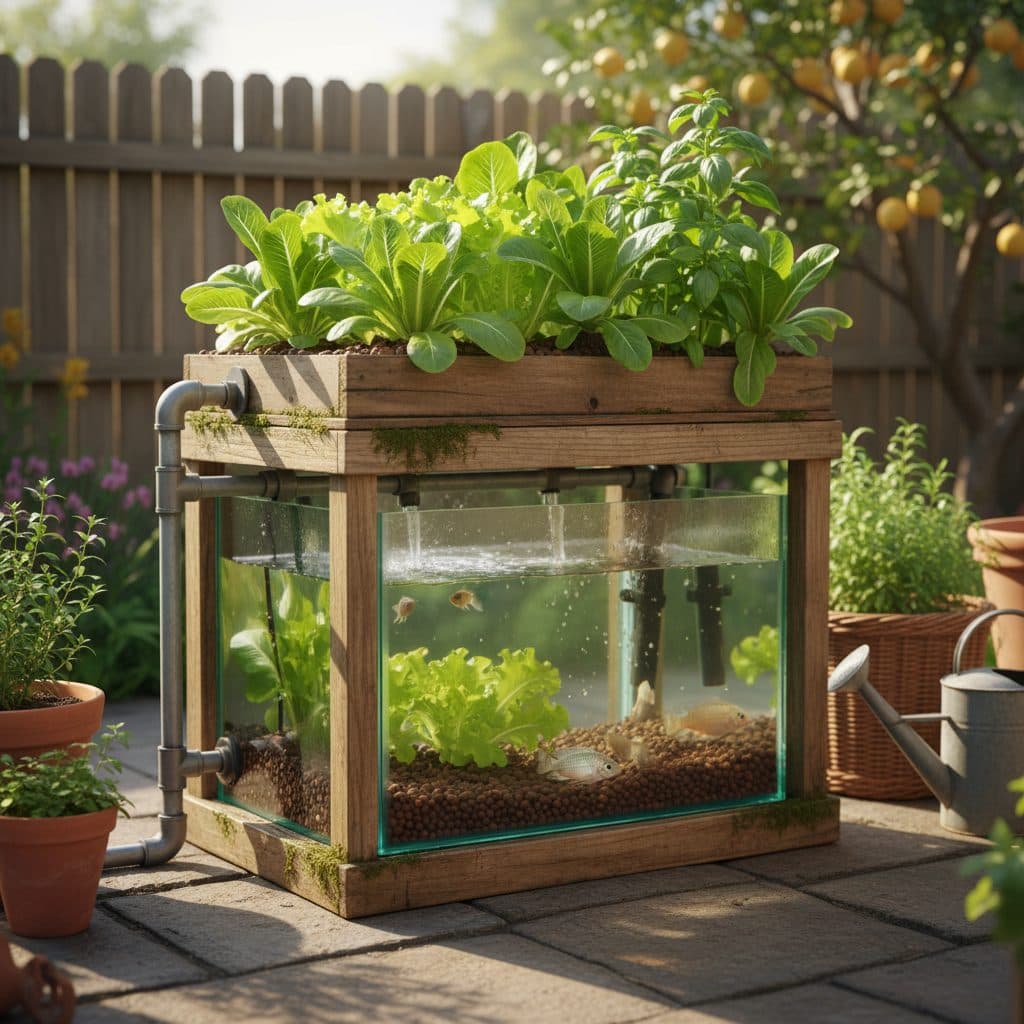
Building an effective small-scale aquaponics system requires careful planning regarding components and layout. A common beginner setup involves a 50-gallon fish tank paired with a 20-gallon grow bed, which gives sufficient space for a few fish and several plants. The grow bed typically sits above the fish tank, allowing gravity to return filtered water. For indoor setups, especially in colder regions like Minnesota, a reflective grow tent can significantly improve light distribution and heat retention, so plants get adequate light even during shorter winter days. You can explore options like a Reflective Indoor Grow Tent to optimize your indoor environment.
key components and system types
The primary components include a fish tank, a grow bed, a water pump, and an air pump with an air stone. The fish tank size determines the number of fish you can raise; a 50-gallon tank can comfortably house 5-7 small fish. Grow beds can be media-filled (using clay pebbles or lava rock) or deep water culture (DWC) rafts, where plant roots are suspended directly in the nutrient-rich water. Media beds offer biological filtration and support a wider range of plants, while DWC systems are often simpler for leafy greens. A water pump, capable of circulating the entire system volume at least once per hour, is essential for consistent nutrient delivery and oxygenation.
- Fish tank: Typically 20-100 gallons for home systems, providing space for fish and water volume stability.
- Grow bed: Sized to 1/2 to 1/1 ratio of fish tank volume, filled with media or used for DWC.
- Water pump: Moves water from the fish tank to the grow bed, often rated for 200-400 gallons per hour.
- Air pump and air stone: Essential for oxygenating the fish water and keeping fish and bacteria healthy.
- Plumbing: PVC pipes and fittings to connect components, ensuring leak-free operation and proper water flow.
Choosing fish and plants for your system
Selecting the right fish and plant species is vital for the success of a small-scale aquaponics system. For fish, hardy species that tolerate varying water conditions and grow at a reasonable rate are ideal. Tilapia is a popular choice for its fast growth (reaching market size in 6-9 months) and tolerance to a wide range of temperatures, often thriving in water between 70°F and 85°F. Live tilapia are regulated in a number of states — some require a permit, and some restrict which species you may hold — so confirm the rules with your state wildlife or agriculture agency before ordering fingerlings. Other good options include trout, especially in cooler climates like the Pacific Northwest, or catfish, which tolerate lower oxygen levels than some other species. Stocking densities should be conservative for beginners, perhaps one pound of fish per 10 gallons of water.
optimal plant and fish pairings
Leafy greens and herbs are generally the easiest plants to grow in aquaponics, especially for beginners. Lettuce, kale, spinach, basil, and mint thrive in the nutrient-rich water and can be harvested frequently, often within 30-45 days from transplanting. Fruiting plants like tomatoes, peppers, or strawberries can also be grown but require a more mature system with higher nutrient concentrations and often more intensive management. A 50-gallon system can support approximately 6-8 mature lettuce plants or 2-3 larger fruiting plants. Consider the specific needs of both your chosen fish and plants to ensure compatibility and maximize your yields.
- Tilapia: Fast-growing, warm-water fish (70-85°F), reaching 1-1.5 pounds in 6-9 months.
- Trout: Cold-water fish (55-65°F), suitable for systems in cooler regions like USDA zone 6.
- Catfish: Hardy, warm-water fish (75-85°F), tolerant of lower oxygen levels.
- Lettuce & leafy greens: Fast growth (30-45 days), high yield, excellent for beginners.
- Herbs (Basil, Mint): Quick to establish, provide continuous harvests, and adapt well to aquaponics.
System maintenance and troubleshooting
Consistent monitoring and maintenance are key to a thriving aquaponics system. Daily checks should include observing fish behavior and ensuring proper water flow from the pump. Weekly tasks involve testing water parameters and topping off evaporated water, which can be 1-2 gallons for a 50-gallon system. Regularly inspect plants for pests or nutrient deficiencies, and remove any dead plant material or uneaten fish food to prevent water quality issues. Maintaining stable conditions helps prevent common problems and ensures a productive environment for both fish and plants.
routine checks and common issues
Water quality testing is paramount. Use a reliable test kit to check pH, ammonia, nitrite, and nitrate levels at least once a week. The ideal pH range is 6.0-7.0; values outside this range can stress fish and hinder plant nutrient uptake. If ammonia rises above 0.5 ppm or nitrite above 0.25 ppm, stop feeding for a day or two and perform a small water change, perhaps 10-15% of the total volume. Plant deficiencies, such as yellowing leaves, might indicate a lack of iron or potassium, which can be supplemented with chelated minerals. For outdoor systems in humid climates like Florida, algae growth can be an issue, often mitigated by keeping direct sunlight off the fish tank and off any exposed plumbing.
- Daily: Check water flow, fish activity, and air pump operation.
- Weekly: Test water pH, ammonia, nitrite, and nitrate levels; top off water due to evaporation.
- Bi-weekly: Clean grow bed media if necessary, remove any plant debris, and inspect roots.
- Monthly: Perform a 10-15% water change if nitrate levels are consistently high (above 80 ppm).
- Quarterly: Clean the water pump impeller and air stone to maintain efficiency.
Aquaponics vs. Traditional Soil Gardening for Home Food Production
Feature | Aquaponics | Traditional Soil Gardening |
|---|---|---|
Water Usage | Up to 90% less water, recirculating system. | Significant water loss through evaporation and runoff. |
Fertilizer Source | Fish waste supplies most of what plants need, but iron, potassium and calcium usually have to be supplemented. | Requires external fertilizers, synthetic or organic. |
Pest Control | Fewer soil-borne pests, easier to manage in a contained environment. | Prone to a wide range of soil-borne pests and diseases. |
Weeding | No weeds, as plants grow in water or inert media. | Requires regular weeding to prevent competition for nutrients. |
Space Efficiency | High yield in a small footprint, often 10-20 square feet. | Requires more land area for comparable yields, typically 50+ square feet. |
Yield Potential | Consistent, year-round production possible, 10-15 lbs fish & 20-30 lbs greens annually. | Seasonal production, dependent on climate and soil quality. |
Water Savings: A recirculating aquaponics system reuses its water instead of losing it to soil drainage and runoff, so it can use up to 90% less than an equivalent soil garden — which matters most in drought-prone areas like California.
Yield Potential: A well-run 50-gallon home system can produce roughly 10-15 pounds of fish and 20-30 pounds of leafy greens a year, though output varies widely with stocking rate, feed, water temperature and light.
Frequently asked questions
How much space does a small aquaponics system require?
A basic small-scale aquaponics system, such as one with a 50-gallon fish tank and a 20-gallon grow bed, can fit into a footprint as small as 10-15 square feet. This compact design allows for significant food production even in limited urban or backyard spaces.
What are the best fish for a beginner aquaponics system?
For beginners, hardy and fast-growing fish like Tilapia are excellent choices, thriving in water temperatures between 70°F and 85°F. Other suitable options include common goldfish or koi, which are very tolerant of varying water conditions, though they are not typically for consumption.
What plants grow well in aquaponics?
Leafy greens such as lettuce, kale, spinach, and Swiss chard, along with herbs like basil, mint, and cilantro, are highly successful in aquaponics. These plants typically mature in 30-45 days and require moderate nutrient levels, making them ideal for most home systems.
How often do I need to test the water in my system?
It is recommended to test your system’s water parameters, including pH, ammonia, nitrite, and nitrate levels, at least once a week. During the initial cycling phase, or if issues arise, daily testing may be necessary to ensure optimal conditions for fish and plants, especially for the first 4-6 weeks.
Can I use tap water for my aquaponics system?
Yes, tap water can be used, but it must be dechlorinated first. Chlorine and chloramines are harmful to fish and beneficial bacteria. Letting the water sit out for 24-48 hours dissipates chlorine, but it does not remove chloramine, which many US utilities now use instead. Check which one your water provider uses, and if it is chloramine, use a dechlorinator rated for it at the dose on the label.