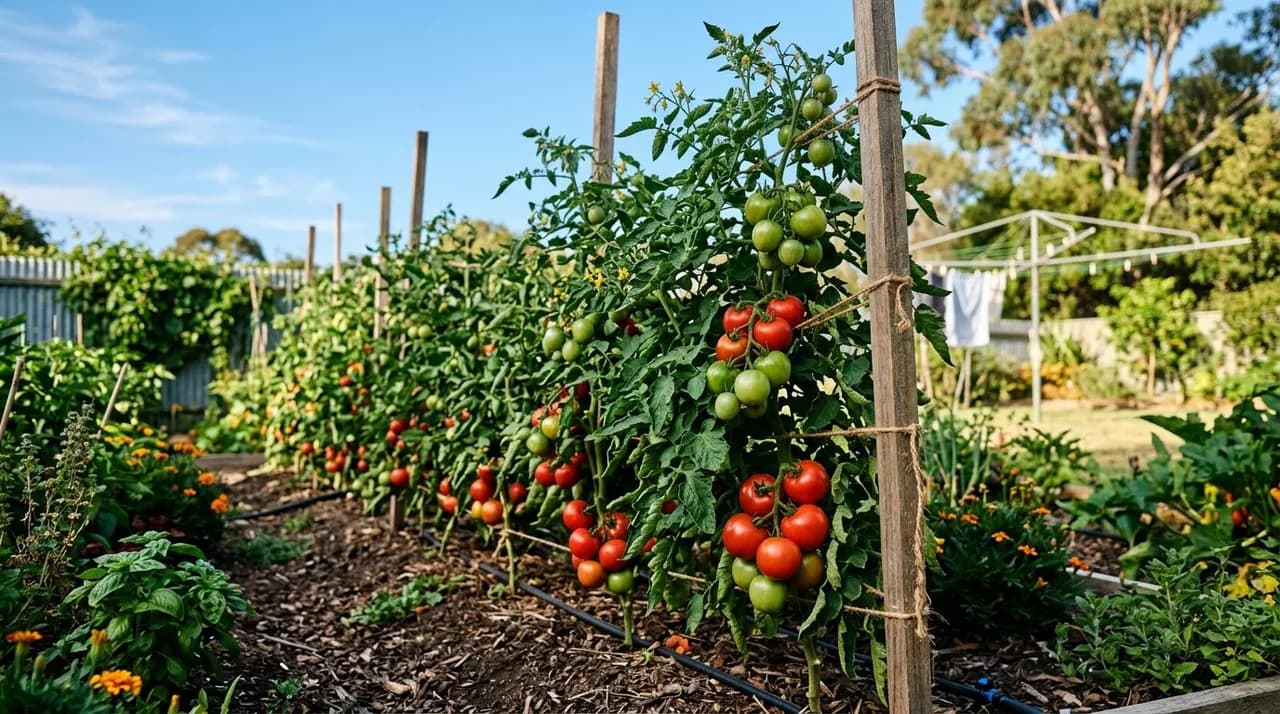
Key takeaways
- Tomato planting timing in Australia depends strictly on climate zone; southern temperate zones plant in spring, while northern tropical zones plant in autumn and winter.
- Temperate and cool zones (Melbourne, Adelaide, Hobart, inland NSW) follow the traditional Melbourne Cup Day (early November) outdoor planting window.
- Subtropical zones (Brisbane, Northern Rivers) plant in autumn (March to May) and late winter (July/August) to avoid extreme summer humidity and fruit fly pressure.
- Tropical zones (Darwin, Cairns, Townsville) plant during the dry season (April to June) to avoid monsoonal rain and fungal blights.
- Tomatoes require warm soil (at least 15°C) and full sunlight (6 to 8 hours daily); protect young seedlings from cold spring winds and late frosts.
Quick answer: In Australia, plant tomatoes outdoors in October or November (around Melbourne Cup Day) in cool and temperate southern regions after frost danger passes. In subtropical and tropical regions, plant from March to August during the mild, dry months to avoid monsoonal summer rains and severe pest pressure.
Tomatoes (Solanum lycopersicum) are a staple of the Australian backyard veggie patch. However, because Australia spans vastly diverse climate regions (from the frost-prone tablelands of Tasmania and Victoria to the humid subtropics of Queensland and the monsoonal tropics of the Top End), there is no single national planting date.
In the southern states, tomatoes are a classic spring and summer crop grown once soil warms past winter chills. In the tropical and subtropical north, the calendar is completely inverted: summer brings scorching heat, waterlogging monsoonal downpours, and intense Queensland fruit fly activity, making autumn and winter the prime tomato-growing season.
Understanding the seasonal planting windows and microclimate requirements for your specific Australian climate zone ensures strong vines, heavy fruit set, and disease-free harvests.
Regional planting calendar: temperate, cool, subtropical, and tropical
Structure your tomato planting around the distinct climate patterns of your geographic region:
+-----------------------------------------------------------------------+
|              AUSTRALIAN TOMATO PLANTING SEASONS BY CLIMATE            |
+-------------------+-----------------------+---------------------------+
| CLIMATE ZONE      | SEED SOWING INDOORS   | OUTDOOR TRANSPLANTING     |
+-------------------+-----------------------+---------------------------+
| Cool & Cold       | August to September   | Late October to November  |
| Temperate         | August to September   | October to November       |
| Subtropical       | Jan-Feb & June-July   | March-May & July-August   |
| Tropical          | February to March     | April to June (Dry Season)|
| Arid / Inland     | July-Aug & Dec-Jan    | Sept-Oct & Feb-March      |
+-------------------+-----------------------+---------------------------+
1. Temperate and cool zones (Melbourne, Sydney, Adelaide, Hobart, Canberra, inland VIC/NSW)
In southern Australia, tomatoes are strictly a warm-season crop. Soil temperatures must reach at least 15°C for root growth, and plants are extremely sensitive to frost:
- Seed Starting: Sow seeds indoors on a sunny windowsill or greenhouse in August or September.
- Outdoor Planting: The classic Australian gardening rule of thumb is planting out around Melbourne Cup Day (the first Tuesday in November). In frost-free coastal Sydney and Adelaide, transplants can go into sheltered beds in October.
- Harvest Window: Harvest runs continuously from December through late autumn (April or May) until first winter frosts terminate the vines.
2. Subtropical zone (Brisbane, Sunshine Coast, Gold Coast, Northern Rivers NSW)
Subtropical summers bring extreme humidity, torrential storms, and intense pest pressure that rapidly destroy tomato vines with fungal leaf spot and fruit fly:
- Primary Growing Window: Plant out in autumn (March to May) for heavy harvesting through winter and early spring.
- Secondary late-winter window: Plant a second crop in late winter (July to August) for harvest through early summer before the wet season builds.
3. Tropical zone (Darwin, Cairns, Townsville, Broome)
In the monsoonal tropics, tomatoes cannot tolerate the heat, humidity, and waterlogging of the summer wet season (November to March):
- The Dry Season Window: Plant transplants outdoors in April, May, and June at the onset of the mild, dry winter season.
- Harvest Window: Enjoy heavy cropping under clear, sunny skies from June through September.
4. Arid and inland zones (Alice Springs, Dubbo, Riverina)
Inland regions experience searing summer heat (regularly exceeding 40°C) which causes blossom drop and pollen sterility, bracketed by frosty winters:
- Plant in early spring (September to October) for early summer harvest, or plant in late summer (February) for autumn harvest before frosts arrive.
For general tomato cultivation and training techniques, see how to grow tomatoes.
Soil preparation, sun requirements, and planting techniques
Tomatoes are vigorous, heavy-feeding plants that require rich, well-draining soil and maximum sun exposure:
[ Step 1: Sun & Soil ]  -----> Full sun (6-8 hours), pH 6.0-6.8, enriched with aged manure
[ Step 2: Deep Planting] -----> Bury stem deeply up to first true leaves to grow extra roots
[ Step 3: Sturdy Staking]-----> Drive hardwood stake 30 cm into soil at planting time
[ Step 4: Mulch & Water] -----> 5 cm sugar cane mulch, deep ground-level watering
1. Sunlight and soil fertility
Choose a position that receives at least 6 to 8 hours of direct sunlight daily. Prepare the bed two weeks before planting by digging in well-rotted cow manure, aged compost, a handful of blood and bone, and a dusting of lime or dolomite only if a soil test shows the bed is acidic. Blossom end rot is a calcium-transport problem rather than a calcium shortage — even, steady soil moisture and a good mulch prevent it far more reliably than adding calcium.
2. Deep planting method
Unlike most garden vegetables, tomato stems produce adventitious roots along any part of the stem buried underground. Remove the lowest leaves and plant the seedling deeply into the soil, burying the stem up to the first set of top leaves. This creates an extensive, deep root system that anchors the plant and improves drought resilience.
3. Immediate staking and mulching
Drive a sturdy 1.8 to 2.1 m hardwood stake or install a heavy wire tomato cage immediately upon planting. Staking later risks severing expanding root systems. Mulch the bed with a 5 cm layer of organic mulch as detailed in our guide on sugar cane mulch.
Top tomato varieties for Australian home gardens
Selecting cultivars adapted to your regional conditions ensures reliable fruit set and pest resistance:
Variety | Growth Habit | Best Climate Zone | Characteristics |
|---|---|---|---|
Grosse Lisse | Indeterminate | Temperate & Cool | Long-time Australian garden favourite, large meaty fruit |
Tommy Toe | Indeterminate | All Zones | Prolific cherry tomato, strong disease resistance |
Roma | Determinate | All Zones | Dense paste tomato, concentrated harvest for sauce |
Black Krim | Indeterminate | Temperate & Arid | Rich, smoky heirloom, handles warm days |
Apollo | Semi-determinate | Subtropical | Early cropper, excellent tolerance to humidity |
- Indeterminate (Climbing) Varieties: Continue growing, flowering, and setting fruit along an extending vine until terminated by frost. Require regular pruning of lateral side shoots (laterals) and sturdy tall stakes.
- Determinate (Bush) Varieties: Grow to a compact height (roughly 1 metre), set flowers in a concentrated flush, and ripen fruit over a 4 to 6 week window. Excellent for pots, small spaces, and making batches of tomato sauce.
Managing common Australian tomato pests and diseases
Keep your tomato crop productive by proactively managing seasonal pests:
- Queensland Fruit Fly (Bactrocera tryoni): The most serious fruit pest in eastern and northern Australia. Female flies sting ripening fruit to lay eggs. Protect crops by enclosing individual trusses or entire plants in fine exclusion netting (mesh under 1 mm) as soon as green fruit forms, or hang monitoring traps.
- Fungal Blights and Leaf Spot: Prevent fungal spores by watering strictly at ground level with drip irrigation, keeping foliage dry. Remove lower leaves up to 30 cm from the ground to prevent soil-splashed spores. For broader disease strategies, review tomato disease organic control.
- Extreme Heat and Sunscald: In midsummer heat exceeding 36°C, erect a temporary 30% to 50% white shade cloth screen over tomatoes to prevent blossom drop and shield developing fruit from sunscald.
- Complementary Tree Care: If cultivating orchard fruit nearby, see our guide on citrus gall wasp management.