Key takeaways
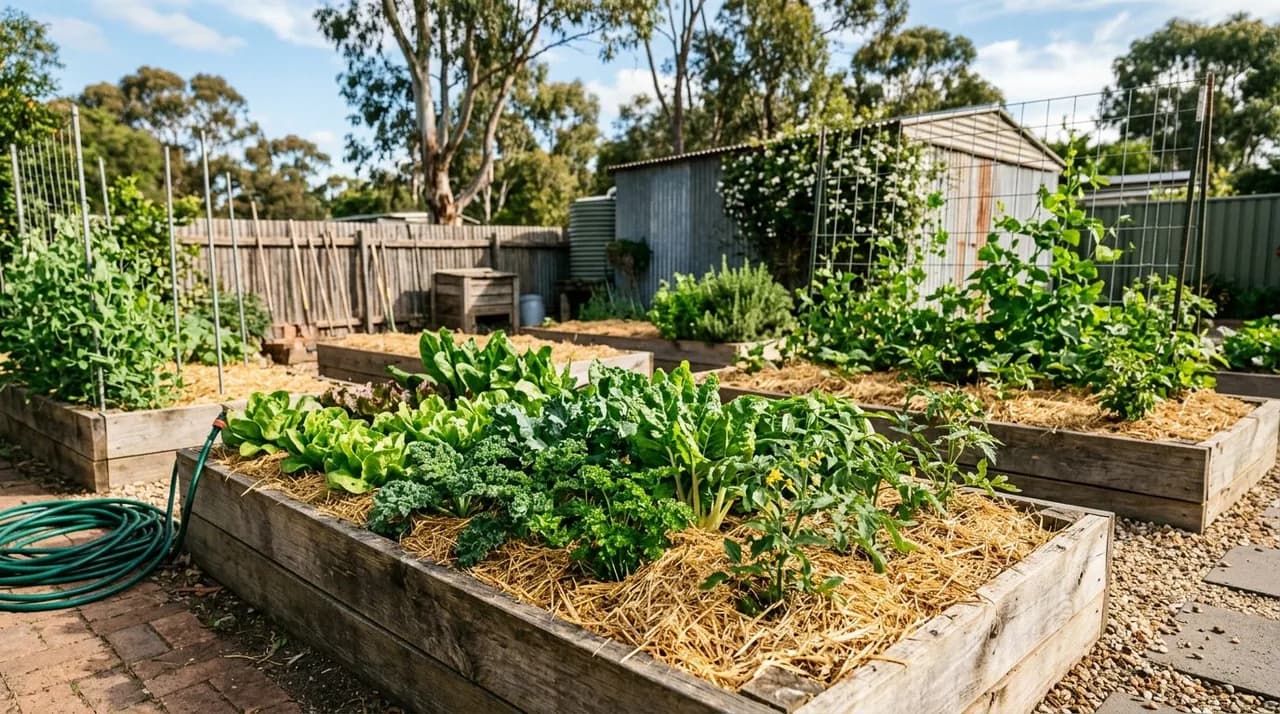
- Sugar cane mulch is made from dried, shredded leaves of harvested sugar cane (Saccharum officinarum), providing a clean, economical ground cover.
- Forms a reflective, insulating surface layer that reduces soil evaporation and shields root zones from extreme Australian summer heat.
- Breaks down over 4 to 6 months into organic carbon, improving soil biology without creating heavy weed seed contamination.
- Compare with pea straw (adds more nitrogen, breaks down faster) and lucerne (premium high-protein mulch for heavy-feeding crops).
- Spread 5 to 7 cm deep over moist, weeded soil, keeping the mulch pulled 5 cm back from plant stems to prevent fungal collar rot.
Quick answer: Sugar cane mulch is a popular, cost-effective organic mulch for Australian veggie patches made from shredded sugar cane leaves. It reflects summer heat, suppresses weeds, and conserves soil moisture when spread 5 to 7 cm deep over damp soil, breaking down into rich humus over 4 to 6 months.
Gardening under the intense Australian sun presents distinct challenges. Fierce ultraviolet radiation, high summer temperatures exceeding 35°C, and drying winds can bake bare garden soil into a hard, cracked crust within hours, desiccating shallow feeder roots and destroying beneficial soil microbes.
Applying an organic surface mulch is the single most effective practice for conserving moisture and sustaining a productive veggie patch in Australia. Among the wide range of mulching materials available at local nurseries and landscape yards, sugar cane mulch has become the primary choice for home vegetable growers.
Produced as a sustainable agricultural byproduct from Queensland and northern New South Wales sugar cane harvests, this lightweight, golden mulch delivers reliable heat protection, suppresses opportunistic weeds, and gradually enriches garden soil biology across suburban and regional gardens.
What is sugar cane mulch: production and properties
Sugar cane mulch consists of the dry leaves, tops, and fibrous residue (trash) left behind during the mechanical harvesting of sugar cane (Saccharum officinarum):
+-----------------------------------------------------------------------+
|                    SUGAR CANE MULCH PROFILE                           |
+-------------------+---------------------------------------------------+
| SOURCING          | Australian sugar cane fields (QLD & Northern NSW) |
| TEXTURE           | Finely shredded, lightweight golden fibres        |
| DECOMPOSITION     | 4 to 6 months (medium breakdown rate)             |
| CARBON:NITROGEN   | High carbon, very low nitrogen — expect mild nitrogen drawdown at the soil surface |
| WEED SEED RISK    | Very low (harvested tops contain no weed seeds)   |
+-------------------+---------------------------------------------------+
Key physical characteristics
- Light Color and Solar Reflection: The pale, straw-like hue of sugar cane mulch reflects harsh solar radiation away from the soil surface. By reflecting light, it keeps the delicate root zone noticeably cooler during midsummer heatwaves.
- Fibrous Interlocking Matrix: When spread and watered, the finely shredded fibres interlock into a loose, breathable mat. This structural mat resists blowing away in hot northerly winds while allowing irrigation water and liquid fertilisers to penetrate smoothly.
- Purity and Cleanliness: Unlike pasture hay or roadside grasses, commercial baled sugar cane mulch contains virtually zero viable weed seeds, preventing unwanted weed outbreaks in prepared garden beds.
- Compressed Bale Convenience: Sugar cane mulch is compressed into tightly wrapped rectangular bales that expand significantly upon opening, making transport in standard passenger vehicles straightforward and tidy.
Sugar cane mulch vs pea straw vs lucerne: choosing the best mulch
Selecting the right organic mulch depends on the specific nutritional demands of your crops and your soil-building goals:
+-----------------------------------------------------------------------+
|               AUSTRALIAN VEGGIE PATCH MULCH COMPARISON                |
+-------------------+-------------------+-------------------------------+
| MULCH TYPE        | NUTRIENT PROFILE  | BEST APPLICATION              |
+-------------------+-------------------+-------------------------------+
| Sugar Cane Mulch  | High Carbon, Low N| Paths, general beds, summer   |
| Pea Straw         | Moderate Nitrogen | Veggie patches, brassicas     |
| Lucerne (Alfalfa) | High N, K & Cal   | Heavy feeders: tomatoes, trees|
+-------------------+-------------------+-------------------------------+
1. Sugar cane mulch
- Best Use: General vegetable beds, strawberry patches, raised containers, and garden pathways.
- Pros: Readily available, economical, clean to handle, long-lasting surface cover (4 to 6 months), excellent heat reflection.
- Cons: Low in natural nitrogen; acts primarily as a physical barrier and carbon builder rather than a fast nutrient source.
2. Pea straw mulch
- Best Use: Seasonal vegetable beds preparing for leafy greens, root crops, and brassicas.
- Pros: Derived from harvested field pea crops, pea straw contains higher levels of residual nitrogen and breaks down within 2 to 4 months into rich, earthworm-attracting organic humus.
- Cons: Can occasionally contain a few sprouting pea seeds (which are easily pulled or hoed) and breaks down faster in humid subtropical zones.
3. Lucerne mulch (alfalfa)
- Best Use: Heavy-feeding fruiting crops such as tomatoes, eggplants, capsicums, citrus trees, and roses.
- Pros: High in organic nutrients. Packed with nitrogen, potassium, calcium, magnesium, and natural growth stimulants (triacontanol). It enriches the soil rapidly as it decomposes.
- Cons: More expensive per bale and breaks down rapidly in hot, moist summer soil.
For comprehensive organic mulching principles, review our guide to organic mulches and soil care.
How to apply sugar cane mulch in your veggie patch
Proper application ensures maximum water conservation while protecting tender plant stems:
[ Step 1: Weed & Water ] --> [ Step 2: Feed Soil ] --> [ Step 3: Spread 5-7 cm ] --> [ Step 4: Water to Settle ]
Clear all weeds thoroughly     Apply compost or pellets    Keep 5 cm stem clearance   Soak mulch to lock fibres
1. Ground preparation
- Weed Thoroughly: Pull all existing annual and perennial weeds from the bed. Mulch suppresses germinating weed seeds but will not kill established perennial grass rhizomes like couch or kikuyu.
- Moisten the Soil Profile: Never lay dry mulch over bone-dry soil. Irrigate the garden bed thoroughly so the underlying soil is deeply saturated.
- Apply Pre-Mulch Nutrients: Scatter a light dressing of organic fertiliser pellets (such as aged poultry manure or blood and bone) and compost over the soil before mulching to offset any minor nitrogen drawdown as surface microbes begin decomposition.
2. Spreading and depth guidelines
- Optimal Layer Thickness: Spread sugar cane mulch evenly to a settled depth of 5 to 7 cm (roughly 2 to 3 inches). A layer thinner than 5 cm allows sunlight to reach weed seeds, while a layer thicker than 10 cm can impede air exchange and prevent light rain from reaching the soil.
- Maintain Stem Clearance: Always pull the mulch back 5 cm away from the base of seedlings, tomato stems, and fruit tree trunks. Piling moist mulch directly against green stems traps humidity, inviting fungal collar rot and stem pathogens.
3. Settle with water
Immediately after spreading, soak the sugar cane mulch thoroughly with a fine hose spray. Wetting the dry fibres expands them slightly and knits the mulch into an interlocking mat that stays anchored against strong summer winds.
Managing summer heat, pests, and soil biology
Integrating sugar cane mulch into your broader garden management supports a healthy living soil ecosystem:
- Summer Heat Protection: During severe heatwaves, a 6 cm mulch blanket keeps root zone temperatures significantly lower than bare ground, preventing blossom drop in heat-sensitive crops. To time your seasonal plantings accurately, see our calendar on when to plant tomatoes in Australia.
- Regional Breakdown Rates: In warm, humid subtropical climates (such as coastal Queensland and northern New South Wales), high biological activity and summer rainfall break down sugar cane mulch in roughly 3 to 4 months. In temperate southern climates (Melbourne, Adelaide, southern NSW), the mulch layer lasts 5 to 6 months before needing replenishment.
- Soil Biological Activity: As earthworms and beneficial soil fungi feed on the decaying lower layers of sugar cane mulch, they draw organic carbon down into the soil profile, creating porous worm channels that improve aeration. Learn more about composting in our overview of vermicomposting at home.
- Pest Monitoring: In moist coastal regions, thick organic mulches can provide daytime shelter for garden snails and slaters. If slater numbers build up and nip tender young seedlings, pull the mulch back 10 cm from delicate stems until plants establish woody resilience, or use beer traps.
- Managing Fruit Pests: For integrated protection of backyard fruit and citrus trees, see our guide on citrus gall wasp control.