Key takeaways
- Winter vegetable gardening in the UK relies on establishing hardy brassicas, roots, and overwintering crops during summer and early autumn.
- Sowing windows: March to May for parsnips and maincrop leeks; June to July for winter brassicas; August to September for autumn-sown salads.
- Frost stimulates sugar accumulation in hardy root crops (parsnips, swedes) and brassicas (kale, Savoy cabbage) as a natural cryoprotectant, which sweetens them.
- Grow resilient brassicas including curly kale, Cavolo Nero, Savoy cabbage, Brussels sprouts, and purple sprouting broccoli for continuous cold-season harvests.
- Sow hardy winter salad leaves such as lamb's lettuce, land cress, and winter purslane in late August and September for fresh greens.
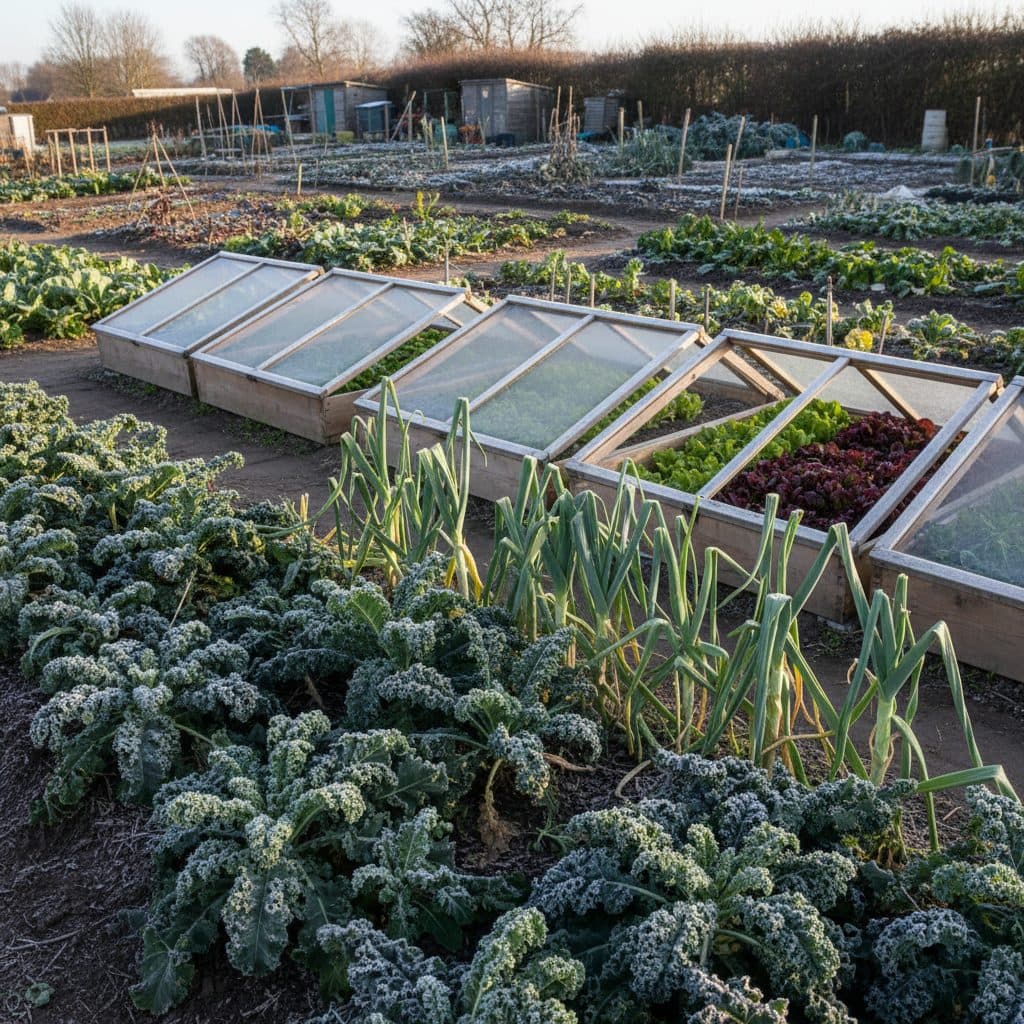
- In Scotland, northern England, and exposed upland sites, prolonged sub-zero temperatures necessitate cloches, fleece covers, or cold frames for leafy crops.
Quick answer: The most reliable winter vegetables to grow in the UK are hardy brassicas like kale, Brussels sprouts, and Savoy cabbage, standing root crops such as parsnips and winter leeks, cold-hardy salad leaves like lamb's lettuce and land cress, and overwintering crops including garlic, autumn onion sets, and Aquadulce Claudia broad beans.
A productive winter vegetable garden in the United Kingdom transforms an empty allotment or backyard plot into a steady source of fresh, nutrient-dense food through the coldest months of the year. While plant growth slows dramatically between November and February due to reduced daylight hours (the Persephone period), hardy crops established during late summer stand in prime condition through British frosts and rains.
Success with winter vegetables to grow uk plots comes down to forward planning. You do not sow most winter crops in the depths of December; rather, you sow and transplant them between spring and late summer so they reach full maturity before the first severe frosts arrive. Once mature, these cold-tolerant vegetables act as living larders, holding in the soil until you are ready to harvest.
+-------------------------------------------------------------+
|              UK WINTER VEGETABLE HARVEST CATEGORIES         |
|                                                             |
|   1. HARDY STANDING BRASSICAS (Harvest Nov - March/May):    |
|   - Kale, Brussels Sprouts, Savoy; PSB (Feb - May)          |
|                                                             |
|   2. GROUND-STORED ROOT VEGETABLES (Harvest Nov - Feb):     |
|   - Parsnips, Swedes, Winter Turnips, Winter Leeks          |
|                                                             |
|   3. CUT-AND-COME-AGAIN WINTER SALADS (Harvest Dec - March):|
|   - Lamb's Lettuce (Corn Salad), Land Cress, Winter Purslane|
|                                                             |
|   4. OVERWINTERING CROPS (Sow Autumn, Harvest May - July):  |
|   - Aquadulce Broad Beans, Autumn Onion Sets, Garlic Cloves |
+-------------------------------------------------------------+
Resilient winter brassicas for continuous harvests
The brassica family forms the backbone of the British winter harvest. These crops possess thick, waxy leaves and sturdy cell structures that withstand freezing temperatures, snow, and winter gales.
+-------------------------------------------------------------+
|               KEY WINTER BRASSICAS FOR UK PLOTS             |
|                                                             |
|   CROP             SOWING WINDOW       HARVEST PERIOD       |
|   ----             -------------       --------------       |
|   Curly Kale       May - July          October - April      |
|   Cavolo Nero      May - June          September - March    |
|   Brussels Sprouts April - May         October - February   |
|   Savoy Cabbage    May - June          November - February  |
|   Purple Sprouting May - June          February - May       |
+-------------------------------------------------------------+
Curly kale and Cavolo Nero
Kale is virtually indestructible in the UK climate, easily enduring temperatures as low as -15°C. Frost improves its flavour by converting starches into natural sugars, reducing bitterness. Pick outer leaves regularly from the bottom of the stalk upward to encourage new leaves to form at the crown. For detailed growing advice, read our comprehensive guide on how to grow kale.
Brussels sprouts, Savoy cabbage, and purple sprouting broccoli
Brussels sprouts require a long growing season and firm soil to prevent root rock during autumn gales. Tread the soil firmly around the base of each plant in September, and stake tall stems on windy allotment sites. Harvest buttons from the base of the stalk upwards as they become firm. Savoy cabbage, with its crinkled, deeply textured dark green leaves, handles heavy snow without rotting, providing crisp heads throughout midwinter.
Purple sprouting broccoli grows vegetatively through winter and produces its prized flowering spears from February to May (with early cultivars cropping from January and late ones through May).
To plan your plot layout across growing cycles, consult our reference on crop rotation plans.
Root vegetables that store in the soil
One of the great advantages of growing winter vegetables in the UK is that many root crops do not require indoor storage. You can leave them directly in the soil and dig them as needed for the kitchen.
Winter Root Crop | Ideal Sowing Window | Soil Requirements | Frost Response |
|---|---|---|---|
Parsnips | March to May | Deep, stone-free, unmanured soil | Flavour improves significantly after hard frost |
Swedes | May to June | Moisture-retentive loam with good drainage | Very hardy; harvest continuously through winter |
Winter Leeks | March to April | Deeply dug, rich soil high in compost | Extremely hardy; stands through heavy freezing |
Winter Turnips | July to August | Light, free-draining garden soil | Mild frost tolerance; harvest before ground freezes hard |
In Scotland, northern England, and exposed upland sites, prolonged sub-zero temperatures and heavy snow necessitate cloches, fleece covers, or cold frames for leafy crops; root crops (parsnips, swedes) can remain in the ground under a thick straw mulch layer.
Parsnips and swedes
Parsnips (Pastinaca sativa) take several months to mature and germinate poorly in warm summer soils, requiring a spring sowing window (March to May). Leave them in the ground until after the first hard frosts of November, which trigger the conversion of starch to sugar. In areas prone to prolonged ground freezing, cover rows with a 10 cm layer of straw or cardboard to keep the topsoil workable so you can easily dig roots with a fork on frosty mornings.
Winter leeks
Cultivars bred specifically for winter hardiness, such as 'Musselburgh' and 'Bleu de Solaise', feature thick, blue-green flags and stout white shanks. Mound soil around the stems during late summer to blanch the lower portion of the shaft, keeping it tender and sweet. You can explore botanical characteristics in our profile on Allium ampeloprasum leek.
Fresh winter salad greens and oriental leaves
You do not need to rely solely on hearty stews and roasted roots; with the right varieties, fresh, peppery salad greens can be harvested right through the coldest months.
+-------------------------------------------------------------+
|                HARDY UK WINTER SALAD VARIETIES              |
|                                                             |
|   1. Lamb's Lettuce (Corn Salad):                           |
|   - Soft, nutty spoon-shaped leaves; immune to hard frost   |
|                                                             |
|   2. Land Cress (American Upland Cress):                    |
|   - Peppery watercress substitute; highly cold-resistant    |
|                                                             |
|   3. Winter Purslane (Claytonia / Miner's Lettuce):         |
|   - Succulent, tender, mild leaves; thrives in damp shade   |
|                                                             |
|   4. Oriental Greens (Mizuna, Mibuna, Mustard Leaves):      |
|   - Spicy, fast-growing greens; ideal for cut-and-come-again|
+-------------------------------------------------------------+
Sow winter salad seeds in late August or early September in bare beds cleared of summer crops like potatoes or french beans. Keep seedbeds evenly moist until germination occurs. During periods of heavy, persistent rain, place a glass cloche or plastic tunnel over the rows to prevent foliage from getting splashed with mud and rotting.
For supplemental leafy greens that excel in cool seasons, see our cultivation steps for how to grow spinach.
Overwintering crops for an early spring harvest
Overwintering vegetables are sown or planted in autumn to establish a compact root system before winter dormancy. In early spring, as day length and soil temperatures increase, they resume vigorous growth, yielding harvests weeks ahead of spring-sown crops.
- Autumn-sown broad beans: Sow hardy cultivars like 'Aquadulce Claudia' in October or early November at a depth of 5 cm. Plants grow to 10 to 15 cm before winter stops growth, then race away in March to produce pods in May, avoiding early blackfly infestations.
- Overwintering onion sets: Plant sets of varieties such as 'Senshyu Yellow' or 'Radar' in September and October, spacing them 10 cm apart. They develop strong roots before winter and bulb up rapidly in early summer.
- Winter garlic: Plant hardneck and softneck garlic cloves in October and November. The winter cold vernalizes the bulbs, so the cloves divide well before the July harvest.
If you are deciding between different types of garden protection to extend your winter harvests, compare options in our guide on polytunnel vs greenhouse.
Managing winter soil, moisture, and pests organically
Winter in the UK presents unique challenges: heavy rainfall, low light, waterlogged soils, and persistent molluscs.
+-------------------------------------------------------------+
|                WINTER CROP PROTECTION STRATEGY              |
|                                                             |
|   Excess Moisture Management:                               |
|   - Use raised beds or ridged rows to prevent waterlogging  |
|   - Clear decaying yellow lower leaves to stop grey mould   |
|                                                             |
|   Wind Protection:                                          |
|  - Stake tall Brussels sprouts and purple sprouting broccoli|
|   - Firm soil around root zones after severe gales          |
|                                                             |
|   Organic Pest & Wildlife Care:                             |
|   - Net brassicas against hungry winter pigeons (mesh <2 cm)|
|   - Hand-pick slugs under boards during mild, damp spells   |
+-------------------------------------------------------------+
Soil drainage and fungal prevention
Cold, waterlogged soil suffocates root systems. If your allotment sits on heavy clay, grow winter crops in raised beds or create raised ridges 15 to 20 cm high. Apply a 2.5 to 5 cm (1 to 2 in) layer of finished compost or well-rotted manure as an annual soil builder. Improve airflow through dense brassica plantings by removing yellowing or decaying bottom leaves, which harbour botrytis (grey mould).
Organic pest control and netting
Pigeons are the primary threat to winter greens across the UK. With natural food sources scarce, flocks can strip an entire bed of kale or spring cabbage to bare stalks in a single afternoon. Cover all brassicas with sturdy bird netting suspended on bamboo canes topped with upturned flowerpots to keep the mesh taut and clear of foliage.
Slugs remain active whenever temperatures stay above 5°C. Check your plot during mild evenings, inspect the undersides of wooden planks or pots, and use physical barrier rings or beer traps to protect tender winter salad seedlings naturally.