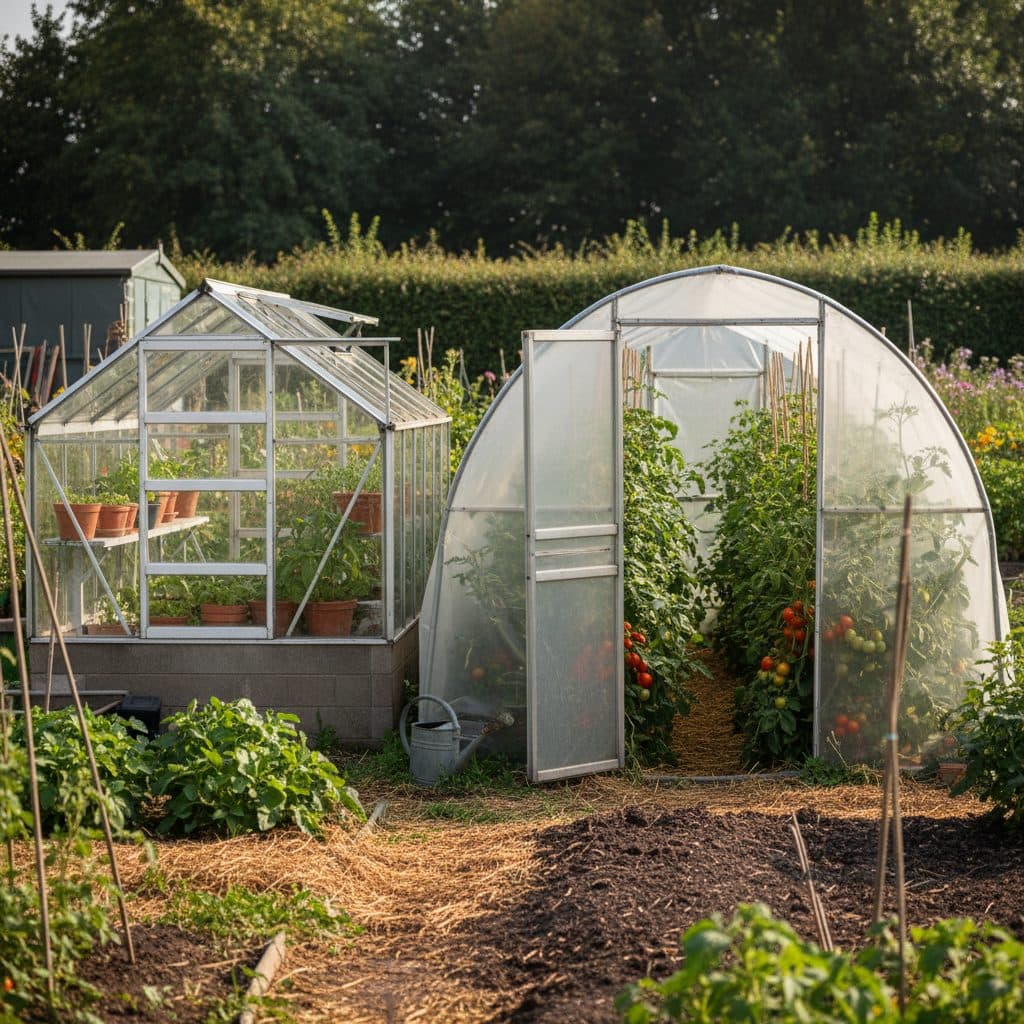
Key takeaways
- Polytunnels provide significantly more covered growing area per pound spent, making them the most cost-effective choice for large allotments and high-volume vegetable production.
- Traditional glass greenhouses offer superior aesthetic appeal, exceptional longevity spanning decades, and better winter light transmission.
- Greenhouses excel at staging, seed propagation, and potted specimen plants, whereas polytunnels are designed primarily for direct in-ground bed growing.
- Polythene covers require replacement every four to seven years, while aluminium and toughened glass structures can last thirty years or more with minimal maintenance.
- Check local council and allotment association bylaws before purchasing, as some UK sites restrict glass structures or impose strict height and footprint limits.
- High-tensile steel hoops and trench-anchored covers allow modern commercial-grade polytunnels to withstand severe British coastal gales.
Quick answer: The choice between a polytunnel and a greenhouse in the UK comes down to growing style, available budget, and plot rules. Polytunnels deliver four to five times more growing space per pound and excel at direct in-ground vegetable cropping, while greenhouses provide permanent durability, better seed propagation staging, and long-term property value.
Extending the British growing season is essential for gardeners aiming to harvest heat-loving crops like tomatoes, aubergines, and cucumbers in summer, as well as tender greens through the damp winter months. Protected cropping shields plants from cold easterly winds, torrential downpours, and unseasonal spring frosts.
Deciding between a polytunnel vs greenhouse setup requires balancing initial purchase cost, structural lifespan, foundation requirements, and practical gardening goals. Whether you are managing a newly acquired council allotment or redesigning a suburban garden, understanding the functional differences between these two structures ensures you invest in the right shelter for your space.
+-------------------------------------------------------------+
|               POLYTUNNEL VS GREENHOUSE COMPARISON           |
|                                                             |
|   FEATURE           POLYTUNNEL          GREENHOUSE          |
|   -------           ----------          ----------          |
|   Frame             Galvanised Steel    Aluminium / Timber  |
|   Cladding          UV Polythene Sheet  Glass / Polycarb    |
|   Growing Format    Direct In-Ground    Staging & Pots      |
|   Lifespan          4 to 8 Years (cover)25 to 50+ Years     |
|   Space per £100    Very High           Moderate to Low     |
|   Planning Rules    Check site bylaws   Check glass rules   |
+-------------------------------------------------------------+
Structure, materials, and initial cost comparison
The core physical difference between a polytunnel and a greenhouse lies in their framing materials and external skin.
+-------------------------------------------------------------+
|                  STRUCTURAL FRAME ARCHITECTURES             |
|                                                             |
|   POLYTUNNEL (Hoop Structure):                              |
|   - Arched tubular galvanised steel hoops (28-32 mm dia)    |
|   - Single continuous sheet of anti-drip thermal polythene  |
|   - Anchored via ground foundation tubes or buried trenches |
|                                                             |
|   GREENHOUSE (Rigid Framework):                             |
|   - Extruded aluminium or pressure-treated cedar timber     |
|   - Individual panes of horticultural or toughened glass    |
|   - Bolted onto a perimeter concrete, brick, or steel base  |
+-------------------------------------------------------------+
Initial purchase costs and usable space
Polytunnels are substantially less expensive per square metre of covered soil. A high-specification British-manufactured domestic polytunnel measuring 3 metres by 6 metres (18 square metres of floor space) costs roughly a fraction of an equivalent-sized aluminium glass greenhouse.
For home food growers and allotment holders with limited budgets who want to produce large quantities of food, polytunnels deliver unmatched value. You can explore broader design frameworks in our guide to greenhouse styles and builds and compare commercial pricing models in greenhouse kits and cost.
Longevity, maintenance, and storm resilience
British weather tests any garden structure with driving autumn rain, wet snow loads, and winter gales exceeding 90 km/h.
Performance Vector | Domestic Polytunnel | Traditional Glass Greenhouse |
|---|---|---|
Structural Lifespan | 15 to 20 years (Steel frame) | 25 to 40+ years (Aluminium) |
Cover / Glazing Lifespan | 4 to 8 years (Polythene sheet) | 20+ years (Glass panes) |
Cover Replacement Cost | Low (£100 to £250 depending on size) | High if multiple panes break |
Storm & Gale Resilience | High if skin is drum-tight | Moderate; panes can dislodge in extreme gusts |
Foundation Requirement | Foundation tubes / trenching | Level perimeter base (brick/concrete) |
Durability and replacement cycles
An aluminium greenhouse frame is essentially permanent; with periodic cleaning of glass panes and replacement of rubber glazing gaskets, it will last several decades. Toughened safety glass withstands impact from stones thrown by lawnmowers and heavy snow accumulations.
In contrast, a polytunnel frame of heavy-gauge galvanised steel will last for decades, but the polythene skin gradually degrades under ultraviolet radiation. High-grade commercial thermal anti-fog film (180 to 200 micron / 720 to 800 gauge, 7.2 to 8 mil) requires replacement every 4 to 8 years depending on polythene grade and UV exposure; specialist agricultural recycling schemes exist, but domestic collection options remain limited. Cover replacement is a demanding job requiring 2-3 people, calm weather (minimal wind), and careful trenching or base-rail tensioning to avoid loose, flapping plastic.
Wind and storm performance
A properly constructed polytunnel with its cover buried 30 cm deep in a perimeter anchor trench is surprisingly aerodynamic. Because it is curved and continuous, high winds flow over the structure rather than catching flat vertical edges. However, if the cover is loose or punctured, gale-force winds can enter underneath, billowing the sheet and tearing it from the frame.
Greenhouses with individual panes can lose glass during severe storms if a single clip fails or if pressure builds up inside an open door. For coastal or exposed hilltop allotments in the UK, a heavy-gauge polytunnel securely anchored into the soil often proves more storm-resilient than a budget horticultural glass greenhouse.
Growing environments: light, temperature, and ventilation
The microclimate inside each structure behaves differently across the changing seasons.
+-------------------------------------------------------------+
|                INTERNAL MICROCLIMATE DYNAMICS               |
|                                                             |
|   Light Quality:                                            |
|   - Greenhouse Glass: Direct, crisp light; can scorch       |
|   - Polytunnel Film: Diffused light; reaches lower foliage  |
|                                                             |
|   Thermal Retention:                                        |
|   - Both heat fast in sun; minimal night thermal retention  |
|   - Larger tunnels buffer temperature changes via air volume|
|                                                             |
|   Ventilation Requirements:                                 |
|   - Greenhouse: Roof vents with automatic solar openers     |
|   - Polytunnel: Double doors, roll-up netting side blinds   |
+-------------------------------------------------------------+
Light diffusion and thermal behaviour
Clear horticultural glass transmits direct sunlight, which provides excellent illumination during low-light winter months. However, in midsummer (June and July), intense direct sunlight through glass can scorch tender foliage on crops like tomatoes and cucumbers, requiring the application of greenhouse shading wash or external blinds. Modern polytunnel plastic incorporates light-diffusing additives, scattering incoming rays across the lower canopy and reducing leaf scorch.
Both structures heat rapidly in sun and lose heat quickly at night; uninsulated single glazing and standard single polythene offer similar minimal thermal retention, though large polytunnels contain a greater air buffer that can slow internal temperature changes.
To maintain optimal growing temperatures throughout the seasons, consult our reference on greenhouse climate control.
Growing styles: in-ground beds vs staging and pots
How you plan to use your protected space should dictate your purchase decision.
+-------------------------------------------------------------+
|                   INTERNAL LAYOUT FORMATS                   |
|                                                             |
|   POLYTUNNEL LAYOUT (In-Ground Production):                 |
|   [ Left Bed (1.2m) ]  [ Central Path (0.6m) ]  [ Right Bed]|
|   ===================  -----------------------  ============|
|   Heavy cordon crops:  Wheelbarrow access for   Brassicas,  |
|   Tomatoes, Squash     compost distribution     Roots, Corn |
|                                                             |
|   GREENHOUSE LAYOUT (Staging & Seed Raising):               |
|   [ Slatted Bench ]    [ Central Path (0.5m) ]  [ Lower Row]|
|   =================    -----------------------  ============|
|   Seed trays, pots,    Standing work height     Chilli pots,|
|   cuttings, tools      for potting on           grow bags   |
+-------------------------------------------------------------+
When to choose a polytunnel
A polytunnel is ideal if your main goal is large-scale edible food production directly in the soil:
- Growing long rows of cordon tomatoes, climbing beans, squash, and sweetcorn in summer.
- Transitioning directly into winter salad beds and hardy greens as outlined in winter vegetables to grow in the UK.
- Filling wide, deep in-ground raised beds with rich home-made compost.
When to choose a greenhouse
A greenhouse is preferable if your focus is plant propagation, container growing, and tidy garden aesthetics:
- Sowing seeds early in spring on waist-height slatted staging benches.
- Overwintering tender perennial flowers, citrus trees, and pelargoniums in decorative terracotta pots.
- Working comfortably on wet days at an integrated potting bench with shelves for hand tools and labels.
UK planning regulations and allotment bylaws
Before purchasing either structure, ensure you review planning thresholds and site-specific rules:
- Residential gardens (Permitted Development): Under UK Permitted Development rights for residential gardens, freestanding greenhouses and polytunnels usually do not require formal planning permission, provided they meet height thresholds (typically under 2.5 m within 2 m of a boundary, or up to 3 to 4 m depending on roof design) and do not cover more than 50% of the garden curtilage. Always verify local council rules.
- Allotment site bylaws: On allotment sites, Permitted Development rights do not apply. Permissions are governed by each local council or allotment association; many restrict structure dimensions (commonly to 6x8 ft or 8x10 ft), prohibit horticultural glass for safety, or require written committee approval.
- Water collection: A glass greenhouse with gutters makes rainwater harvesting into a water butt straightforward. Standard polytunnels require aftermarket gutter kits along side purlins to capture runoff.
For new plot holders setting up their site infrastructure, read our comprehensive on-ramp in allotments for beginners.
Summary: which structure should you buy?
Choose a polytunnel if:
- You have a large allotment plot or productive kitchen garden and want maximum covered growing area for minimal spend.
- You primarily grow high-volume edible crops directly in ground beds.
- Your allotment site prohibits glass structures.
Choose a greenhouse if:
- You want a permanent, attractive garden feature that adds to property value.
- Your priority is early spring seed starting, potting on, and container cultivation on raised staging benches.
- You want a structure that will last thirty years without needing a replacement cover.