Key takeaways
- Assess soil moisture by feeling the top 1-2 inches before watering.
- Ensure proper drainage in pots to prevent root rot, a common issue for overwatered plants.
- Provide balanced nutrition with a 20-20-20 fertilizer, especially if leaves show interveinal chlorosis.
- Adjust light levels; most houseplants need 10-12 hours of indirect light daily.
- Maintain consistent room temperatures between 65°F and 75°F to avoid cold or heat stress.
- Inspect plants weekly for pests, treating with a neem oil solution if necessary.
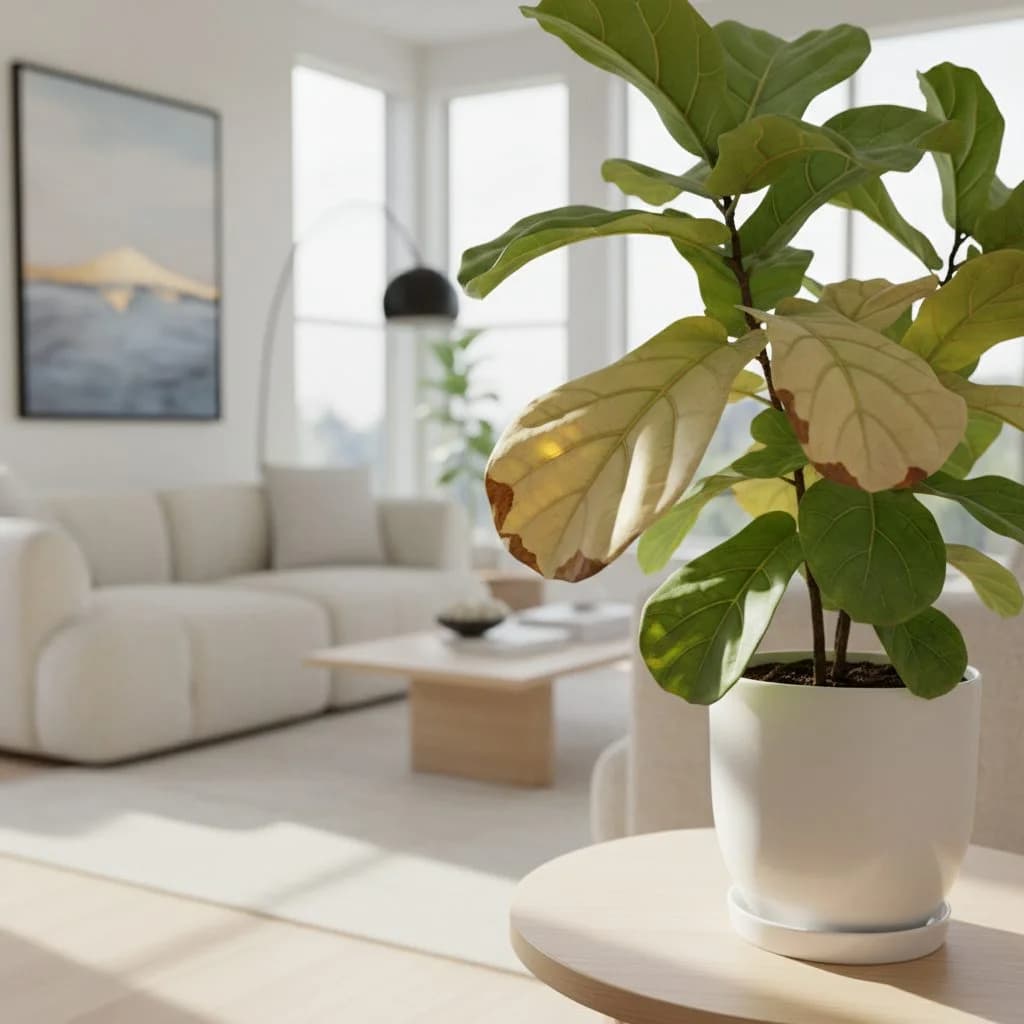
Quick answer: Houseplant leaves yellow due to issues like improper watering, nutrient deficiencies, or incorrect light exposure. Address these by adjusting soil moisture, providing balanced fertilizer, and optimizing light levels to restore plant health.
In US homes, a common sight that can cause concern for any plant enthusiast is the sudden yellowing of houseplant leaves. From a small apartment in New York City to a sprawling home in rural Texas, this symptom often signals an underlying issue that needs attention. While it might seem alarming, yellowing leaves are a plant’s way of communicating distress, and understanding these signals can help you restore your plant to health.
This guide will walk you through the seven most common reasons your indoor plants might be turning yellow, offering practical, data-backed solutions. Many issues can be resolved with simple adjustments, often involving basic care like proper watering or light. For instance, a study in 1970 noted that yellowing is often caused by chlorophyll degradation, which the right intervention can reverse [4].
Improper watering: too much or too little moisture
Watering issues are arguably the most frequent cause of yellowing leaves in houseplants, affecting many indoor plant problems. Both overwatering and underwatering can lead to similar symptoms, making diagnosis tricky. Overwatering suffocates roots, leading to root rot, which can cause leaves to turn yellow and mushy. Underwatering, conversely, deprives the plant of essential moisture, causing leaves to dry out and become brittle, often starting from the lower foliage.
How to water your houseplants correctly
To determine if your plant needs water, feel the top 1 to 2 inches of soil. If it feels dry, it’s likely time to water. For most houseplants, watering every 7 to 10 days is a good starting point, but this can vary significantly based on plant type, pot size, and ambient humidity. For instance, a celery plant needs consistent moisture, while a succulent can go for weeks without water. Always ensure your pots have adequate drainage holes to prevent waterlogging, which can lead to root rot within days. Consider using a moisture meter for precise readings, aiming for a consistent moisture level for many common plants.
- Check soil moisture by hand or with a meter.
- Water thoroughly until water drains from the bottom.
- Empty excess water from the saucer within 30 minutes.
- Adjust watering frequency based on plant type and season.
Nutrient deficiencies: when your plant is hungry
Just like any living organism, plants require a balanced diet of macronutrients and micronutrients to thrive. When one or more of these essential elements are lacking, leaves can begin to yellow, signaling a nutrient deficiency. Nitrogen, a primary macronutrient, is needed for chlorophyll production and overall plant growth. A deficiency in nitrogen often presents as a general yellowing of older leaves, starting from the tips and moving inward. Iron deficiency, common in plants like common myrtle, causes interveinal chlorosis, where the veins remain green while the tissue between them turns yellow, typically on younger leaves.
Identifying and correcting specific deficiencies
Magnesium deficiency, another common issue, also results in interveinal yellowing, but usually on older leaves, similar to nitrogen. To address these issues, a balanced liquid fertilizer, such as a 20-20-20 formulation, applied at half strength every 2 to 4 weeks during the growing season, can often correct most deficiencies. For specific micronutrient deficiencies like iron, a chelated iron supplement can be applied. Ensure your soil pH is within the optimal range of 6.0 to 7.0, as pH imbalances can prevent nutrient uptake even if nutrients are present in the soil. A 1976 study found phytoferritin in yellowing coconut leaves, which points to iron’s role [5].
- Nitrogen: General yellowing of older leaves.
- Iron: Yellowing between veins on new leaves.
- Magnesium: Yellowing between veins on older leaves.
- Potassium: Yellowing or browning along leaf edges.
Inadequate light: too much or too little sun
Light is the energy source for photosynthesis, the process by which plants produce food. Both insufficient and excessive light can stress a plant, leading to yellowing leaves. Too little light—a common problem in apartments in regions like the Pacific Northwest during winter—results in a general fading and yellowing, often accompanied by leggy growth (etiolation) as the plant stretches for light. Leaves may also drop prematurely. Conversely, too much direct sunlight, especially for plants accustomed to indirect light, can cause sunburn, manifesting as bleached or yellow patches, often turning brown or crispy later.
Optimizing light exposure for houseplants
Most houseplants thrive in bright, indirect light, typically receiving ample light daily. A south- or west-facing window often provides ample light, but direct sun can be too intense for some species. Consider moving plants 3 to 6 feet away from a bright window or using sheer curtains to diffuse harsh light. For low-light conditions, especially during shorter winter days in USDA zone 4, supplemental grow lights can be incredibly beneficial. A small grow tent can offer a controlled light environment. Aim for an appropriate light intensity for most foliage plants.
- Low light: Pale, yellowing leaves, leggy growth.
- High light: Bleached spots, crispy edges, rapid yellowing.
- Rotate plants weekly for even exposure.
- Supplement with LED grow lights for 8-10 hours daily if natural light is insufficient.
Temperature stress: too hot or too cold
Houseplants, originating from tropical or subtropical climates, are sensitive to extreme temperature fluctuations. Most thrive in a consistent indoor temperature range between 65°F and 75°F. Exposure to temperatures below 50°F can cause cold shock, leading to sudden yellowing and dropping of leaves, especially for sensitive plants like common bean seedlings. This is particularly common in homes in colder regions like Minnesota during winter, where plants might be placed too close to drafty windows or exterior doors. Conversely, prolonged exposure to temperatures above 85°F can cause heat stress, resulting in wilting, yellowing, and scorched leaf edges.
Maintaining ideal indoor temperatures
To prevent temperature stress, keep your plants away from direct drafts from open windows, air conditioning vents, or heating registers. If you live in a region with significant seasonal temperature changes, like USDA zone 5, consider moving plants further from windows during extreme cold or heat. For plants that prefer higher humidity, like ferns, a consistent temperature also helps maintain ambient moisture. Using a small room thermometer can help you monitor the environment around your plants so it stays within the optimal 65-75°F range. Maintaining stable conditions can reduce yellowing incidents.
- Avoid placing plants near drafty windows or doors.
- Keep plants away from heating or air conditioning vents.
- Maintain consistent room temperatures between 65°F and 75°F.
- Consider a humidifier if indoor air is too dry, especially in winter.
Pests and diseases: unwelcome visitors
Pests and diseases can cause significant stress to houseplants, often resulting in yellowing leaves. Common culprits include spider mites, aphids, mealybugs, and scale insects. Spider mites, tiny arachnids, feed on plant sap, causing small yellow or white spots (stippling) on leaves, which eventually turn entirely yellow and may develop fine webbing. Aphids and mealybugs also suck sap, leading to distorted, yellowing leaves and sometimes a sticky residue called honeydew. Fungal diseases, such as powdery mildew or root rot (if combined with overwatering), can also cause yellowing and other discoloration.
Effective pest and disease management
Regular inspection is key to early detection. Check the undersides of leaves and along stems weekly for any signs of pests. If you spot an infestation, isolate the affected plant immediately to prevent spread. For minor infestations, a strong spray of water can dislodge many pests. For more persistent problems, a homemade bug spray using a 1:10 dilution of neem oil and water can be effective. Apply it every 5 to 7 days until the pests are gone. For instance, spider mites can rapidly increase their population, making quick action vital. Learn more about homemade bug sprays.
- Spider mites: Fine webbing, stippling, yellowing leaves.
- Aphids: Small green/black insects, distorted yellow leaves, honeydew.
- Mealybugs: Cottony white masses, yellowing, stunted growth.
- Fungal gnats: Small flying insects, usually harmless but indicate overwatering.
pH imbalance: affecting nutrient uptake
The pH level of your plant’s soil plays a critical role in nutrient availability. Most houseplants prefer a slightly acidic to neutral soil pH, typically ranging from 6.0 to 7.0. When the pH is too high (alkaline) or too low (acidic), essential nutrients, even if present in the soil, can become unavailable to the plant’s roots. This phenomenon, known as nutrient lockout, can lead to various deficiency symptoms, including yellowing leaves, despite regular fertilization. For example, iron and manganese become less available in alkaline soils, often leading to interveinal chlorosis in plants in regions with naturally alkaline tap water, such as parts of California.
Adjusting soil pH for optimal health
Testing your soil’s pH is the first step. Home pH testing kits are readily available and provide readings within minutes. If your soil is too acidic (below 6.0), you can raise the pH by adding a small amount of horticultural lime or wood ash. For overly alkaline soil (above 7.0), you can lower the pH by incorporating elemental sulfur, peat moss, or using an acidic fertilizer. Distilled water or rainwater, which typically has a neutral pH of 7.0, can also help stabilize soil pH over time. Aim to adjust pH gradually, making small changes over several weeks to avoid shocking the plant. An optimal pH can improve nutrient uptake.
- Test soil pH regularly with a home kit.
- Add horticultural lime to raise pH in acidic soil.
- Use peat moss or elemental sulfur to lower pH in alkaline soil.
- Water with distilled or rainwater to maintain stable pH.
Natural aging: the cycle of life
Sometimes, yellowing leaves are simply a part of a plant’s natural life cycle, a process known as senescence. As leaves age, they become less efficient at photosynthesis. The plant then reallocates useful nutrients, such as nitrogen and chlorophyll, from these older leaves to newer, more productive growth. This results in the older leaves, typically at the bottom of the plant, turning yellow before eventually browning and falling off. This is a perfectly normal process and not a cause for concern, especially if only a few older leaves are affected while the rest of the plant appears healthy and is producing new growth. For example, leaves on many common houseplants typically last for a period of time before senescing.
Distinguishing natural aging from other causes
To differentiate natural aging from other issues, observe the pattern of yellowing. If it’s just the oldest leaves at the base of the plant, and the yellowing is gradual and uniform before dropping, it’s likely natural senescence. If yellowing occurs rapidly, affects new growth, or is accompanied by other symptoms like spots, wilting, or stunted growth, then another issue is probably at play. For instance, a 2019 study on banana plants in Côte d’Ivoire identified specific pathogens causing yellowing, distinct from natural aging [1]. Simply prune off the yellowing leaves to maintain the plant’s appearance and redirect its energy towards new growth. This can improve overall plant vigor.
- Yellowing occurs on the oldest, lowest leaves.
- The yellowing is gradual and uniform.
- The rest of the plant appears healthy and is actively growing.
- Only a few leaves are affected at any given time.
Quick Diagnosis: Yellowing Leaf Symptoms
Symptom Pattern | Likely Cause | Quick Fix |
|---|---|---|
Older leaves, soft/mushy | Overwatering | Reduce watering, check drainage, repot if root rot is present. |
Older leaves, crispy/dry | Underwatering | Water thoroughly, increase frequency, check soil regularly. |
New leaves, veins green, tissue yellow | Iron deficiency / High pH | Apply chelated iron, adjust soil pH to 6.0-7.0. |
Older leaves, general yellowing | Nitrogen deficiency | Apply balanced liquid fertilizer (e.g., 20-20-20) every 2-4 weeks. |
New leaves, pale/small | Too little light | Move to brighter spot, add grow light for 10-12 hours daily. |
Bleached spots, crispy edges | Too much light | Move away from direct sun, use sheer curtain. |
Yellowing with spots/webs | Pests (e.g., spider mites) | Isolate plant, spray with 1:10 neem oil solution every 5-7 days. |
Watering Rule: Many houseplant issues, including yellowing leaves, stem from improper watering; always check the top 1-2 inches of soil before adding more water.
Nutrient Boost: A balanced 20-20-20 liquid fertilizer, applied at half strength every 2-4 weeks during the growing season, can correct most common nutrient deficiencies.
References
- First Report of Yellowing Disease of Banana Leaves Caused by Armillaria Tabescens in Cote d’Ivoire (2019).
- Nucleic acids from leaves of a yellowing and a non-yellowing variety of Festuca pratensis Huds. (1978).
- parsley (2015).
- Chlorophyll Content and the Pattern of Yellowing in Senescent Leaves (1970).
- Phytoferritin associated with yellowing in leaves ofCocos nucifera (Arecaceae) (1976).
- USDA Natural Resources Conservation Service.