Key takeaways
- Your tenancy agreement sets the standard - some specify a percentage under cultivation, while others require keeping the plot in good horticultural condition.
- Under Section 12 of the Allotments Act 1950, tenants possess a statutory right to keep hens and rabbits unless prohibited by local bylaws or causing a nuisance.
- Sheds, greenhouses, and polytunnels generally require written permission from the landlord council or allotment association before erection.
- Landlords must issue formal notice of non-compliance before initiating eviction proceedings, giving plot holders an opportunity to rectify neglect.
- Bonfire restrictions vary by local council, with many authorities prohibiting fires or restricting them to specific winter daylight hours.
Quick answer: Allotment rules in the United Kingdom are governed by a combination of historic statutory legislation and individual site tenancy agreements issued by local parish, town, or city councils and private associations. These agreements mandate minimum cultivation levels, restrict commercial sales, regulate structure sizes, and manage water use and nuisance. While tenants enjoy statutory protections regarding tenure and small livestock, they must maintain their plots in good horticultural condition to avoid formal notice and eviction.
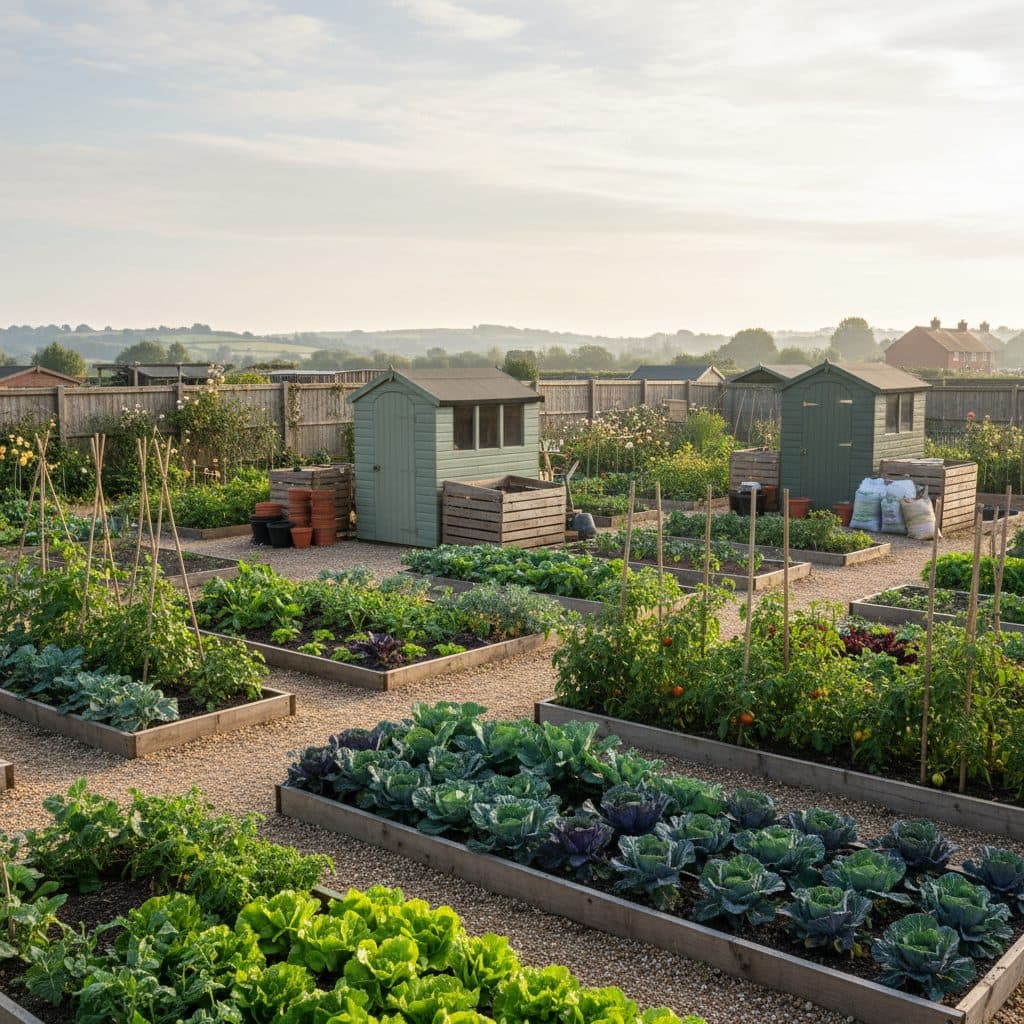
Securing an allotment plot offers UK gardeners access to land for growing fresh vegetables, soft fruit, and flowers. However, managing an allotment requires adherence to specific rules designed to keep the entire site productive, safe, and respectful of neighbouring plot holders.
Every allotment site operates under a tenancy agreement that defines what you can build, grow, and bring onto the land. Because demand for plots remains high across England and Wales, landlord authorities enforce cultivation standards to ensure public land is actively worked rather than abandoned.
Understanding your statutory rights and local obligations helps you plan site infrastructure, manage waste, and avoid disputes with allotment committees or council officers. Whether you have just signed your first tenancy or managed a plot for seasons, mastering the regulatory framework ensures uninterrupted tenure on your growing space.
The legal framework: statutory acts vs local tenancy agreements
This guide covers England and Wales. Scottish plot holders should work from Part 9 of the Community Empowerment (Scotland) Act 2015, which sets its own rules on waiting lists, plot sizes and tenancy; Northern Ireland has separate legislation again. In England and Wales, allotments are underpinned by historic legislation, primarily the Small Holdings and Allotments Act 1908 and the Allotments Acts of 1922, 1925, and 1950. These statutes establish the duties of local authorities to provide land and define basic tenant rights.
+------------------------+-----------------------------------+-----------------------------------+
| Regulatory Layer       | Governing Body                    | Key Responsibilities & Scope      |
+------------------------+-----------------------------------+-----------------------------------+
| National Statutes      | UK Parliament (Allotments Acts)   | Basic tenure, livestock rights    |
| Local Council Policy   | Parish, Town, or District Council | Site-wide rules, fees, waiting list|
| Tenancy Agreement      | Landlord Authority / Committee    | Cultivation %, structures, fences |
| Site Guidelines        | Local Allotment Association       | Water rotas, communal workdays    |
+------------------------+-----------------------------------+-----------------------------------+
While national legislation sets the overarching baseline, day-to-day management is dictated by your specific tenancy agreement. This legal contract between the tenant and the landlord council or association overrides general assumptions. When signing for a plot, you agree to comply with every clause listed in the document.
Cultivation requirements and inspection standards
The most common reason for tenancy disputes and plot forfeiture is failure to meet cultivation thresholds. Councils inspect sites regularly, often in spring, mid-summer, and autumn, to evaluate plot condition.
+-------------------------------------------------------------------+
|               TYPICAL CULTIVATION PROGRESS TIMELINE               |
+-------------------------------------------------------------------+
| [Month 1 to 3]   Clear pernicious weeds, mark beds and paths       |
| [Month 3 to 6]   Cultivate 25% to 50% with productive crops       |
| [Month 6 to 12]  Cultivate 60% to 75% of total plot area          |
| [Year 2 Onward]  Maintain full cultivation; suppress weed seeding |
+-------------------------------------------------------------------+
Defining "cultivated"
Tenancy agreements generally define cultivation as actively growing vegetables, fruit, herbs, or flowers, alongside maintaining weed-free mulched paths or working compost heaps. Covering uncultivated soil with breathable membrane or clean cardboard is acceptable as a temporary measure during initial clearance, but leaving plastic tarpaulins permanently across a plot without planting does not satisfy cultivation requirements.
If tackling an overgrown plot, establishing no dig raised beds provides a rapid method to bring defined growing zones into active cultivation within your first months.
Weed control and seeding prevention
Allowing the injurious weeds listed under the Weeds Act 1959 (common ragwort, spear and creeping thistle, and curled and broad-leaved dock) to flower and set seed harms neighbouring plots and is a breach of most tenancy agreements. You are expected to keep boundary margins and shared pathway edges trimmed and clear.
Livestock on allotments: hens, rabbits and bees
One of the most frequently misunderstood rights involves keeping animals on allotment plots.
The statutory right to hens and rabbits
Under Section 12 of the Allotments Act 1950, tenants possess a statutory right to keep hens and rabbits on their plots for domestic egg and meat production (cockerels fall outside this right, and most sites prohibit them by tenancy condition). Section 12(1) overrides contrary covenants and tenancy clauses, subject to the section's actual limits: (1) the keeping must be otherwise than by way of trade or business; (2) the hens or rabbits must not be kept in a place or manner prejudicial to health or a nuisance; (3) the section does not displace other enactments - planning control, and animal health and welfare law, still apply.
Furthermore, an 'allotment garden' is statutorily defined under the Allotments Act 1922 as land wholly or mainly cultivated by the occupier for the production of vegetable or fruit crops for consumption by themselves and their family. Livestock can only be a subsidiary use; a plot given over largely to poultry is a tenancy breach whatever section 12 says.
Before bringing hens onto a plot, review our guidelines on what to feed chickens and ensure predator-proof housing is approved by the site management.
Beekeeping
Beekeeping is not covered by automatic statutory rights. Most councils permit apiaries only with prior written permission, proof of beekeeping qualifications or mentoring, third-party public liability insurance, and consultation with adjacent plot holders.
Structures: sheds, greenhouses and polytunnels
Erecting structures allows gardeners to store tools and extend the growing season, but unapproved construction is a frequent trigger for council enforcement.
Common size restrictions
Structure limits are set by your tenancy agreement and vary widely between sites - some cap footprint, some cap the share of the plot covered, some ban sheds altogether. Ask your allotment officer for the permitted dimensions and any conditions on foundations and glazing in writing before you buy anything. Where structures are permitted, guttering connected to water butts is widely encouraged to harvest rainwater.
Always submit an application form with dimensioned sketches to your allotment officer before purchasing or erecting any garden building.
Water usage, chemical controls and environmental rules
Allotment sites share communal resources and must adhere to environmental standards to preserve site health.
Hosepipe and sprinkler bans
To prevent excessive municipal water consumption, many sites prohibit unattended sprinklers and direct hosepipe connection to mains standpipes. Tenants must use watering cans filled from shared supply troughs. Harvesting rainwater from shed roofs helps maintain an independent moisture supply during dry summer spells.
Non-chemical and weed management standards
An increasing number of UK councils now mandate organic or low-impact management methods. Chemical pesticide approvals change frequently, and synthetic herbicide drift onto neighbouring plots can result in civil liability. Managing bare ground naturally using a winter green manure prevents nutrient leaching and suppresses weeds without chemical intervention.
Eviction processes, appeals and plot relinquishment
If an inspection reveals neglected ground, broken structures, or unmanaged hazards, the landlord authority will initiate a formal compliance procedure.
Tenancy termination and statutory notice
Tenancy termination is governed by your agreement and statutory rules. Under Section 1 of the Allotments Act 1922, a tenancy of an allotment garden can generally only be terminated by twelve months' notice expiring on or before 6 April or on or after 29 September, though shorter periods apply for non-payment of rent or breach of tenancy conditions, or if the land is required for building, mining, industrial use, or roads. The Act also provides rules regarding compensation for disturbance and unexhausted crops or manure upon termination—check the relevant statutory provisions and your agreement for exact procedures.
If severe illness, family emergency, or temporary personal difficulty prevents you from tending your plot, contact your allotment secretary immediately. Most committees grant temporary dispensations or assist with plot maintenance rather than issuing enforcement notices.
By pairing clear communication with a structured allotment first year plan, you can maintain compliance and enjoy a productive growing space for years.