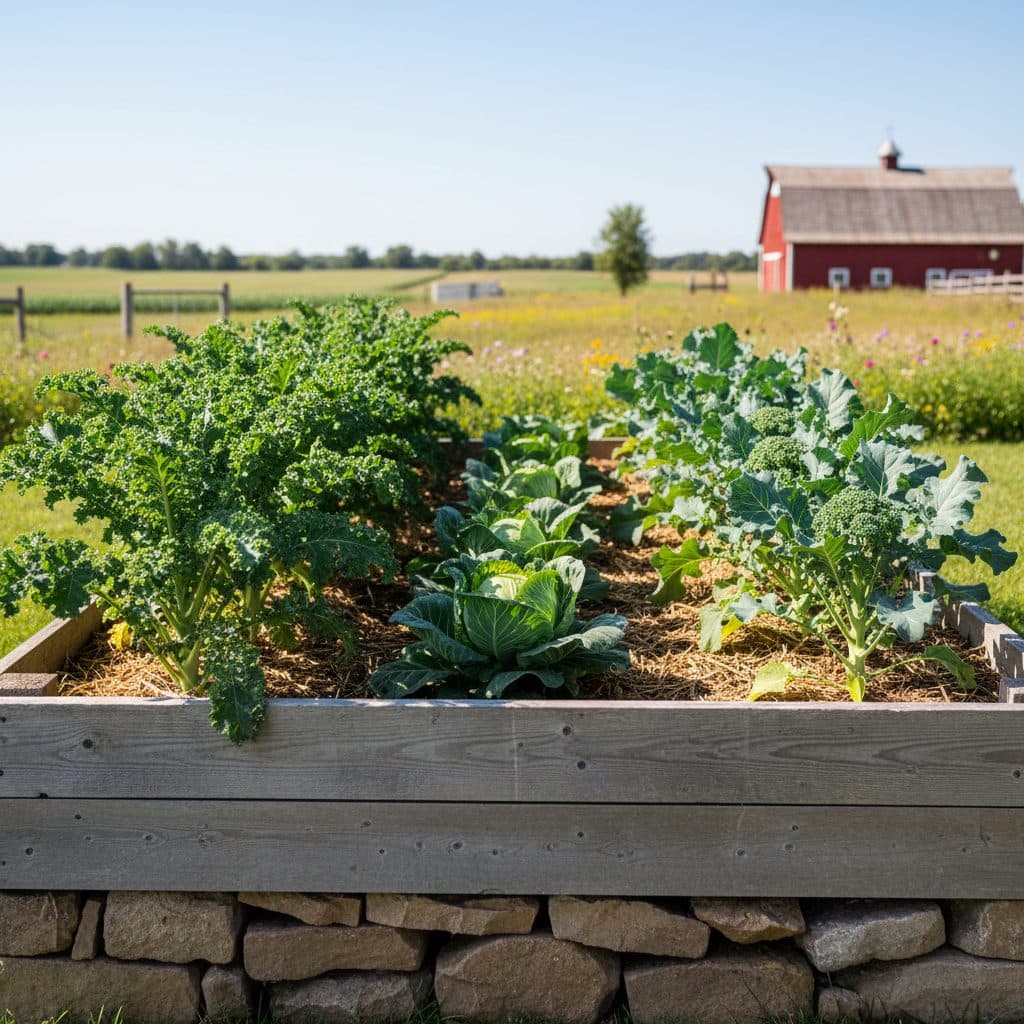
Key takeaways
- Brassicas thrive in cool weather, generally between 55°F and 75°F, and require careful timing to avoid heat stress or hard freezes.
- Spring planting involves starting seeds indoors 6-8 weeks before the last frost, then transplanting 2-4 weeks before the average last frost date.
- Fall planting often yields larger harvests and fewer pest issues, with seeds sown 8-12 weeks before the first hard freeze in your USDA zone.
- Soil temperature is critical; aim for 50°F to 75°F for optimal germination and growth of brassica seeds and transplants.
- Protecting young plants from late spring frosts or early fall freezes is essential, especially in USDA zones 4-7, using row covers or cloches.
- Selecting appropriate brassica varieties for your specific growing season and days to maturity matters for success in any USDA zone.
Quick answer: To successfully plant brassicas, time spring planting by starting seeds indoors 6-8 weeks before the last frost and transplanting 2-4 weeks prior. For fall, sow seeds 8-12 weeks before the first hard freeze, ensuring soil temperatures are between 50°F and 75°F.
In the fertile agricultural valleys of California’s Central Coast, or the rich soils of the Midwest, growing brassicas like broccoli, cabbage, and kale is a rewarding endeavor when timed correctly. These cool-season vegetables, members of the Brassicaceae family, thrive in moderate temperatures, generally between 55°F and 75°F. Understanding the optimal planting windows — both spring and fall — is paramount to a successful harvest, especially when considering the varied climates across the United States’ USDA plant hardiness zones.
A well-timed planting can mean the difference between healthy, productive plants and those that bolt prematurely or suffer from frost damage. For instance, in USDA zone 6, the average last frost date might be mid-April, while the first frost could arrive in late October. This creates distinct windows for spring and fall planting, each with its own advantages and challenges. Historically, planting guides from 1964 provided specific recommendations for fall planting cool-season crops, and made clear how much timing mattered [2].
Understanding cool-season brassicas and their needs
Brassicas are a diverse group of vegetables, including broccoli, cabbage, kale, collards, kohlrabi, and turnips, all sharing a preference for cooler growing conditions. Their ideal growth occurs when temperatures are consistently below 75°F, but above 32°F. Exposure to prolonged temperatures above 80°F can cause many brassicas, particularly broccoli and cabbage, to bolt, meaning they prematurely flower and produce seeds, which diminishes their edible quality. Conversely, a hard freeze below 28°F can damage or kill most brassica plants, though mature kale and collards routinely come through hard freezes near 20°F without significant harm.
The importance of soil temperature and sunlight
Beyond air temperature, soil temperature plays a critical role in brassica success. For optimal seed germination, soil temperatures should ideally be between 50°F and 75°F. Average last and first frost dates for your location come from NOAA's National Centers for Environmental Information and from your state's cooperative extension service, and they are the basis for determining planting times. Most brassicas require at least 6 hours of direct sunlight daily for vigorous growth and good yields. In regions like the Pacific Northwest (USDA zones 8-9), where summers can be mild and winters moderate, a longer growing season allows for more flexibility in planting, potentially yielding two or even three harvests in a single year.
- Broccoli: Requires 60-100 days to maturity from transplant.
- Cabbage: Varies from 60-120 days depending on the variety.
- Kale: Can be harvested in 30-60 days for baby leaves, 60-80 for mature.
- Collards: Typically mature in 75-85 days.
- Kohlrabi: Fast-growing, often ready in 45-60 days.
Spring planting: chasing the early harvest
Spring planting is about timing your brassicas to mature before the heat of summer arrives. This is particularly important for varieties like broccoli and cauliflower, which are prone to bolting in warm weather. For most US regions, the strategy involves starting seeds indoors to get a head start. In USDA zone 5, for example, where the average last frost is typically in early May, you might start seeds indoors around mid-March. This gives young plants four to six weeks of growth before they are ready for transplanting outdoors.
Transplanting and frost protection
Transplanting brassica seedlings outdoors should occur 2-4 weeks before your average last frost date. This allows plants to establish themselves in cool soil without facing immediate hard freezes. For example, in USDA zone 7, where the last frost might be in late March, you could transplant cabbage seedlings by early March. If a late frost is predicted, covering young plants with row covers or cloches can provide crucial protection from temperatures dipping below 30°F. For more detailed guidance on a specific brassica, consider reviewing our how to grow broccoli guide, which emphasizes cool-season timing.
- Start seeds indoors: 6-8 weeks before last frost.
- Harden off seedlings: 7-10 days before transplanting.
- Transplant outdoors: 2-4 weeks before last frost.
- Protect from late frosts: Use row covers if temperatures drop below 30°F.
- Monitor for bolting: Harvest promptly as temperatures rise above 75°F.
Fall planting: leveraging the second season
Fall planting often presents a more forgiving environment for brassicas, as temperatures gradually cool down rather than rapidly heating up. This leads to less stress on the plants, often resulting in larger, sweeter harvests and fewer pest issues. To determine your fall planting window, count backward from your average first hard freeze date (temperatures below 28°F). For instance, if your USDA zone 4 garden experiences its first hard freeze in early October, you would aim to sow seeds or transplant seedlings 8-12 weeks prior, placing your planting window in late July to early August.
Extending the fall harvest
Many brassica varieties require 60-90 days to maturity from transplanting, influencing optimal planting windows [3]. For a continuous harvest, consider succession planting every 2-3 weeks. In warmer regions, like USDA zone 9, where the first hard freeze might not occur until December, you can extend your fall planting well into September or even October. Using row covers or cold frames can further extend the harvest season by protecting plants from early freezes down to 20°F, allowing you to enjoy fresh greens well into winter.
- Determine first hard freeze: Count back 8-12 weeks for planting.
- Select appropriate varieties: Choose those with 60-90 days to maturity.
- Direct sow or transplant: Both methods work well in fall.
- Provide consistent moisture: Especially during germination in warmer soil.
- Protect from early freezes: Use row covers or cloches below 28°F.
Zone-by-zone brassica timing specifics
The vast differences in climate across the US mean that brassica planting windows vary significantly by USDA zone. Understanding your specific zone’s frost dates is the cornerstone of successful timing. For example, gardeners in USDA zones 4-5, such as parts of Minnesota or northern New York, face short growing seasons. Here, spring planting requires starting seeds indoors as early as March 1, with transplanting around May 1. Fall planting is similarly compressed, often requiring direct sowing or transplanting by late July to ensure maturity before hard freezes in early October.
Adapting to warmer and milder zones
In USDA zones 6-7, covering much of the Mid-Atlantic and parts of the Midwest, spring planting can begin with transplants around April 1, with fall planting extending into September. These zones often allow for a longer harvest period, especially for cold-tolerant varieties like kale. For those in USDA zones 8-9, like much of the Pacific Northwest or parts of the Southeast, the growing season is considerably longer. Spring planting can start in late February, and fall planting can stretch from August through October, potentially allowing for winter harvests of some brassicas. Fall planting of brassicas aims for harvest before sustained hard freezes. Zone 8 gardens should still plan for annual lows in the 10-20°F range, and zone 9 for lows of 20-30°F. Meanwhile, in USDA zones 10-11, found in southern Florida or coastal California, brassicas are primarily a winter crop, planted from September to November for harvests through spring, as summer heat is too intense. For additional cool-season crop strategies, our guide on how to grow spinach offers insights into bolt avoidance and cut-and-come-again harvesting.
- USDA Zones 4-5: Spring: March 1 (indoor start), May 1 (transplant). Fall: Late July-early August (plant).
- USDA Zones 6-7: Spring: start indoors 6-8 weeks before your last frost, transplant 2-4 weeks before it once seedlings have four to five true leaves. Fall: August-September (plant).
- USDA Zones 8-9: Spring: start indoors 6-8 weeks before your last frost, transplant 2-4 weeks before it once seedlings have four to five true leaves. Fall: August-October (plant).
- USDA Zones 10-11: Primarily a winter crop, plant September-November.
- General rule: Always consult local extension offices for precise frost dates for your specific location within a zone.
Soil health and crop rotation for brassicas
Healthy soil is fundamental for vigorous brassica growth. These plants are heavy feeders, requiring nutrient-rich soil with good drainage. Incorporating 2-3 inches of well-rotted compost or aged manure into your garden beds before planting can significantly improve soil structure and fertility. A soil pH between 6.0 and 7.0 is generally ideal for most brassicas. Regular soil testing, perhaps every 2-3 years, can help you monitor and adjust nutrient levels and pH as needed. For example, in many Midwestern soils, which tend to be slightly acidic, adding agricultural lime might be beneficial to raise the pH to the optimal range.
Preventing pests and diseases with rotation
Crop rotation is an essential practice for brassicas to prevent the buildup of soil-borne diseases and pests specific to the Brassicaceae family. Avoid planting brassicas in the same spot more than once every 3-4 years. Instead, rotate them with other plant families, such as legumes (beans, peas) or solanaceous crops (tomatoes, peppers). This practice breaks the life cycles of pests like cabbage worms and diseases like clubroot, which can persist in the soil. Utilizing cover crops for the home garden in between brassica plantings can also enrich the soil and suppress weeds, which helps keep the growing environment healthy. For instance, planting a clover cover crop in a bed after a spring brassica harvest can add nitrogen and organic matter before a subsequent non-brassica crop.
- Amend soil: Add 2-3 inches of compost or aged manure annually.
- Maintain pH: Aim for a soil pH between 6.0 and 7.0.
- Rotate crops: Avoid planting brassicas in the same spot for 3-4 years.
- Follow brassicas with: Legumes or root vegetables to break pest cycles.
- Consider cover crops: To improve soil health and suppress weeds.
Spring vs. Fall Brassica Planting Considerations
Characteristic | Spring Planting | Fall Planting |
|---|---|---|
Primary Goal | Harvest before summer heat, avoid bolting | Harvest before hard freezes, often sweeter flavor |
Seed Start | Indoors, 6-8 weeks before last frost | Direct sow or transplant 8-12 weeks before first hard freeze |
Pest Pressure | Higher, as pests emerge with warming weather | Lower, as many pest cycles are winding down |
Temperature Challenge | Rising heat causing bolting | Dropping temperatures, risk of early hard freezes |
Typical Harvest | Early to mid-summer | Late fall to early winter |
Frost Protection | For late spring frosts (below 30°F) | For early fall hard freezes (below 28°F) |
Soil pH range: Brassicas thrive in soil with a pH between 6.0 and 7.0, a range that supports optimal nutrient availability for robust growth.
Days to maturity: Many brassica varieties require 60-90 days to mature from transplanting, an important factor in calculating planting dates for both spring and fall seasons.
Frost tolerance: While most brassicas tolerate light frosts down to 32°F, temperatures consistently below 28°F can cause significant damage or kill plants.
Frequently asked questions
What is the ideal temperature range for growing brassicas?
Brassicas grow best in cool temperatures, ideally between 55°F and 75°F. Temperatures consistently above 80°F can cause plants to bolt, while hard freezes below 28°F can damage or kill most varieties.
How many weeks before the last frost should I plant spring brassicas?
For spring planting, you should aim to transplant brassica seedlings outdoors 2-4 weeks before your average last frost date. This allows them to establish in cool soil while avoiding severe frost damage.
When should I start seeds indoors for fall brassica planting?
For a fall brassica harvest, you should start seeds indoors or direct sow them 8-12 weeks before your average first hard freeze date. This ensures plants have enough time to mature before cold weather sets in.
Can brassicas tolerate frost?
Most brassicas can tolerate light frosts down to 32°F, and some mature varieties like kale and collards can withstand temperatures as low as 20°F. However, hard freezes below 28°F are generally damaging and require protection.
Why is crop rotation important for brassicas?
Crop rotation matters for brassicas to prevent the buildup of specific soil-borne pests and diseases, such as clubroot or cabbage worms. It’s recommended to rotate brassicas to a different bed every 3-4 years to maintain soil health and plant vigor.
References
- Spring beauties for fall planting / (1921). Spring beauties for fall planting /.
- Planting guide : fall 1964 spring 1965 (1964). Planting guide : fall 1964 spring 1965.
- Planting guide : fall 1967 spring 1968 (1967). Planting guide : fall 1967 spring 1968.
- Bulbs for fall planting and spring flowering / (1904). Bulbs for fall planting and spring flowering /.
- USDA Natural Resources Conservation Service (2024). USDA Natural Resources Conservation Service.