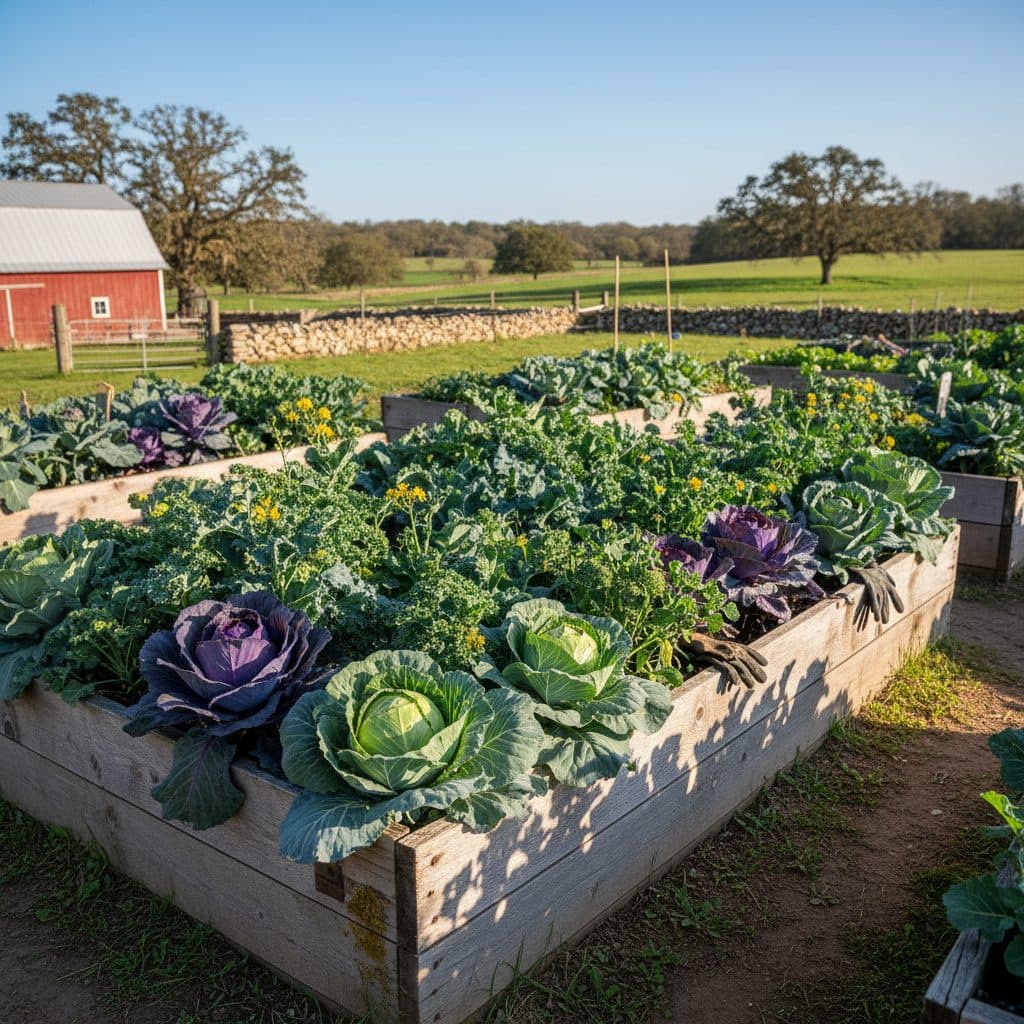
Key takeaways
- Early pest identification matters most for effective organic management, preventing infestations from overwhelming plants.
- Healthy soil, rich in organic matter, and proper plant spacing reduce pest pressure and help plants outgrow the damage they do take.
- Physical barriers like floating row covers exclude flying insects from brassica crops when the edges are sealed at planting.
- Targeted organic sprays, such as neem oil or insecticidal soap, offer direct control for specific pest outbreaks.
- Crop rotation over 3 to 4 years breaks pest life cycles, significantly reducing their populations in the soil.
- Encouraging beneficial insects provides natural pest control that suppresses aphid colonies.
Quick answer: Organic pest control for brassicas in US gardens involves early identification, healthy soil, crop rotation, physical barriers like row covers, and targeted organic sprays such as neem oil or insecticidal soap.
Across the US, from USDA zone 3 to 10, gardeners cultivating brassicas—cabbage, broccoli, kale, and collards—often face a common challenge: persistent insect pests. These crops, vital for many home and market gardens, can suffer significant damage, sometimes losing much of their yield to pests like cabbage worms and aphids. Protecting these plants without resorting to synthetic chemicals is a priority for many growers, aiming to maintain soil health and support local ecosystems.
While chemical pesticides offer a quick fix, many growers prefer organic methods to maintain soil health and protect beneficial insects. This guide details practical, organic strategies for managing the most common brassica pests, helping you get a solid harvest without synthetic inputs, a practice supported by research from organizations like SARE [2]. We will cover identification, prevention, and direct control methods so your brassicas thrive.
Understanding common brassica pests
Effective pest management begins with accurate identification. In US gardens, brassicas are typically targeted by a few key insect species, each with distinct characteristics and damage patterns. Knowing what you are up against allows for more precise and effective organic interventions. Early detection, often by checking plants 2 to 3 times per week, is a grower’s best tool.
identifying the usual suspects
Cabbage worms, primarily the larvae of the imported cabbageworm (Pieris rapae) and the cabbage looper (Trichoplusia ni), are among the most destructive. Imported cabbageworms are velvety green caterpillars up to 1.5 in long, often found on the upper leaf surfaces. Cabbage loopers are light green, up to 1.5 in long, and move with a distinctive ‘looping’ motion. Both feed voraciously, creating large, irregular holes in leaves and sometimes tunneling into heads of cabbage (learn more about cabbage here). A single caterpillar can consume several square inches of leaf tissue daily.
Aphids, tiny pear-shaped insects often green or black, can colonize plant stems and undersides of leaves, sometimes numbering in the hundreds on a single plant. They suck plant sap, causing stunted growth, curled leaves, and often excrete sticky honeydew, which can lead to sooty mold. Flea beetles, small, dark, jumping beetles about 0.1 in long, create characteristic ‘shot-hole’ damage on leaves, especially on young seedlings, which they can kill outright. Recognizing these pests quickly is key to successful control.
- Small, velvety green caterpillars (imported cabbageworm)
- Light green, looping caterpillars (cabbage looper)
- Tiny, pear-shaped insects on undersides of leaves (aphids)
- Small, dark, jumping beetles creating ‘shot-holes’ (flea beetles)
- White or yellow butterflies fluttering around brassicas (adult cabbageworms)
Preventative measures: building a resilient garden
The most effective organic pest control starts before pests become a problem. By creating a healthy, resilient garden ecosystem, you can significantly reduce the likelihood and severity of infestations. These preventative strategies lower pest pressure, so less direct intervention is needed later in the season. A proactive approach is always more sustainable and less labor-intensive.
soil health and crop rotation
Building healthy soil, rich in organic matter, is foundational. Adding 2 in of compost annually builds soil organic matter over time, improving plant vigor and resistance to stress. Stronger plants are inherently better equipped to fend off pest attacks. Crop rotation is another critical practice; moving brassicas to a different bed every 3 to 4 years significantly reduces the buildup of pest populations and disease pathogens in the soil. This breaks the life cycle of pests like flea beetles and cabbage root maggots, which overwinter in the soil.
Companion planting involves strategically placing different plant species together to deter pests or attract beneficial insects. For example, planting marigolds or nasturtiums near brassicas can help repel certain pests, while dill and cilantro attract predatory wasps. Physical barriers, such as floating row covers, are highly effective. Installed at planting and secured with soil or weights, these fine mesh covers keep imported cabbageworms and flea beetles from reaching your plants. Consider using cover crops in off-seasons to further improve soil structure and suppress weeds.
- Improve soil health with 2 in of compost annually.
- Rotate brassica crops to new beds every 3 to 4 years.
- Plant companion crops like marigolds or nasturtiums.
- Attract beneficial insects with dill, cilantro, or sweet alyssum.
- Use floating row covers to physically block flying pests.
Direct organic control methods for specific pests
Even with excellent preventative measures, pests can sometimes break through. When they do, direct organic control methods offer targeted solutions to manage outbreaks without synthetic chemicals. These methods are most effective when applied early, before pest populations grow exponentially. Always monitor your plants closely and act decisively.
targeted sprays and physical removal
For cabbage worms and loopers, hand-picking can be highly effective in smaller gardens, removing dozens of caterpillars daily. Drop them into a bucket of soapy water. Bacillus thuringiensis (Bt), a naturally occurring soil bacterium, is a powerful organic insecticide specifically targeting caterpillars. When ingested, Bt causes caterpillars to stop feeding within hours and die within 2 to 3 days. Apply Bt in the late afternoon or early evening for best results, as it degrades in direct sunlight.
Aphids can be managed with a strong blast of water from a garden hose, dislodging much of a colony. For more persistent infestations, insecticidal soap, mixed at 1 to 2 tablespoons per gallon of water, smothers soft-bodied insects like aphids, mites, and whiteflies. Neem oil, derived from the neem tree, acts as an antifeedant, repellent, and growth disruptor for a wide range of pests, including flea beetles. Mix 1 tablespoon of 70% neem oil concentrate per gallon of water and apply thoroughly, ensuring coverage of both leaf surfaces. For severe aphid problems, consult our detailed guide on how to get rid of aphids.
- Hand-pick cabbage worms and loopers daily.
- Apply Bacillus thuringiensis var. kurstaki (Bt) for caterpillar control, keeping spray and drift off nearby plants that host butterfly and moth caterpillars you want to keep.
- Spray aphids off plants with a strong stream of water.
- Use insecticidal soap for soft-bodied insects.
- Apply neem oil as a repellent and antifeedant, spraying in the late evening so it dries before pollinators are active.
Integrated pest management (IPM) for long-term success
Integrated Pest Management (IPM) is a holistic, long-term approach that combines various strategies to manage pests, minimizing economic damage and environmental impact. It emphasizes prevention and monitoring, using direct controls only when necessary. By adopting an IPM framework, growers can steadily reduce pest damage over several seasons and build a more balanced garden ecosystem. This approach is supported by organizations like ATTRA / NCAT Sustainable Agriculture [3].
monitoring and beneficial insects
Regular scouting is the cornerstone of IPM. Inspect your brassica plants at least 3 times a week, paying close attention to new growth, leaf undersides, and stems. Early detection of pest eggs or small colonies allows for immediate, localized intervention, preventing widespread infestations. Keep a garden journal to track pest sightings, population levels, and the effectiveness of your control methods; this data can inform future decisions in subsequent years.
Encouraging beneficial insects is a cornerstone of organic IPM. Lady beetles, lacewings, parasitic wasps, and hoverflies are natural predators that can significantly reduce pest populations. For instance, lady beetle adults and larvae both feed heavily on aphid colonies, though purchased adults commonly disperse from the release site rather than staying to feed. You can attract these helpful insects by planting a diverse range of flowering plants, especially those with small flowers like dill, cilantro, sweet alyssum, and cosmos. These provide nectar and pollen that support resident populations of beneficial insects. Ensure you avoid broad-spectrum sprays that might harm these allies. Starting a herb garden is an excellent way to introduce many of these beneficial insect attractants.
- Regularly monitor plants (3+ times per week) for early pest signs.
- Identify pests accurately before applying any control method.
- Encourage beneficial insects by planting diverse flowering plants.
- Use physical barriers like row covers as a first line of defense.
- Apply targeted organic sprays only when pest thresholds are met.
Soil health boost: Adding 2 in of compost annually builds soil organic matter, improving plant vigor and pest resistance.
Aphid alert: A single aphid can reproduce asexually, producing 50-100 offspring in its 20-day lifespan, leading to rapid infestations if not controlled early [3].
Frequently asked questions
Can I use organic pesticides on brassicas right before harvest?
Most organic pesticides, like insecticidal soap or Bt, have short pre-harvest intervals, often 0-1 day, meaning they can be applied close to harvest without residue concerns. Always check the product label for specific instructions and ensure you rinse your harvest thoroughly, as some products can leave a slight residue.
How often should I inspect my brassica plants for pests?
Inspect your brassica plants at least 2 to 3 times per week, paying close attention to new growth and the undersides of leaves. Early detection keeps most pest problems from escalating, allowing for targeted and less intensive control methods.
What’s the best time of day to apply organic sprays?
Apply organic sprays in the early morning or late evening when temperatures are cooler and beneficial insects are less active. This timing reduces the risk of leaf burn from the sun and helps protect pollinators, which are often foraging during midday hours.
Do floating row covers work for all brassica pests?
Floating row covers are highly effective against flying pests like imported cabbageworms, cabbage loopers, and flea beetles, blocking their access to plants. However, they won’t stop soil-borne pests or those already present in the soil at planting, so proper soil preparation is still essential.
How can I attract beneficial insects to my garden?
Attract beneficial insects by planting a diverse range of flowering plants, especially those with small flowers like dill, cilantro, and sweet alyssum. These provide nectar and pollen that support beneficial insect populations and strengthen natural pest control.
References
- USDA Natural Resources Conservation Service (2024). USDA Natural Resources Conservation Service.
- SARE — Sustainable Agriculture Research & Education (2023). SARE — Sustainable Agriculture Research & Education.
- ATTRA / NCAT Sustainable Agriculture (2023). ATTRA / NCAT Sustainable Agriculture.
- USDA National Agroforestry Center (2023). USDA National Agroforestry Center.