Key takeaways
- Onions can be grown from seed, sets, or transplants, each method offering distinct advantages in terms of cost, time, and effort.
- Seeds are the most economical option, requiring 100 to 175 days to mature and best started indoors 8 to 10 weeks before the last frost.
- Onion sets provide the quickest harvest, maturing in 60 to 90 days, but are more susceptible to bolting and may produce smaller bulbs.
- Transplants offer a balance of good bulb size and reduced growing time, typically maturing in 70 to 100 days after planting out.
- Proper soil preparation, including a pH between 6.0 and 7.0 and ample organic matter, matters for successful onion cultivation.
- Consistent moisture, especially during bulb formation, and regular weeding are essential for maximizing yields.
Quick answer: A good onion crop comes from careful planning, proper soil preparation, consistent moisture, and selecting the right starting material (seeds, sets, or transplants) for your region and goals.
For market growers and home gardeners alike, cultivating onions across the United States offers a reliable return on effort. The choice of starting material (seed, sets, or transplants) significantly influences your planting schedule, labor investment, and, ultimately, the size and quality of your harvest.
Understanding the nuances of each method is key to a successful onion crop, whether you are aiming for a few dozen bulbs for your kitchen or hundreds of pounds for market. Each approach has its own timeline, from the 100 to 175 days required for seed-grown onions to the quicker 60 to 90 days for those grown from sets. We’ll break down the specifics, helping you decide the best path for your growing conditions and goals.
Growing onions from seed: the long-term investment
Starting onions from seed is the most economical method, costing significantly less per plant than sets or transplants. This approach allows for the widest selection of varieties, including specialized long-day, short-day, and intermediate-day types suited to different US regions. For example, long-day onions thrive in northern states like Michigan (USDA zone 5b), requiring 14 to 16 hours of daylight to bulb properly, while short-day varieties are suited for southern states like Florida (USDA zone 9a), needing 10 to 12 hours. Seeds typically take 100 to 175 days to mature into full-sized bulbs.
starting seeds indoors for a head start
To get a jump on the growing season, especially in cooler climates, start onion seeds indoors 8 to 10 weeks before your last anticipated spring frost. Plant seeds about one-quarter inch deep in seed-starting trays filled with a sterile mix. Maintain a soil temperature of 60 to 70°F for optimal germination, which usually occurs within 7 to 10 days. Once seedlings emerge, provide strong light for 12 to 14 hours daily to prevent legginess. A reflective indoor grow tent can help maximize light efficiency. Thin seedlings to about one-half inch apart once they develop their first true leaf. Hardening off for 7 to 10 days before transplanting outdoors is essential to acclimate them to harsher conditions.
- Economical choice: Seeds cost approximately one-tenth the price of sets for a similar number of plants.
- Variety selection: Access to hundreds of onion cultivars, including specific day-length types.
- Reduced bolting: Seed-grown onions are less prone to bolting (flowering) compared to sets.
- Storage potential: Storage life is set by cultivar and by curing, not by starting method, and seed gives you access to the best-storing cultivars.
Growing onions from sets: the quick and easy route
Onion sets are small, immature onion bulbs, typically one-half to three-quarters of an inch in diameter, that were grown from seed the previous year and then harvested and dried. They are a popular choice for gardeners seeking a quick and relatively easy harvest, often maturing in just 60 to 90 days after planting. This speed makes them particularly suitable for regions with shorter growing seasons, such as parts of Montana (USDA zone 4a), where direct seeding might not allow enough time for full bulb development. Sets are less prone to pest damage in their early stages compared to delicate seedlings.
planting and care for onion sets
Plant onion sets in early spring, as soon as the soil can be worked and the hardest freezes have passed. Space them 4 to 6 inches apart in rows 12 to 18 inches apart, so the tip of the set is just barely covered, with no more than an inch of soil over it. Deeper planting can restrict bulb development. While sets offer convenience, they are more susceptible to bolting, especially if exposed to prolonged cold temperatures (below 45°F) after planting. This can lead to smaller bulbs or no bulb at all, as the plant prioritizes seed production over bulb growth. Consistent moisture, about one inch per week, is vital for good growth.
- Fast maturity: Harvestable in 60-90 days, ideal for quick crops.
- Ease of planting: Larger size makes them simpler to handle than tiny seeds.
- Early harvest: Can be planted earlier in spring than seeds or transplants.
- Reduced initial care: Less susceptible to damping-off disease than young seedlings.
Growing onions from transplants: balancing speed and quality
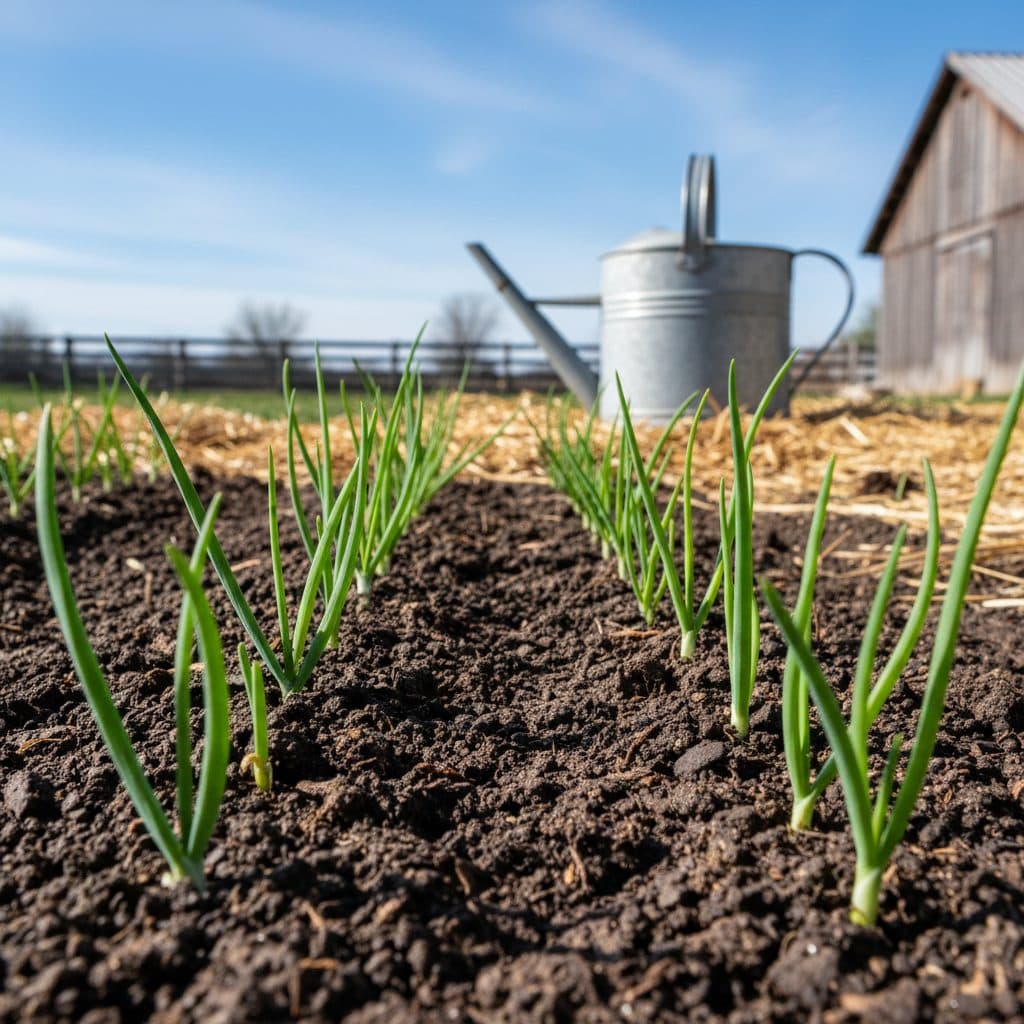
Onion transplants are young onion plants, typically 6 to 8 inches tall, that have been started from seed by commercial growers or by the gardener indoors. They offer a significant advantage by reducing the time to harvest by 4 to 6 weeks compared to direct seeding, often maturing in 70 to 100 days after being planted out in the garden [4]. This method combines the genetic diversity available from seeds with the reduced growing time of sets, often resulting in larger, more uniform bulbs than sets. For example, in a study from 1994, multi-seeded transplants showed good yields with optimal plant density [4].
selecting and planting onion transplants
When purchasing transplants, look for healthy, green plants with a sturdy stem and a good root system. Avoid plants that are yellowing or show signs of disease. Plant transplants in early spring, after the danger of hard frost has passed, typically when soil temperatures reach 50°F. Space them 4 to 6 inches apart in rows that are 12 to 18 inches apart. Set transplants about 1 inch deep. Planting deeper buries the developing bulb and restricts its expansion, and burying green foliage invites neck rot. Transplants generally produce better-quality bulbs and are less likely to bolt than sets, making them a favored choice for many commercial growers in regions like the fertile valleys of California (USDA zone 9b).
- Faster maturity: Reduces field growing time by 4-6 weeks compared to seeds.
- Larger bulbs: Tend to produce bigger, more uniform bulbs than sets.
- Variety choice: Offers a good selection of varieties, similar to seeds.
- Higher success rate: Established plants are more resilient to early season challenges.
Soil preparation and site selection for all onion types
Regardless of whether you choose seeds, sets, or transplants, proper soil preparation is paramount for a successful onion crop. Onions thrive in well-drained, fertile loam soils with a pH between 6.0 and 7.0 [6]. Heavy clay soils can impede bulb expansion, while sandy soils may not retain enough moisture or nutrients. Before planting, amend your soil with 2 to 3 inches of well-rotted compost or other organic matter to improve drainage, aeration, and nutrient retention. This is a practice that has been recommended for over a century for profitable onion cultivation [3].
optimal growing conditions and nutrient needs
A sunny location receiving at least six to eight hours of direct sunlight per day is essential for good bulb development. Onions are heavy feeders, particularly requiring nitrogen during their vegetative growth phase. A balanced fertilizer, such as a 10-10-10, can be incorporated into the soil before planting at a rate of 2 to 3 pounds per 100 square feet. Once bulbs begin to swell, typically in mid-summer, switch to a fertilizer higher in phosphorus and potassium, like a 5-10-10, to support bulb maturity. Avoid excessive nitrogen late in the season, as it can encourage lush top growth at the expense of bulb size and reduce storage quality. Consistent moisture is also critical; aim for one inch of water per week, either from rainfall or irrigation, especially during dry spells in July and August in regions like Ohio (USDA zone 6a).
- Sunlight: At least 6-8 hours of direct sun daily.
- Soil pH: Ideal range is 6.0 to 7.0 for nutrient availability.
- Drainage: Well-drained soil prevents root rot and bulb malformation.
- Fertility: Rich in organic matter; regular feeding with appropriate fertilizers.
Ongoing care and harvesting your onion crop
Once your onions are planted, consistent care is vital for a bountiful harvest. Weeding is particularly important for onions because they are shallow-rooted and compete poorly with weeds for water and nutrients. Hand-weeding is often preferred to avoid damaging the delicate roots. Apply a light layer of mulch, about one inch thick, around the plants to suppress weeds and conserve soil moisture, but avoid mulching directly over the developing bulbs as this can encourage rot. Regular watering, especially during dry periods, matters for bulb expansion, aiming for one inch of water per week through rainfall or irrigation, particularly from June to August in areas like the Pacific Northwest (USDA zone 8b).
when and how to harvest onions
Onions are ready for harvest when their tops begin to yellow and fall over, typically in late summer or early fall. For seed-grown onions, this can be 100 to 175 days after planting, while sets and transplants mature faster, in 60 to 100 days. Once about 50% to 75% of the tops have fallen, let the rest go down on their own. Bending or crimping the necks by hand bruises them and gives rot an entry point during curing and storage. After a week or two, carefully lift the bulbs from the soil using a garden fork, taking care not to bruise them. Allow the onions to cure in a warm, dry, well-ventilated area, such as a garage or shed, for two to three weeks. During this time, the outer skins will dry and tighten, and the neck will seal, preparing them for long-term storage, often lasting 6 to 12 months under proper conditions. You can learn more about specific harvest times for other vegetables, like peppers, in our other guides.
- Weed control: Hand-weed regularly to minimize competition for resources.
- Consistent watering: Provide 1 inch of water weekly, especially during bulb formation.
- Harvest timing: Harvest when 50-75% of tops have fallen over.
- Curing: Cure onions for 2-3 weeks in a warm, dry, ventilated space for best storage.
Comparison of onion starting methods
Method | Cost (per plant) | Maturity (days) | Ease of planting | Bolting risk | Storage quality |
|---|---|---|---|---|---|
Seeds | Low (approx. $0.01) | 100-175 | Moderate (indoor start) | Low | Excellent (6-12 months) |
Sets | Medium (approx. $0.10) | 60-90 | High (easy to handle) | High | Fair (3-6 months) |
Transplants | High (approx. $0.25) | 70-100 | Moderate (less delicate than seeds) | Low | Good (4-8 months) |
Optimal pH: Onions perform best in soils with a pH range of 6.0 to 7.0, as recommended by the USDA Natural Resources Conservation Service [6].
Transplant advantage: Using transplants can reduce the time to harvest by 4 to 6 weeks compared to direct seeding, offering a quicker turnaround for growers [4].
Frequently asked questions
What is the best method for growing onions?
The ‘best’ method depends on your goals. Seeds offer the most variety and best storage for a low cost, but take 100 to 175 days. Sets are quickest, maturing in 60 to 90 days, but may bolt. Transplants offer a good balance, maturing in 70 to 100 days with good bulb size and reduced bolting risk.
When should I plant onion seeds, sets, or transplants?
Onion seeds should be started indoors 8 to 10 weeks before the last frost. Sets and transplants can be planted outdoors in early spring as soon as the soil can be worked, typically when soil temperatures reach 50°F and danger of hard frost has passed, usually around mid-March in USDA zone 6.
How far apart should I plant onions?
For optimal bulb size, space onion plants 4 to 6 inches apart in rows that are 12 to 18 inches apart. This spacing allows for adequate air circulation and bulb development.
What kind of soil do onions need?
Onions prefer well-drained, fertile loam soil with a pH between 6.0 and 7.0. Amending the soil with 2 to 3 inches of organic matter, like compost, before planting is highly beneficial for improving soil structure and nutrient availability [6].
How much water do onions require?
Onions need consistent moisture, especially during bulb formation. Aim for about one inch of water per week, either from rainfall or supplemental irrigation. Inconsistent watering can lead to smaller bulbs or splitting, cutting into overall yield.
How long do onions take to mature?
Maturity time varies by method: seeds take 100 to 175 days, sets take 60 to 90 days, and transplants take 70 to 100 days after planting out. Harvest when 50-75% of the tops have fallen over, typically in late summer or early fall.
References
- Making high priced land pay : by growing onions as a special crop / (1911). Making high priced land pay : by growing onions as a special crop /.
- Onions from seed : revised for 1908 / (1908). Onions from seed : revised for 1908 /.
- The new onion culture; a complete guide in growing onions for profit, (1903). The new onion culture; a complete guide in growing onions for profit,.
- THE EFFECTS OF PLANT DENSITY ON ONIONS ESTABLISHED FROM MULTISEEDED TRANSPLANTS (1994). THE EFFECTS OF PLANT DENSITY ON ONIONS ESTABLISHED FROM MULTISEEDED TRANSPLANTS.
- How to make your high-priced land pay big money by growing my Grandpa’s Pride Globe Onions / (1911). How to make your high-priced land pay big money by growing my Grandpa’s Pride Globe Onions /.
- USDA Natural Resources Conservation Service (2024). USDA Natural Resources Conservation Service.