Key takeaways
- Harvest onions when 50-75% of tops have fallen, and garlic when 3-5 green leaves remain.
- Cure alliums in a warm, well-ventilated space (60-80°F, 60-70% humidity) for two to four weeks.
- Proper trimming involves leaving 1/2 to one inch of stem on onions and one inch on garlic.
- Store cured bulbs cold, dark and dry at 32-35°F with 60-70% humidity, and keep them out of the 40-50°F band where garlic sprouts fastest.
- Softneck garlic varieties typically store longer, up to nine months, compared to hardneck types.
- Good air circulation during storage helps prevent mold and sprouting and extends shelf life.
Quick answer: To cure and store alliums for up to 12 months, harvest at peak maturity, cure in a warm, well-ventilated space (60-80°F, 60-70% humidity) for 2-4 weeks, then store just above freezing at 32-35°F with 60-70% humidity.
In many parts of the United States, from the fertile valleys of California to the humid summers of the Mid-Atlantic, growers often find themselves with an abundance of onions and garlic come harvest time. The challenge then shifts from growing these flavorful alliums to preserving them for months of culinary use. Without proper curing and storage, a substantial portion of a harvest can sprout or spoil within weeks, a frustrating outcome after months of careful cultivation. This guide focuses on practical, data-driven methods for extending the shelf life of your onions and garlic, ensuring they remain firm and flavorful through the winter and beyond.
Achieving long-term storage, often six to 12 months depending on the variety and conditions, is entirely feasible with careful attention to detail. This process begins even before harvest, with selecting appropriate varieties and ensuring optimal growing conditions. For example, long-day onion varieties thrive in northern US states like Washington and Oregon, while short-day types are better suited for southern regions like Texas and Florida. By following the steps outlined here, you can significantly reduce spoilage and enjoy your homegrown alliums for a substantial portion of the year.
Harvesting at the right time for longevity
The foundation of successful long-term storage for onions and garlic is harvesting at their peak maturity. For onions, this typically occurs when 50% to 75% of the plant’s tops have naturally fallen over and begun to yellow. In USDA zone 7, this often happens in late July or early August. Harvesting too early can result in bulbs with thick necks that don’t cure well, leading to faster spoilage. Conversely, leaving them in the ground too long can increase susceptibility to diseases and reduce storage potential. Once the tops have fallen, loosen the soil around the bulbs with a fork to encourage drying, leaving them in the ground for another one to two days if the weather is dry.
Garlic harvest indicators
Garlic has slightly different cues. Hardneck garlic, common in colder climates like USDA zone 4, should be harvested when the lower leaves have yellowed or browned while the upper leaves are still green — usually when three to five green leaves remain. Softneck varieties, often preferred in warmer regions like USDA zone 9, are ready when 50% to 75% of their leaves have turned yellow or brown. Pulling garlic too early results in smaller cloves and a less developed papery wrapper, which is critical for protection during storage. Waiting too long can cause the wrappers to split, exposing cloves to moisture and disease, reducing storage life to just a few weeks. After harvesting, gently brush off excess soil, but avoid washing the bulbs, as added moisture can encourage rot.
- Monitor onion tops for 50-75% fall-over.
- For garlic, harvest once the lower leaves have browned and three to five green leaves remain.
- Loosen soil around onions one to two days before pulling.
- Avoid washing bulbs after harvest.
- Harvest hardneck garlic in USDA zone 4 when leaves begin to yellow.
The critical curing process
Curing is the essential step that prepares onions and garlic for extended storage, allowing the outer skin to dry and form a protective layer, while the neck tissue seals off. This process typically takes two to four weeks. The ideal curing environment is warm, with temperatures between 60°F and 80°F, and moderate humidity, around 60% to 70%. Good air circulation is paramount to prevent mold and mildew. Many growers in the Midwest use open-air sheds, garages, or even covered porches for this stage. Bulbs should be spread out in a single layer, perhaps on wire racks or screens, ensuring at least one to two inches of space between each. Alternatively, you can braid softneck garlic or tie onions in bunches and hang them.
Trimming and preparing for storage
After the curing period, the outer skins should be papery and dry, and the necks of the onions should be completely dry and tight. For onions, trim the roots to about 1/4 inch and the tops to 1/2 to one inch above the bulb. For garlic, trim the roots to 1/4 inch and the stem to about one inch, or leave the stem longer if braiding. Discard any bulbs that show signs of damage, disease, or softness, as these will spoil quickly and could affect neighboring bulbs. Onions with thick, green necks after curing will not store well and should be used within a few weeks. Careful trimming and culling before storage lets bulbs reach their full expected storage life instead of failing early.
- Cure bulbs for two to four weeks.
- Maintain temperatures between 60-80°F.
- Aim for 60-70% relative humidity.
- Ensure good air circulation, spacing bulbs 1-2 inches apart.
- Trim onion roots to 1/4 inch and tops to 1/2-1 inch.
Optimal long-term storage conditions
Once properly cured and trimmed, onions and garlic require specific conditions for long-term storage. The ideal environment is cool, dark, and dry, with relative humidity between 60% and 70%. Onions and garlic keep longest just above freezing, at 32°F to 35°F; garlic can alternatively be held at a steady 60°F to 65°F. The 40°F to 50°F band in between is where garlic sprouts fastest, so do not store bulbs there. These conditions inhibit sprouting and slow down metabolic processes that lead to spoilage. Basements, unheated pantries, or root cellars are excellent options. In USDA zone 6, measure an unheated basement across a full season before committing a crop to it, since many run in the sprout-prone middle range rather than near freezing. Avoid storing alliums in refrigerators, as the high humidity can encourage mold and sprouting, reducing their shelf life to just a few weeks.
Storage containers and air flow
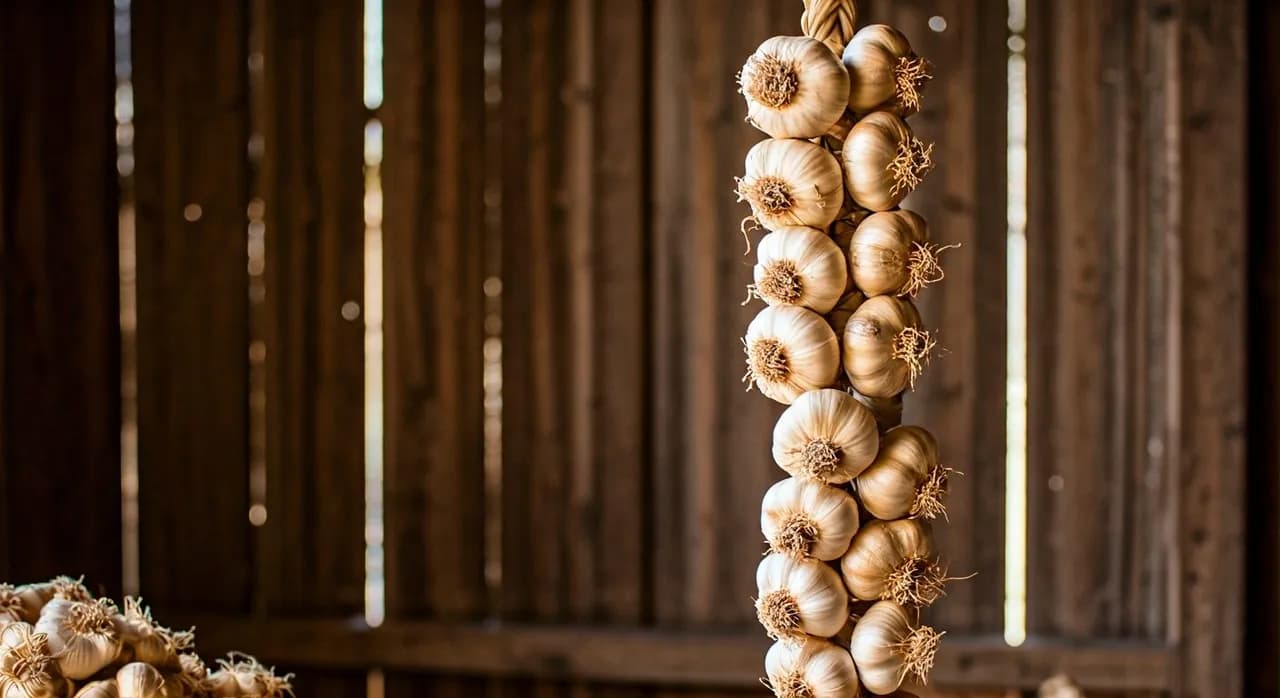
Proper air circulation remains vital during storage. Store bulbs in mesh bags, old nylon stockings, slatted crates, or cardboard boxes with holes punched in them. Do not store them in sealed plastic bags or airtight containers, as this traps moisture and promotes rot. For example, a single layer of onions in a mesh bag hung in a cool, dry pantry can last six to nine months. Garlic, especially softneck varieties, can be braided and hung, which provides excellent air circulation and looks appealing. Hardneck garlic, like ‘Music’ or ‘German Extra Hardy’, typically stores for four to six months, while softneck varieties such as ‘Inchelium Red’ or ‘Silverskin’ can last six to nine months, sometimes even up to 12 months under ideal conditions. For more details on growing these, see our guide on how to grow garlic.
- Store in a cool, dark, dry place.
- Maintain 32-35°F and 60-70% humidity, avoiding the 40-50°F sprouting range.
- Use mesh bags, crates, or braided strings for storage.
- Ensure continuous air circulation around bulbs.
- Regularly inspect stored alliums for signs of spoilage.
Common storage challenges and solutions
Even with the best intentions, storage challenges can arise. Sprouting is a common issue, especially if temperatures fluctuate or humidity is too high. If a bulb starts to sprout, it’s still edible, but its flavor may diminish, and its texture can become softer. Use sprouted bulbs first. Another challenge is mold or rot, often indicated by soft spots or a strong, unpleasant odor. This is usually due to insufficient curing, high humidity during storage, or damaged bulbs. Regular inspection, perhaps once every two to three weeks, allows you to remove any compromised bulbs before they affect others. A single rotten onion can spoil a whole crate in a matter of days if left unchecked.
Pest prevention and variety selection
Pests can also be a concern, though less so in a dry, cool storage environment. Onion thrips (Thrips tabaci) and onion maggots (Delia antiqua) are primarily field pests, but their damage can lead to storage issues [1]. Proper field sanitation and crop rotation can reduce their impact. For example, avoiding planting onions in the same spot for three consecutive years can significantly reduce onion maggot populations. When selecting varieties, choose those known for good storage capabilities. For onions, ‘Patterson’, ‘Copra’, and ‘Redwing’ are excellent choices, often lasting six to nine months. For garlic, softneck varieties like ‘California Early’ or ‘Italian Purple’ typically store longer than hardneck types such as ‘German White’. Understanding how to grow onions from sets or seeds can also influence their storage potential.
- Inspect stored bulbs every two to three weeks.
- Remove any sprouting or rotting bulbs immediately.
- Ensure consistent cool, dry temperatures.
- Choose onion varieties like ‘Patterson’ or ‘Copra’ for storage.
- Opt for softneck garlic varieties for longer shelf life, up to nine months.
Storage Potential of Common Allium Varieties
Allium Type | Variety Examples | Typical Storage Duration |
|---|---|---|
Onions (Long-Day) | Patterson, Copra, Redwing | 6-9 months |
Onions (Short-Day) | Granex, Bermuda | 1-3 months |
Hardneck Garlic | Music, German Extra Hardy | 4-6 months |
Softneck Garlic | Inchelium Red, California Early | 6-9 months |
Curing Temp: Maintain curing temperatures between 60°F and 80°F for two to four weeks to properly dry onion and garlic skins.
Storage Humidity: Optimal storage humidity for alliums is 60% to 70%, preventing both excessive drying and mold growth.
Garlic Storage: Softneck garlic varieties can store for up to nine months, while hardneck types typically last four to six months under ideal conditions.
Frequently asked questions
Can I store onions and garlic in the refrigerator?
No, storing onions and garlic in the refrigerator is generally not recommended. The high humidity inside a refrigerator, typically above 80%, can encourage sprouting and mold growth, significantly reducing their shelf life to just a few weeks.
What happens if I harvest my onions or garlic too early?
Harvesting too early results in smaller bulbs and thick, green necks that do not cure properly. These bulbs will have a shorter storage life, often only two to three months, and are more susceptible to rot and disease.
How do I know if my onions or garlic are fully cured?
Onions are fully cured when their outer skins are papery and dry, and the neck is completely dry and tight, feeling firm to the touch. For garlic, the wrappers should be dry and crisp, and the cloves should feel firm, usually after two to four weeks of curing.
What is the best way to store large quantities of alliums?
For large quantities, store cured bulbs in mesh bags, slatted wooden crates, or cardboard boxes with ample ventilation holes. Stack them carefully in a cool, dark, and dry location, such as a root cellar, maintaining 32-35°F and 60-70% humidity; check the spot with a thermometer first, since many basements sit in the 40-50°F band where bulbs sprout fastest.
Can I store different varieties of onions and garlic together?
Yes, you can store different varieties of onions and garlic together, provided they are all properly cured and healthy. Ensure good air circulation between different types and inspect all bulbs regularly, perhaps every three weeks, to remove any spoilage.
Why do my stored onions or garlic start to sprout?
Sprouting is fastest in the 40-50°F band rather than simply when storage is warm, and high humidity makes it worse. Hold onions and garlic just above freezing at 32-35°F with 60-70% humidity, or keep garlic at a steady 60-65°F, and avoid the range in between.
References
- Insect Management for Onions, Leek, and Garlic (2005). Insect Management for Onions, Leek, and Garlic.
- Insect Management for Onions, Leek, and Garlic (2002). Insect Management for Onions, Leek, and Garlic.