Key takeaways
- Do not attempt to dig or rotavate the entire plot at once; clear and cultivate in manageable quarter-sections to prevent early burnout.
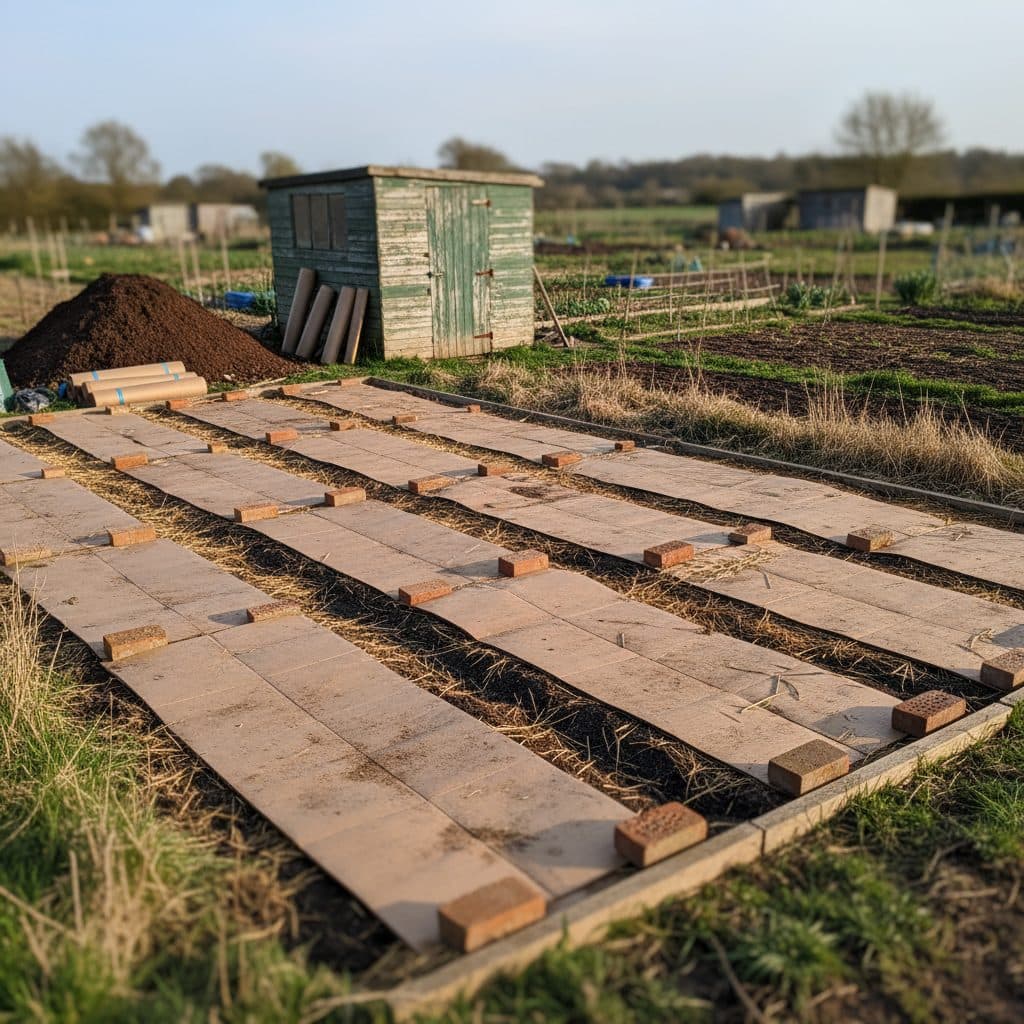
- Smother pernicious perennial weeds using heavy corrugated cardboard and thick compost layers rather than bare plastic sheeting.
- Prioritize reliable beginner crops in year one: potatoes, courgettes, runner beans, onions, garlic, and winter squash.
- Your tenancy agreement sets the cultivation standard - some sites state a percentage, others just require the plot to be kept in good horticultural condition.
- Install basic infrastructure early: compost bays, a tool storage shed, guttered water butts, and permanent woodchip paths.
Quick answer: Successfully managing your first year on a UK allotment requires a staged, month-by-month strategy rather than exhausting all your energy in a single weekend. New plot holders succeed by dividing overgrown ground into four manageable sections, using no-dig cardboard sheet mulching to suppress weeds, planting high-success clearing crops like maincrop potatoes and courgettes, and building core infrastructure like compost bins and rain harvesting before expanding into delicate crops.
Taking on a new allotment is exciting, but stepping onto a neglected 250-square-metre plot covered in waist-high brambles, docks, and couch grass can feel overwhelming. Many enthusiastic beginners exhaust themselves trying to dig the entire area by hand in spring, only to abandon the plot by July when weeds return aggressively.
Succeeding in your first year requires a strategic balance: clearing ground efficiently, satisfying council tenancy rules, establishing productive beds quickly, and pacing your labor.
Following a structured month-by-month roadmap transforms a daunting weed jungle into a neat, productive vegetable plot without burning out or risking tenancy warnings.
Month-by-month allotment first-year timeline
A seasonal UK roadmap guiding your first twelve months on the plot:
+------------------------+-----------------------------------------------------------------------+
| Month                  | Key Allotment Activities & Priorities                                 |
+------------------------+-----------------------------------------------------------------------+
| January - February     | Inspect boundaries, test soil drainage, build 3-bay pallet compost bin|
| March                  | Strim brambles, cover unworked zones with cardboard, chit seed potato |
| April                  | Build first no-dig beds, plant onion sets, sow broad beans and peas   |
| May                    | Plant maincrop potatoes, plant out courgettes, squash, and beans      |
| June                   | Hoe annual weeds on sunny days, mulch pathways, erect runner bean poles|
| July                   | Harvest broad beans, peas and salad greens; keep on top of watering   |
| August                 | Harvest courgettes and beans; sow winter salads and autumn greens     |
| September              | Harvest maincrop potatoes, pumpkins, and squash; clear spent crops    |
| October                | Plant garlic cloves and spring cabbage; sow winter green manure       |
| November               | Apply 5 cm compost top-dressing across all beds; heel in fruit bushes |
| December               | Service hand tools, clean cold frames, review seed catalogues         |
+------------------------+-----------------------------------------------------------------------+
+-------------------------------------------------------------------+
| FIRST YEAR ALLOTMENT STAGING STRATEGY |
+-------------------------------------------------------------------+
| [Quarter 1 (25%)] High-Priority No-Dig Beds: Salads, Onions, Roots|
| [Quarter 2 (25%)] Heavy Ground-Clearing Crops: Potatoes & Squash |
| [Quarter 3 (25%)] Cardboard Sheet-Mulched Area: Smothering Weeds |
| [Quarter 4 (25%)] Infrastructure: Compost Bays, Shed, Water Storage|
+-------------------------------------------------------------------+Understanding council inspection milestones is essential; review legal tenure boundaries in our overview of allotment rules.
Months 1 to 3: site assessment, clearing and base infrastructure
During late winter, focus on site planning and structural setup before the spring growing rush begins.
1. Ground clearing without rotavating
Cut down tall woody overgrowth, brambles, and dock stems using a brushcutter, scythe, or heavy loppers. Check bramble and scrub for active nests before you cut from March onward - damaging a nest in use is an offence, so leave occupied patches until the birds have fledged. Rake the cut material into a pile for composting. Avoid rotavating weed-choked ground; rotavator blades chop bindweed and couch grass rhizomes into countless viable fragments, so every pass multiplies the problem.
Instead, establish growing areas by building no dig raised beds or mounded no-dig beds using overlapping cardboard smothered with compost.
2. Sourcing infrastructure materials
- Wooden Pallets: Look for the HT stamp (heat treated) and avoid any stamped MB (methyl bromide fumigated). Avoid painted or oil-stained pallets too.
- Water Butts: Install guttering on your shed roof connected to 200-litre water butts to secure an independent water supply.
- Cardboard Boxes: Collect large, unprinted bicycle or appliance boxes to smother unworked areas.
Months 4 to 6: spring planting and tenancy compliance
From April to June, get productive crops into the ground. Your tenancy agreement sets the cultivation standard - some sites state a percentage, others just require the plot to be kept in good horticultural condition. Read the clause and ask your allotment officer what the first inspection actually looks for.
+------------------------+-------------------+---------------------------------------------------+
| High-Success Crop      | Planting Month    | Why It Succeeds in Year One                       |
+------------------------+-------------------+---------------------------------------------------+
| Maincrop Potatoes      | April / May       | Dense canopy smothers weeds; loosens topsoil      |
| Courgettes & Squash    | May (after frost) | Massive leaves shade soil; yields continuous food |
| Runner / French Beans  | May / June        | Vertical climbers; heavy yield in small footprint |
| Onion & Shallot Sets   | March / April     | Easy establishment from sets; reliable storage    |
| Chard (Swiss and rainbow) | April to June | Unfazed by poor soil; crops through winter into spring |
+------------------------+-------------------+---------------------------------------------------+
The power of potatoes as a first-year crop
Potatoes are the traditional allotment clearing crop. Their dense, broad foliage creates deep shade that starves underlying perennial weeds of light, while harvesting potatoes in late summer naturally loosens compacted soil without heavy digging.
Months 7 to 9: summer maintenance and harvesting
Summer is when weeds grow rapidly, but simple daily routines keep the plot manageable.
Weed control and path mulching
Hoe annual weed seedlings on hot, dry mornings so the sun bakes exposed roots on the surface. Mulch all walking pathways with thick cardboard topped with 7 cm of woodchips. Clean, defined paths prevent weeds from creeping into your vegetable beds. For persistent weed problems along borders, apply sheet mulching cardboard weed control.
Watering strategies and pests
Water plants deeply at the root zone once or twice a week rather than giving light daily sprinkles that encourage shallow rooting. Utilize cold frames to harden off summer successions as explained in how to use a cold frame. Inspect brassica netting regularly to prevent cabbage white butterflies from depositing eggs on young plants.
Months 10 to 12: autumn bed protection and winter preparation
Autumn is when you set the foundation for an effortless second year on the plot.
+-------------------------------------------------------------------+
|               AUTUMN BED CLOSURE CHECKLIST                        |
+-------------------------------------------------------------------+
|1. Clear Haulms:         Compost spent bean vines and squash leaves|
|2. Plant Garlic:         Sow cloves 3 cm deep in October/November  |
|3. Sow Green Manure:     Sow grazing rye on empty beds             |
|4. Top-Dress Compost:    Apply 5 cm compost across all no-dig beds |
|5. Butts and Taps:       Leave butts lidded and connected; lag or drain the tap only |
+-------------------------------------------------------------------+
Protect bare soil over winter by sowing a hardy winter green manure or applying a thick layer of organic matter as detailed in compost for no dig gardening.
Clean and oil hand tools before winter storage. Coat carbon steel spade blades and hoe heads with a light layer of linseed oil to prevent rust over damp winter months. Service petrol mowers and strimmers, draining residual fuel to protect carburetors.
Reviewing seed catalogues in December lets you plan crop rotations and seed orders early, so you start year two with clarity and confidence.
By following this disciplined first-year plan, you will stay on the right side of your tenancy, get a real harvest off the sections you have cleared, and start year two with fertile, defined beds.