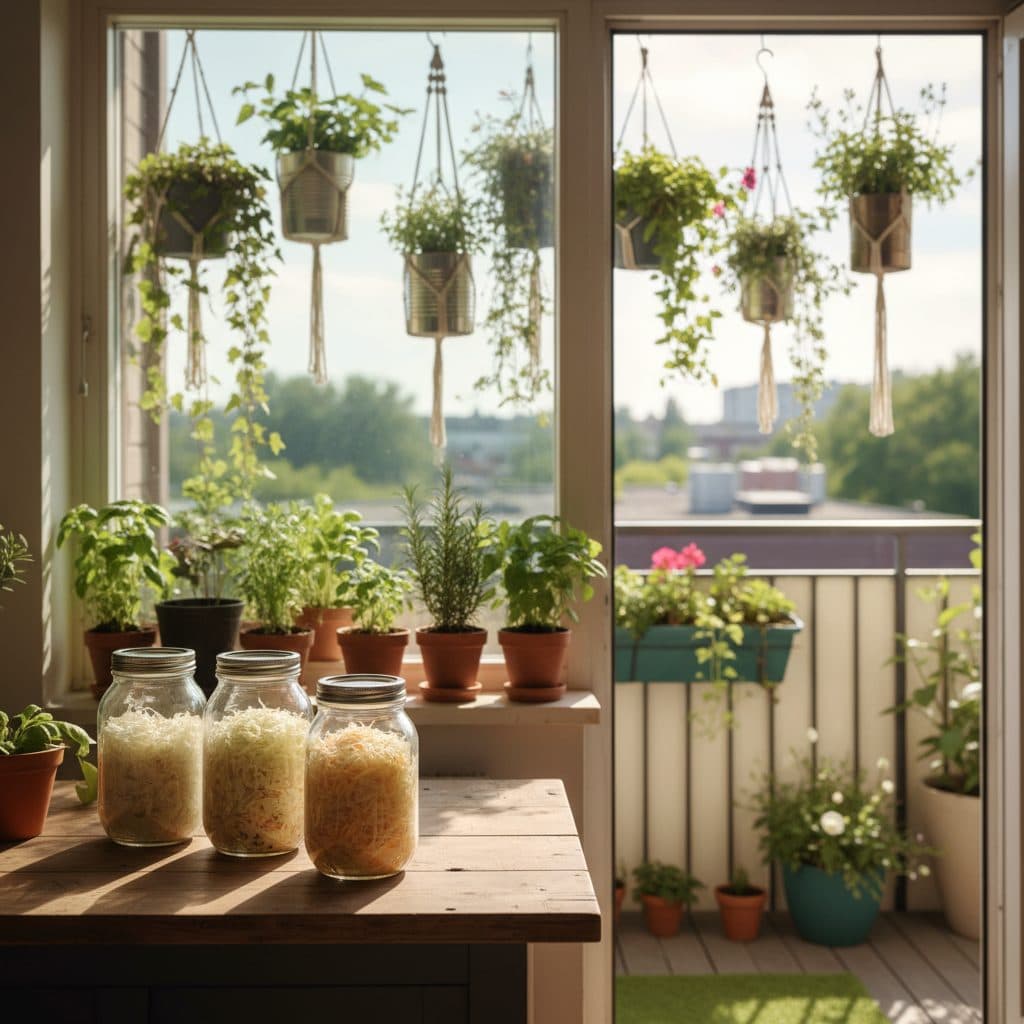
Key takeaways
- Focus on high-value, small-footprint food production such as culinary herbs, leafy salad greens, and countertop microgreens under grow lights.
- Master countertop food preservation skills including lacto-fermentation, sourdough baking, yogurt making, and small-batch water bath canning.
- Process kitchen food scraps without odor using sealed anaerobic bokashi fermentation buckets or compact worm vermicomposting bins.
- Maximize balcony space with vertical railing planters, modular trellising, and lightweight self-watering sub-irrigated containers.
- Build resilience through bulk pantry purchasing, seasonal scratch cooking, natural home cleaner formulation, and fabric mending.
Quick answer: Apartment homesteading is the practice of applying traditional self-reliance, food production, waste reduction, and preservation skills within the confines of a rental unit or high-density urban apartment. Key practices include growing microgreens and herbs on windowsills, maintaining countertop ferments (sourdough, sauerkraut, kefir), processing food waste with odorless bokashi buckets, and batch cooking from seasonal farmers market surplus.
Many people assume homesteading requires owning thirty acres of rural pasture, a barn full of livestock, and an extensive orchard. In reality, homesteading is a mindset of active production rather than passive consumption.
Practicing apartment homesteading allows renters and city dwellers to cultivate self-reliance, reduce grocery dependence, and build practical home skills regardless of square footage or lease restrictions. Without altering structural walls or violating rental agreements, you can turn a compact living space into a productive hub of household sustainability.
From balcony container gardening and countertop fermentation to indoor composting and textile repair, urban self-sufficiency begins right in the kitchen.
Defining the apartment homesteading framework
Homesteading without land focuses on intensive micro-skills that yield maximum nutritional and practical value per square foot.
+------------------------+-----------------------------------+-------------------------+
| Homestead Pillar       | Apartment Implementation          | Space Requirement       |
+------------------------+-----------------------------------+-------------------------+
| Micro Food Production  | Microgreens, culinary herbs, greens| Windowsill / 1 Shelf    |
| Food Preservation      | Fermentation, dehydrating, canning| Kitchen countertop      |
| Waste Cycling          | Bokashi fermentation, worm bin    | Under sink / Closet     |
| Scratch Kitchen        | Sourdough, yogurt, bone broth     | Standard stove/oven     |
| Domestic Resilience    | Bulk pantry, DIY cleaners, mending| Storage bins / Cupboard |
+------------------------+-----------------------------------+-------------------------+
+-------------------------------------------------------------------+
| APARTMENT HOMESTEAD PRODUCTION FLOW |
| |
| [Bulk Pantry / Market] ---> [Kitchen Scratch Cooking & Ferments] |
| | |
| (Kitchen Scraps) |
| v |
| [Balcony Garden / Herbs] <-- [Bokashi / Worm Castings Soil] |
+-------------------------------------------------------------------+By connecting food sourcing, kitchen processing, and biological waste cycling, apartment dwellers create a closed-loop system scaled to domestic interiors.
High-yield indoor and balcony food production
In a small apartment, devoting floor space to low-yielding, space-intensive crops like corn or pumpkins is impractical. Focus instead on nutrient-dense, high-turnaround crops.
+--------------------+-------------------------+--------------------+------------------------+
| Crop Type          | Production Method       | Harvest Cycle      | Space Needed           |
+--------------------+-------------------------+--------------------+------------------------+
| Microgreens        | Shallow 1020 seed trays | 7 to 12 Days       | 1 Tier of a wire rack  |
| Culinary Herbs     | 6-inch windowsill pots  | Continuous cut     | Sunny windowsill       |
| Leafy Greens       | Balcony railing trough  | 30 to 45 Days      | Balcony railing edge   |
| Cherry Tomatoes    | 5-gallon sub-irrigated  | 60 to 75 Days      | Sunny balcony corner   |
| Sprouting Seeds    | Wide-mouth Mason jars   | 4 to 6 Days        | Kitchen counter dish   |
+--------------------+-------------------------+--------------------+------------------------+
Countertop microgreens and sprouts
Growing microgreens (sunflower shoots, radishes, broccoli, and pea shoots) provides fresh, concentrated enzymes and vitamins in less than two weeks. A 2-foot LED shop light over a wire shelving unit will support one or two 1020 trays at a time, giving a cut every one to two weeks. When sprouting seeds in jars, use seed sold specifically for sprouting, rinse and drain at least twice daily, refrigerate finished sprouts, and cook sprouts before eating if anyone in the household is pregnant, elderly, young or immunocompromised.
Balcony container strategies
If you have access to a small balcony or fire escape, make use of vertical space. Install vertical wall pocket planters and use lightweight fabric grow bags. Vertical trellising supports climbing peas and pole beans along wall surfaces without cluttering floor areas.
To manage watering when you are away from home, implement self-watering balcony planters and review small-space container dynamics in our comprehensive urban homesteading guide.
Countertop fermentation and small-batch preservation
Food preservation in an apartment does not require a commercial walk-in root cellar. Traditional fermentation preserves harvest surpluses on a standard kitchen countertop and improves digestive health.
+-------------------------------------------------------------------+
|               CORE FERMENTATION STARTER PROJECTS                  |
+-------------------------------------------------------------------+
| 1. Lacto-Fermented Sauerkraut: Cabbage + 2% salt by weight        |
| 2. Wild Sourdough Starter:     Flour + water capture wild yeasts  |
|3. Milk / Water Kefir:         Kefir grains culture probiotic drink|
|4. Vegetable Pickling:         Brine fermentation of cucumbers/peppers|
| 5. Kombucha Brewing:           Sweet tea fermented via SCOBY disc |
+-------------------------------------------------------------------+
+------------------------+-----------------------------------+-------------------------+
| Preservation Method | Essential Equipment | Apartment Advantage |
+------------------------+-----------------------------------+-------------------------+
| Lacto-Fermentation | Mason jars + airlock fermentation lids| Zero heat; counter storage|
| Dehydration | 4-tray compact food dehydrator | Shrinks 10 lbs into jars|
| Small-Batch Canning | Enamel stockpot + jar lifter tongs| Shelf-stable pantry jars|
| Vinegar Infusions | Reusable swing-top glass bottles | Herb preservation |
+------------------------+-----------------------------------+-------------------------+Boiling-water canning is only safe for high-acid foods. Tomatoes must be acidified with bottled lemon juice or citric acid at the rate given in a tested recipe, and low-acid foods (beans, corn, carrots, meat, plain vegetables) require a pressure canner — a boiling-water bath will not reach the temperature needed to destroy Clostridium botulinum spores. When local farmers markets sell seasonal surplus berries, cucumbers, or tomatoes at peak abundance, process them in small batches using water bath methods described in water bath canning.
Odor-free indoor composting for renters
Throwing kitchen organic scraps into municipal landfill waste creates methane emissions and wastes valuable organic nutrients. Renters can safely process organic scraps indoors without foul odors or pest infestations.
+-------------------------------------------------------------------+
|                 INDOOR COMPOSTING METHOD COMPARISON               |
|                                                                   |
| [Bokashi Fermentation]              [Worm Vermicomposting]        |
| Anaerobic microbe bran inoculation  Aerobic red wiggler worms     |
| Accepts meat, cheese, citrus scraps Accepts vegetable/fruit peel  |
| 100% airtight sealed bucket         Ventilated bin with bedding   |
| Yields a fermented pre-compost      Yields rich worm castings tea |
| that must be soil-finished                                        |
+-------------------------------------------------------------------+
The bokashi method
Bokashi uses an airtight 5-gallon bucket and wheat bran inoculated with effective microorganisms (Lactobacillus, yeast, and photosynthetic bacteria). Layer vegetable trimmings, coffee grounds, and table scraps into the bucket, sprinkle a handful of bokashi bran over each layer, and seal tightly.
Because the process is anaerobic fermentation rather than rotting, it produces no offensive smell. Use a bucket with a bottom spigot and drain the leachate every few days; dilute it 1:100 for watering or pour it down the drain. Once full, seal and let the bucket ferment for two weeks, then bury the fermented material in an unplanted container or soil-factory bin and leave it two to four weeks. It is strongly acidic when it comes out of the bucket, so do not put it in contact with living roots until it has finished breaking down in soil.
Explore indoor odor control protocols in small space composting no odor and container integration in balcony countertop composting renters.
Scratch cooking and bulk pantry economics
True homesteading resilience rests on fundamental kitchen competence: buying whole ingredients in bulk, eliminating single-use processed foods, and cooking from scratch.
+------------------------+-----------------------------------+---------------------------------------------------------------+
| Kitchen Skill          | Commercial Substitute Replaced    | Household Impact                                              |
+------------------------+-----------------------------------+---------------------------------------------------------------+
| Sourdough Breadmaking  | Store-bought commercial loaves    | Nutrient-dense, low cost                                      |
| Bone Broth & Stock     | Packaged sodium broths & cubes    | Extracts marrow collagen                                      |
| Scratch Yogurt Making  | Single-use plastic yogurt tubs    | Cultures live probiotics                                      |
| Whole Chicken Butchery | Pre-cut plastic-wrapped parts     | Cheaper per kilo than pre-cut parts; yields carcass for stock  |
| Sprouted Legumes       | Canned beans                      | Enhanced bioavailability                                      |
+------------------------+-----------------------------------+---------------------------------------------------------------+
Sprouted kidney, lima and broad beans must be boiled hard for at least 10 minutes before eating; only lentils, mung beans, chickpeas and peas are safe to eat raw-sprouted.
Invest in 5-gallon food-grade buckets with gamma-seal screw-top lids to store pantry staples like whole grains, dried beans, rolled oats, and raw sugar purchased from bulk suppliers. Buying in 25-pound bags cuts staple food costs substantially and buffers against supply chain interruptions.
Renter-friendly domestic self-reliance skills
Homesteading extends beyond food to the maintenance and self-sufficiency of the entire household.
+-------------------------------------------------------------------+
|               NON-FOOD RENTER HOMESTEAD PRACTICES                 |
+-------------------------------------------------------------------+
| - Herbal Apothecary:   Infuse dried calendula/chamomile in oils   |
| - DIY Non-Toxic Cleaners: Citrus peel infused in white vinegar    |
| - Mending & Repair:    Hand-darning socks, sewing dropped hems    |
| - Energy Conservation: Thermal blackout curtains, drying racks    |
| - Tool Kit Mastery:    Cordless drill, hand saw, basic hardware   |
+-------------------------------------------------------------------+
Rather than buying aerosol chemicals and disposable paper towels, brew multi-surface cleaning sprays by steeping leftover orange and lemon rinds in standard distilled white vinegar for three weeks. Dilute 50/50 with water in a spray bottle for an effective grease-cutting cleaner.
Learning basic textile care, button replacement, seam stitching, and tool handling reduces reliance on disposable goods and strengthens domestic independence.
By viewing every square foot of an apartment as a productive space, urban renters cultivate genuine self-sufficiency, practical life skills, and deep domestic satisfaction.