Key takeaways
- Choose angular, washed gravel 0.5 in to 1.5 in for optimal void space and drainage.
- Avoid limestone and fine sands to prevent pH issues and clogging in reservoir layers.
- Scoria offers good porosity and lighter weight, especially useful in raised beds or urban gardens.
- A proper reservoir layer can reduce irrigation needs by 30% to 50% in arid regions like Southern California.
- Depth of the reservoir layer should be at least 6 in for most wicking beds to ensure adequate water storage.
Quick answer: For wicking beds, select angular, washed gravel 0.5 to 1.5 inches in diameter to ensure optimal void space, drainage, and stable pH. This foundational reservoir layer stores water, significantly reducing irrigation needs.
In hot regions like Arizona where summer temperatures often exceed 100°F, efficient water use is essential. Whether building a wicking bed, installing ollas, or designing passive irrigation earthworks, the aggregate chosen for the reservoir layer determines how well the system performs. This foundational layer is responsible for holding a significant volume of water, preventing soil saturation, and providing a stable base for your plants.
Getting this layer right can mean the difference between a thriving garden and one that struggles, potentially reducing your irrigation water needs by 30% or more over a growing season in regions like Southern California. We’ll explore the characteristics of effective reservoir materials, discuss common pitfalls, and help you select the best aggregate for your specific water harvesting project, ensuring your plants get the moisture they need without waste.
Understanding the reservoir layer: more than just drainage
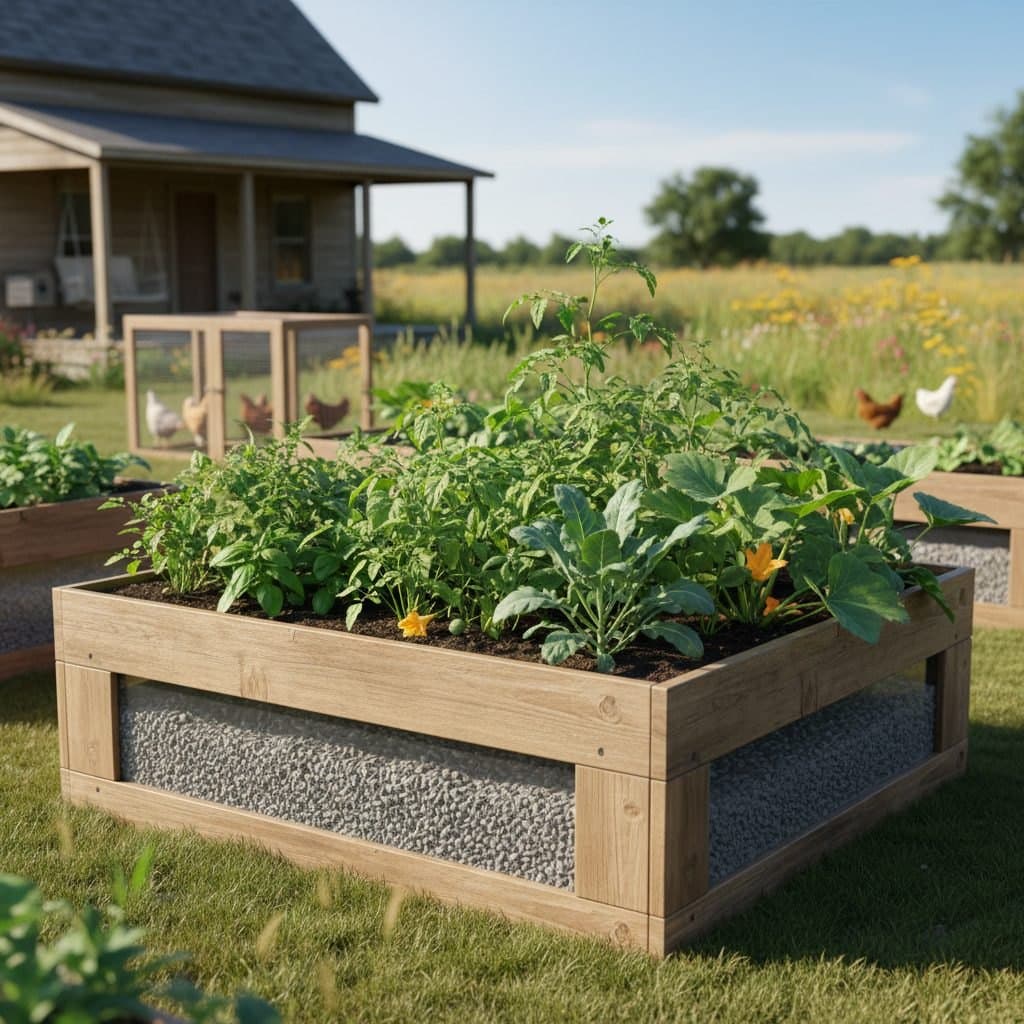
The reservoir layer is a basic component in water-efficient systems like wicking beds and passive irrigation earthworks. In a wicking bed system, for instance, the reservoir layer sits beneath the growing medium, typically 6 in to 12 in deep, acting as a subsurface water tank. Its primary function is to store water that plants can draw up through capillary action, significantly reducing the frequency of manual irrigation. This void space, the open volume between aggregate particles, accounts for 30% to 40% of the layer’s total volume when using angular gravel. For example, a 4 ft by 8 ft wicking bed with a 6 in reservoir layer can store over 30 gallons of water.
Key properties for water storage
For the reservoir layer to perform optimally, the chosen material must possess several key properties. It needs a high void space to maximize water storage, allowing for efficient rainwater harvesting. The particles should be angular and uniform in size, generally between 0.5 in and 1.5 in, to create stable air pockets and promote consistent capillary action without compacting. In USDA zone 9, where summer rainfall is scarce, this stored water can extend irrigation intervals by several days, reducing overall water consumption by 30%. The material should also be chemically inert, meaning it won’t react with water or soil amendments, maintaining a stable pH between 6.0 and 7.0 for plant health. Finally, good particle size distribution prevents fine soil from migrating into the reservoir and clogging it over time, ensuring the system functions for many years.
- High void space for maximum water retention.
- Angular particles to prevent compaction and promote stability.
- Chemically inert to maintain stable soil pH.
- Uniform particle size to ensure consistent capillary rise.
- Durability for long-term performance, often 15 to 20 years.
Gravel types: what works and what doesn’t
When it comes to gravel for your reservoir layer, not all types are created equal. Crushed gravel, often sourced from local quarries in states like Pennsylvania or Texas, is a popular choice due to its angular shape and widespread availability. Angular particles, typically 0.5 in to 1.5 in in diameter, interlock well, creating stable void spaces that can hold up to 38% of the layer’s volume in water. This stability helps prevent compaction and maintains consistent water wicking. Pea gravel, with its smooth, rounded stones usually 0.25 in to 0.5 in, is less ideal because it compacts more easily, reducing void space to perhaps 25% and potentially hindering water movement.
Selecting the right aggregate size
Successful gravel selection requires washed aggregate with a consistent particle size. Unwashed material can contain fine silts and clays that will clog the reservoir layer over time, reducing its water-holding capacity by 10% to 15% within a year. For optimal performance, aim for a gravel size that provides a good void ratio without being so large that it creates air pockets too big for capillary action. The drainage rate is also important; while the layer holds water, it should allow excess water to drain slowly if the system overflows. The cost for crushed, washed gravel generally ranges from $30 to $50 per cubic yard, depending on your location in regions like the Midwest, making it a cost-effective option for many projects.
- Crushed gravel (0.5-1.5 in): Excellent void space, stable, widely available.
- Pea gravel (0.25-0.5 in): Readily available, but less void space and prone to compaction.
- Washed gravel: Essential to prevent clogging from fines.
- Unwashed gravel: Contains silts and clays that reduce efficiency by 10% or more.
- River rock (large, rounded): Poor interlocking, lower void space, generally not recommended.
Scoria and pumice: lighter alternatives for raised beds
For gardeners in urban environments or those building large raised wicking beds where weight is a significant concern, alternatives to heavy gravel are invaluable. Scoria, a reddish-brown volcanic rock, is an excellent lightweight option, particularly beneficial for raised wicking beds or rooftop gardens in urban areas like New York City. Its highly porous structure allows it to hold a substantial amount of water, often up to 50% of its volume, while being 30% to 40% lighter than traditional gravel. This reduced weight, typically around 1,500 lbs per cubic yard compared to gravel’s 2,500 lbs, can significantly ease construction and reduce structural load on decks or patios, which often have weight limits of 50 lbs per square foot.
Benefits for container and wicking beds
Scoria’s high porosity means it has a greater internal surface area for water retention, which can be advantageous for drought-tolerant plants. Pumice, another volcanic aggregate, shares similar benefits, offering good porosity and thermal insulation, which can help regulate soil temperatures by a few degrees Fahrenheit in fluctuating climates like those in Colorado. Both materials are generally inert, maintaining a neutral pH, which is suitable for a wide range of plants in USDA zone 7. While scoria might cost $50 to $80 per cubic yard, its benefits in specific applications, especially for large beds over 100 square feet, often justify the higher price point by reducing labor and potential structural reinforcement costs. The lighter weight also makes it easier to transport and handle for DIY projects.
- Significantly lighter than gravel, reducing structural load by 30% to 40%.
- High porosity allows for excellent water retention, up to 50% of its volume.
- Provides good thermal insulation, stabilizing root zone temperatures.
- Generally pH neutral and chemically inert.
- Ideal for rooftop gardens, balconies, and large container wicking systems.
Materials to avoid: preventing common reservoir layer failures
Just as important as choosing the right material is knowing which materials to avoid in your reservoir layer. One of the most common mistakes is using limestone, which is readily available and often inexpensive, costing as little as $20 per cubic yard in some areas of the Southeast. However, limestone is primarily calcium carbonate and will slowly dissolve, leaching alkaline compounds into your soil and raising its pH, potentially above 7.5. This can be detrimental to many common garden plants, especially acid-loving species like blueberries or azaleas, which prefer a pH between 4.5 and 5.5, and thrive in regions like the Pacific Northwest.
The dangers of reactive and fine materials
Another material to steer clear of is fine sand or unwashed gravel containing a high percentage of fines; these fine particles will quickly clog the void spaces in your reservoir layer, reducing its water-holding capacity by 50% or more within a single growing season. This clogging impedes capillary action and can lead to waterlogging in the growing medium above. Organic matter, such as wood chips, sawdust, or compost, should also be avoided in the reservoir layer itself; it will decompose, compact, and create anaerobic conditions that can harm plant roots, potentially reducing oxygen levels by 70%. This decomposition can also lead to nutrient imbalances and attract pests. Always prioritize inert materials with a consistent particle size to ensure the longevity and effectiveness of your water harvesting system.
- Limestone: Raises soil pH, detrimental to acid-loving plants.
- Fine sand: Clogs void spaces, reducing water retention by 50% or more.
- Unwashed gravel: Contains fines that lead to clogging and compaction.
- Organic matter: Decomposes, creates anaerobic conditions, and compacts.
- Crushed concrete: Can leach alkaline compounds and heavy metals, impacting soil chemistry.
Installing your reservoir layer for lasting performance
Once you’ve selected your ideal aggregate, proper installation ensures your reservoir layer functions effectively for many years, often 15 to 20 years with good practice. Start by ensuring the base of your wicking bed or earthwork is level within 0.5 in across its entire surface; this promotes even water distribution and prevents dry spots in the soil above. Next, lay down a durable geotextile fabric, often rated for 20 years of underground use, directly over the base before adding your chosen aggregate. This fabric prevents the reservoir material from migrating into the soil below and, more importantly, keeps the fine soil particles from washing down and clogging the aggregate layer, which can reduce water holding capacity by 25%.
Ensuring long-term functionality
After placing the fabric, carefully add your chosen gravel or scoria, ensuring a uniform layer depth of 6 in to 12 in. This depth provides ample water storage (up to 100 gallons for a 4 ft by 10 ft bed) and stable support for the growing medium above. Avoid excessive compaction of the aggregate, as this can reduce void space. Once the aggregate is in place, cover it with another layer of geotextile fabric. This top layer prevents root penetration into the reservoir and stops the growing medium from mixing with the aggregate. This separation maintains the integrity of both layers, ensuring consistent wicking action and preventing the reservoir from becoming a muddy mess over time, especially in regions with heavy rainfall like the Pacific Northwest, where soil migration can be a significant issue.
- Level the base of your bed within 0.5 in for even water distribution.
- Install a durable geotextile fabric (20-year lifespan) beneath the aggregate.
- Add your chosen aggregate to a uniform depth of 6 in to 12 in.
- Avoid compacting the aggregate excessively to preserve void space.
- Place a second layer of geotextile fabric over the aggregate to separate it from the soil.
Comparing common reservoir layer materials
material | pros | cons | typical cost (per cubic yard) |
|---|---|---|---|
crushed gravel (0.5-1.5 in) | excellent void space, stable, widely available, inert | heavy, can be expensive to transport, requires washing | $30-$50 |
scoria (0.5-1.0 in) | lightweight, high porosity, good insulation, inert | can be more expensive than gravel, not as widely available | $50-$80 |
pea gravel (0.25-0.5 in) | readily available, smooth, relatively inexpensive | less void space than crushed, prone to compaction, can shift | $25-$45 |
limestone | inexpensive, common | raises soil pH (above 7.5), dissolves over time, harms acid-loving plants | $20-$40 |
water savings: A well-designed wicking bed with a proper reservoir layer can reduce irrigation water use by 30% to 50% in dry climates like those in USDA zone 9.
void space: Angular crushed gravel typically offers 35% to 40% void space, allowing for significant water storage in the reservoir layer, holding up to 2.6 gallons per cubic foot.
Frequently asked questions
How deep should the reservoir layer be for a wicking bed?
For most wicking beds, a reservoir layer depth of 6 in to 12 in is recommended to provide sufficient water storage for plants, especially during dry spells in USDA zone 8, holding up to 100 gallons in a 4 ft by 10 ft bed.
Can I use sand as a reservoir layer?
Fine sand is generally not recommended as it compacts easily, significantly reducing void space to below 20% and impeding water movement, which can lead to root rot and poor plant health.
Does the type of gravel affect soil pH?
Yes, certain types like limestone can leach calcium carbonate, raising the soil pH above 7.5 over time, which is detrimental to acid-loving plants common in the Pacific Northwest, requiring careful selection.
What is the ideal particle size for reservoir gravel?
An ideal particle size for reservoir gravel ranges from 0.5 in to 1.5 in, as this size provides optimal void space for water storage and allows for good capillary action, ensuring efficient moisture delivery to plants.
How much water can a gravel reservoir hold?
A cubic foot of angular gravel with 35% void space can hold approximately 2.6 gallons of water, meaning a 4 ft by 8 ft bed with a 6 in layer holds about 83 gallons for plant use.
References
- Reflective Outtake Counseling (ROCK) (2025). Reflective Outtake Counseling (ROCK).
- Rock, Paper, Scissors: Choosing the Right Vehicle for Federal Corporate Governance Initiatives (2004). Rock, Paper, Scissors: Choosing the Right Vehicle for Federal Corporate Governance Initiatives.
- Choosing the right test and graph (2019). Choosing the right test and graph.
- Choosing the Reservoir Simulator (2013). Choosing the Reservoir Simulator.
- Carbonate Rock Types Matrix, the Initial Rock Properties Classification Catalogue (2012). Carbonate Rock Types Matrix, the Initial Rock Properties Classification Catalogue.
- USDA Natural Resources Conservation Service (2024). USDA Natural Resources Conservation Service.