Key takeaways
- Heavy clay soils, common in states like Illinois and Alabama, benefit significantly from consistent organic matter additions.
- Compost, vermicompost, and biochar each offer unique advantages for improving clay’s structure, drainage, and nutrient retention.
- Aim to incorporate 2-4 inches of finished compost or vermicompost annually for noticeable improvements in soil tilth within 3-5 years.
- Biochar provides long-term structural benefits, persisting in the soil for hundreds of years and improving microbial habitat.
- Regular soil testing for pH, moisture, and nutrient levels is necessary for tailoring amendments and optimizing plant growth in clay.
- Avoiding heavy tillage and implementing cover crops like common vetch can prevent compaction and further improve soil health over time.
Quick answer: Heavy clay soil can be effectively amended by consistently incorporating organic matter like compost, vermicompost, and biochar, which improves structure, drainage, and nutrient retention. This process transforms dense soil into productive garden beds, enhancing plant growth and yields.
Across the US Midwest, from Ohio to Iowa, and throughout the Southeast, including states like Alabama and Georgia, many growers face the persistent challenge of heavy clay soil. This dense, often waterlogged soil type can make gardening feel like an uphill battle, especially when trying to establish robust root systems. For instance, in USDA zone 6, a typical clay soil might contain 35% or more clay particles, which are less than 0.002 mm in diameter, leading to poor drainage and compaction.
These soils become productive garden beds with systematic additions of organic amendments like compost, vermicompost, and biochar. Working with clay’s physical properties improves drainage and fertility over time, potentially increasing yields for crops like common beans by 10-15% in well-managed beds.
Understanding heavy clay soil’s properties
Heavy clay soils are characterized by their high proportion of tiny clay particles, which pack tightly together, leaving minimal pore space for air and water. In regions like the Mississippi Delta, clay content can often exceed 45%, leading to slow drainage and waterlogging after heavy rains, such as the 3-4 inches that might fall during a summer storm. This dense structure also means clay soils are prone to compaction, especially when worked while wet, and can become rock-hard when dry, hindering root penetration for many plants.
Despite these challenges, clay soils offer significant benefits, primarily their superior nutrient retention capacity. The negatively charged surfaces of clay particles can bind positively charged nutrient ions, like calcium, magnesium, and potassium, preventing them from leaching away. Research indicates that clay can effectively retain heavy metals, reducing their loss from the soil profile [1]. This means that once nutrients are in clay soil, they tend to stay there, providing a long-term reservoir for plant growth. The goal of amending clay is to improve its physical structure without sacrificing its inherent fertility.
The problem with tillage in clay
Traditional heavy tillage breaks up compacted clay initially, but repeated plowing or rototilling destroys soil aggregates and leaves a finer, easily compacted profile. Research shows that aggressive tillage contributes to surface cracking in heavy clay soils, which restricts root development and increases water runoff [3]. A no-till or reduced-till approach combined with surface organic amendments maintains soil structure more effectively.
- Clay particles are less than 0.002 mm in diameter.
- Heavy clay soils can hold 25% more water than sandy soils.
- Nutrient retention in clay soils is often 2-3 times higher than in sandy soils.
- Compaction can reduce air space by up to 50% in clay.
The power of composting for clay
Finished compost provides the most reliable way to amend heavy clay soil. It adds organic matter that binds individual clay particles into stable aggregates. This process (flocculation) creates macropores, which are larger channels that allow air and water to move freely through the soil profile. For a 100 square foot bed in USDA zone 7, incorporating 2-4 inches of compost annually improves soil structure within 3-5 years, noticeably increasing tilth and workability.
When making your own compost, aim for a carbon-to-nitrogen (C:N) ratio between 25:1 and 30:1 for optimal decomposition. Materials like dried leaves and wood chips provide carbon, while grass clippings and food scraps contribute nitrogen. A well-managed compost pile can reach internal temperatures of 140-160°F, effectively killing most weed seeds and pathogens within 2-3 weeks. Applying this mature compost to your garden beds in the fall or early spring, before planting, allows time for it to integrate with the existing clay.
Incorporating compost effectively
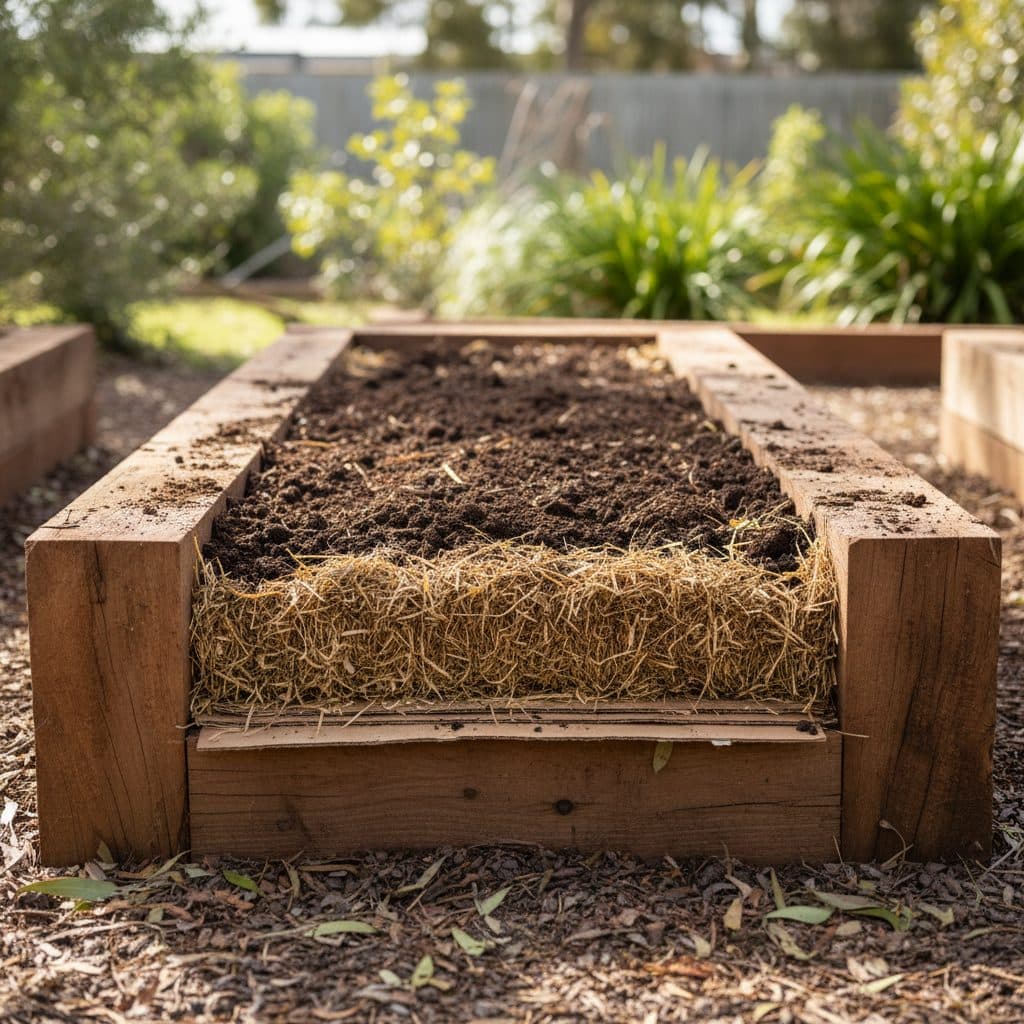
To incorporate compost into heavy clay, avoid deep tilling which can re-compact the soil. Instead, spread a 2-4 inch layer over the surface and gently work it into the top 6-8 inches with a broadfork or digging fork. This minimal disturbance approach preserves existing soil structure and fungal networks. For ongoing maintenance, a 1-2 inch top dressing of compost each year will continue to build soil health. Consider exploring mulch for organic gardening as a complementary strategy, as mulches also break down over time, contributing organic matter to the topsoil.
- Compost improves water infiltration rates by up to 50% in clay.
- A 30:1 carbon-to-nitrogen ratio is ideal for composting.
- Adding 2 inches of compost can increase soil organic matter by 0.5-1% annually.
- Compost can buffer soil pH, helping to maintain a range between 6.0 and 7.0.
Vermicomposting for concentrated fertility
Vermicomposting (worm composting) produces a nutrient-dense amendment well suited to clay soils. Worm castings, produced by composting worms such as red wigglers (Eisenia fetida), contain high levels of microbial activity, plant-available nutrients, and humus. The castings have a crumbly structure that helps break up dense clay while improving water-holding capacity. A 10-gallon vermicompost bin can process 2-3 pounds of food scraps per week, providing a steady supply of amendment for garden beds.
Compared to traditional compost, vermicompost often has higher concentrations of essential plant nutrients, with nitrogen, phosphorus, and potassium levels potentially 50% greater. This concentrated fertility means you don’t need to apply as much by volume. For example, a 1/2 inch layer of vermicompost can provide similar benefits to a 2-inch layer of regular compost in terms of nutrient delivery. The beneficial microbes in worm castings also help to suppress plant diseases and enhance nutrient cycling within the soil, making nutrients more accessible to plant roots.
Applying worm castings to clay
To maximize the impact of vermicompost on heavy clay, apply it as a top dressing or work it gently into the top 2-3 inches of soil around existing plants. For new beds, incorporate 1-2 pounds of castings per 10 square feet. The fine texture of the castings helps to improve the aggregation of clay particles, leading to better drainage and aeration over time. Regular applications, even in small amounts, can significantly improve the structure and fertility of clay soil, especially in areas with persistent compaction or nutrient deficiencies. Consider using a 3-in-1 soil pH, moisture, and fertility meter to monitor your soil’s response to these amendments.
- Vermicompost can increase water retention by 20-30% in sandy soils, and improve drainage in clay.
- Worm castings contain 5 times more nitrogen, 7 times more phosphorus, and 11 times more potassium than surrounding soil.
- A 1 cubic foot bag of vermicompost weighs approximately 30-40 pounds.
- Applying 1 pound of vermicompost per 10 square feet can significantly boost microbial activity.
Biochar’s long-term impact on clay
Biochar, produced by heating organic matter in the absence of oxygen (pyrolysis), provides long-lasting structural changes in heavy clay soil. Unlike compost, which decomposes over several seasons, biochar persists in soil for decades or centuries. Its porous structure can hold up to 6 times its weight in water while creating permanent pore spaces that improve drainage. A typical application rate is 5-10% by volume in the top 6 inches of soil.
For clay soils, biochar’s porous surface provides colonization space for soil microbes, supporting the wider soil food web. This microbial activity improves nutrient cycling and availability, which can increase plant growth by 10-20% over several seasons. Research indicates that adding biochar increases carbon concentration in the silt and clay fractions of soil, contributing to stable organic matter [5]. Biochar also helps stabilize soil pH against acidity, which is useful in regions with naturally acidic clay, such as parts of the Southeast.
Sourcing and applying biochar
When sourcing biochar, look for products made from sustainably harvested feedstocks and ensure it’s ‘charged’ or inoculated with nutrients and microbes before application. Uncharged biochar can initially absorb nutrients from the soil, temporarily depleting them. For best results, mix biochar with compost or vermicompost at a 1:10 ratio (biochar to compost) and let it sit for 2-4 weeks before incorporating. Apply 1-2 pounds of charged biochar per 10 square feet, mixing it into the top 4-6 inches of your clay soil. This one-time or infrequent application provides enduring benefits, reducing the need for continuous heavy amendments.
- Biochar can increase soil water holding capacity by up to 30%.
- It can reduce nutrient leaching by 10-20%.
- Biochar typically has a surface area of 200-800 m²/g.
- It can persist in soil for over 1,000 years.
Practical application: mixing and timing
Successfully amending heavy clay soil requires a strategic approach to mixing and timing. For new garden beds or significantly compacted areas, a one-time intensive amendment can lay a strong foundation. Begin by spreading a 4-6 inch layer of high-quality compost over the entire bed. If using biochar, mix it with compost at a 1:10 ratio and spread this blend. Then, use a broadfork to gently loosen the soil to a depth of 10-12 inches, allowing the amendments to fall into the created channels. This avoids inverting soil layers and preserves existing microbial communities, which can be interrupted by deep tilling.
The best time for this initial amendment is in the fall, allowing winter’s freeze-thaw cycles and microbial activity to further integrate the organic matter. For ongoing maintenance, a top-dressing approach is highly effective. Each spring, apply a 1-2 inch layer of compost or vermicompost to the surface of your garden beds. This continuous addition of organic matter gradually improves the top 6-8 inches of soil, fostering a healthier environment for plant roots. Over 3-5 years, you will notice a significant improvement in soil friability and drainage, with water percolating 2-3 times faster than before.
Integrating amendments for best results
When amending, focus on creating a consistent blend within the topsoil. For example, if you’re planting common beans (*Phaseolus vulgaris*), which thrive in well-drained soil, ensuring a thoroughly amended top 8 inches will significantly improve their root development and yield. Studies suggest that improved soil conditions can increase common bean yields by 10-20% [6]. Avoid amending just a small planting hole, as this can create a ‘bathtub effect’ where water drains poorly from the amended area into the surrounding dense clay. Instead, amend the entire bed or a substantial area, at least 3-4 feet wide, to ensure uniform improvement.
- Initial amendment should be 4-6 inches of compost.
- Top-dress with 1-2 inches of compost annually.
- Use a broadfork to a depth of 10-12 inches for initial incorporation.
- Amend in fall for optimal integration over winter.
Ongoing soil health and cover cropping
Building clay soil structure requires ongoing maintenance rather than a single application. Once compost and biochar are incorporated, keeping heavy traffic and machinery off wet clay prevents re-compaction, which can undo soil aggregation quickly. For instance, a single tractor pass on wet clay can increase soil density by 10-15% in the top 6 inches.
Cover cropping is another powerful tool for long-term clay soil improvement. Planting cover crops like common vetch (Vicia sativa) in the fall, or oats in the spring, provides living roots that penetrate and loosen dense clay, creating channels for air and water. When these crops are terminated and left on the surface as mulch, they contribute additional organic matter, feeding soil microbes and continuing the aggregation process. A dense stand of cover crops can add 2-4 tons of organic matter per acre over a single growing season.
Choosing the right cover crops
For heavy clay, deep-rooted cover crops are particularly effective. Radishes, with their taproots, can penetrate 12-18 inches into compacted soil, creating pathways for subsequent cash crops. Leguminous cover crops, such as crimson clover or common vetch, also fix atmospheric nitrogen, providing a natural fertility boost of 50-100 pounds of nitrogen per acre. This reduces the need for synthetic fertilizers, saving growers money and improving soil biology. Consider planting common vetch in your rotation to experience these benefits firsthand.
- Avoid working clay soil when moisture content is above 25%.
- Cover crops can add 2-4 tons of organic matter per acre annually.
- Deep-rooted radishes can penetrate clay up to 18 inches.
- Leguminous cover crops can fix 50-100 pounds of nitrogen per acre.
Monitoring and adjusting your clay soil
Successful soil amendment is an iterative process that requires regular monitoring and adjustment. The best way to understand your soil’s progress is through consistent testing. A basic soil test, available from your local extension office for around $15-25, can provide crucial data on pH, organic matter content, and macro- and micronutrient levels. Aim for a soil pH between 6.0 and 7.0 for most garden vegetables, as this range optimizes nutrient availability. For instance, in many parts of the Southeast, clay soils can be acidic, with pH values below 5.5, requiring lime applications to raise the pH by 0.5-1 unit.
Beyond laboratory tests, simple field observations indicate how clay is responding. Dig a small test pit to observe drainage rates: water should drain at least 1-2 inches per hour in well-amended clay. The soil should feel crumbly and easy to work rather than sticky or rock-hard. Keeping soil evenly moist prevents both saturation (which causes compaction) and severe drying, maintaining suitable conditions for microbial activity and root uptake.
Adjusting amendments based on results
Based on your monitoring, you can fine-tune your amendment strategy. If organic matter levels are still below 3-5%, increase your compost application rate or frequency. If drainage remains an issue, consider a more aggressive biochar application in specific areas. For nutrient deficiencies, target specific organic fertilizers or continue with nutrient-rich vermicompost. Remember, the goal is to build a living, resilient soil system that supports healthy plant growth year after year. For example, if your common beans are showing signs of nitrogen deficiency (yellowing leaves), a top-dressing of vermicompost could provide a quick boost of 0.5-1% nitrogen.
- Perform a soil test every 2-3 years.
- Aim for 3-5% organic matter content in clay soil.
- Optimal pH for most vegetables is 6.0-7.0.
- Well-drained clay should drain 1-2 inches of water per hour.
Comparing Clay Soil Amendments
Amendment Type | Primary Benefit for Clay | Application Rate (Approx.) | Longevity in Soil |
|---|---|---|---|
Compost | Improves structure, adds broad nutrients | 2-4 inches annually | 1-3 years |
Vermicompost | Concentrated nutrients, microbial boost | 0.5-1 inch annually | 6-12 months |
Biochar | Permanent structure, water retention, microbial habitat | 1-2 lbs per 10 sq ft (initial) | Hundreds of years |
Organic Matter Goal: Target an organic matter content of 3-5% in heavy clay soil for significant improvements in drainage and fertility.
Drainage Improvement: Well-amended clay soil should demonstrate a water infiltration rate of at least 1-2 inches per hour, a 200% improvement over unamended clay.
Yield Boost: Improving clay soil structure can increase yields for crops like common beans by 10-20% in optimal conditions, according to studies [6].
Frequently asked questions
How long does it take to amend heavy clay soil?
Significant improvements in heavy clay soil structure can be observed within 3-5 years of consistent annual organic matter additions. However, continuous amendment and good practices will continue to enhance soil health over decades, with initial drainage improvements noticeable within the first year.
Can I use sand to amend clay soil?
No, adding sand directly to heavy clay soil is generally not recommended. Unless sand is added in very large quantities (over 50% by volume), it can combine with clay to form a concrete-like substance, worsening compaction and drainage issues.
What is the ideal organic matter percentage for clay soil?
For heavy clay soils, an ideal organic matter content ranges from 3% to 5%. Achieving this level significantly improves soil structure, aeration, and water management, leading to healthier plant growth and potentially increasing yields by 10% or more.
How often should I apply compost to clay soil?
For initial improvement, incorporate 4-6 inches of compost. For ongoing maintenance, apply a 1-2 inch layer of finished compost as a top dressing annually, typically in the spring or fall, to continuously build soil health and fertility.
Will amending clay soil affect its nutrient retention?
Amending clay soil with organic matter like compost and biochar enhances its nutrient retention capacity. While clay naturally holds nutrients, organic matter provides additional binding sites and improves nutrient cycling, making them more available to plants without increasing leaching by more than 5%.
Are there specific plants that help break up clay soil?
Yes, deep-rooted cover crops such as daikon radishes, sweet clover, or common vetch are excellent for breaking up clay soil. Their taproots can penetrate compacted layers up to 18 inches deep, creating channels for water and air, and adding beneficial organic matter when terminated.
References
- Figure 6: Effect of clay on loss of heavy metals (HMs) in soil. (2023). Figure 6: Effect of clay on loss of heavy metals (HMs) in soil..
- Phytoremediation of Metals and Radionuclides in the Environment: The Case for Natural Hyperaccumulators, Metal Transporters, Soil-Amending Chelators and Transge (2004). Phytoremediation of Metals and Radionuclides in the Environment: The Case for Natural Hyperaccumulators, Metal Transporters, Soil-Amending Chelators and Transge.
- Effect of tillage techniques on cracking of a heavy clay soil (1986). [Effect of tillage techniques on cracking of a heavy clay soil](https://doi.org/10.1016/0167-1987(86)90370-3).
- The Effect of Amending Soil with Waste Elemental Sulfur on the Availability of Selected Macroelements and Heavy Metals (2020). The Effect of Amending Soil with Waste Elemental Sulfur on the Availability of Selected Macroelements and Heavy Metals.
- Figure 5: Carbon concentration (g C kg
<sup>−1</sup>
soil) in the particulate organic matter, heavy and silt + clay (2023). [Figure 5: Carbon concentration (g C kg
<sup>−1</sup>
soil) in the particulate organic matter, heavy and silt + clay](https://doi.org/10.7717/peerj.5398/fig-5) . - IMPACT OF DRIP AND GATED PIPE IRRIGATION SYSTEMS, INTERVALS ON YIELD, PRODUCTIVITY OF IRRIGATION WATER AND QUALITY OF TWO COMMON BEAN (PHASEOLUS VULGARIS L) CUL (2020). IMPACT OF DRIP AND GATED PIPE IRRIGATION SYSTEMS, INTERVALS ON YIELD, PRODUCTIVITY OF IRRIGATION WATER AND QUALITY OF TWO COMMON BEAN (PHASEOLUS VULGARIS L) CUL.