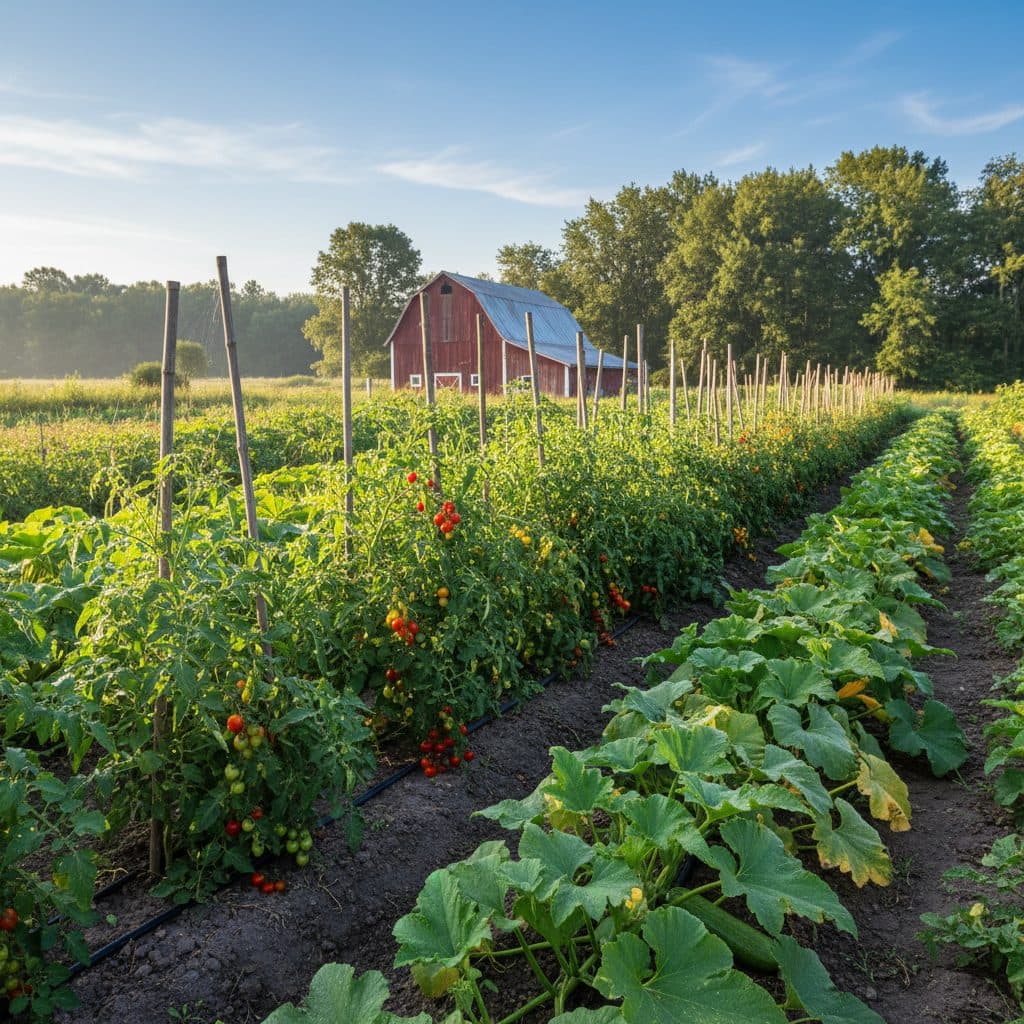
Key takeaways
- Days-to-maturity (DTM) figures are estimates based on ideal conditions, often varying by 10 to 30 days in real-world gardens.
- Environmental factors like temperature fluctuations, soil health, and water availability significantly impact actual harvest times, especially for tomatoes and cucurbits.
- Poor fruit set in tomatoes can stem from temperatures above 85°F or below 55°F, inadequate pollination, or nutrient imbalances.
- Cucurbit fruit set often depends on effective pollination, with male flowers appearing first, and can be hindered by pest pressure like squash vine borers.
- Maintaining consistent soil moisture, providing balanced nutrition, and supporting pollinator populations matter for reliable fruit development.
- Understanding your specific USDA zone and microclimate allows for better planning, including season extension techniques for earlier or later harvests.
Quick answer: Days-to-maturity (DTM) for tomatoes and cucurbits can vary by 10 to 30 days from seed packet estimates due to environmental factors like temperature extremes, soil health, water availability, and pollination issues. These factors significantly impact fruit set and overall plant development.
In the fertile valleys of central Pennsylvania, a grower in USDA zone 6 might expect ‘Celebrity’ tomatoes to mature in 70 days, according to the seed packet. However, real-world conditions often stretch this timeline by ten to twenty days, pushing harvest into late August or early September. This discrepancy between listed days-to-maturity (DTM) and actual harvest timing is a common challenge for growers across the United States, from the humid summers of zone 8 in Georgia to the shorter growing seasons of zone 4 in northern Minnesota.
Understanding why a crop like a zucchini, advertised at 45 days DTM, might not produce its first edible fruit until 60 days in your garden involves looking beyond the seed packet. Factors like fluctuating temperatures, soil composition, water availability, and even pollinator activity play significant roles. For tomatoes and cucurbits, reliable fruit set is the critical hurdle, and diagnosing issues at this stage can mean the difference between a bountiful harvest and a disappointing one, often varying by 25% or more from expected yields.
Days-to-maturity: a guideline, not a guarantee
The days-to-maturity (DTM) listed on seed packets provides a useful estimate, typically representing the period from transplanting to first harvest under optimal growing conditions. However, this figure is a generalization, often based on commercial farm data from specific regions like California’s Central Valley or parts of Florida. For a home gardener in, say, USDA zone 7 in Virginia, actual DTM can easily extend by 10 to 30 days due to local climate variations, soil differences, and pest pressures. For instance, a ‘Roma’ tomato listed at 75 days DTM might take 90 days in a cooler spring.
environmental factors that shift harvest dates
Several environmental factors consistently push back harvest dates. Temperature extremes are a primary culprit; prolonged periods below 50°F or above 90°F can slow growth or cause blossom drop, particularly for heat-sensitive crops like tomatoes. Soil health also plays a role, with nutrient-deficient or poorly drained soils delaying plant development by weeks. A soil test revealing low organic matter, perhaps below 2%, indicates a need for amendments. Finally, water availability is critical; inconsistent watering, whether too much or too little, stresses plants and can delay maturity by 15% or more. The USDA Natural Resources Conservation Service emphasizes that local soil types and rainfall patterns in a given region, like the heavy clay soils found in parts of Ohio (USDA zone 6), significantly influence water retention and nutrient availability.
- Inconsistent soil moisture levels
- Prolonged periods of cold or excessive heat
- Nutrient deficiencies or imbalances in the soil
- Unexpected pest or disease outbreaks
- Insufficient sunlight exposure
Tomato fruit set: diagnosing common issues
Tomatoes (Solanum lycopersicum) are a staple in many US gardens, but their fruit set can be surprisingly finicky. A common complaint from growers in hot climates, such as USDA zone 9 in Arizona, is blossom drop, where flowers appear but fail to develop into fruit. This is often due to temperature extremes; tomato plants typically set fruit best when nighttime temperatures are between 60°F and 70°F, and daytime temperatures are below 90°F. Temperatures consistently above 85°F or below 55°F can sterilize pollen or prevent proper fertilization, leading to 100% flower abortion in severe cases. You can learn more about companion planting to help with some of these issues at What not to plant with tomatoes.
pollination and nutrient roles in tomato production
Beyond temperature, pollination issues are frequent. While tomatoes are self-pollinating, a little vibration helps release pollen. In greenhouses or very still outdoor conditions, a gentle shake of the plant or a visit from a bee can significantly improve fruit set. For example, a study in California showed that even a light vibration increased fruit set by 20% in some varieties. Nutrient imbalances, particularly a deficiency in phosphorus or an excess of nitrogen, can also hinder fruit development. High nitrogen promotes leafy growth at the expense of flowering and fruiting, potentially reducing yields by 30% or more. Using a balanced fertilizer, or one slightly higher in phosphorus and potassium during flowering, can support better fruit production. Consider using a slow-release option like Fermented Soybean Meal Organic Fertilizer for consistent nutrient delivery.
- Nighttime temperatures consistently above 70°F or below 55°F
- Lack of air movement or pollinator activity
- Excessive nitrogen fertilization leading to lush foliage
- Insufficient phosphorus or calcium in the soil
- Extreme fluctuations in soil moisture
Cucurbit fruit set: understanding male and female flowers
Cucurbits, including squash, zucchini, cucumbers, and melons, are known for their vigorous growth but can sometimes disappoint with fruit production. A common observation in gardens from USDA zone 5 in Michigan to zone 8 in North Carolina is the appearance of many flowers, but few or no fruits. This often boils down to understanding their unique flowering habit: cucurbits produce separate male and female flowers on the same plant. The male flowers, which appear first and are more numerous, produce pollen but no fruit. Female flowers, identifiable by a tiny swelling (the immature fruit) at their base, require pollen from a male flower to develop. If you see many flowers but no fruit, it’s possible you’re seeing only male flowers, or there aren’t enough pollinators.
pollinator activity and pest management for cucurbits
Effective pollination is absolutely critical for cucurbits; each female flower needs multiple visits from bees or other pollinators to set fruit properly. Without adequate pollination, the tiny fruit will yellow and drop off, a common sight in gardens with low bee populations, potentially reducing yields by 50% or more. Consider planting pollinator-friendly flowers nearby or even hand-pollinating if necessary. Beyond pollination, pest pressure can severely impact cucurbit DTM and yield. Squash vine borers, for example, can decimate a squash plant in USDA zone 6 within a week once they tunnel into the stem. Early detection and exclusion methods, such as row covers applied early in the season, can protect young plants until flowering. The ATTRA / NCAT Sustainable Agriculture program emphasizes the importance of integrated pest management strategies to maintain plant vigor and fruit production.
- Insufficient pollinator activity in the garden
- Predominance of male flowers early in the season
- Pest damage, especially from squash vine borers or cucumber beetles
- Nutrient deficiencies, particularly boron or calcium
- Extreme heat or cold affecting flower viability
General fruit set diagnostics and solutions
When fruit fails to set on any crop, a systematic diagnostic approach can save much frustration. Beyond species-specific issues, several overarching factors influence fruit set across a wide range of plants, from tomatoes to passion fruit. Soil health is foundational; a healthy soil microbiome and balanced nutrients are essential for robust flowering and fruiting. Regular soil testing, perhaps every three years, can reveal deficiencies in micronutrients like boron or zinc, which are critical for pollen tube growth and fruit development. For example, boron deficiency can reduce fruit set by up to 40% in some fruit crops. The SARE program highlights that improving soil organic matter content by even 1% can significantly improve nutrient availability and water retention.
water, nutrients, and microclimates
Consistent water management matters too. Plants under drought stress will prioritize survival over reproduction, often aborting flowers or small fruits. Conversely, waterlogged soils can lead to root rot and nutrient lockout, equally detrimental. Monitoring soil moisture with a tool like a Soil Moisture Meter can help maintain ideal conditions, aiming for consistent moisture in the top 6 inches of soil. Nutrient balance, particularly avoiding excessive nitrogen, is essential during the reproductive phase. While nitrogen is vital for vegetative growth, too much can suppress flowering. Finally, microclimates within your garden can create localized challenges. A sheltered corner might be 5°F warmer than an open area, affecting fruit set. Consider using season extension techniques, such as row covers or a Reflective Indoor Grow Tent for starting seedlings, to mitigate unfavorable conditions.
- Inadequate or inconsistent watering practices
- Unbalanced soil nutrients, especially excess nitrogen
- Lack of beneficial insect activity for pollination
- Extreme temperature fluctuations in the microclimate
- Presence of undiagnosed plant diseases
Regional variations and season extension strategies
The impact of USDA hardiness zones on DTM and fruit set is substantial, primarily dictating planting windows and the length of the effective growing season. In USDA zone 4, for example, the last frost date might be in late May, leaving only 90 to 120 frost-free days for many crops. This short window means that a 70-day DTM tomato might barely ripen before the first fall frost. Conversely, in USDA zone 9, with a growing season often exceeding 250 days, the challenge shifts to managing summer heat and humidity, which can cause blossom drop in sensitive crops like tomatoes if temperatures exceed 90°F for extended periods. Understanding these regional differences helps with successful gardening, allowing for more realistic DTM expectations and proactive problem-solving.
extending your growing season effectively
To bridge the gap between DTM estimates and real-world timing, especially in regions with shorter seasons like USDA zone 5, season extension techniques are invaluable. Starting seeds indoors six to eight weeks before the last frost date can give plants a significant head start, effectively adding 30 to 45 days to their growth cycle. Using row covers or cold frames can protect early plantings from unexpected cold snaps, allowing for earlier transplanting by two to three weeks. For heat-sensitive crops in warmer zones, shade cloth can reduce temperatures by 10°F to 15°F during peak summer, preventing heat-induced blossom drop. The USDA National Agroforestry Center promotes strategies that improve microclimates, such as windbreaks, which can raise soil temperatures by several degrees in spring, accelerating early growth. These methods can help achieve harvests closer to the stated DTM, or even extend them significantly, providing a longer period of fresh produce.
- Starting seeds indoors six to eight weeks early
- Utilizing row covers or cold frames for early protection
- Applying shade cloth during extreme summer heat
- Employing high tunnels or hoop houses for extended seasons
- Selecting short-season or heat-tolerant varieties
Days-to-Maturity: Seed Packet vs. Real-World Average (USDA Zone 6)
Crop & Variety | Seed Packet DTM | Observed DTM (Zone 6) | Primary DTM Factor |
|---|---|---|---|
Tomato ‘Celebrity’ | 70 days | 85 days | Cool spring, high summer temps |
Zucchini ‘Black Beauty’ | 45 days | 58 days | Late pollination, squash bugs |
Cucumber ‘Marketmore 76’ | 60 days | 72 days | Inconsistent watering, powdery mildew |
Bell Pepper ‘California Wonder’ | 75 days | 90 days | Cool nights, slow initial growth |
Temperature impact: Tomato fruit set can drop by 100% if temperatures consistently exceed 85°F or fall below 55°F.
Soil organic matter: Increasing soil organic matter by just 1% can boost water retention by 20,000 gallons per acre.
Frequently asked questions
What is the primary reason my tomatoes aren’t setting fruit?
The most common reason for poor tomato fruit set is temperature extremes. If daytime temperatures consistently exceed 85°F or nighttime temperatures drop below 55°F, pollen can become unviable or fertilization fails, leading to blossom drop. Ensuring consistent temperatures within the optimal 60-80°F range supports a good yield.
Why do my zucchini plants have many flowers but no fruit?
Cucurbits like zucchini produce separate male and female flowers. Often, male flowers appear first and in greater numbers. If you’re seeing many flowers but no fruit, it’s likely a lack of female flowers or insufficient pollination of the existing female flowers. Each female flower, identifiable by a tiny fruit at its base, needs multiple bee visits for proper development, potentially 10 to 15 visits.
How can I accurately measure soil moisture to help my plants?
You can accurately measure soil moisture using a soil moisture meter, which provides a numerical reading of the water content in the soil. Alternatively, the ‘feel test’ involves squeezing a handful of soil; if it forms a ball but crumbles easily, moisture is adequate. Aim for consistent moisture in the top 6 inches of soil for most fruiting vegetables, providing 1 to 1.5 inches of water weekly.
Does my USDA zone affect my days-to-maturity (DTM)?
Yes, your USDA hardiness zone significantly impacts DTM by defining the length of your frost-free growing season. For instance, a gardener in USDA zone 4 might have only 90 to 120 frost-free days, making a 70-day DTM crop a tight fit, whereas a gardener in zone 8 has a much longer season, often exceeding 200 days, allowing for multiple successions or longer-season varieties.
What role do pollinators play in fruit set for my garden?
Pollinators are vital for the fruit set of many common garden vegetables, especially cucurbits, which rely heavily on insects like bees to transfer pollen from male to female flowers. Without adequate pollination, female flowers will not develop into fruit and will often abort. Even self-pollinating plants like tomatoes can see a 15-20% increase in fruit set with some assistance from wind or pollinators.