Key takeaways
- Select hardy perennial herbs suitable for USDA zones 4-6, prioritizing species tolerant of temperatures down to -30°F.
- Mulch 6-8 inches deep around the crowns rather than over them, applied after the first hard frost in late fall.
- Ensure excellent drainage within the herb spiral, utilizing a soil mix with 30-40% sand or grit, to prevent root rot during winter thaws.
- Utilize the herb spiral’s inherent microclimates, placing less hardy but still zone-appropriate plants on warmer, south-facing slopes.
- Plan for spring revival by gradually removing mulch, pruning dead growth, and amending the soil with compost in early spring.
Quick answer: To overwinter an herb spiral in USDA Zone 5, select hardy perennial herbs, implement a 6-8 inch organic mulch layer around (not over) the crowns after the first hard frost, and ensure excellent drainage. Utilize the spiral’s microclimates by placing less hardy plants on warmer, south-facing slopes.
In regions like northern Michigan, where winter temperatures can consistently drop below 0°F, gardeners face significant challenges in keeping perennial plants alive. An herb spiral, a permaculture design element, offers a unique solution by creating diverse microclimates within a small footprint. This structure, often 6 feet in diameter and 3 feet tall, naturally provides varied sun exposure, moisture levels, and thermal mass, which can be particularly advantageous for overwintering herbs in colder USDA zones 4-6.
Successfully maintaining an herb spiral through freezing winters requires more than just good intentions; it demands strategic plant selection, careful winter preparation, and a clear understanding of your local climate. For instance, a well-sited spiral in USDA zone 5 can extend the growing season by several weeks compared to a flat bed. Hardy herbs then hold on well past the first frosts. This guide will walk you through the practical steps to ensure your herb spiral thrives year after year, even when the thermometer dips to -20°F.
Understanding the herb spiral’s microclimates in cold zones
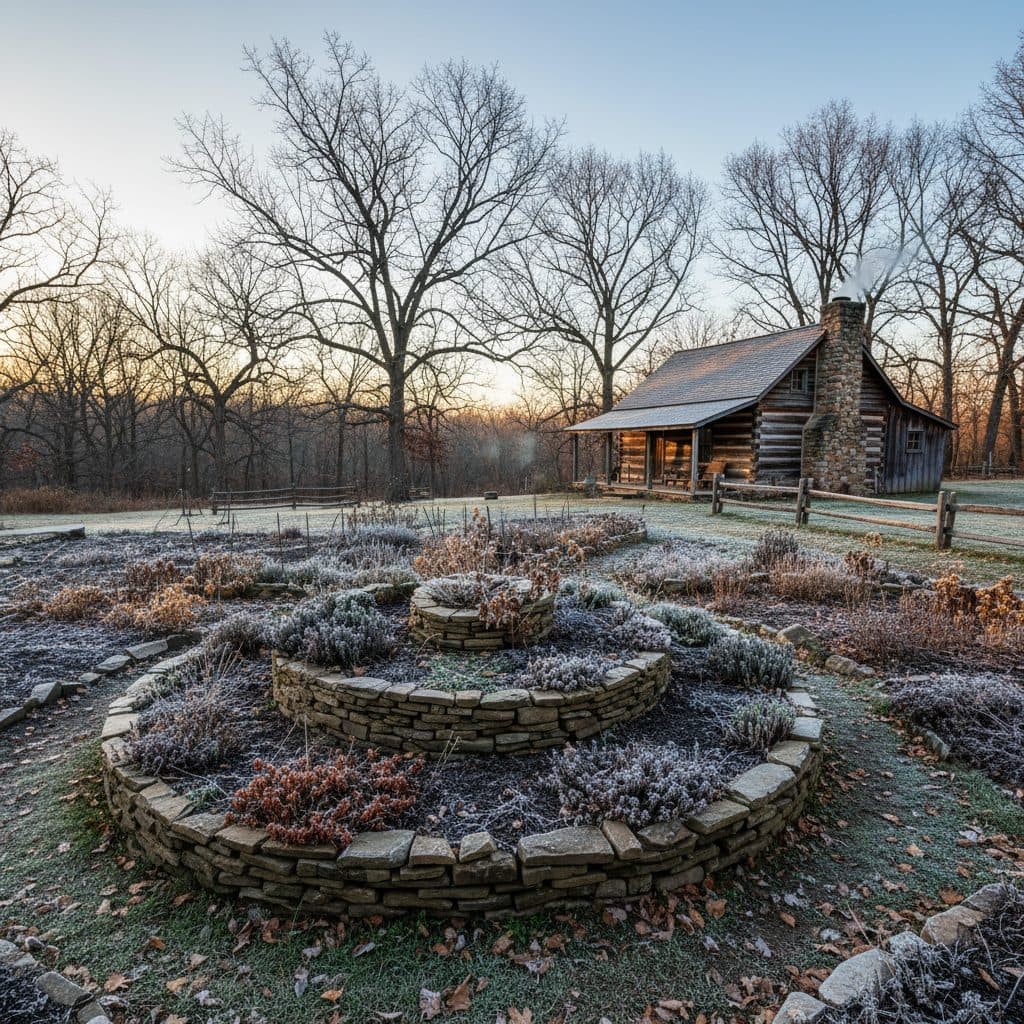
An herb spiral is a three-dimensional garden bed, typically built from stone, brick, or earth, that spirals upwards to a central point. This design creates a range of distinct microclimates—areas with slightly different environmental conditions than the surrounding garden. For gardeners in USDA zones 4-6, where winter temperatures can plummet to -30°F, these microclimates matter for plant survival. The top of the spiral, being drier and sunnier, mimics Mediterranean conditions, while the base remains moister and shadier. The thermal mass of the retaining walls absorbs solar radiation during the day and releases it slowly at night, taking the edge off cold nights at the top of the spiral.
designing for thermal mass and drainage
When constructing an herb spiral for cold climates, consider its orientation and materials. A spiral with a south-facing slope will capture the most winter sun, offering a warmer spot for borderline hardy plants. Dark stone such as basalt or slate absorbs noticeably more solar heat than pale stone, which helps on the south face. Proper drainage is also paramount; a base layer of 6-12 inches of gravel or rubble beneath the soil mix prevents waterlogging, which is a major cause of root rot in freezing conditions. The internal structure should allow water to drain from the top to the bottom. Moisture-loving plants at the base then get adequate water while perennials at the top stay well drained.
- Increased thermal mass from stone walls helps maintain soil warmth.
- Varied sun exposure creates warmer, south-facing slopes.
- Improved drainage from the spiral’s elevation prevents waterlogging.
- Shelter from wind on the leeward side offers protection.
- Diverse moisture zones accommodate a wider range of herb preferences.
Selecting hardy herbs for northern gardens
Choosing the right plants is the first critical step for overwintering success in USDA zones 4-6, where average annual extreme minimum winter temperatures run from about -30°F in zone 4 to 0°F in zone 6. Focus on perennial herbs that are rated for your specific zone or colder. For example, chives (Allium schoenoprasum) and mint (Mentha spp.) are reliably hardy to zone 3, tolerating temperatures down to -40°F. Sage (Salvia officinalis) and thyme (Thymus vulgaris) are generally reliable in zone 5 and often in zone 4 given sharp drainage. Placing these hardy staples on the upper or mid-slopes of the spiral, where drainage is best, will ensure they don’t sit in soggy soil during winter thaws.
placement and companion considerations
For herbs that are borderline hardy, such as lavender (Lavandula angustifolia) which is often rated for zone 5, placement matters. Plant them on the warmer, south-facing side of the spiral. Even with careful selection, some herbs like rosemary (Salvia rosmarinus), typically hardy to zone 7, will not survive outdoors in zone 5 without significant intervention, such as being brought indoors for the winter. Consider how plants interact; for example, mint can be aggressive, so planting it in a contained area at the base of the spiral helps manage its spread, as discussed in detail in our article on companion planting.
- Chives (USDA Zone 3): Extremely cold tolerant, ideal for high moisture areas.
- Mint (USDA Zone 3): Vigorous, best in a contained section at the spiral’s base.
- Thyme (USDA Zone 4): Prefers well-drained soil, good for mid-to-upper slopes.
- Sage (USDA Zone 4-5): Needs excellent drainage, suitable for mid-slopes.
- Oregano (USDA Zone 5): Tolerates dry conditions, thrives on upper slopes.
Preparing your spiral for winter’s chill
Winter preparation for an herb spiral in zones 4-6 should begin in late fall, typically after the first few light frosts but before consistent temperatures drop below 20°F. The primary goal is to insulate the soil and roots from freezing and thawing cycles, which can heave plants out of the ground and damage root systems. Mound 6 to 8 inches of mulch around the plants, keeping it off the crowns themselves. Woody Mediterranean herbs — sage, thyme, oregano, lavender, winter savory — rot if their crowns sit buried and damp all winter; they want insulation over the root zone and open air at the center of the plant. Materials like straw, shredded leaves, or pine needles are excellent choices because they provide good insulation and allow some air circulation, preventing rot. Avoid heavy, wet mulches like wood chips directly against plant crowns, as they can trap too much moisture.
mulching strategies and moisture management
Before mulching, ensure the soil is adequately moist but not waterlogged. A Soil Moisture Meter can help you gauge this. If the fall has been dry, a deep watering of 1-2 inches before the ground freezes can prevent dehydration. For particularly tender perennials, consider adding a cloche or a small wire cage filled with leaves over individual plants for extra protection.
- Straw: Provides excellent insulation, easy to apply and remove.
- Shredded leaves: Readily available, breaks down into compost.
- Pine needles: Slightly acidic, good for plants that prefer lower pH.
- Evergreen boughs: Offers protection from wind and sun scorch, especially for broadleaf evergreens.
- Compost: Adds nutrients, but use as a base layer before lighter mulches.
Spring awakening and ongoing care
As spring approaches in USDA zones 4-6, typically in late March or early April when daytime temperatures consistently reach 40-50°F, it’s time to assess your herb spiral. Begin by gradually removing the heavy winter mulch. Do this in stages over 1-2 weeks to allow plants to acclimate to changing temperatures and prevent new shoots from being scorched by sudden sun exposure. Inspect plants for winter damage, such as broken stems or signs of mold. Prune back any dead or severely damaged growth to about 1-2 inches above the crown, encouraging vigorous new growth. For example, chives can be cut back to 1 inch, while sage might only need a light trim of dead tips.
feeding and replanting for productivity
Once the mulch is removed and plants are pruned, replenish the soil’s nutrients. A 1-2 inch layer of well-rotted compost or a light organic feed such as fermented soybean meal at 7-2-1, used sparingly, can be worked gently into the top few inches of soil. This provides essential nutrients for the coming growing season. This approach aligns with broader permaculture principles for maintaining soil health, as outlined in our article on permaculture gardening. Replant any annual herbs like basil or cilantro once the danger of frost has passed, usually after May 15th in zone 5.
- Gradual mulch removal: Prevents shock and sun scald for emerging plants.
- Pruning dead growth: Encourages new, healthy shoots and improves air circulation.
- Soil amendment: Replenishes nutrients with compost or organic fertilizers.
- Pest and disease check: Early detection of issues after winter dormancy.
- Replanting annuals: Introduces new growth for summer harvests.
Advanced strategies and site integration
For gardeners in zones 4-6 wishing to grow less hardy herbs like rosemary (USDA zone 7) or bay laurel (USDA zone 8), advanced overwintering strategies are necessary. One common method is to grow these tender perennials in pots during the warmer months and bring them indoors before the first hard frost, typically when night temperatures consistently fall below 40°F. Place them in a sunny window or under grow lights to ensure they receive at least 6-8 hours of light per day. Water less than you would outdoors, but check the pot rather than working to a fixed interval — rosemary and bay will not recover from a full dry-out, so water when the top inch of the mix is dry and let the excess drain away.
cold frames and permaculture integration
Another option for extending the season or protecting slightly less hardy plants is to use a cold frame. A well-built cold frame, roughly 2 feet deep and 4 feet wide, buys about a zone of protection — usually a few degrees on a clear, still night, more on a sunny day — enough to carry parsley or cilantro through cold snaps. Integrating your herb spiral into a broader permaculture design, considering zones and sectors, makes it more resilient. For example, placing the spiral in zone 1—the area closest to your home and most frequently visited—ensures easy access for daily harvesting and monitoring. This thoughtful placement is a core tenet of permaculture design, which emphasizes efficiency and natural patterns.
- Potted tender herbs: Bring indoors when temperatures drop below 40°F.
- Supplemental lighting: Provide 6-8 hours of artificial light for indoor plants.
- Cold frames: Buy roughly a zone of protection for marginal plants.
- Passive solar design: Utilize nearby structures to create warmer microclimates.
- Zone 1 placement: Integrate the spiral near the home for convenience and observation.
Mulch Depth: Mound 6-8 inches of straw or shredded leaves around perennial herbs in late fall, keeping it clear of the crowns, to protect roots through hard freezes.
Drainage Ratio: Ensure your herb spiral’s soil mix includes 30-40% sand or grit to facilitate excellent drainage, preventing root rot in winter.
Frequently asked questions
When should I start preparing my herb spiral for winter in zone 5?
Begin preparations in late October or early November, typically after the first light frosts but before consistent overnight temperatures drop below 20°F. Apply a 6-inch layer of mulch after the first hard frost for optimal protection.
Which herbs are most likely to survive winter in USDA zone 4?
Hardy herbs like chives, mint, sage, and thyme are excellent choices for zone 4, often tolerating temperatures down to -30°F with proper mulching. Rosemary, however, typically only survives down to zone 7 and needs indoor protection.
How deep should the mulch layer be for overwintering herbs?
A mulch layer of 6 to 8 inches is generally recommended around perennial herbs in USDA zones 4-6, mounded over the root zone but kept clear of the crowns. That depth insulates against the freeze-thaw cycles that heave plants out of the ground, while leaving the center of woody herbs open enough not to rot.
Can I leave tender herbs like basil in the spiral over winter?
No, basil is an annual and will not survive winter temperatures below 32°F. It’s best to harvest basil before the first frost or bring potted plants indoors if you wish to extend their season for several weeks.
What kind of soil drainage is best for an herb spiral in cold zones?
Excellent drainage is essential. A soil mix with a high proportion of sand or grit, perhaps 30-40% by volume, helps prevent waterlogging and subsequent root rot during winter thaws, especially when temperatures fluctuate around freezing.
How early can I uncover my herb spiral in spring?
In USDA zone 5, you can typically begin to gradually remove heavy mulch layers in late March or early April, once the threat of severe hard freezes (below 20°F) has passed. Watch for new growth as a signal that warmer weather is here.