Key takeaways
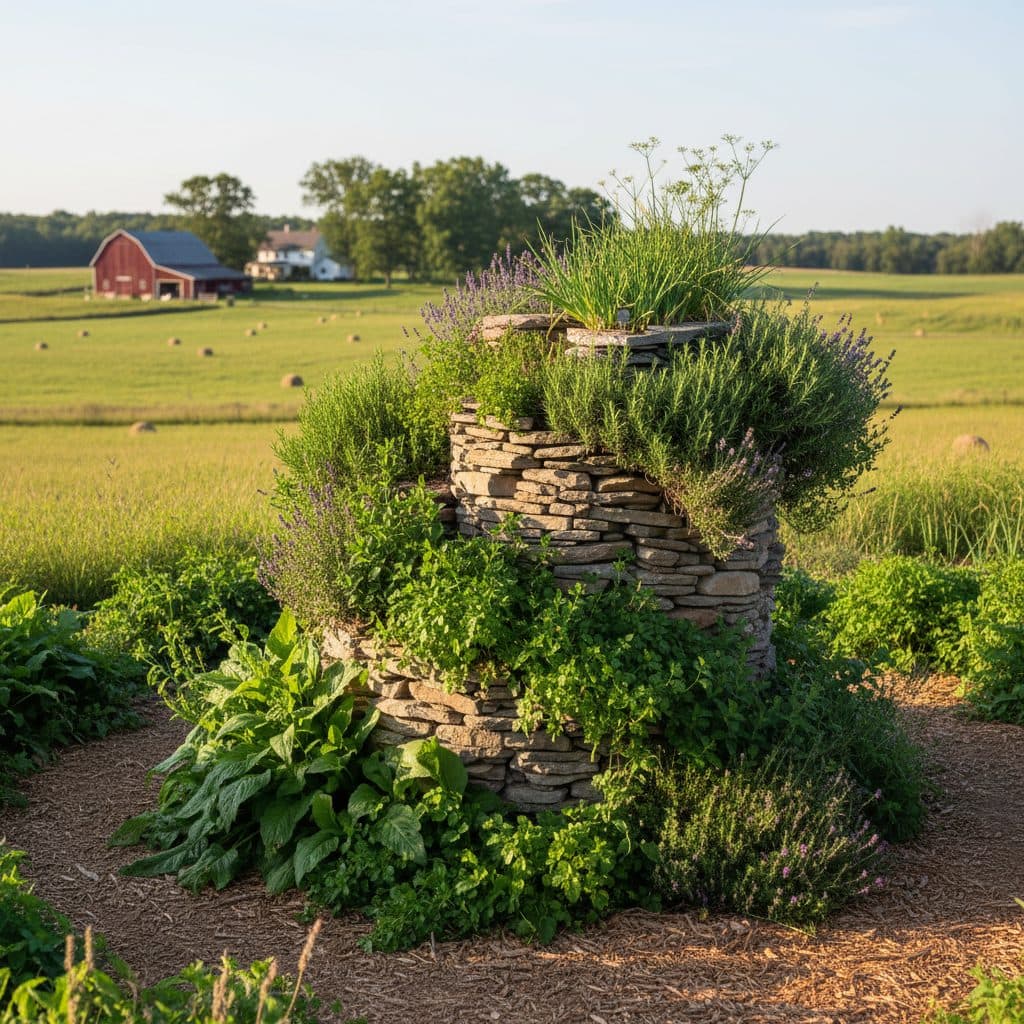
- An herb spiral creates distinct microclimates, allowing diverse herbs to thrive in a small footprint.
- Place sun-loving, drought-tolerant Mediterranean herbs like rosemary and lavender at the spiral’s dry, sunny apex.
- Position moisture-loving herbs such as mint and lemon balm at the cool, damp base, potentially with a small bog area.
- Utilize the middle zones for adaptable herbs like parsley and basil, which prefer moderate sun and consistent moisture.
- Incorporate 30-40% sand or gravel for drainage at the top and 10-20% compost for moisture retention at the base.
- Consider a spiral diameter of 6-10 feet to maximize growing space and microclimate diversity.
Quick answer: An herb spiral is a permaculture design that creates distinct microclimates, allowing diverse herbs to thrive in a small footprint. It places sun-loving herbs at the dry, sunny apex and moisture-loving herbs at the cool, damp base.
In many parts of the US, from the dry plains of Colorado to the humid summers of North Carolina, gardeners face the challenge of optimizing limited space and varied plant needs. A well-designed herb spiral offers a practical solution, creating distinct microclimates within a compact footprint, often less than 10 feet in diameter. This permaculture technique allows you to grow a diverse range of herbs, from drought-tolerant Mediterranean varieties to moisture-loving plants, all within a single, visually appealing structure.
Building an herb spiral adds sloped planting surface to the same base footprint, and more usefully it splits that footprint into conditions a flat bed cannot offer at once. This design principle, rooted in efficient resource use, helps manage water flow and sunlight exposure to ensure each plant receives its ideal conditions without extensive intervention. For instance, in a USDA Zone 6 garden, you can successfully cultivate herbs requiring vastly different conditions, like rosemary and mint, side-by-side yet in their preferred niches.
Understanding the herb spiral’s microclimates
An herb spiral is a carefully engineered mound of rocks and soil, designed to create a range of growing conditions. As you build upwards, the soil drains more rapidly, and the stones or bricks used in construction absorb and radiate heat, mimicking the arid, sunny conditions favored by many Mediterranean herbs. This upper tier can see soil temperatures 5-10°F warmer than the base during a sunny afternoon in a Kansas summer, allowing plants like rosemary to flourish where other herbs might struggle.
the four zones of an herb spiral
The spiral’s structure naturally divides into four primary zones, each with distinct characteristics. The top, sunniest, and driest zone is ideal for herbs that thrive in lean, well-draining soil, while the base, often with a small pond or boggy area, suits water-loving species. Intermediate zones offer varying degrees of moisture and sun, accommodating a wide array of culinary and medicinal plants. This strategic placement ensures that plants like thyme, which prefers less water, are not competing with mint, which demands consistent moisture, for the same resources. In a typical 8-foot diameter spiral, the top zone might be 2 feet wide, gradually expanding to a 4-foot wide base.
- Zone 1 (Top): Hottest, driest, full sun, lean soil.
- Zone 2 (Upper-Middle): Warm, well-drained, full sun to partial shade.
- Zone 3 (Lower-Middle): Cooler, moister, partial shade.
- Zone 4 (Base): Coolest, wettest, often boggy, partial shade.
Placing sun-loving Mediterranean herbs at the apex
The top 18-24 inches of your herb spiral is prime real estate for herbs that originate from the sunny, often rocky landscapes of the Mediterranean basin. These plants, like rosemary (Rosmarinus officinalis), lavender (Lavandula angustifolia), and oregano (Origanum vulgare), are accustomed to long periods of drought and intense sun exposure, often tolerating temperatures exceeding 95°F in places like Southern California. Their root systems are adapted to seek out moisture deep within the soil, and they thrive in lean, well-draining conditions. A soil mix here should incorporate 30-40% sand or gravel to ensure excellent drainage, which keeps water moving through the root zone instead of holding it there.
choosing the right Mediterranean varieties
When selecting Mediterranean herbs for the top of your spiral, prioritize varieties known for their drought tolerance and heat resistance. Thyme (Thymus vulgaris), for example, is a low-growing perennial that performs exceptionally well in these conditions, requiring minimal water once established. Sage (Salvia officinalis) also flourishes, with a strong flavor and attractive foliage. Remember that these plants often prefer a pH between 6.0 and 7.0, which is typical for many garden soils across the US, but can be adjusted with amendments if necessary. In USDA zone 6, treat rosemary as borderline: it wants the lean, fast-draining top of the spiral, and most cultivars still need winter protection or a pot brought indoors. For more on overall garden design, consider reviewing our guide on a permaculture garden plan.
- Rosemary: Thrives in full sun and dry conditions, tolerating temperatures down to 10°F in protected spots.
- Lavender: Prefers well-drained, slightly alkaline soil and at least six hours of direct sunlight daily.
- Oregano: Drought-tolerant once established, grows vigorously in hot, sunny locations.
- Thyme: Excellent groundcover for dry, sunny spots, requires minimal watering.
- Sage: Hardy and robust, prefers full sun and well-drained soil, can reach 2-3 feet in height.
Cultivating moisture-loving herbs at the base
As you descend the spiral, the conditions shift dramatically, becoming cooler, shadier, and significantly moister. This is the ideal environment for herbs that naturally grow in damp meadows, along stream banks, or in areas with consistent soil moisture. Plants like mint (Mentha spp.), lemon balm (Melissa officinalis), and chives (Allium schoenoprasum) will flourish here, often benefiting from the slight pooling of water at the very base of the structure. In a humid climate like that of Florida, these plants will thrive with minimal supplemental watering once established, especially if the base includes a small bog garden or a buried watering reservoir of 5-10 gallons.
managing moisture for success
To ensure these moisture-loving herbs receive adequate hydration, consider building a small, shallow pond or a perpetually damp area at the lowest point of your spiral. This can be as simple as digging a 6-inch deep basin lined with pond liner or heavy-duty plastic, then backfilling with a rich, moisture-retentive soil mix, perhaps 20% compost. Plants like watercress (Nasturtium officinale) can even grow directly in the shallow water. Regularly checking soil moisture, especially during dry spells in a region like the high desert of Arizona, matters. A Soil Moisture Meter can be a valuable tool for this, since the top and the base of the spiral dry out at very different rates. For broader permaculture insights, explore our articles on permaculture gardening.
- Mint: Thrives in consistently moist soil and partial shade; can be invasive, so consider containing it.
- Lemon Balm: Prefers rich, moist soil and partial sun, reaching up to 2 feet tall.
- Chives: Needs consistent moisture and full sun to partial shade; tolerates cooler temperatures.
- Watercress: Best grown in shallow, moving water or very wet soil, ideal for the lowest, wettest point.
- Comfrey (use sterile Bocking 14, Symphytum x uplandicum): deep-rooted, prefers moist fertile soil and partial shade, grows to about 3 feet. Plant it beside the spiral rather than in it, and treat the leaves as mulch, not as food or fodder — comfrey’s pyrrolizidine alkaloids are hepatotoxic.
The middle ground: adaptable herbs and transition zones
Between the arid top and the damp base lies a versatile middle ground, offering conditions suitable for a wide range of adaptable herbs. These transition zones receive moderate sun and consistent, but not excessive, moisture. Here, you can successfully grow herbs like parsley (Petroselinum crispum), cilantro (Coriandrum sativum), dill (Anethum graveolens), and calendula (Calendula officinalis). These plants often prefer 4-6 hours of direct sunlight per day, a common condition in many suburban gardens across the Pacific Northwest. The soil in these sections should be well-drained but also retain some moisture, perhaps with a 10-15% compost amendment.
designing for diversity and succession
Thinking about the middle zones allows for greater biodiversity and succession planting. For instance, you might plant cilantro and dill in spring, harvesting them before the summer heat causes them to bolt, then follow with heat-tolerant basil (Ocimum basilicum) or calendula in the warmer months. This approach maximizes productivity within the limited space of the spiral, which might only be 6-8 feet in diameter. When planning your layout, consider the mature size of each plant; a mature parsley plant can spread 12 inches wide, so spacing is important. For guidance on initial site assessment, look at our article on permaculture design.
- Parsley: Prefers rich, moist soil and partial sun; can be grown as an annual or biennial.
- Cilantro: Thrives in cooler weather and moist soil; bolts quickly in heat.
- Dill: Likes full sun and well-drained soil; can reach 2-3 feet tall.
- Basil: Requires full sun and consistently moist, rich soil; sensitive to cold.
- Calendula: Tolerates a range of conditions, prefers full sun to partial shade and moderate moisture.
Herb Spiral Zone Characteristics and Example Plants
Zone | Sunlight | Moisture | Soil Type | Example Herbs |
|---|---|---|---|---|
Top (Zone 1) | Full sun (8+ hrs) | Very dry | Lean, sandy, well-drained | Rosemary, Lavender, Oregano, Thyme |
Upper-Middle (Zone 2) | Full sun (6-8 hrs) | Dry to moderate | Well-drained, slightly enriched | Sage, Marjoram, Savory, Hyssop |
Lower-Middle (Zone 3) | Partial sun (4-6 hrs) | Moderate to damp | Rich, moisture-retentive | Parsley, Cilantro, Dill, Basil |
Base (Zone 4) | Partial sun to shade (2-4 hrs) | Very damp to wet | Rich, boggy | Mint, Lemon Balm, Chives, Watercress |
Space Saver: An herb spiral turns one 6-to-10-foot footprint into several distinct growing conditions instead of a single uniform bed.
Water Efficiency: Properly designed, a spiral sheds surplus water off the dry top toward the plants at the base that want it.
Frequently asked questions
How much space does an herb spiral typically require?
An herb spiral can be surprisingly compact, with many successful designs having a base diameter of just 6 to 10 feet. That footprint holds several distinct growing conditions rather than one uniform bed, which is what makes it useful in small yards or urban gardens.
What kind of materials are best for building an herb spiral?
Natural, locally sourced materials like rocks, bricks, or reclaimed concrete are excellent choices for the retaining walls. These materials absorb and radiate heat, creating beneficial microclimates, and can last for decades. Avoid treated wood, which can leach chemicals into the soil.
Can I grow annual herbs in an herb spiral?
Yes, absolutely. Annual herbs like basil, cilantro, and dill thrive in the middle and lower zones of an herb spiral where they receive moderate sun and consistent moisture. You can succession plant these throughout the growing season to ensure a continuous harvest, often yielding 2-3 crops per year in warmer climates.
How do I ensure proper drainage for the top of the spiral?
For the top 18-24 inches of the spiral, incorporate 30-40% coarse sand, gravel, or perlite into your soil mix. This amendment significantly improves drainage, preventing waterlogging that can harm drought-tolerant Mediterranean herbs. This is especially important in regions with heavy clay soils, like parts of the Midwest.
What if I live in a very cold climate, like USDA Zone 4?
In colder climates, an herb spiral can still be effective, but you might focus on cold-hardy perennials and treat some Mediterranean herbs as annuals. The thermal mass of the rocks can offer some winter protection, potentially raising soil temperatures by a few degrees. Consider covering the spiral with a layer of mulch 4-6 inches deep in late fall.
How often should I water an herb spiral?
Watering frequency varies greatly depending on your climate, soil type, and the specific plants. Mediterranean herbs at the top may only need water every 7-10 days in dry periods, while moisture-lovers at the base might need it every 2-3 days. A Soil Moisture Meter can help you gauge needs accurately.