Key takeaways
- The Ruth Stout deep-mulch method involves applying 6-12 inches of organic material like hay or leaves year-round.
- This technique significantly reduces weeding and conserves soil moisture, so beds need watering far less often.
- It builds soil organic matter, improving soil structure and fertility over time, which supports a thriving soil food web.
- Starting requires an initial layer of 6-8 inches of mulch, ideally in fall or early spring, after clearing existing weeds.
- The method integrates well with permaculture principles, supporting plant guilds, water retention, and garden resilience.
- Replenishing mulch with about 4-6 inches annually maintains weed suppression over time.
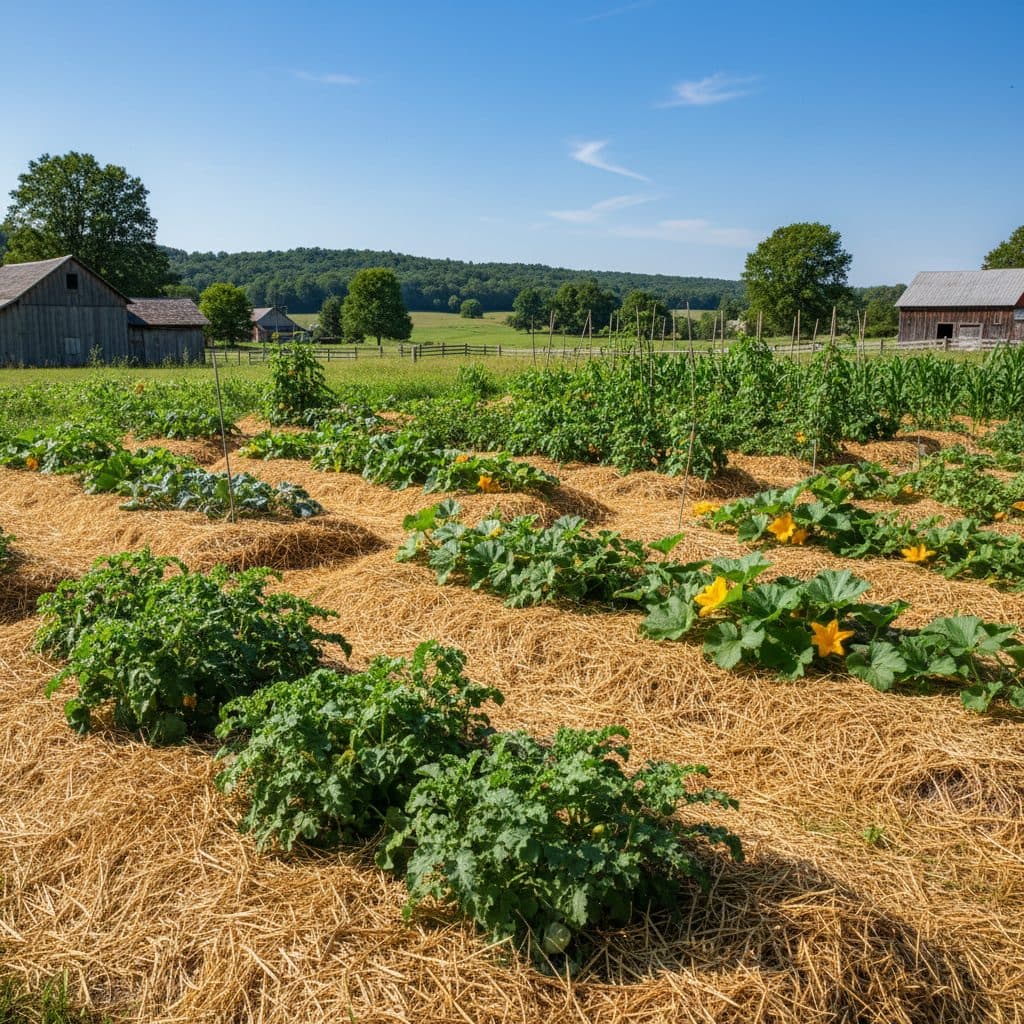
Quick answer: The Ruth Stout deep-mulch method involves applying a continuous 6-12 inch layer of organic material like hay to garden beds year-round. This no-dig approach suppresses weeds, conserves moisture, and builds soil health over time.
In the humid summers of USDA zone 7b, where temperatures can reach 90°F for weeks, gardeners often battle relentless weeds and rapidly drying soil. The traditional approach of tilling and frequent watering can be exhausting and resource-intensive. However, a simpler, more effective method exists, pioneered by Ruth Stout in the mid-20th century: the deep-mulch, or year-round hay, gardening system. This approach reduces garden labour by eliminating tilling and most weeding while improving soil health.
Ruth Stout’s method centers on maintaining a permanent, thick layer of organic mulch over the entire garden bed, typically 6 to 12 inches deep. This continuous blanket of material, often hay, eliminates the need for digging, cultivating, or even much weeding. For growers in regions like the Pacific Northwest, where annual rainfall can exceed 40 inches, this method also provides excellent erosion control and nutrient retention. It fits permaculture principles, creating a resilient, productive garden that requires less intervention over time.
Understanding the Ruth Stout deep-mulch method
The Ruth Stout deep-mulch method relies on one principle: never leave bare soil exposed. Instead, cover every square inch of your garden with a thick layer of organic material, usually hay, year-round. Stout, who gardened in Connecticut, famously claimed she hadn’t tilled her garden in decades, nor had she weeded much since adopting this system in the 1940s. This continuous mulch layer, typically 6 to 12 inches deep, acts as a living blanket, suppressing weeds, regulating soil temperature, and slowly breaking down to feed the soil. In a 500 square foot garden, this could mean 50 to 75 square bales of hay initially.
The ‘no-dig, no-weed’ philosophy
This method changes how soil is managed. Instead of disturbing the soil structure through tilling, which can destroy beneficial fungi and bacteria, the mulch allows soil organisms to thrive. Earthworms, for instance, aerate the soil naturally, and deep-burrowing species drive permanent vertical channels several feet down. This ‘no-dig’ approach is a cornerstone of permaculture, supporting long-term soil health and fertility. The constant decomposition of the mulch also acts as a slow-release fertilizer, reducing the need for external inputs over several seasons.
- Continuous coverage: Maintain 6-12 inches of mulch at all times.
- No tilling: Avoid disturbing soil structure to protect microbial life.
- Weed suppression: Block sunlight, preventing most weed seeds from germinating.
- Moisture retention: Sharply reduce evaporation from the soil surface in hot weather.
- Nutrient cycling: Organic matter breaks down, feeding the soil slowly.
Benefits for soil health and plant vitality
The advantages of the deep-mulch system include labor savings and improved soil ecology. By keeping the soil covered, you prevent the rapid evaporation of moisture, an advantage in arid regions like USDA zone 8b, where summer temperatures regularly exceed 95°F. Mulched beds hold soil moisture markedly better than bare soil, reducing how often you need to irrigate. This consistent moisture also creates a stable environment for beneficial soil organisms, which are essential for nutrient cycling.
Building living soil with organic matter
As the organic mulch breaks down, it continuously adds organic matter to the soil. This process improves soil structure, increases water-holding capacity, and aids nutrient availability. For instance, a 1% increase in soil organic matter can allow the soil to hold an additional 16,500 gallons of water per acre, which aids drought resilience. This living soil supports steady plant growth, making plants more resistant to pests and diseases. The slow decomposition also releases nutrients steadily, providing a consistent food source for plants without the sudden spikes and drops associated with synthetic fertilizers. This approach supports permaculture gardening by creating a self-sustaining system.
- Enhanced soil structure: Improved aggregation and aeration.
- Increased water retention: Soil holds more moisture, reducing drought stress.
- Nutrient availability: Slow release of essential plant nutrients.
- Reduced erosion: Protects soil from wind and water erosion, especially on slopes.
- Support for beneficial microbes: Creates a stable habitat for soil life.
Starting your deep-mulch garden
Beginning a deep-mulch garden requires some initial preparation, but the long-term benefits far outweigh the upfront effort. The best time to start is in the fall or early spring, giving the mulch time to settle before planting. First, clear any existing perennial weeds from your chosen garden area. For a 200 square foot bed, this might take a few hours of manual removal, or you could solarize: cover damp soil with clear plastic for 4-6 weeks during the hottest part of summer to heat the top few inches enough to kill many weed seeds and seedlings. Solarization is unreliable against established perennial weeds with deep roots, so dig those out first. Once cleared, apply an initial layer of 6 to 8 inches of organic mulch.
Sourcing and applying your mulch
The choice of mulch material is important. Hay, straw, and leaves are excellent options. Hay, while sometimes containing seeds, breaks down well and is often available from local farms — spoiled or weathered bales that are no use as feed are usually the cheapest option worth asking for. Avoid hay from fields treated with persistent broadleaf herbicides. Aminopyralid, clopyralid and picloram survive baling, grazing, the animal's gut and composting, and stay active in the resulting hay, manure or compost for up to three years — at concentrations of a few parts per billion they will cup, twist and kill tomatoes, potatoes, beans, peas and most other broadleaf vegetables. Ask the grower what was sprayed on the field, and before you spread a new source over a whole garden, run a bioassay: sow pea or bean seeds in a pot of potting mix blended half-and-half with the hay and compare their growth against a pot of clean mix over two to three weeks. Wood chips, while good for paths or around trees, decompose more slowly and can temporarily tie up nitrogen if mixed directly into annual beds. For a new 100 square foot bed, you might need 10-15 bales of hay. Lay down cardboard first to suppress persistent weeds, then apply your mulch directly on top. For specific permaculture design considerations, review resources on how to read a site before you plant it.
- Clear existing weeds: Remove perennials manually or use solarization.
- Layer cardboard: Use plain, unprinted cardboard as a weed barrier.
- Apply initial mulch: Spread 6-8 inches of hay, straw, or leaves.
- Water thoroughly: Moisten the mulch layer to encourage decomposition.
- Source locally: Obtain materials from nearby farms or arborists to reduce cost.
Planting and ongoing maintenance
Once your deep-mulch bed is established, planting is surprisingly straightforward. Instead of digging large holes, simply push the mulch aside to expose a small area of soil. Dig a hole just large enough for your plant or seeds, place it in, and then pull the mulch back around the base of the plant to ensure the stem is not buried. For smaller seeds, create a shallow furrow, sow the seeds, cover lightly with soil, and then gently pull a thin layer of fine mulch or compost over the top. This method works well for most vegetables, from tomatoes in USDA zone 5 to peppers in USDA zone 9, provided they receive adequate sunlight.
Replenishing and integrating with permaculture
Ongoing maintenance primarily involves replenishing the mulch as it breaks down. Expect to add another 4 to 6 inches of material annually, or as needed to maintain the 6-12 inch depth. This might require 5-8 bales of hay for a 100 square foot bed each year. This continuous feeding of the soil is a key permaculture principle, mimicking forest floor processes. Consider integrating plant guilds around your vegetables, such as planting comfrey nearby as a ‘chop and drop’ mulch source. Use only the sterile cultivar Symphytum × uplandicum ‘Bocking 14’, which does not set seed — common comfrey (Symphytum officinale) self-sows freely and its brittle taproot regrows from fragments, so it is close to impossible to remove once established. Treat comfrey as a mulch plant only, not as food or fodder: its pyrrolizidine alkaloids are hepatotoxic to people and livestock. Borage works the same way and dies back on its own, though it also self-seeds enthusiastically. For water management in a permaculture system, swales can be useful.
- Planting technique: Push mulch aside, plant, then pull mulch back.
- Annual replenishment: Add 4-6 inches of new mulch each year.
- Monitor moisture: Use a soil moisture meter to check moisture levels under the mulch.
- Crop rotation: Rotate crops as usual, even in mulched beds, to manage nutrients and pests.
- Integrate guilds: Plant nitrogen fixers or dynamic accumulators to improve soil fertility.
Deep mulch in permaculture design
The Ruth Stout deep-mulch method is a natural fit for permaculture design, embodying principles like ‘obtain a yield,’ ‘apply self-regulation and accept feedback,’ and ‘use and value renewable resources.’ In a permaculture system, mulch contributes to building no-dig beds, which are fundamental for long-term soil health. For instance, in a well-designed food forest in USDA zone 6, a thick layer of wood chip mulch around fruit trees like apples and pears can suppress grass, retain moisture, and slowly release nutrients, benefiting the trees for decades. This reduces competition and stress on young trees, leading to better establishment and fruit production.
Improving zones, guilds, and water management
Deep mulch functions across different permaculture zones. In Zone 1, the most intensively managed area near the home, deep mulch keeps vegetable beds productive and weed-free. In Zone 2, where perennial crops and small livestock might reside, mulch around berry bushes or in chicken runs helps manage soil and fertility. It also integrates seamlessly into plant guilds, where a ‘living mulch’ of groundcovers or dynamic accumulators can be used in conjunction with hay or straw. For instance, a comfrey plant in a guild can be cut several times a season and dropped as mulch around a fruit tree. Use the sterile cultivar Symphytum × uplandicum ‘Bocking 14’ instead of seed-setting common comfrey, and keep it as mulch; comfrey's pyrrolizidine alkaloids are hepatotoxic, so it is not food or fodder. Mulch also supports water management; a deep layer slows rainfall, letting it soak in rather than run off, and shields the soil surface from the impact of heavy drops.
- Zone integration: Effective in Zone 1 (annuals) and Zone 2 (perennials).
- Guild support: Improves nutrient cycling within plant communities.
- Water infiltration: Improves soil’s ability to absorb and store rainwater.
- Ecosystem services: Provides habitat for beneficial insects and soil organisms.
- Reduced input: Decreases reliance on external fertilizers and irrigation.
Deep mulch vs. traditional gardening methods
Feature | Deep Mulch Method | Traditional Tilling Method |
|---|---|---|
Weeding effort | Minimal once the mulch is deep enough | High, frequent weeding required |
Water usage | Low; mulched soil dries out slowly | High, frequent irrigation needed |
Soil disturbance | None, no-dig approach | High, regular tilling |
Soil organic matter | Increases significantly over time | Often decreases or remains low |
Soil structure | Improves, stable and aerated | Degrades, compaction issues |
Fertilizer needs | Reduced over time by 30%+ | Consistent, often higher inputs |
Erosion control | Excellent, soil always covered | Poor, bare soil prone to erosion |
Weed suppression: A 6-inch layer of hay mulch stops nearly all annual weed seeds from germinating, though established perennial weeds will still push through.
Soil temperature: Mulched soil can be up to 15°F cooler in summer and 5°F warmer in winter compared to bare soil.
Water retention: Deep mulch keeps the soil surface from drying out, so beds go much longer between waterings.
Frequently asked questions
What kind of hay or straw is best for deep mulching?
For deep mulching, untreated hay or straw is ideal. Avoid hay that has been sprayed with herbicides, as these chemicals can persist and harm your garden plants. Straw is often preferred because it typically contains fewer weed seeds than hay, reducing potential new weed growth by 20-30% in the first year.
How deep should the mulch layer be?
The initial mulch layer should be 6 to 8 inches deep, settling to about 4-6 inches over time. For optimal weed suppression and moisture retention, aim to maintain a consistent depth of 6 to 12 inches by adding fresh material annually. A 100 square foot garden might require 10-15 bales of hay initially.
Will deep mulch attract pests like slugs or rodents?
While deep mulch can provide habitat for some creatures, proper management minimizes pest issues. Slugs are more common in consistently wet, shady areas, so ensure good air circulation. Rodents are typically attracted to food sources; avoid mulching with food scraps or leaving ripe produce exposed. The main risk with permanent deep mulch is voles, which nest in it and girdle the bark of fruit trees and shrubs over winter; pull mulch back six inches to a foot from every trunk and stem, and set traps if you see runways when you lift the hay.
Can I use wood chips for the deep mulch method?
Wood chips are excellent for mulching perennial beds, pathways, and around trees in a food forest, especially in USDA zone 5 and warmer regions. However, for annual vegetable beds, they decompose more slowly and can temporarily deplete nitrogen from the soil as they break down, potentially affecting plant growth by 10-20% in the short term. Hay or straw is generally preferred for annuals due to faster decomposition and a more balanced carbon-to-nitrogen ratio.
How do I fertilize plants in a deep-mulch garden?
The decomposing mulch itself acts as a slow-release fertilizer, continuously feeding the soil. Over time, external fertilization needs can decrease by 30% or more. For heavy feeders or if soil tests indicate deficiencies, you can apply compost, worm castings, or organic granular fertilizers directly to the soil beneath the mulch, or use liquid feeds like compost tea to ensure they reach the root zone. A soil test every 2-3 years can guide specific nutrient additions.
Is the deep mulch method suitable for all climates and soil types?
The deep mulch method is highly adaptable and can be successful in most climates and soil types, from sandy soils in Florida (USDA zone 9) to heavy clay in Ohio (USDA zone 6). In very wet climates, ensure good drainage to prevent waterlogging. In very dry climates, the moisture retention benefits are even more pronounced. Adjust the type and depth of mulch to suit local conditions and available materials.