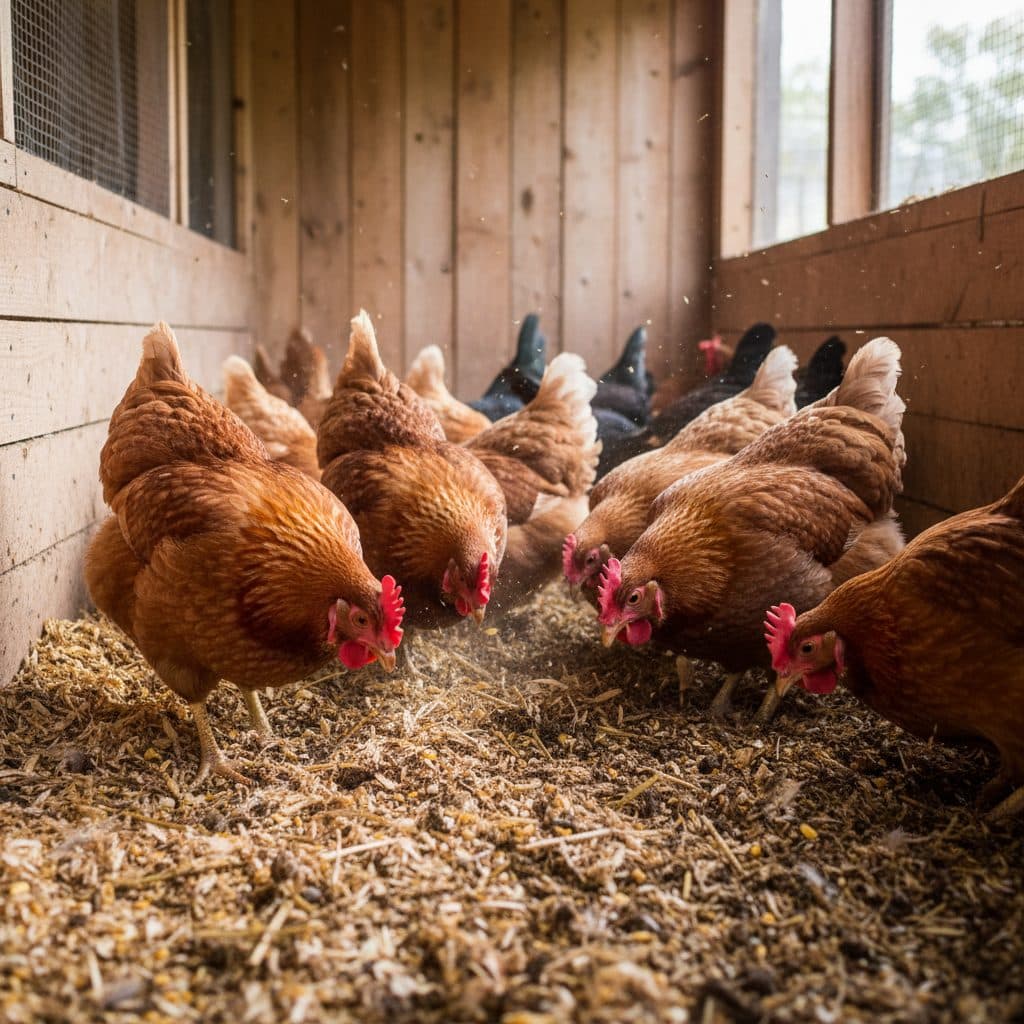
Key takeaways
- The deep litter method uses active aerobic composting directly on the chicken coop floor, turning daily manure into crumbly, odor-free compost.
- Balancing high-nitrogen poultry manure with regular additions of carbon-rich pine shavings, hemp, or dry autumn leaves prevents harmful ammonia gas accumulation.
- Hens perform all aeration labor when scratch grains or sunflower seeds are scattered across the bedding, eliminating manual pitchfork turning.
- Active microbial breakdown inside an established 8 to 12-inch litter pack generates gentle ambient heat, keeping coops warmer during sub-freezing winter weather.
- Perform a single comprehensive clean-out annually in spring, leaving behind a 2-inch layer of biologically active litter to inoculate the next cycle.
Quick answer: The deep litter method is an in-coop composting technique where carbon-rich bedding (such as pine shavings or hemp) is continuously added over accumulating chicken manure. Active hens scratch and aerate the bedding daily, allowing beneficial microbes to break down manure, eliminate ammonia odors, generate gentle winter warmth, and yield rich finished compost.
Cleaning a stationary chicken coop every few days is one of the most tedious chores on a homestead. Scraping droppings boards and stripping thin bedding frequently results in foul ammonia fumes, fly problems, and heaps of raw, uncomposted manure that can burn garden plants.
With the deep litter method, you manage the coop floor as an active, enclosed compost pile instead of removing manure constantly. Beneficial bacteria, actinomycetes, and fungi flourish within the deep carbon pack, outcompeting some bacterial pathogens, and neutralising odours. Older built-up-litter research also credited the pack with adding some B vitamins to what birds pick up, though this is a bonus rather than a reason to run the system.
Maintaining the proper carbon-to-nitrogen ratio, providing adequate continuous ventilation, and using your birds' natural scratching instincts lets you keep a clean, dry coop with only one annual clean-out.
+-------------------------------------------------------------+
|              DEEP LITTER SYSTEM VS FREQUENT CLEANING        |
|                                                             |
|   FEATURE          DEEP LITTER METHOD       FREQUENT STRIP  |
|   -------          ------------------       --------------  |
|   Labor Demand     Top up 1-2x monthly      Weekly scraping |
|   Odor Profile     Earthy forest floor      Strong ammonia  |
|   Winter Warmth    Generates passive heat   Cold bare floor |
|   End Product      Finished rich compost    Raw hot manure  |
|   Pathogen Risk    Low (beneficial microbes)High humidity   |
+-------------------------------------------------------------+
How does the biology of deep litter composting work?
Poultry manure is exceptionally high in nitrogen, uric acid, and moisture (with a carbon-to-nitrogen ratio of roughly 10:1 to 12:1). Left in thin layers or exposed on bare floors, anaerobic bacteria quickly convert uric acid into volatile ammonia gas ($NH_3$), which irritates chickens' delicate respiratory tracts and cornea.
The deep litter system restores biological balance by introducing massive volumes of high-carbon bedding materials (with C:N ratios of 100:1 to 400:1):
- Carbon-nitrogen balance: As birds deposit nitrogen-rich droppings beneath roosts, a regular surface application of dry carbon maintains an ideal overall composting ratio near 30:1.
- Moisture absorption: Deep carbon particles absorb excess moisture from droppings. Aim to keep litter moisture around 20 to 30 percent, which is what the squeeze test below is checking. Above roughly 30 percent the pack cakes and ammonia release climbs sharply.
- Aerobic microbial decomposition: Aerobic bacteria and beneficial molds decompose the manure within the lower strata of the bedding. This decomposition generates mild, steady biological warmth that rises upward through the pack during winter freezes.
- Pathogen suppression: A diverse litter microflora can reduce some bacterial pathogen loads, but deep litter does not suppress coccidia. Eimeria oocysts sporulate readily in warm, damp litter, so a wet pack raises coccidiosis pressure rather than lowering it. Keep the pack dry, and watch chicks and newly introduced birds for hunched posture, blood in droppings or a drop in appetite.
+-------------------------------------------------------------+
|              DEEP LITTER CROSS-SECTION DYNAMICS             |
|                                                             |
|   [ Top Active Layer (2-3 in): Fresh Shavings & Manure    ] |
|   [ Middle Aerobic Zone (4-6 in): Decomposing & Heat Gen  ] |
|   [ Base Humus Layer (2-4 in): Rich Crumbly Compost       ] |
|   ========================================================= |
|   ----------------- Dirt or Wood Coop Floor --------------- |
+-------------------------------------------------------------+
Which bedding materials work best for deep litter?
Selecting absorbent, porous carbon materials that break down at varying rates ensures optimal pack structure.
+-------------------------------------------------------------+
|              BEDDING MATERIAL EVALUATION                    |
|                                                             |
|   MATERIAL         ABSORBENCY    DECOMPOSITION SPEED        |
|   --------         ----------    -------------------        |
|   Pine Shavings    Excellent     Moderate (Ideal standard)  |
|   Hemp Bedding     Superior      Fast - Moderate            |
|   Dry Hardwood Lea Good          Fast (Excellent supplement)|
|   Chopped Straw    Moderate      Slow (Can pack if unchopped|
|   Cedar Shavings   UNSAFE        Toxic aromatic oils        |
|   Hay              POOR          Rots, molds, causes asperg |
+-------------------------------------------------------------+
1. Medium to coarse pine shavings
Kiln-dried pine shavings are the most reliable option. They are highly absorbent, low in dust compared with sawdust or chopped straw, provide loose air pockets, and resist compacting. Choose screened medium-to-coarse flake and shake the bale out before spreading. Avoid cedar shavings. The volatile aromatic oils in cedar are irritant, and the caution comes mainly from rodent studies rather than poultry trials, but there is no reason to take the risk when pine is cheaper and works better.
2. Industrial hemp bedding
Hemp stalks absorb up to four times more moisture than wood shavings and decompose into exceptionally fine, nutrient-rich garden compost.
3. Dry autumn leaves
Crushed, dry deciduous leaves (oak, maple, beech) are an abundant, cost-free carbon source. Store bags of dry leaves in autumn and toss them into the coop throughout winter.
Materials to avoid
Avoid green hay, lawn clippings, or damp straw. Whole straw has a hollow, waxy stem that traps moisture and encourages Aspergillus mold, leading to brooder pneumonia in chickens. If using straw, ensure it is finely chopped and completely dry. For sourcing clean organic matter, explore our guide on sourcing free manure from local farms.
How do you set up and manage deep litter step by step?
Follow this seasonal timeline to establish an active, self-regulating biological bed:
Step 1: Initial setup (late summer / early fall)
Begin building your deep litter base in late summer so microbial populations are fully active before freezing winter temperatures arrive.
- Sweep the coop floor clean and start straight onto bare, dry floor. Do not add lime, which raises litter pH and drives more ammonia off, and do not dust diatomaceous earth into the pack, which kills the litter fauna and irritates the birds' airways. If you want to suppress ammonia, use a litter acidifier sold for poultry houses and follow its label.
- Spread an initial 4 to 6-inch (10 to 15 cm) layer of fresh pine shavings across the entire coop floor.
Step 2: Daily hen aeration
Scatter a small handful of scratch grains, black oil sunflower seeds, or whole oats across the litter every morning. As hens energetically scratch and peck for grains, they turn the upper bedding layers, burying fresh droppings and aerating the pack naturally. For balanced flock feed management, review what to feed chickens.
Step 3: Routine carbon topdressing
Inspect the bedding beneath night roosts weekly. Whenever the surface appears dark, sticky, or begins to smell faintly of ammonia, add a fresh 1 to 2-inch layer of dry pine shavings or leaves. By midwinter, your bedding pack should reach 8 to 12 inches (20 to 30 cm) deep.
+-------------------------------------------------------------+
|              DEEP LITTER MANAGEMENT CYCLE                   |
|                                                             |
|   LATE SUMMER: Spread initial 4-6 inch base of pine shavings|
|   WEEKLY:      Add 1-2 inches fresh carbon over droppings   |
|   DAILY:       Scatter scratch grains for natural turning   |
|   SPRING:      Harvest bottom 80% finished compost; repeat  |
+-------------------------------------------------------------+
How do you maintain proper coop ventilation and moisture balance?
The most common failure in deep litter systems is excess moisture. If bedding becomes soaking wet, aerobic bacteria die off, and anaerobic fermentation takes over, creating foul odors and dangerous ammonia fumes.
- Ventilate high at roof eaves: Never seal a chicken coop airtight in winter. Maintain continuous open ridge vents or high soffit openings (covered with 1/2-inch hardware cloth). Warm, moist air exhaled by roosting birds must vent freely out the roof peak before it condenses on walls.
- Keep waterers elevated or outside: Place drinking founts and nipple buckets on elevated stands or in the outdoor run. Never allow a leaking water container to saturate the deep litter pack.
- Moisture squeeze test: Pick up a handful of bedding from 4 inches deep and squeeze it firmly. It should feel like a lightly damp, crumbly sponge. If water drops squeeze out, the litter is too wet; immediately add dry shavings and increase coop airflow.
To ensure your coop design keeps predators out while maintaining open high-level airflow, consult our detailed instructions on how to protect chickens from predators.
How and when do you harvest finished coop compost?
Once a year, typically in spring or early autumn, harvest the deep litter pack:
- Shovel off the dry, loose top 2 inches of bedding and set it aside in clean buckets.
- Dig out the rich, dark, earthy lower layers. This material will resemble rich, crumbly black topsoil with zero foul odor.
- Apply this finished compost directly to garden beds, orchard tree guilds, and berry patches. It is biologically mature and will not burn plant roots.
- Return the reserved 2 inches of active top bedding to the clean coop floor. This material acts as a biological starter inoculant, seeding the new batch of pine shavings with beneficial compost microbes.
If raising meat birds or pastured laying flocks in mobile shelters, compare this indoor system with our outdoor chicken tractor plans.