Key takeaways
- Select appropriate pepper varieties for paprika, such as ‘Alma Paprika’ or ‘Hungarian Paprika’, which offer high color and flavor.
- Dehydrate sliced peppers, garlic, and onions at consistent temperatures, typically between 125°F and 135°F, until brittle.
- Grind dried ingredients into a fine powder using a dedicated spice grinder or coffee grinder to prevent cross-contamination of flavors.
- Store homemade spices in airtight containers in a cool, dark place, maintaining quality for six to twelve months.
- Understand the importance of moisture content, aiming for below 10% for optimal shelf stability and to prevent mold growth.
- Proper curing of garlic and onions before drying develops full flavor and extends storage life.
Quick answer: To dry, store, and grind spices like paprika, garlic, and onion, select appropriate varieties, dehydrate at 125-135°F until brittle, then grind into a fine powder. Store in airtight containers in a cool, dark place for optimal shelf life.
In the expansive agricultural regions of the American Midwest, where corn and soybean fields stretch for miles, many small growers are rediscovering the value of self-sufficiency, particularly in their kitchens. For those in USDA zone 6 and warmer, cultivating your own spices like paprika, garlic powder, and onion powder from homegrown produce offers a tangible connection to your food system and can significantly reduce grocery expenses.
Transforming fresh harvests into shelf-stable spices is a rewarding process that extends the utility of your garden well beyond the growing season. This guide outlines practical steps for drying, storing, and grinding your own paprika from sweet peppers, and powdering garlic and onions, ensuring you have flavorful, high-quality ingredients year-round. With careful attention to detail, you can achieve results comparable to, or even exceeding, commercial spice quality, often at a fraction of the cost per ounce.
Selecting and preparing peppers for paprika
Making your own paprika begins with selecting the right pepper varieties. Sweet, thin-walled pepper varieties with deep red flesh work best for making paprika. Cultivars like ‘Alma Paprika’ or ‘Hungarian Paprika’ are excellent choices, known for their high pigment content and balanced flavor profile. In regions like California’s Central Valley or parts of the Gulf Coast, these peppers can yield up to 15 pounds per 100 square feet of garden space. Harvest peppers when they are fully ripe and deep red for full flavor and color development, which is measured in ASTA units (a standard quality metric for paprika) [3].
Cleaning and slicing peppers
Once harvested, thoroughly wash the peppers under cool running water to remove any soil or debris. For optimal drying, peppers should be sliced uniformly. Remove the stems, seeds, and any white pith, which can impart a bitter taste to the final product. Aim for slices approximately one-quarter inch thick. This uniform thickness ensures even drying, preventing some pieces from becoming over-dried and brittle while others remain too moist. A mandoline can be particularly useful for achieving consistent slices, which speeds up preparation considerably on a large batch of peppers; use the hand guard rather than holding the pepper directly.
- Choose fully ripe, red peppers for best color and flavor.
- Wash peppers thoroughly to remove dirt.
- Remove stems, seeds, and white pith.
- Slice peppers into uniform one-quarter inch pieces.
- Consider a mandoline for consistent slicing.
Drying paprika peppers for optimal color and flavor
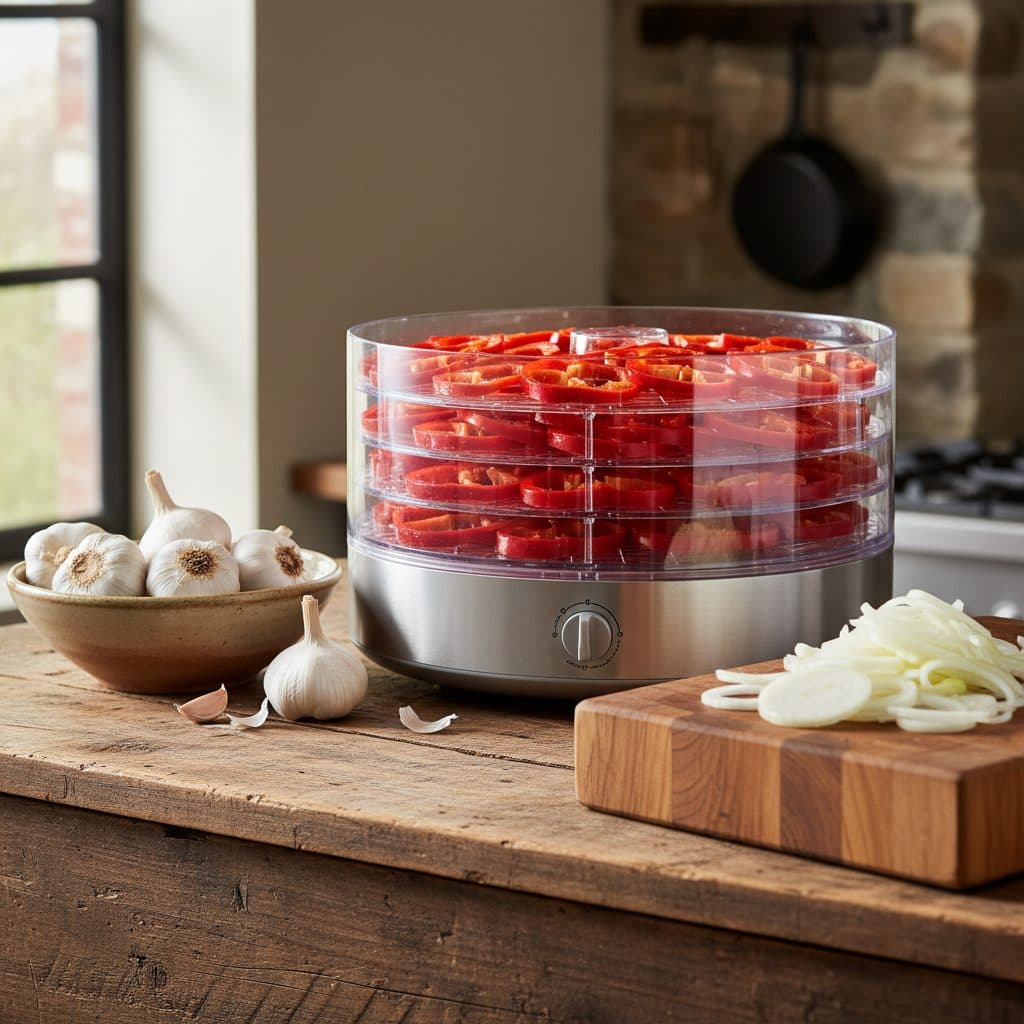
Proper drying preserves the deep color and full flavor of homemade paprika. The goal is to remove sufficient moisture to prevent spoilage while retaining the pepper’s essential oils and pigments. A food dehydrator is the most reliable method, offering controlled temperature and airflow. Set your dehydrator to 125°F to 135°F. Arrange the sliced peppers in a single layer on the dehydrator trays to allow good air circulation around each piece. Drying typically takes between eight and twelve hours, depending on humidity levels and pepper thickness. The peppers are fully dry when they are brittle and snap easily, with no flexibility remaining [1].
Monitoring moisture and color
After drying, allow the peppers to cool completely to room temperature, which can take up to two hours. This step helps to equalize any residual moisture and prevents condensation during storage. For best results, the moisture content should be below 10% to ensure stability and prevent mold growth. The color of your dried paprika is a direct indicator of quality, often measured in ASTA units, with higher numbers indicating richer color [4]. While home growers typically don’t have access to spectrophotometers, visually inspecting for a deep, consistent red color is a good proxy. Condition cooled, dried peppers for one to two weeks before grinding: pack them loosely in a jar, shake it daily, and if any condensation appears on the glass the batch is not dry enough and must go back into the dehydrator.
- Use a food dehydrator set to 125°F to 135°F.
- Arrange pepper slices in a single layer for even drying.
- Dry for eight to twelve hours until brittle.
- Cool completely before grinding or storing.
- Ensure moisture content is below 10% for shelf stability.
Growing and preparing garlic and onions for powder
Garlic (Allium sativum) and onions (Allium cepa) are staples in many kitchens, and making their powdered forms at home preserves their pungent flavors for long-term use. For garlic, hardneck varieties like ‘Music’ or ‘German Extra Hardy’ thrive in cooler climates, such as USDA zone 4, producing large, easy-to-peel cloves. Softneck varieties like ‘Inchelium Red’ are better suited for warmer zones, like USDA zone 7, and store well. Onions, regardless of variety, should be mature and firm, harvested when their tops have fallen over and dried naturally, typically in late summer. Proper curing of garlic bulbs and onion bulbs for two to four weeks in a well-ventilated, shaded area is essential to develop their full flavor and ensure good storage potential before drying.
Peeling and slicing alliums
After curing, preparing garlic and onions for drying involves peeling and slicing. For garlic, separate cloves and peel away the papery skin. A quick blanch in hot water for 30 seconds can make peeling large quantities significantly easier. For onions, remove the outer dry layers and trim the ends. Both garlic and onions should be sliced uniformly thin, ideally one-eighth to one-quarter inch thick. Uniform slices dry at the same rate. Using a food processor with a slicing blade or a mandoline can speed up this task considerably, allowing you to process 5 pounds of onions in under 15 minutes.
- Choose appropriate garlic varieties for your climate zone.
- Harvest onions when tops have naturally fallen and dried.
- Cure garlic and onions for two to four weeks.
- Peel garlic cloves and outer onion layers.
- Slice both garlic and onions uniformly thin (1/8 to 1/4 inch).
Drying and grinding garlic and onion for powder
Drying garlic and onion requires careful temperature control to prevent scorching and preserve their volatile compounds. A food dehydrator set between 125°F and 135°F is ideal. Spread the sliced garlic and onions in a single layer on dehydrator trays. Drying times can vary significantly; garlic typically takes six to ten hours, while onions may require eight to twelve hours, depending on their moisture content and slice thickness. They are fully dry when they are brittle and shatter easily when bent. Any remaining flexibility indicates insufficient drying and can lead to spoilage during storage [2].
Grinding into powder
Once thoroughly dried and cooled, the garlic and onion pieces are ready for grinding. A dedicated spice grinder or a clean coffee grinder works best for this task. Grinding in small batches, about one-quarter cup at a time, helps achieve a fine, consistent powder and prevents the grinder from overheating. Pulse the grinder rather than running it continuously to prevent the natural oils from heating up and potentially clumping the powder. Continue grinding until you reach a fine, uniform consistency, similar to commercial powders. For an extra-fine powder, you can sift the ground spice through a fine-mesh sieve and re-grind any larger pieces. This process ensures a smooth texture for culinary use and can yield up to 1 cup of powder from 3 pounds of fresh produce.
- Dehydrate garlic and onions at 125°F to 135°F.
- Dry garlic for six to ten hours, onions for eight to twelve hours.
- Ensure dried pieces are brittle and shatter easily.
- Grind in small batches using a spice or coffee grinder.
- Pulse the grinder to prevent overheating and clumping.
Storing homemade spices and troubleshooting common issues
Proper storage maintains the potency and shelf life of homemade spices. Exposure to light, air, and moisture are the primary enemies of spice quality. Store your freshly ground paprika, garlic powder, and onion powder in airtight glass jars or opaque containers. Mason jars with tight-fitting lids are an excellent choice, as they create a good seal. Keep these containers in a cool, dark pantry or cupboard, away from direct sunlight and heat sources like stoves or ovens. Under these ideal conditions, homemade spices can retain their peak flavor and aroma for six to twelve months [5]. Beyond this period, they may still be usable but will gradually lose their intensity.
Common issues and solutions
One common issue is clumping, particularly with garlic and onion powders, due to residual moisture or high humidity. If your powder clumps, spread it thinly on a baking sheet and dry it in a very low oven (around 150°F) for 30 minutes, then re-grind. Another concern is off-flavors, which can result from incomplete drying or contamination. Always ensure your dehydrator and grinder are clean and free of other food residues. Using a dedicated spice grinder can prevent flavor transfer. For paprika, a dull color indicates either unripe peppers were used or the drying temperature was too high, degrading the pigments. Aim for a deep red color, which correlates with higher ASTA units and better quality [4].
- Store spices in airtight, opaque containers.
- Keep containers in a cool, dark pantry or cupboard.
- Expect homemade spices to last six to twelve months.
- Re-dry clumped spices in a low oven (150°F) for 30 minutes.
- Use a dedicated spice grinder to prevent flavor contamination.
Beyond the basics: advanced tips and yield estimates
For those looking to refine their spice-making process, consider experimenting with different pepper varieties for paprika. While ‘Alma Paprika’ is a standard, ‘Piment d’Espelette’ or ‘Aleppo’ peppers, grown in warmer climates like USDA zone 8, can offer distinct flavor profiles and heat levels. For garlic powder, roasting the garlic first gives a richer, sweeter flavor, but roasted and caramelized alliums are high in sugar and stay tacky rather than brittle. They take much longer to dry at the same temperature, may never pass the snap test this article recommends, and often grind into a paste instead of a powder; try a small batch first. Roasting 5 pounds of garlic can take 45-60 minutes at 400°F. For onion powder, try caramelizing onions before dehydrating them for a deeper, sweeter flavor.
Yield estimates and cost savings
Understanding the typical yield can help you plan your garden space and appreciate the cost savings. Fresh peppers and onions are mostly water and garlic is well over half water, so a large basket of fresh produce dries down to a small jar of powder — but the exact ratio depends on variety, wall thickness and how far you dry it. Weigh your first batch before drying and weigh the finished powder, then use that ratio to plan how much bed space to give each crop. Considering that a 1-ounce jar of commercial organic paprika can cost upwards of $5, producing your own can result in significant savings. Growing your own also gives you control over the quality and handling of your ingredients.
- Experiment with different pepper varieties for unique paprika flavors.
- Roast garlic or caramelize onions before drying for enhanced depth.
- Weigh a first batch of peppers before and after drying to learn your own fresh-to-powder ratio.
- Expect garlic, which is far less watery than peppers or onions, to yield proportionally much more powder.
- Weigh what you spend on garden inputs against what the same weight of commercial spice would cost you.
Comparison of homemade vs. store-bought spices
Feature | Homemade spices | Store-bought spices |
|---|---|---|
Flavor intensity | Often higher due to freshness and specific varieties | Can vary, often mellowed by processing and age |
Ingredient control | 100% control over pepper, garlic, onion type and purity | Limited information on sourcing and processing |
Cost per ounce | Significantly lower, especially for bulk garden harvests | Higher, ranging from $3 to $10+ per ounce |
Shelf life (peak) | 6-12 months when stored properly | 12-24 months, but flavor degrades over time |
ASTA units (paprika) | Potentially very high with ripe, quality peppers | Varies widely by brand and grade, often undisclosed |
Dehydrator Temp: Maintain a dehydrator temperature of 125°F to 135°F for optimal drying of peppers, garlic, and onions, preventing scorching while ensuring moisture removal.
Moisture Content: Aim for a final moisture content below 10% in dried spices to inhibit mold growth and ensure a stable shelf life of six to twelve months.
Paprika Yield: Fresh peppers lose most of their weight as water when dried, so weigh one batch before and after to learn what your own peppers yield.
Frequently asked questions
What kind of peppers are best for making paprika?
For homemade paprika, sweet, thin-walled pepper varieties with deep red flesh are ideal. Cultivars like ‘Alma Paprika’ or ‘Hungarian Paprika’ are excellent choices, as they offer high pigment content and balanced flavor. Harvest them when fully ripe and deep red, often yielding 10-15 pounds per 100 square feet.
How can I prevent my homemade spice powders from clumping?
To prevent clumping, ensure your ingredients are thoroughly dried to below 10% moisture content before grinding. Store the finished powders in airtight containers in a cool, dark, and low-humidity environment. If clumping occurs, you can spread the powder thinly on a baking sheet and re-dry it in a low oven, around 150°F, for 30 minutes before re-grinding.
Is it necessary to cure garlic and onions before drying for powder?
Yes, curing garlic bulbs and onion bulbs for two to four weeks in a well-ventilated, shaded area is necessary. Curing develops their full flavor, allows the outer skins to dry, and improves storage life before dehydration begins.
What is the recommended dehydrator temperature for spices?
For drying peppers, garlic, and onions for spices, a consistent dehydrator temperature between 125°F and 135°F is recommended. This range effectively removes moisture without scorching the produce or degrading their delicate flavors and pigments, ensuring a high-quality finished product.
How long do homemade spices typically last?
When stored correctly in airtight, opaque containers in a cool, dark place, homemade spices like paprika, garlic powder, and onion powder can retain their peak flavor and aroma for six to twelve months. Beyond this period, they may still be safe to use but will gradually lose their potency.
References
- Herbs and spices ready for food use (2023). Herbs and spices ready for food use.
- Herbs and spices ready for food use (2023). Herbs and spices ready for food use.
- Spices and condiments. Spectrophotometric determination of the extractable colour in paprika (2023). Spices and condiments. Spectrophotometric determination of the extractable colour in paprika.
- Spices and condiments. Spectrophotometric determination of the extractable colour in paprika (2023). Spices and condiments. Spectrophotometric determination of the extractable colour in paprika.
- Herbs and spices ready for food use (2023). Herbs and spices ready for food use.