Key takeaways
- Calendula thrives across a wide range of climates, flourishing in USDA zones 2 through 11.
- Direct sowing seeds 0.25 to 0.5 inches deep in spring or fall yields the best germination results.
- Optimal soil pH for calendula is between 6.0 and 7.0, and well-draining soil matters just as much.
- Regular harvesting of flowers every 2-3 days encourages continuous blooming throughout the growing season.
- Calendula flowers are rich in beneficial compounds like carotenoids and flavonoids, essential for skin applications.
- Drying calendula for salve making requires good air circulation and storage in airtight containers.
Quick answer: Calendula thrives across USDA zones 2-11 in well-draining soil (pH 6.0-7.0) and full sun. Direct sow seeds 0.25-0.5 inches deep in spring or fall, harvesting regularly for continuous blooms for home apothecaries.
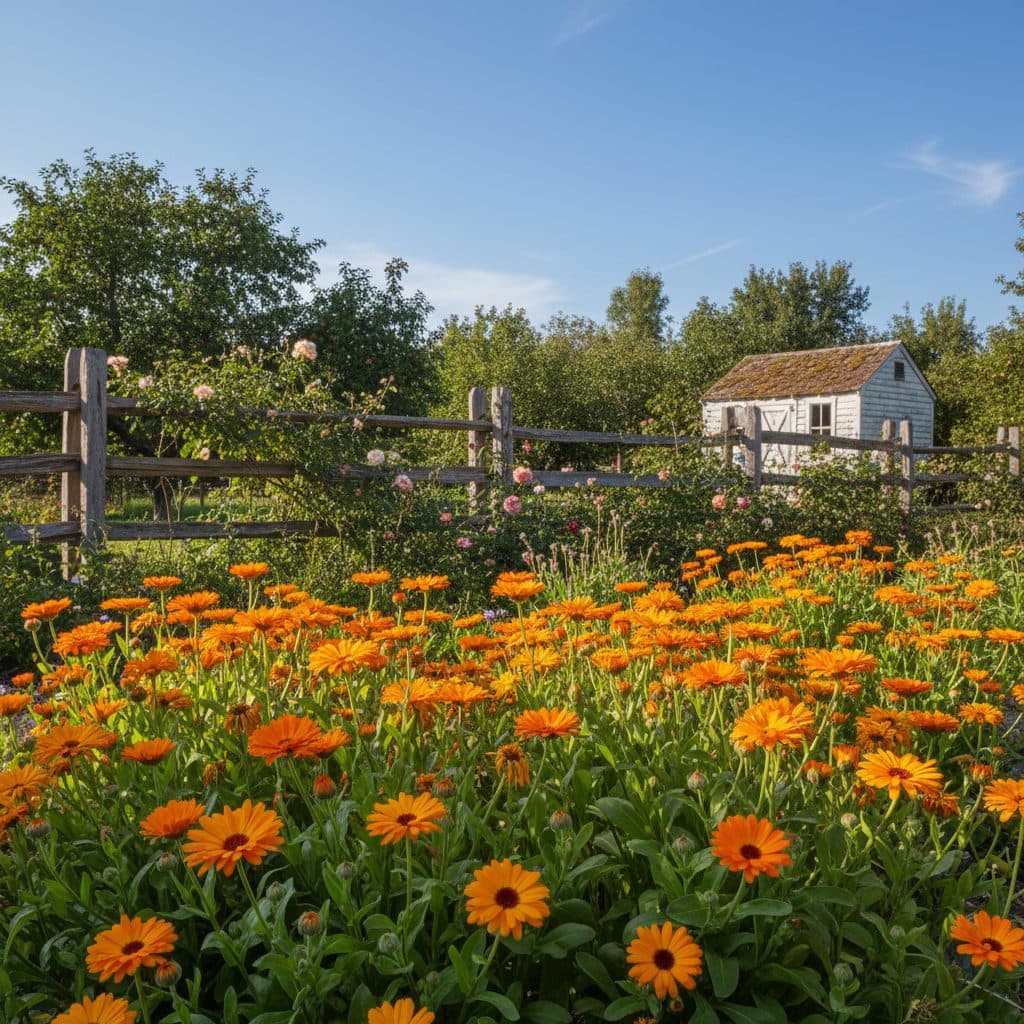
Across the United States, from the humid summers of USDA zone 8 in the Southeast to the cooler climates of USDA zone 4 in the Upper Midwest, calendula (Calendula officinalis) stands out as a remarkably adaptable and useful plant for the home garden. This cheerful annual, often called pot marigold, is far more than just an ornamental flower; it’s a foundational herb for anyone interested in creating their own home apothecary.
For centuries, calendula has been valued for its skin-soothing properties, making it an essential ingredient in homemade salves, balms, and infused oils. With minimal effort, you can cultivate a thriving patch that provides a continuous harvest of these vibrant, beneficial blossoms, with a plant in peak season giving you a pickable flush every few days.
Why grow calendula? A resilient plant for your home apothecary
Calendula officinalis, commonly known as pot marigold, is a staple for US gardeners interested in home remedies. This annual flower offers real benefits for skin care and general wellness, making it a workhorse in any medicinal herb garden. Its adaptability allows it to flourish across a wide range of climates, from the cooler summers of USDA zone 3 in Minnesota to the warmer, longer growing seasons of USDA zone 10 in Florida, tolerating temperatures down to 20°F (-6°C).
Historically, calendula has been valued for its skin soothing properties and its ability to support healing. The bright orange and yellow petals are the part traditionally used in skin preparations. In a typical growing season, a well-maintained calendula plant will keep producing flowers steadily enough to supply a home apothecary.
The calendula advantage in your garden
Beyond its medicinal uses, calendula is a relatively low-maintenance plant, making it an excellent choice for both novice and experienced growers. It typically grows to a height of one to two feet (30-60 cm) and spreads about one foot (30 cm) wide, fitting well into mixed borders or dedicated herb beds [1]. Its cheerful blooms can also attract beneficial insects that support a healthier garden ecosystem. For instance, in California’s Central Valley, calendula can help draw pollinators and other beneficial insects to nearby crops.
- Salves and balms for minor skin irritations.
- Infused oils for massage or cosmetic bases.
- Herbal teas — calendula is in the daisy family, so people sensitized to ragweed, daisies or chrysanthemums can react to it, and it is traditionally avoided in pregnancy.
- Tinctures for concentrated medicinal use.
- Culinary garnish for salads and dishes.
Getting started: planting and soil requirements
Establishing calendula in your garden is straightforward, requiring minimal fuss for a plant that gives so much back. The key is to provide the right foundation: good soil and adequate sunlight. In regions like the Pacific Northwest, with its mild springs, direct sowing seeds is often the most successful method.
Calendula seeds can be direct-sown in early spring after the last frost, or in late summer for fall and winter blooms in warmer climates like USDA zone 9 in Texas. Plant seeds 0.25 to 0.5 inches (0.6-1.3 cm) deep and space them about 6 to 12 inches (15-30 cm) apart to allow for mature growth. Germination typically occurs within 7 to 14 days when soil temperatures are between 55°F and 70°F (13°C and 21°C) [1]. For a continuous supply of flowers, consider succession planting every two to three weeks until mid-summer.
Ideal soil and sun conditions
Calendula prefers well-draining soil with a soil pH between 6.0 and 7.0, which is slightly acidic to neutral [2]. Heavy clay soils can be amended with generous compost to improve drainage, while sandy soils can benefit from added organic matter to retain moisture. In areas like the sandy coastal plains of North Carolina, incorporating 2-3 inches of compost can significantly improve soil structure. Calendula thrives in full sun exposure, needing at least six hours of direct sunlight daily for abundant flowering. In hotter southern states, like Arizona, some afternoon shade can be beneficial to prevent the plants from bolting or becoming stressed when temperatures consistently exceed 90°F (32°C). For more guidance on soil health, you might find our article on starting a herb garden helpful.
- Amend heavy clay soils with compost and perlite to improve aeration.
- Improve sandy soils with well-rotted manure or peat moss for moisture retention.
- Ensure good drainage to prevent root rot, especially in humid regions.
- Conduct a soil test to determine current pH levels and nutrient availability.
- Adjust pH with garden lime for acidity or elemental sulfur for alkalinity as needed.
Cultivation and care: watering, feeding, and pest management
Once established, calendula is a relatively low-maintenance plant, but consistent care ensures a steady supply of its blossoms throughout the growing season. Proper watering, thoughtful feeding, and proactive pest management are key to a thriving patch.
Consistent moisture matters for calendula, especially during dry periods. Aim to provide about one inch (2.5 cm) of water per week, either through rainfall or irrigation. In drier climates, like Colorado, this might mean watering deeply two to three times a week, while in more humid regions, less frequent watering may suffice. Overwatering can lead to fungal issues, so ensure the soil dries out slightly between waterings. A soil moisture meter can be a useful tool to gauge when your plants need a drink, helping to prevent both underwatering and overwatering.
Fertilization and pest control strategies
Calendula generally doesn’t require heavy fertilization. An initial application of a balanced organic fertilizer, such as a 5-10-5 granular product, at planting time or when seedlings are 4-6 inches (10-15 cm) tall, is usually sufficient. Excessive nitrogen can promote leafy growth at the expense of flowers. Regular deadheading — removing spent blooms — is perhaps the most important care task, encouraging the plant to produce more flowers rather than setting seed. This practice keeps the plant putting energy into new flowers rather than into setting seed.
While calendula is generally healthy, it can occasionally face challenges from common garden pests like aphids and powdery mildew. Aphids can be managed with a strong spray of water or an insecticidal soap solution, typically applied every 5-7 days until the infestation is under control. Powdery mildew, often seen in humid conditions in states like Florida, can be mitigated by ensuring good air circulation and avoiding overhead watering. In a study on growing calendula, certain organic fertilizers and biological activators were reported to improve plant growth and flowering [3].
- Water at the base of the plant to avoid wetting foliage, reducing fungal risks.
- Apply a 2-inch layer of organic mulch to conserve soil moisture and suppress weeds.
- Inspect plants regularly, at least once a week, for early signs of pests or diseases.
- Use neem oil spray for persistent insect issues, following product instructions carefully.
- Ensure adequate spacing between plants, at least 6 inches, for optimal air circulation.
Harvesting and preparing calendula for home remedies
The true reward of growing calendula comes with the harvest, turning your garden flowers into potent ingredients for your home apothecary. Knowing when and how to pick the blooms, and then properly drying them, ensures you capture their full medicinal potential.
Harvest calendula flowers when they are in peak bloom, typically in the morning after the dew has dried but before the midday sun is too intense. Pick the entire flower head, including the green calyx, by pinching or snipping the stem just below the flower. Regular harvesting, every two to three days, encourages the plant to produce more flowers, extending your harvest season significantly, sometimes by an additional 4-6 weeks in temperate climates like Oregon. For more details on the plant itself, explore our Calendula plant page.
Drying and preparing for salves
Proper drying is essential to preserve the beneficial compounds in calendula flowers, such as carotenoids and flavonoids, which are known for their antioxidant properties [5]. Spread the harvested flower heads in a single layer on screens or clean cloths in a warm, dry, well-ventilated area, away from direct sunlight. The ideal drying temperature should be below 100°F (38°C) to prevent degradation of active compounds. Depending on humidity levels, drying can take anywhere from 5 to 14 days. Ensure the flowers are completely dry and brittle before storing them in airtight containers, away from light and moisture, where they can last for up to one year.
Once dried, calendula flowers are ready for use in various preparations, most commonly as an infused oil for salves and balms. To make a basic infused oil, fill a clean glass jar about one-third full with dried calendula flowers, then cover them completely with a carrier oil like olive oil, almond oil, or jojoba oil, ensuring a 1:2 or 1:3 ratio of plant material to oil. Let the mixture infuse for 4-6 weeks in a cool, dark place, shaking daily, or use a gentle heat method — a jar of oil standing in a pan of water kept just warm to the touch, or a slow cooker on its warm setting with the jar in a water bath — over a few hours to speed up the process. Strain the oil, and it’s ready to be combined with beeswax and other ingredients to create your homemade calendula salve, which typically has a shelf life of 6-12 months.
- Choose fully open, vibrant flower heads for maximum potency.
- Harvest in the morning after dew evaporates for best drying results.
- Spread flowers thinly on drying screens or breathable surfaces.
- Store dried flowers in dark, airtight containers to protect from light and moisture.
- Label containers with the date and contents for proper inventory management.
Drying temperature: keep calendula below 100°F (38°C) while drying. Higher heat degrades the carotenoids and volatile compounds that give the flowers their value.
Seed Viability: Calendula seed stored cool and dry stays reliably viable for about three years, with germination tailing off after that.
Frequently asked questions
What USDA zones does calendula grow in?
Calendula is remarkably hardy, thriving in USDA zones 2 through 11, making it suitable for nearly all regions of the United States. It can tolerate light frosts down to 20°F (-6°C) and prefers temperatures between 60°F and 75°F (15°C and 24°C) for optimal growth and flowering.
How much sun does calendula need?
Calendula requires at least six hours of full sun daily for abundant flowering, particularly in northern US states like Michigan or Montana. In hotter climates, such as Arizona or parts of California, some afternoon shade can prevent stress and extend the bloom period when temperatures exceed 90°F (32°C).
When is the best time to plant calendula seeds?
In most US regions, calendula seeds are best direct-sown in early spring after the last frost, typically from March to May, when soil temperatures reach 55°F (13°C). For a continuous harvest, succession planting every 2-3 weeks through early summer is recommended to ensure a steady supply of flowers.
How often should I water calendula?
Calendula needs consistent moisture, especially during dry spells, requiring about one inch of water per week. In sandy soils common in Florida, this might mean watering 2-3 times weekly, while in heavier clay soils found in parts of Ohio, once a week may suffice to prevent waterlogging.
Can I grow calendula in containers?
Yes, calendula grows well in containers, provided they are at least 8-10 inches deep and have good drainage holes. A 10-inch pot can comfortably hold one to two plants, and you should ensure the potting mix is kept consistently moist, checking it daily during hot weather.
References
- EFFECT OF DIFFERENT GROWING MEDIA AND PLANTING DATES ON GROWTH AND FLOWERING OF CALENDULA (CALENDULA OFFICINALIS L.) (2025). EFFECT OF DIFFERENT GROWING MEDIA AND PLANTING DATES ON GROWTH AND FLOWERING OF CALENDULA (CALENDULA OFFICINALIS L.).
- Effect of growing media on growth and flowering of calendula (Calendula officinalis L.) (2022). Effect of growing media on growth and flowering of calendula (Calendula officinalis L.).
- A New Type of Biological Activators and Organic Fertilizers Used in the Growing of Medicinal Plant Calendula (Calendula officinalis L.) (2019). A New Type of Biological Activators and Organic Fertilizers Used in the Growing of Medicinal Plant Calendula (Calendula officinalis L.).
- Growing Clots (Calendula Officinalis L.) Between Rows in Rose Plants (Rosa Canina L.) (2021). Growing Clots (Calendula Officinalis L.) Between Rows in Rose Plants (Rosa Canina L.).
- Phytochemical and In Vitro Antioxidant Studies of Calendula Officinalis (L.) Growing Wild in Kosovo (2017). Phytochemical and In Vitro Antioxidant Studies of Calendula Officinalis (L.) Growing Wild in Kosovo.
- USDA Natural Resources Conservation Service (2024). USDA Natural Resources Conservation Service.