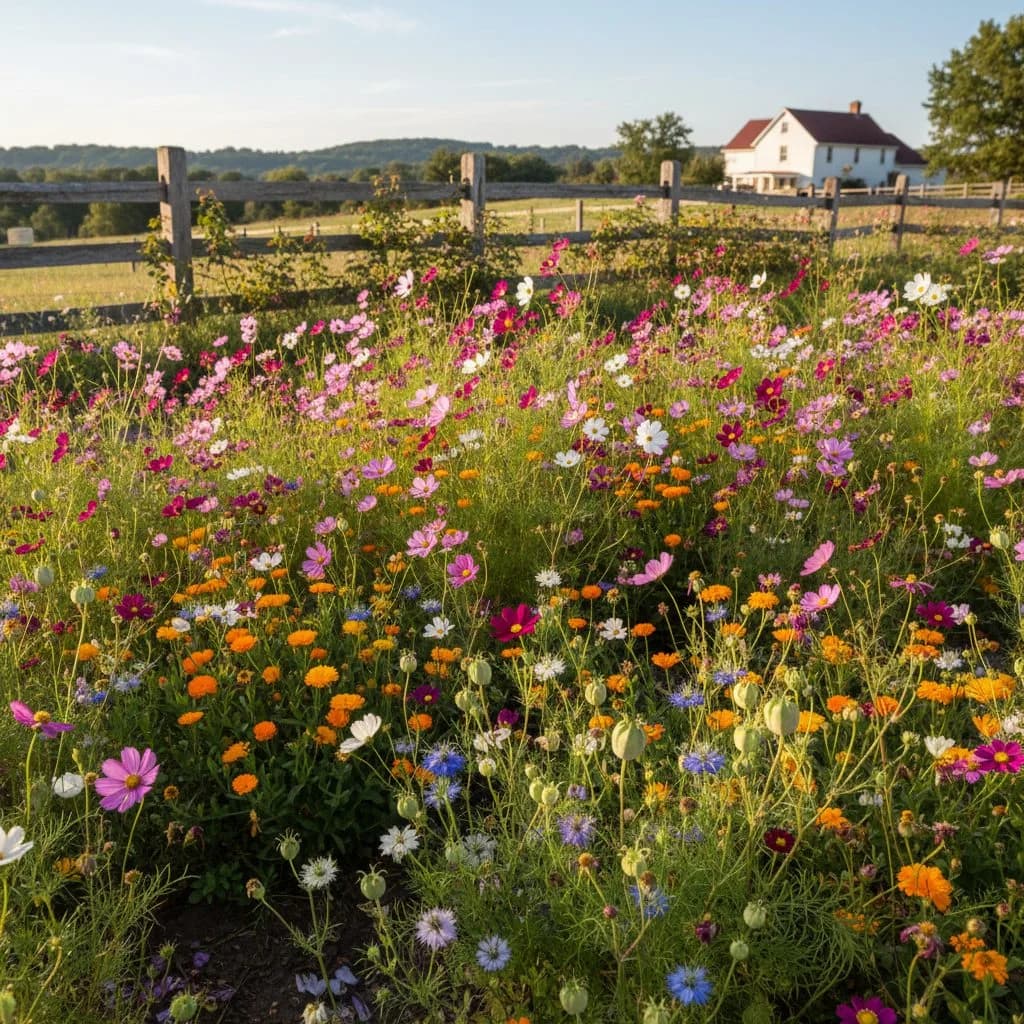
Key takeaways
- Selecting appropriate self-seeding annuals like Cosmos, Calendula, and Nigella can significantly reduce yearly planting effort.
- Good soil preparation, including adding 2-3 inches of compost, supports strong germination and plant vigor.
- Strategic deadheading and allowing some flowers to go to seed ensures a continuous display and future generations of plants.
- Thinning seedlings to 6-12 inches apart prevents overcrowding, which can lead to reduced bloom size and plant health.
- A self-seeding cut flower garden can provide fresh bouquets from late spring through fall with minimal annual intervention.
- Understanding your local climate, especially frost dates and USDA hardiness zone, is vital for successful naturalization.
Quick answer: A self-seeding cut flower garden reduces annual planting by allowing specific annuals like Cosmos and Calendula to drop seeds naturally, providing continuous blooms with minimal yearly effort. This approach can potentially cut annual planting significantly.
In many parts of the United States, from the fertile valleys of California to the humid plains of Georgia, gardeners are always looking for ways to maximize bloom production while minimizing labor. For those in USDA zones 5 to 9, a self-seeding cut flower garden can cut annual replanting by as much as 70%. Letting plants drop their own seed brings back fresh blooms year after year with far less work than traditional annual beds.
The concept is straightforward: choose annuals that reliably reseed themselves, prepare the soil once, and then manage the volunteers. This method saves time and money on purchasing new seeds or starts each spring while supporting a resilient garden ecosystem. With careful selection and planning, a self-seeding garden can provide a continuous supply of fresh cut flowers from late spring (typically May or June) through the first hard frost in October or November.
Understanding the benefits of self-seeding annuals
For many growers, the appeal of self-seeding annuals lies in their ability to reduce annual garden maintenance. Instead of purchasing and planting new flats of flowers every spring, a well-established self-seeding bed can provide most of your desired blooms with minimal intervention. This translates into significant time savings (potentially tens of hours each spring) and a reduction in material costs, often cutting seed or plant start expenses over a three-year period. The naturalization process also tends to produce stronger, more resilient plants, as they are often better adapted to local soil and climate conditions from the outset.
Reducing labor and cost in the garden
The financial benefits are clear; a packet of seeds costing five dollars can yield hundreds of plants over several seasons, far surpassing the value of a single six-pack of annuals. Beyond economics, the ecological advantages are notable. Allowing plants to complete their natural life cycle supports local insect populations, including beneficial pollinators, throughout the growing season. For instance, in a 100 square foot garden, a diverse mix of self-seeders can attract many different species of insects while aiding a healthier garden environment. This approach also reduces soil disturbance, helping maintain soil structure and microbial life to support healthy beds over time.
- Reduced annual planting time
- Lower seed and plant start costs
- Increased plant resilience and local adaptation
- Better support for pollinator populations
- Improved soil health through less disturbance
Key considerations for a successful self-seeding garden
Establishing a thriving self-seeding cut flower garden requires more than just scattering seeds. Soil quality is paramount; well-draining soil with a pH between 6.0 and 7.0 is ideal for most annuals. Incorporating 2-3 inches of organic matter, such as compost, before the initial planting significantly improves soil structure and nutrient availability, supporting strong growth for years. Sunlight is also essential, with most cut flowers requiring at least six to eight hours of direct sun daily to produce abundant blooms. Sites with less than six hours often result in leggy plants and fewer flowers, reducing your potential harvest.
Site selection and soil preparation
Proper site selection involves observing sun patterns throughout the day and considering wind exposure. A location sheltered from strong winds can protect taller varieties like Cosmos from damage, especially during summer storms. Once the site is chosen, a lightweight garden hand trowel can be used to incorporate amendments. For gardeners in USDA zone 7, preparing beds in early spring, typically March, allows sufficient time for soil amendments to integrate before planting in April. Regular soil testing every 2-3 years can help monitor nutrient levels and pH so your self-seeding flowers continue to flourish without decline in vigor.
- Ensure 6-8 hours of direct sunlight daily
- Amend soil with 2-3 inches of compost
- Maintain soil pH between 6.0 and 7.0
- Consider wind protection for taller varieties
- Test soil every 2-3 years for optimal health
Top self-seeding annuals for continuous cut flower harvests
Selecting the right species is fundamental for a productive self-seeding cut flower garden. Some annuals are much more reliable re-seeders than others, providing consistent blooms without much fuss. Cosmos (Cosmos bipinnatus) is a prime example, often producing hundreds of volunteer seedlings from a single plant in USDA zones 4-10. Their delicate, daisy-like flowers come in shades of pink, white, and orange, reaching heights of 3-5 feet. Calendula (Calendula officinalis), also known as pot marigold, is another excellent choice, offering cheerful orange and yellow blooms that readily reseed, even in cooler climates, and can be harvested from June through October.
Reliable varieties for your bouquet garden
Nigella (Nigella damascena), or Love-in-a-Mist, provides unique blue or white flowers alongside attractive seed pods that add texture to arrangements. This plant typically grows to 18-24 inches tall and can produce dozens of seeds per pod, yielding a reliable return the following season. Other strong contenders include Larkspur (Consolida ajacis), known for its tall spires of blue, pink, or white flowers, and Johnny-jump-ups (Viola tricolor), which are smaller, often reaching only 6-8 inches, but provide early spring color and reliably reseed in shaded areas. For those interested in more specific plant details, resources like the Garden Pea entry provide similar botanical information for other garden favorites. These varieties, when allowed to mature and drop seed, can increase their population significantly annually in favorable conditions.
- Cosmos (Cosmos bipinnatus) for tall, prolific blooms
- Calendula (Calendula officinalis) for cheerful, long-lasting color
- Nigella (Nigella damascena) for unique flowers and seed pods
- Larkspur (Consolida ajacis) for elegant vertical accents
- Johnny-jump-ups (Viola tricolor) for early, low-growing color
Managing your self-seeding flower garden for optimal results
Once your self-seeding annuals are established, ongoing management focuses on encouraging continuous blooms and preventing overcrowding. Deadheading, the removal of spent flowers, is necessary for most cut flowers. This practice redirects the plant’s energy from seed production to creating more flowers, extending the bloom season by several weeks, often into late fall. However, to ensure future generations, you must allow a portion of the flowers to remain on the plant and go to seed. This balance ensures both a bountiful harvest for the current season and a reliable crop for the next, particularly in USDA zone 6 where winter dormancy is significant.
Thinning, watering, and seed collection
Thinning volunteer seedlings in spring is another vital task. Overcrowding can lead to weaker plants, smaller flowers, and increased susceptibility to disease, reducing your usable harvest. Aim to thin seedlings to a spacing of 6-12 inches apart, depending on the mature size of the plant. A soil moisture meter can help maintain consistent watering, especially during dry spells so plants receive the 1 inch of water per week they typically need. For specific seed collection, wait until seed pods are dry and brown, usually in late summer or early fall. Storing seeds in a cool, dry place can maintain viability for 2-3 years, as noted by historical gardening practices [5].
- Deadhead regularly to extend bloom season
- Allow 10-20% of flowers to set seed for next year
- Thin seedlings to 6-12 inches apart to prevent overcrowding
- Provide 1 inch of water per week, especially during dry periods
- Collect and store seeds from dry pods in late summer or early fall
Integrating self-seeders with other garden elements
A self-seeding cut flower garden doesn’t have to exist in isolation. Integrating these annuals with perennial beds, vegetable patches, or even cover crops improves overall garden health and productivity. For example, planting self-seeding Calendula or Nigella near vegetable rows can attract beneficial insects that prey on pests, potentially reducing pest damage. The diverse root systems of varied plants also contribute to improved soil structure and nutrient cycling, which is a main principle of sustainable agriculture as supported by the USDA Natural Resources Conservation Service [6]. Consider using taller self-seeders like Cosmos as a living fence or backdrop for shorter perennials.
Designing for biodiversity and pest management
When planning your garden layout, remember that some self-seeders can become aggressive if not managed. Johnny-jump-ups, for instance, can spread rapidly in moist, shaded areas, covering a significant area from a single plant within a season. Strategic placement and occasional weeding are necessary to prevent them from overwhelming less vigorous plants. For areas prone to deer, selecting deer resistant plants, even among self-seeders, can save your blooms. While no plant is truly deer-proof, species like Salvia (including Garden Sage) can deter browsing. A mixed planting strategy, incorporating deer-resistant options, can significantly reduce damage.
- Plant self-seeders near vegetables to attract beneficial insects
- Use taller varieties as living backdrops or screens
- Manage aggressive re-seeders through strategic weeding
- Incorporate deer-resistant options, making up 15-20% of plantings
- Improve soil health through diverse plant root systems
Comparison of popular self-seeding cut flowers
Flower | Height (in) | Sun Needs | Reseeding Reliability | USDA Zones |
|---|---|---|---|---|
Cosmos | 36-60 | Full Sun | High | 4-10 |
Calendula | 12-24 | Full Sun to Part Shade | High | 3-10 |
Nigella | 18-24 | Full Sun | Medium-High | 3-9 |
Larkspur | 24-48 | Full Sun | Medium | 3-9 |
Johnny-jump-ups | 6-8 | Part Shade to Full Sun | Very High | 3-9 |
Time Savings: A well-managed self-seeding garden can reduce annual planting time significantly, saving dozens of hours each spring.
Cost Efficiency: Over three years, gardeners can cut seed and plant start expenses by relying on natural reseeding.
Bloom Season: With proper deadheading, many self-seeders will bloom continuously from June through October, providing four months of fresh flowers.
References
- Design considerations for the free-electron laser with the self-seeding and current-enhanced SASE (2013).
- Free-Time Activities (2011).
- An analysis of undulator optimization in self-seeding free electron lasers (2014).
- AMHD’s 2nd Annual Best Practices conference: Tools of Empowerment! Illness Self-Management and Self Directed Recovery (2005).
- Weaver’s flowers : the world’s best flowers / (1931).
- USDA Natural Resources Conservation Service (2024).