Key takeaways
- Citrus trees require full sun (minimum 6 to 8 hours daily), free-draining soil, and consistent moisture during flowering and fruit set.
- Plant potted citrus in early spring (September to October) or early autumn (March to April) across Australian climate regions.
- Feed established citrus four times a year at the change of each season, with heavy organic fertilisation in late winter (August) and late spring (November).
- Prune out swollen citrus gall wasp branches by the end of August before adult wasps emerge to lay eggs in new spring growth.
- Apply a 7.5 cm layer of organic mulch across the entire drip line, keeping the mulch pulled 10 cm back from the trunk to prevent fungal collar rot.
- Trifoliate orange (Citrus trifoliata) rootstocks suit heavier, wetter soils and give good Phytophthora tolerance; its dwarfing selection 'Flying Dragon' is the one to ask for if you want a compact tree for a pot.
Quick answer: To succeed with growing citrus in Australia, plant your tree in a warm, sunny spot with free-draining soil in spring or early autumn. Fertilise heavily in August and November with pelletised poultry manure and blood and bone, provide 20 to 30 litres of water weekly during hot summer spells, and prune out gall wasp swellings before spring.
A thriving citrus tree—whether a classic backyard lemon, a sweet seedless mandarin, or an Australian native finger lime—is the crown jewel of the Australian suburban garden. Known for their glossy evergreen foliage, intensely perfumed spring blossoms, and heavy seasonal yields, citrus trees thrive across Australia's warm temperate, subtropical, and Mediterranean climate regions.
However, citrus are heavy gross feeders with shallow, fibrous root networks that require attentive year-round management. Successfully growing citrus australia requires mastering the seasonal feeding calendar, managing summer heat stress, and controlling regional pests like citrus gall wasp and bronze orange bugs.
+-------------------------------------------------------------+
|              AUSTRALIAN CITRUS SEASONAL CALENDAR            |
|                                                             |
|   LATE WINTER (August):                                     |
|   - Heavy seasonal feeding (pelletised manure + potash)     |
|   - Final deadline to prune and destroy citrus gall wasp    |
|                                                             |
|   SPRING (September to November):                           |
|   - Peak flowering and fruit set; plant new container trees |
|   - Second major seasonal feed in November                  |
|                                                             |
|   SUMMER (December to February):                            |
|   - Deep weekly watering (20-30L); apply protective mulch   |
|   - Spray pest oil late afternoon for citrus leaf miner     |
|                                                             |
|   AUTUMN (March to May):                                    |
|   - Harvesting begins; light autumn organic feeding         |
+-------------------------------------------------------------+
Top citrus varieties for Australian backyards
Selecting the right citrus variety and rootstock matched to your space ensures years of bountiful picking.
+-------------------------------------------------------------+
|              POPULAR CITRUS VARIETIES IN AUSTRALIA          |
|                                                             |
|   1. LEMONS:                                                |
|   - Eureka: Heavy year-round cropping; thornless; cold-mild |
|   - Meyer: Sweeter, thinner skin; exceptionally cold-hardy  |
|   - Lisbon: Heavy winter crop; thorny; heat & cold resilient|
|                                                             |
|   2. LIMES & NATIVE CITRUS:                                 |
|   - Tahitian Lime: Seedless, juicy; perfect for cooking     |
|   - Australian Finger Lime (*Citrus australasica*): Native  |
|     bush tucker; caviar-like pearls; rainforest shrub       |
|                                                             |
|   3. MANDARINS & ORANGES:                                   |
|   - Imperial Mandarin: Early season; easy-peel; very sweet  |
|   - Washington Navel: Seedless, rich flavour; winter harvest|
+-------------------------------------------------------------+
Lemons: Eureka vs Meyer vs Lisbon
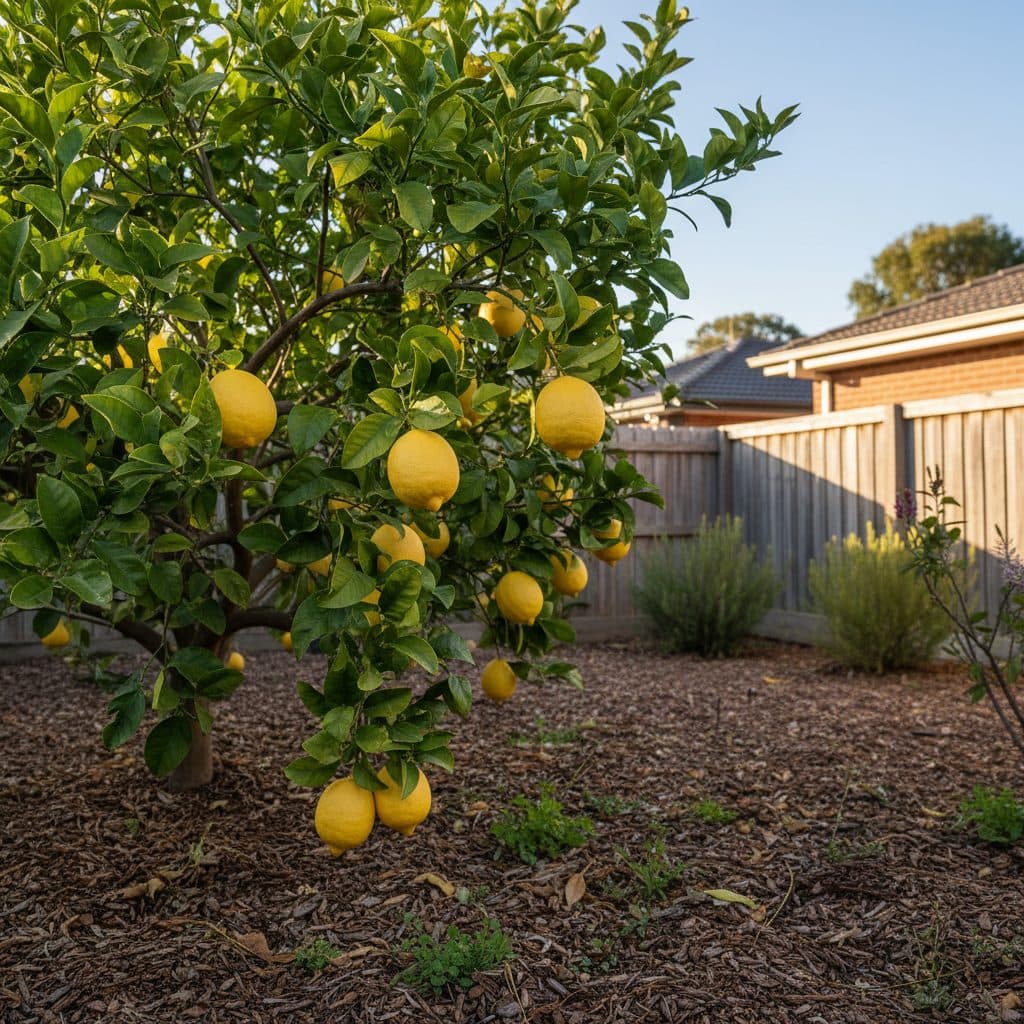
- Eureka Lemon: The classic Australian backyard lemon. Produces large, juicy, thick-skinned fruit virtually year-round in coastal and warm temperate areas. Ideal for Sydney, Brisbane, Perth, and coastal regions.
- Meyer Lemon: Not a true lemon — a citron x mandarin/sweet-orange hybrid, which is why the fruit is rounder, sweeter and less acidic. Because it tolerates sub-zero winter frosts better than Eureka, Meyer is the preferred lemon for Melbourne, Canberra, and inland regions.
- Lisbon Lemon: Produces a massive single winter crop. Very vigorous and highly tolerant of extreme heat and cold, though branches carry sharp thorns.
You can inspect detailed varietal characteristics in our botanical profile on Citrus Eureka lemon.
Native Australian finger limes
Australian Finger Lime (Citrus australasica): Native bush tucker with caviar-like pearls. A rainforest understorey shrub — it wants steady moisture, shelter from hot afternoon sun and drying wind while young, and free-draining soil; it is frost-tender and is not drought-hardy. Slender green, pink, or burgundy fruits contain translucent vesicles that burst with intense tangy juice.
Site selection, soil preparation, and planting
Citrus trees have zero tolerance for waterlogged roots. Planting citrus into heavy, poorly drained clay will lead to Phytophthora root rot and tree death within two to three seasons.
+-------------------------------------------------------------+
|                 CITRUS PLANTING BED SPECIFICATIONS          |
|                                                             |
|   Sunlight: Minimum 6 to 8 hours direct sun daily           |
|   Wind Shelter: Protected from cold westerly/southerly winds|
|   Soil pH: 6.0 to 7.0 (Slightly acidic to neutral)          |
|   Heavy Clay Fix: 30 cm high raised mound (1.5 m diameter)  |
|   Graft Union: Kept strictly 10 cm above finished ground    |
+-------------------------------------------------------------+
Step-by-step planting:
- When to plant: Plant in early spring (September to October) as soil warms, or in early autumn (March to April). Avoid planting in the middle of winter or during summer heatwaves. For wider orchard timing, refer to when to plant fruit trees in Australia.
- Mound in clay soils: If your garden soil contains heavy clay, do not dig a deep pit. Instead, loosen the top 15 cm of soil and build a broad raised mound 30 cm high and 1.5 metres wide using equal parts native topsoil and well-aged compost.
- Position the root ball: Set the potted tree so the root ball sits level with the top of the mound. Ensure the graft union sits at least 10 cm above the soil surface.
- Mulch and water in: Build an earthen saucer ring around the edge of the mound, fill with 20 litres of water containing seaweed tonic, and mulch with 7.5 cm of woodchips, keeping mulch clear of the trunk.
The Australian citrus fertilising schedule
Citrus trees are notorious gross feeders that extract large quantities of nitrogen, potassium, and trace minerals from the soil. In Australia, the golden rule of citrus nutrition is: Feed at the change of each season (August, November, February, and May).
+-------------------------------------------------------------+
|                SEASONAL CITRUS FEEDING PROGRAM              |
|                                                             |
|   LATE WINTER (August - The Big Feed):                      |
|   - 2 to 3 kg pelletised organic poultry manure             |
|   - 100 grams sulphate of potash (for flower & fruit set)   |
|   - 1 cup organic blood and bone                            |
|                                                             |
|   LATE SPRING (November - Fruit Swelling Feed):             |
|   - 2 kg pelletised poultry manure + liquid seaweed tonic   |
|                                                             |
|   LATE SUMMER (February - Autumn Support):                  |
|   - Light dressing of aged compost; trace elements spray    |
|                                                             |
|   AUTUMN / WINTER (May):                                    |
|   - Top-dress with sulphate of potash                       |
+-------------------------------------------------------------+
Correct fertiliser application:
Always apply fertiliser around the drip line (the circular zone beneath the outer circumference of the canopy branches) where fine, active feeder roots concentrate. Top-dress with sulphate of potash. Use wood ash sparingly if at all — it raises soil pH, and citrus on already-alkaline soils will show trace-element deficiency as a result. Never pile manure or concentrated fertilisers against the tree trunk, which causes collar burn. Water the soil thoroughly before and after applying dry fertilisers.
Summer watering and heatwave management
Australian summers present intense heat and drying winds that can cause developing fruitlets to drop prematurely.
- Watering frequency: Established in-ground citrus require a deep soaking of 20 to 30 litres once a week during warm weather, increasing to twice weekly during prolonged 35°C+ heatwaves. Potted citrus require daily watering in summer.
- Preventing fruit drop: Irregular watering—letting soil dry to dust, then flooding it—causes rapid moisture fluctuations that trigger heavy fruit drop and split fruit skins. Maintain steady soil moisture beneath mulch.
For deep moisture conservation strategies during extreme dry spells, read our dedicated manual on deep watering fruit trees in drought and discover canopy shielding techniques in protecting fruit trees in a heatwave.
Managing key Australian citrus pests and diseases
Protecting your citrus harvest involves monitoring for a few specific regional insect pests.
+-------------------------------------------------------------+
|                AUSTRALIAN CITRUS PEST CONTROLS              |
|                                                             |
|   CITRUS GALL WASP:                                         |
|   - Woody swellings on green branches                       |
|   - Control: Prune/destroy galls in late winter             |
|                                                             |
|   CITRUS LEAF MINER:                                        |
|   - Silvery serpentine trails; curled new leaves            |
|   - Control: Spray horticultural pest oil late afternoon    |
|                                                             |
|   BRONZE ORANGE BUG:                                        |
|   - Large orange/black sap-sucking stink bugs               |
|   - Control: Hand-pick with eye protection; soapy bucket    |
+-------------------------------------------------------------+
Citrus gall wasp (Bruchophagus fellis)
Citrus gall wasp is a major pest across New South Wales, Queensland, Victoria, South Australia and parts of Western Australia. The tiny native wasp lays eggs into soft green spring shoots in October and November. Over the following nine months, the tree produces woody, swollen galls around the developing larvae.
- Pruning timing: Prune and destroy galls in late winter, before adults emerge — check local timing, as emergence is earlier in warm subtropical areas than in cool southern districts.
- Disposal: Do not throw galls into your home compost bin. Seal them in a black plastic bag and leave it in full sun for several weeks before disposal, or place them in the general council waste bin.
- Peeling alternative: For thick main structural branches that cannot be cut without ruining the tree shape, use a sharp vegetable peeler to shave off the outer bark of the gall, exposing the larvae to desiccation.
Citrus leaf miner (Phyllocnistis citrella)
During late summer and autumn growth flushes, tiny moth larvae tunnel through tender young leaves, leaving silvery trails and causing foliage to curl tightly. Apply botanical horticultural pest oil sprays late in the afternoon every 10 to 14 days on fresh new flush. For detailed life cycle and spray protocols, read our complete guide on citrus leaf miner organic control.
Rootstock suckers
If you notice vigorous, upright, thorny shoots with three-lobed leaves emerging from beneath the graft union on the lower trunk, cut them off flush immediately. These are rootstock suckers — most often trifoliate orange (Citrus trifoliata) or a citrange, recognisable by the three-lobed leaves and thorns — which will outgrow and starve the cultivated fruiting variety if allowed to develop.