Key takeaways
- Assess soil moisture deeply, down to 12-18 inches, before watering to prevent over or under-irrigation.
- Apply water slowly and deeply, aiming for 10-20 gallons per inch of trunk diameter for mature trees.
- Adjust watering frequency based on tree age, soil type, and local climate data, potentially watering every 7-14 days during drought.
- Utilize drip irrigation or soaker hoses to deliver water efficiently, reducing evaporation by up to 50% compared to sprinklers.
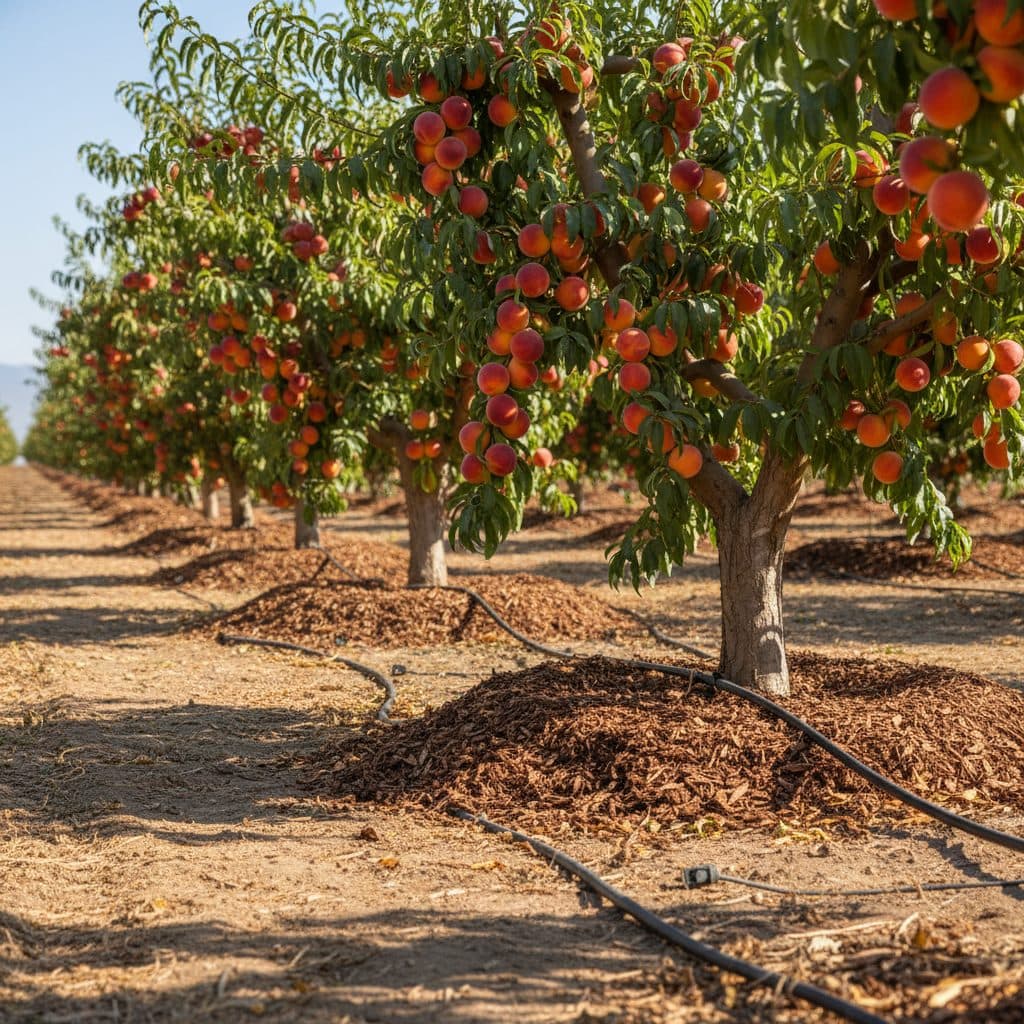
- Mulch around fruit trees with 3-4 inches of organic material to conserve soil moisture and regulate soil temperature.
- Monitor tree health closely for signs of stress, such as wilting leaves or premature fruit drop, indicating a need for adjustment.
Quick answer: To deep water fruit trees during drought and heat, apply water slowly and deeply to penetrate 18-24 inches, encouraging resilient root growth. Use drip irrigation or soaker hoses and mulch to conserve moisture, adjusting frequency based on tree age, soil type, and climate.
In regions like the Central Valley of California or the arid Southwest, where annual rainfall can be as low as 10-15 inches, managing fruit tree hydration during extended drought and intense summer heat is a critical challenge for growers. Even in typically wetter areas, such as parts of the Southeast experiencing periodic dry spells, a mature apple tree (Malus domestica) in USDA zone 6 might require 15-25 gallons of water per week during its peak growing season to produce a healthy crop. Understanding how to deliver this water effectively and efficiently is key to maintaining orchard productivity and tree longevity.
The traditional approach of frequent, shallow watering often fails to meet the needs of established fruit trees, especially those with root systems extending 2-3 feet deep. During heat waves, with temperatures consistently above 95°F, water evaporates rapidly from the soil surface, leaving deeper roots parched. This article outlines practical, data-driven deep watering schedules and techniques designed to help your fruit trees, from young saplings to mature peach (Prunus persica) orchards, thrive even under the most challenging drought and heat conditions across US growing regions.
Understanding tree water needs in arid climates
Fruit trees, whether a young cherry in USDA zone 5 or a mature citrus tree in USDA zone 9, have varying water requirements influenced by their age, species, and local climate. Young trees, with their developing root systems, need more frequent, shallower watering — perhaps 5-10 gallons every 3-5 days for the first year. Mature trees, however, possess extensive root networks that can reach 2-3 feet deep or more, requiring less frequent but much deeper irrigation to encourage root growth into moisture-rich soil layers. For instance, a 10-year-old pecan tree (Carya illinoinensis) in Texas might have roots extending 15 feet horizontally and 8 feet deep, needing substantial water penetration to thrive.
factors influencing water demand
Several factors dictate how much water a fruit tree truly needs. Soil type plays a significant role; sandy soils drain quickly, requiring more frequent watering than heavy clay soils, which retain moisture for longer periods. A loamy soil, ideal for most fruit trees, can hold about 1.5 inches of water per foot of depth. Temperature and humidity also impact evapotranspiration rates; a day with 100°F temperatures and 20% humidity will cause a tree to lose water much faster than a 75°F day with 70% humidity. Research from 1944 noted that a single mature orchard tree could transpire 200-300 gallons of water on a hot day [1]. Finally, the tree’s growth stage — flowering, fruit set, and fruit development — are periods of high water demand, with fruit set being particularly sensitive to water stress [5].
- Tree age: Young trees need frequent, shallow watering (e.g., 5 gallons every 3 days).
- Soil type: Sandy soils drain fast (e.g., 1 inch/hour), clay soils retain water longer.
- Climate conditions: High temperatures (e.g., 90°F+) and low humidity (e.g., 30%) increase water loss.
- Growth stage: Fruit set and development require consistent moisture (e.g., 80% soil moisture).
- Tree species: Some species like figs are more drought-tolerant than others like apples.
The science of deep watering
Deep watering means applying water slowly enough to penetrate the soil deeply, encouraging roots to grow downwards rather than staying near the surface. This practice builds a more resilient root system, crucial for trees facing drought conditions in areas like the high desert of Arizona where annual precipitation might only be 8 inches. When water penetrates to a depth of 18-24 inches, it creates a reservoir that the tree can draw upon for several days or even weeks, depending on soil type and temperature. This contrasts sharply with shallow watering, which only moistens the top 2-4 inches of soil, leading to rapid evaporation and surface root development, making trees more susceptible to stress during dry spells.
root zone hydration and soil health
The primary goal of deep watering is to hydrate the entire root zone, which for most established fruit trees extends at least 2 feet deep. For a mature apple tree with a canopy spread of 15 feet, the root zone can encompass an area of over 175 square feet. Delivering water to this depth also helps to leach accumulated salts from the upper soil layers, which can become problematic in arid regions where irrigation water often contains dissolved minerals. Furthermore, deep watering promotes a healthier soil microbiome by ensuring consistent moisture levels for beneficial microorganisms. A healthy soil structure, with good aeration and organic matter content of 3-5%, can significantly improve water infiltration and retention, allowing trees to access moisture more efficiently [6].
- Encourages deep roots: Roots grow downwards, accessing more stable moisture.
- Reduces evaporation: Less water is lost from the surface (up to 50% reduction).
- Leaches salts: Helps move harmful salts below the root zone.
- Improves soil health: Supports beneficial soil organisms and structure.
- Increases drought resilience: Trees can withstand longer periods without rain.
Practical deep watering techniques
Achieving deep water penetration requires specific techniques that minimize runoff and maximize absorption. One of the most effective methods involves using drip irrigation systems or soaker hoses, which deliver water slowly and directly to the root zone. A typical drip emitter might release 1-2 gallons per hour, allowing water to soak in rather than run off. For a mature fruit tree, multiple emitters placed around the drip line can ensure even distribution, covering an area 2-3 feet wide. These systems can reduce water usage by 30-50% compared to overhead sprinklers, making them ideal for drought-prone areas like the Southwest, where water conservation is paramount.
mulching and water retention
After applying water, a 3-4 inch layer of organic mulch — such as wood chips, straw, or compost — around the base of the tree matters. This mulch layer acts as an insulator, reducing soil temperature by 10-15°F and significantly decreasing evaporation from the soil surface by up to 25-30%. It also suppresses weed growth, preventing competition for water and nutrients. When mulching, ensure the mulch does not touch the tree trunk, leaving a 6-12 inch gap to prevent disease and pest issues. For a 10-foot diameter tree canopy, this would require approximately 1-2 cubic yards of mulch. Regular replenishment of mulch, perhaps once a year, helps maintain its effectiveness.
- Drip irrigation: Delivers water slowly and directly to roots (e.g., 1 gallon per hour).
- Soaker hoses: Provide even, low-pressure watering over a wider area.
- Watering basins: Create a temporary berm around the drip line to hold water.
- Mulching: Apply 3-4 inches of organic material to conserve moisture.
- Deep root irrigation: Use specialized tools to deliver water below the surface.
Adjusting schedules for drought and heat
During periods of drought and extreme heat, a typical watering schedule of once every 10-14 days for mature trees might need adjustment. When temperatures consistently exceed 90°F for several days, or when local rainfall is less than 0.5 inch per week, trees experience increased stress. For example, in USDA zone 8, a mature fig tree (Ficus carica), generally considered drought-tolerant, might still benefit from deep watering every 7-10 days during a prolonged heatwave. The key is to respond to the tree’s needs and environmental conditions, rather than adhering strictly to a calendar. This often means increasing the volume of water per session, or slightly increasing frequency, while still maintaining deep penetration.
monitoring and adaptation
Effective drought watering relies on constant monitoring. Use a soil moisture meter to check moisture levels at 12-18 inches deep before each watering. If the meter reads below 30% moisture, it’s time to water. Observing the tree itself provides critical clues; wilting leaves, yellowing foliage, or premature fruit drop can indicate water stress. For olive trees (Olea europaea) in the North Coast region of Egypt, research showed that deficit irrigation schedules could significantly impact fruit set and growth, highlighting the need for precise water management [5]. Adjusting irrigation timing to early morning (before 8 AM) or late evening (after 6 PM) minimizes water loss to evaporation, potentially saving 10-15% of the applied water during peak summer heat.
- Increase volume: Apply 20-30% more water per session during heatwaves.
- Slightly increase frequency: Water every 7-10 days instead of 10-14 days if soil dries out quickly.
- Water deeply: Ensure water penetrates to at least 18 inches with each application.
- Monitor weather: Adjust schedules based on forecast temperatures (e.g., 90°F+ days).
- Observe tree health: Look for wilting, leaf scorch, or fruit stress as indicators.
Monitoring soil moisture and tree health
Accurate assessment of soil moisture is the cornerstone of effective watering, especially for fruit trees in challenging climates. While a simple hand test — squeezing a handful of soil at 6-8 inches deep — can give a rough idea, a dedicated soil moisture meter provides precise data. These meters can measure moisture levels at various depths, typically 6-12 inches, giving you a clear picture of what’s happening in the critical root zone. For example, a reading of 50-60% moisture is often ideal for many fruit trees, whereas below 30% indicates a need for irrigation. Checking moisture at 3-4 different points around the tree’s drip line offers a comprehensive understanding of soil hydration.
visual cues and tree resilience
Beyond soil readings, your trees will communicate their needs through visual cues. Wilting leaves, particularly during the hottest part of the day, are a primary indicator of water stress, though some wilting can be a natural response to heat. Leaf scorch, where leaf edges turn brown and crispy, suggests severe dehydration. Premature fruit drop or undersized fruit are also clear signs of insufficient water, impacting yield significantly; a 20% water deficit can reduce fruit size by 15% in some species [4]. For instance, a young apple tree in USDA zone 7 might show signs of stress after just 3-4 days without adequate water in 90°F weather. Understanding these signals allows for timely intervention, preventing irreversible damage and ensuring the tree’s long-term health and fruit production.
- Soil moisture meters: Provide precise readings at 6-18 inch depths.
- Hand test: Squeeze soil from 6 inches deep; if it crumbles, it’s dry.
- Leaf wilting: Leaves droop, especially in afternoon heat (e.g., 90°F+).
- Leaf color: Yellowing or browning edges indicate water stress.
- Fruit condition: Premature drop, small size, or poor quality fruit.
Long-term strategies for drought resilience
Beyond immediate watering schedules, adopting long-term strategies can significantly enhance a fruit tree’s resilience to drought and heat. Selecting drought-tolerant varieties suitable for your specific USDA zone is a foundational step. For instance, in USDA zone 9, olive trees (Olea europaea) and pomegranates (Punica granatum) are naturally more resilient than water-loving citrus varieties. Similarly, choosing appropriate rootstocks can impart significant drought tolerance; some apple rootstocks can reduce water needs by 10-15% compared to others. Proper soil preparation, incorporating 2-3 inches of organic matter like compost before planting, improves water holding capacity and drainage, creating a healthier environment for root development.
pruning and canopy management
Strategic pruning practices also play a role in water management. While it might seem counterintuitive, judicious pruning can reduce the tree’s overall leaf surface area, thereby decreasing its water demand through transpiration by 5-10%. This is particularly effective for mature trees with dense canopies. Thinning out excessive branches improves air circulation, which can help reduce humidity around leaves and mitigate fungal issues, but also slightly increases air movement, potentially increasing evaporation. However, the primary benefit is redirecting the tree’s energy and water resources to fewer, stronger branches and developing fruit, rather than supporting unproductive growth. Aim to remove 15-20% of the canopy during dormant pruning for optimal balance.
- Select drought-tolerant species: Choose varieties like figs or pomegranates for arid regions.
- Improve soil: Incorporate 2-3 inches of compost to enhance water retention.
- Strategic pruning: Reduce canopy density by 15-20% to lower water demand.
- Windbreaks: Plant rows of fast-growing privacy trees to reduce wind stress.
- Shade structures: Provide temporary shade for young trees during extreme heat (e.g., 100°F+).
Watering Methods for Fruit Trees in Drought
Method | Efficiency | Penetration Depth | Best Use Case |
|---|---|---|---|
Drip Irrigation | High (90-95%) | Deep (18-24 in) | Established trees, water conservation |
Soaker Hoses | Medium-High (70-85%) | Medium-Deep (12-18 in) | Multiple trees, flexible setup |
Hand Watering (Hose) | Low-Medium (50-70%) | Variable (6-12 in) | Young trees, spot treatment |
Sprinklers (Overhead) | Low (30-50%) | Shallow (4-8 in) | Not recommended for drought |
Water Depth: For mature fruit trees, ensure water penetrates at least 18-24 inches into the soil to encourage deep root growth and resilience.
Mulch Benefit: A 3-4 inch layer of organic mulch can reduce soil moisture evaporation by 25-30% and suppress weed competition for water.
Frequently asked questions
How often should I deep water my fruit trees during a drought?
During a severe drought or heatwave, mature fruit trees may need deep watering every 7-10 days, ensuring water penetrates 18-24 inches deep. Always check soil moisture with a meter before watering; aim for 50-60% moisture in the root zone.
What is the best time of day to water fruit trees in hot weather?
The best time to water fruit trees in hot weather is early morning, between 5 AM and 8 AM. This allows water to soak in before the sun’s intensity increases, minimizing evaporation by 10-15% and reducing the risk of fungal diseases.
How much water does a mature fruit tree need per watering session?
A mature fruit tree typically needs 10-20 gallons of water per inch of trunk diameter, measured 6 inches above the ground. For a tree with a 4-inch trunk diameter, this means 40-80 gallons per deep watering session, applied slowly over several hours.
Can I overwater my fruit trees during a drought?
Yes, overwatering is possible even during a drought, especially in heavy clay soils that drain poorly. Excess water can lead to root rot and deprive roots of oxygen. Always check soil moisture at 12-18 inches deep before watering; if it’s still moist (above 60%), delay irrigation for a few days.
What are the signs that my fruit tree is not getting enough water?
Common signs of underwatering include wilting leaves that don’t recover overnight, yellowing or browning leaf edges (scorch), premature fruit drop, and stunted fruit growth. A soil moisture meter reading below 30% at root depth confirms insufficient water.
Does mulching really help with water conservation?
Yes, a 3-4 inch layer of organic mulch around the base of your fruit trees significantly helps conserve water. It can reduce evaporation from the soil surface by 25-30%, regulate soil temperature by 10-15°F, and suppress weeds that compete for moisture.
References
- Watering Plantation Trees (1944). Watering Plantation Trees.
- Watering Trees (2009). Watering Trees.
- IDENTIFICATION OF SPECIES OF FRUIT TREES BASED ON THE SPECTRAL REFLECTANCE OF CANOPIES OF FRUIT TREES DURING FLOWERING PERIOD (2009). IDENTIFICATION OF SPECIES OF FRUIT TREES BASED ON THE SPECTRAL REFLECTANCE OF CANOPIES OF FRUIT TREES DURING FLOWERING PERIOD.
- Mathematical modeling of fruit trees’ growth under scarce watering (2021). Mathematical modeling of fruit trees’ growth under scarce watering.
- Effect of several deficit irrigation schedules on fruit set and fruit growth of olive trees in the north coast region of Egypt (2018). Effect of several deficit irrigation schedules on fruit set and fruit growth of olive trees in the north coast region of Egypt.
- USDA Natural Resources Conservation Service (2024). USDA Natural Resources Conservation Service.