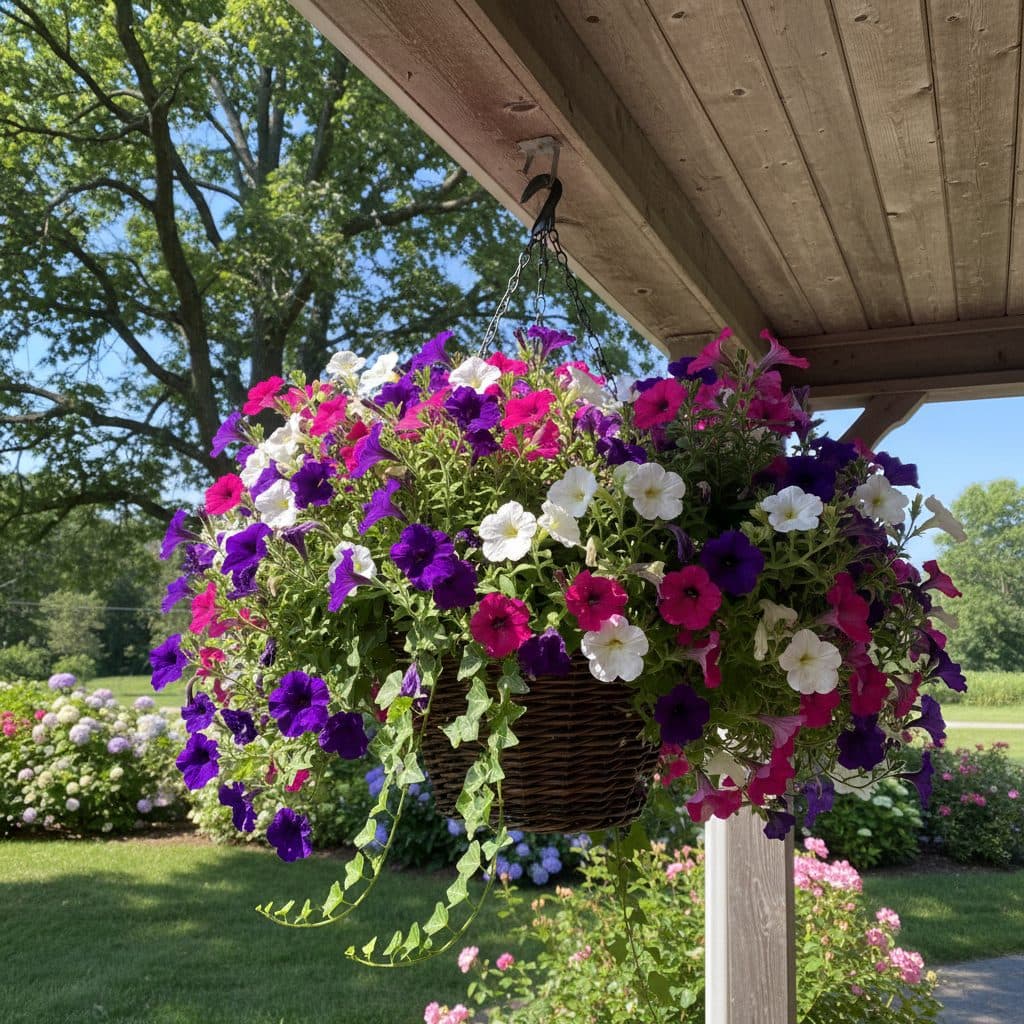
Key takeaways
- Small soil volumes in hanging baskets, often 1.5 to 2 gallons, lead to rapid moisture loss, especially in warm climates like USDA Zone 8.
- Selecting baskets with larger diameters, at least 14 inches, or self-watering reservoirs can significantly extend watering intervals.
- Amending potting mix with coco coir, vermiculite, or water-retaining polymers can increase moisture retention by 30% or more.
- Consistent daily watering, sometimes twice daily during heatwaves above 85°F, is crucial for most hanging basket plants.
- Choosing drought-tolerant plants like succulents, sedums, or portulaca cuts water demand substantially compared with thirsty annuals.
- Strategic placement, avoiding direct afternoon sun in hot regions, helps reduce transpiration and soil evaporation.
Quick answer: To keep hanging baskets hydrated, especially in warm climates, choose larger baskets or self-watering designs, amend potting mix with moisture-retaining materials, select drought-tolerant plants, and ensure strategic placement away from direct afternoon sun.
If you’ve ever admired a vibrant hanging basket in a garden center in, say, coastal North Carolina or central California, only to bring it home and watch it wilt within a day, you’re not alone. Many growers across the United States, from USDA Zone 6 in the Midwest to Zone 9 in the Southwest, face the persistent challenge of hanging baskets drying out at an alarming rate. It’s a common frustration, often leading to daily, sometimes twice-daily, watering routines, particularly when summer temperatures climb above 85°F.
The issue isn’t a mystery; it’s a combination of physics, plant biology, and container design. Early hanging baskets, popular in the late 19th century, presented similar challenges, though modern materials offer new solutions [2]. Understanding the core reasons (limited soil volume, exposure to air, and plant transpiration) is the first step toward growing displays that don’t demand constant attention. Here are practical strategies to keep your hanging baskets thriving through the growing season, with less day-to-day watering.
the fundamental reasons hanging baskets dry out so quickly
Hanging baskets are inherently designed for rapid drying, a fact that can surprise new growers in regions from New England to the Pacific Northwest. The primary culprit is the limited soil volume; a typical 12-inch diameter basket holds approximately 1.5 to 2 gallons of potting mix, which is a fraction of the 5 to 10 gallons found in larger patio containers [1]. This small volume means less water storage capacity, making the soil susceptible to drying out within hours, especially on a hot, windy day. For instance, a basket in full sun in USDA Zone 7b, experiencing 90°F temperatures and low humidity typical of an August afternoon in the Mid-Atlantic, might lose 50% of its available moisture in as little as four to six hours.
exposure to the elements and air circulation
Unlike plants rooted in the ground or in larger pots sitting on a surface, hanging baskets are suspended, exposing their entire surface area—top, sides, and bottom—to air circulation and direct sunlight. This increased air movement around the container accelerates evaporation from the soil surface and through the sides of porous baskets, like those made from coir or moss. In windy conditions common in areas like the Great Plains, this evaporative loss can increase by 20% to 30%. Furthermore, the elevated position often means more direct sun exposure for 6 to 8 hours daily, intensifying water loss through both evaporation and plant transpiration.
- Small soil volume: Limits water holding capacity to 1.5-2 gallons.
- Full exposure: Air circulates around all sides, increasing evaporation.
- Sun and wind: Accelerate moisture loss significantly, especially above 85°F.
- Porous materials: Coir or moss liners allow water to escape through sides.
- Plant transpiration: Actively pulls water from the soil and releases it.
choosing the right basket for better water retention
The type of hanging basket you select plays a significant role in how quickly it dries out. While traditional wire baskets lined with coir or moss are aesthetically pleasing, they are also notorious for rapid drainage and evaporation through their porous sides. In arid regions like Arizona or parts of California’s Central Valley, where summer temperatures can reach 100°F or more, these porous baskets can require watering twice daily, sometimes even three times during peak heat. Opting for baskets with larger soil volumes or those made from less porous materials can drastically reduce your watering frequency by 25% to 40%.
material and size considerations
When selecting a basket, consider both its material and size. Plastic or glazed ceramic baskets retain moisture far better than coir or unglazed terracotta, as they do not allow water to evaporate through the container walls. A 14-inch plastic basket, holding closer to 3 gallons of soil, will stay moist longer than a 10-inch coir basket holding one gallon. Self-watering hanging baskets, which incorporate a built-in water reservoir at the bottom, are particularly effective. These designs, recognized since at least 1992, can extend watering intervals from daily to every two or three days, depending on the plant and climate [5]. For example, a self-watering basket in a humid climate like Florida’s USDA Zone 9b might only need water every three days.
- Plastic or glazed ceramic: Superior moisture retention compared to porous materials.
- Larger diameter: A 14-inch basket holds more soil and water than a 10-inch one.
- Self-watering designs: Feature reservoirs that can stretch the interval between waterings, often to every two or three days.
- Avoid unlined wire baskets: They offer minimal water retention.
- Consider basket color: Lighter colors reflect sun, reducing soil temperature by a few degrees.
optimizing potting mix for maximum moisture retention
The soil you use in your hanging baskets is arguably the most critical factor in managing moisture. Standard potting mixes, while good for general container gardening, often lack the specific amendments needed to hold water effectively in the challenging environment of a hanging basket. Improving your potting mix can reduce watering frequency by 30% to 50%, saving you time and ensuring healthier plants. For instance, a basket with an optimized mix in a temperate climate like USDA Zone 6 in Ohio, receiving moderate sun, might only need watering every other day, potentially reducing water usage by 40 gallons over a three-month growing season, compared to daily for a standard mix.
amendments for water retention and nutrition
To create a superior potting mix, start with a high-quality, peat-based or coco coir-based potting mix. Then, incorporate amendments known for their water-holding capabilities. Coco coir is excellent, absorbing up to 10 times its weight in water and releasing it slowly. Vermiculite can hold up to three to four times its weight in water and also provides some aeration. Some growers add water-retaining polymers (hydrogels), which absorb many times their weight in water and release it as the soil dries. Follow the rate on the product label exactly — these crystals swell enormously, and over-dosing lifts plants up out of the basket and keeps the root zone waterlogged. For example, adding 10% to 20% vermiculite to your mix can significantly improve moisture retention. You can find appropriate amendments and tools like a lightweight garden hand trowel for mixing at agripure.org/shop.
- Coco coir: Holds up to 10 times its weight in water, improving moisture retention.
- Vermiculite: Absorbs 3-4 times its weight in water and aids aeration.
- Water-retaining polymers: mix in at the rate printed on the product label; the benefit varies with mix, basket and climate.
- Compost: Adds organic matter, improving soil structure and water holding capacity by 10-20%.
- Slow-release fertilizer: Provides consistent nutrients for 3-4 months, reducing the need for frequent liquid feeding.
effective watering strategies and monitoring techniques
Even with the best basket and soil, proper watering technique is paramount. Many growers simply give their baskets a quick splash, which often isn’t enough to thoroughly saturate the root ball. This leads to dry pockets and stressed plants, particularly during the peak summer months in hot, dry climates like those found in the high desert of New Mexico, where humidity can drop below 20% and daily evaporation rates are high. Consistent and thorough watering is key; aim to water until you see water draining from the bottom, indicating full saturation.
when and how to water
The frequency of watering depends heavily on temperature, humidity, wind, and plant type. In hot conditions, such as 90°F days in USDA Zone 8, baskets may need watering twice daily—once in the morning and again in the late afternoon [1]. On cooler, overcast days, watering every other day might suffice. Always check the soil moisture before watering. Stick your finger one to two inches into the soil; if it feels dry, it’s time to water. Alternatively, use a soil moisture meter, which provides a more accurate reading of moisture levels from one to ten. A reading below three typically indicates a need for water. When watering, apply water slowly and evenly, allowing it to soak in rather than run off immediately. For very dry baskets, a two-stage watering approach can be effective: water until runoff, wait 15 minutes, then water again to ensure full rehydration of the potting mix.
- Water thoroughly: Until water drains from the bottom, ensuring full saturation.
- Check soil moisture: Use a finger test (1-2 inches deep) or a soil moisture meter.
- Water based on conditions: Daily or twice daily in hot weather (above 85°F), less often in cool weather.
- Two-stage watering: Rehydrates severely dry potting mix more effectively.
- Avoid overhead watering: Focus water directly on the soil surface to minimize leaf disease and waste.
strategic plant selection and placement
The plants you choose and where you hang your baskets are just as important as your soil and watering routine. Some plants are simply more demanding of water than others, and placing a high-water-demand plant in a hot, exposed location is a recipe for daily wilting. By selecting appropriate species and optimizing their position, you can significantly reduce the stress on both your plants and your watering schedule, potentially cutting water needs by 20% to 40% over a typical growing season, translating to dozens of gallons of water saved.
choosing the right plants and locations
For locations with intense sun exposure, especially in southern states like Texas or Florida, prioritize drought-tolerant plants. Succulents, sedums, portulaca, and trailing herbs such as creeping thyme or prostrate rosemary are excellent choices that can tolerate drier conditions and require less frequent watering. English ivy (Hedera helix) is widely sold for baskets but has escaped cultivation and is listed as invasive in many states, so check your state noxious weed list before you plant it, and never tip a spent basket out over a fence line or into woods. Even some orchids, like epiphytic Cattleya species, can thrive in hanging baskets, often mounted on tree fern or cork bark, requiring specific but less frequent watering than typical annuals [3]. Conversely, plants like impatiens, fuchsias, and petunias are heavy drinkers and will demand daily attention in full sun. When it comes to placement, try to find locations that receive morning sun and afternoon shade, particularly in regions where summer temperatures regularly exceed 85°F. A covered porch or under the canopy of a deciduous tree can provide the necessary protection, reducing evaporative loss by 15% to 25% compared to full sun exposure. Consider using a sturdy wooden-handle garden fork for any ground-level planting nearby.
- Drought-tolerant plants: Succulents, sedums, portulaca, and trailing herbs require less water.
- Shade-loving plants: Impatiens and fuchsias thrive in partial shade, reducing water stress.
- Morning sun, afternoon shade: Ideal placement to reduce heat stress and evaporation.
- Sheltered locations: Protect from strong winds, which increase water loss by 20-30%.
- Consider plant size: Don’t overcrowd baskets; allow room for root growth and reduce competition for water.
Hanging Basket Material Comparison for Water Retention
Material Type | Water Retention | Evaporation Rate | Typical Cost |
|---|---|---|---|
Plastic/Glazed Ceramic | High | Low | Moderate ($10-30) |
Metal Wire with Coir/Moss Liner | Low | High | Moderate ($15-40) |
Unglazed Terracotta | Medium | Medium | Moderate ($10-25) |
Self-Watering Plastic | Very High | Very Low | Higher ($25-60) |
Water Reduction: Self-watering baskets and water-retaining polymers both stretch the interval between waterings.
Daily Check: In USDA Zone 8, hanging baskets may require watering twice daily when temperatures consistently exceed 85°F [1].
Discover Container Gardening Tips
Frequently asked questions
How often should I water my hanging baskets?
The frequency depends on several factors, but in hot summer conditions above 85°F, many hanging baskets in regions like USDA Zone 8 may need watering once or even twice daily [1]. On cooler days, checking the top one to two inches of soil for dryness is a good practice before watering.
What kind of soil is best for hanging baskets?
A high-quality, peat-based or coco coir-based potting mix is recommended. For enhanced moisture retention, amend it with materials like coco coir, vermiculite (10-20% by volume), or water-retaining polymers used at the label rate.
Can I use regular garden soil in my hanging baskets?
No, regular garden soil is generally too heavy and compacts easily in containers, restricting root growth and drainage. It also often lacks the necessary aeration and can introduce pests and diseases. Potting mix is specifically formulated to be lightweight and well-draining for container use, offering a better environment for plant roots to thrive, especially in small volumes like 1.5-2 gallon baskets [1].
What plants are good for hanging baskets that don’t dry out quickly?
For drought tolerance, consider plants like portulaca, sedums, succulents and trailing herbs. These plants are more forgiving of drier conditions and can reduce your watering frequency by 20% to 40% compared to water-thirsty annuals.
How do self-watering hanging baskets work?
Self-watering hanging baskets typically have a false bottom that creates a water reservoir beneath the soil. A wicking system, often a fabric strip or a perforated section, draws water up into the potting mix as needed. This design can extend watering intervals from daily to every two or three days, depending on the climate and plant, a solution recognized since at least 1992 [5].
Should I fertilize my hanging baskets?
Yes, frequent watering leaches nutrients from the small soil volume, so regular fertilization is important. Incorporate a slow-release granular fertilizer into the potting mix at planting time, which can feed plants for three to four months. Supplement this with a diluted liquid fertilizer every two to four weeks during the active growing season for optimal plant health and bloom production.
References
- Hanging Baskets (1980). Hanging Baskets.
- Hanging Baskets (1888). Hanging Baskets.
- 11 Orchids for Pot Culture/ Hanging Baskets/ Tree Mounting (2014). 11 Orchids for Pot Culture/ Hanging Baskets/ Tree Mounting.
- Ivy in Hanging Baskets (1887). Ivy in Hanging Baskets.
- Hanging Baskets, Standards, Combination Pots, and Vertical Gardens (1992). Hanging Baskets, Standards, Combination Pots, and Vertical Gardens.
- USDA Natural Resources Conservation Service (2024). USDA Natural Resources Conservation Service.